

Notion ran an email client for 17 months and killed it because the customers stopped showing up. On June 25, 2026 the company announced it was sunsetting Notion Mail on September 22 across web, desktop and iOS (TechCrunch). The stated reason is the interesting part. In a post on X, Notion said "more than half of Notion Mail users manage emails without ever opening their inbox," and that it was going "all in on using agents to run your inbox." Mail itself stays in Gmail, since Notion Mail was only a client. Drafts, scheduled sends and auto-label rules created inside Notion Mail had to be exported by September 21 or they were deleted.

That single decision maps the whole AI email market as it stands in late 2026. The paid email client, the category that lived and died on keyboard shortcuts and triage speed, is being squeezed from two sides: free AI inside Gmail and Outlook, and paid delegation layers that never require you to look at the inbox at all.
The baseline is now free, and Google owns it
On January 8, 2026 Google declared Gmail "the Gemini era" for its 3 billion users (Google blog). Thread-summarizing AI Overviews, Help Me Write and Suggested Replies rolled out to everyone at no cost. Google gated only the deeper features: asking your inbox questions through AI Overviews and Proofread require Google AI Pro or Ultra (Google blog). On the consumer ladder that means the assistant basics are bundled and the good parts sit behind AI Plus at $4.99 or AI Pro at $19.99 a month, with Pro unchanged at $19.99 for more than two years.
Microsoft's route is the opposite posture. Copilot in Outlook is not in the base license. Per Microsoft's own list prices, the enterprise add-on costs $30 per user per month on an annual term, and a Copilot Business add-on runs $21 per user per month annually, or $25.20 monthly, with an $18 first-year promotion for subscriptions bought between July 1 and December 31, 2026 (Microsoft pricing, Netsys breakdown). Chat with work data is free on eligible plans; the paid seat is what adds grounded drafting in the mail client itself.
The practical effect: "AI answers my email" now has a reference price of zero on the platform where most people actually read email. Anything charging a per-seat fee above that is selling either taste or delegation, not capability.
The standalone client became a consolidation target
The premium inbox client as a standalone product is gone. Grammarly announced its acquisition of Superhuman in July 2025 (Reuters), closed it in October 2025, and then inverted the relationship: the parent company renamed itself Superhuman, folding in Grammarly, Coda-based Superhuman Docs and an assistant called Superhuman Go (The Verge). Email is no longer the product, it is one SKU in a suite. On the current ladder, Free and the $12 Pro tier do not include the mail client at all; Superhuman Mail is available to new subscribers only through the Business plan at $33 per member per month billed annually ($40 monthly), per the company's own plan table and a May 2026 pricing-page check.
Notion Mail's run is the control experiment. It launched in April 2025, followed Notion's 2024 acquisition of the encrypted-workspace startup Skiff (TechCrunch, Enterprise DNA recap), shipped auto-labels and AI triage, and shut down as an inbox while keeping the email agents running. Surviving independent clients are repositioning the same way, from interface to plumbing: Spark now sells a CLI that exposes your inbox to coding agents like Claude and Codex rather than competing with them on keyboard shortcuts (Spark).
The delegation layer has its own price card
What replaced the paid client is an assistant that works on the inbox instead of displaying it. The going rate is two to three times what Gmail and Outlook charge for AI, and the policies are more interesting than the prices.
- Fyxer AI, a UK company that pitched itself on running an executive-assistant agency, charges $49 per person per month ($37 annually) on Pro and $99 ($64 annually) on Team, meters work in credits (3,000 a month on Pro, sorting costing one credit per five emails), claims more than 100,000 users, and still never sends an email without you pressing send (Fyxer, pricing check from October 2026, feature notes).
- Carly, an email-and-text executive assistant, starts at $35 per month and does send on your behalf (Carly).
- The chat assistants reached into the mailbox directly. OpenAI rolled out Gmail, Google Calendar and Contacts connectors in ChatGPT, Pro plan first, then Plus, Team, Enterprise and Edu (BleepingComputer). The connector asks Google for the
gmail.modifyscope, which covers reading, composing and sending; OpenAI says it does not train models on data pulled through connected Google apps (OpenAI help). - Anthropic draws the opposite boundary on its official add-ins. Claude for Outlook "never sends mail or invites on its own," does not request the
Mail.Sendpermission, and drops every draft unsent into the Outbox, with Graph calls running in the browser so the access token never reaches Anthropic (Claude docs). The Gmail connector is moving the other way: as of October 2026 the directory listing includes draft, reply, send and forward tools (connector inventory).
What the price card is actually selling
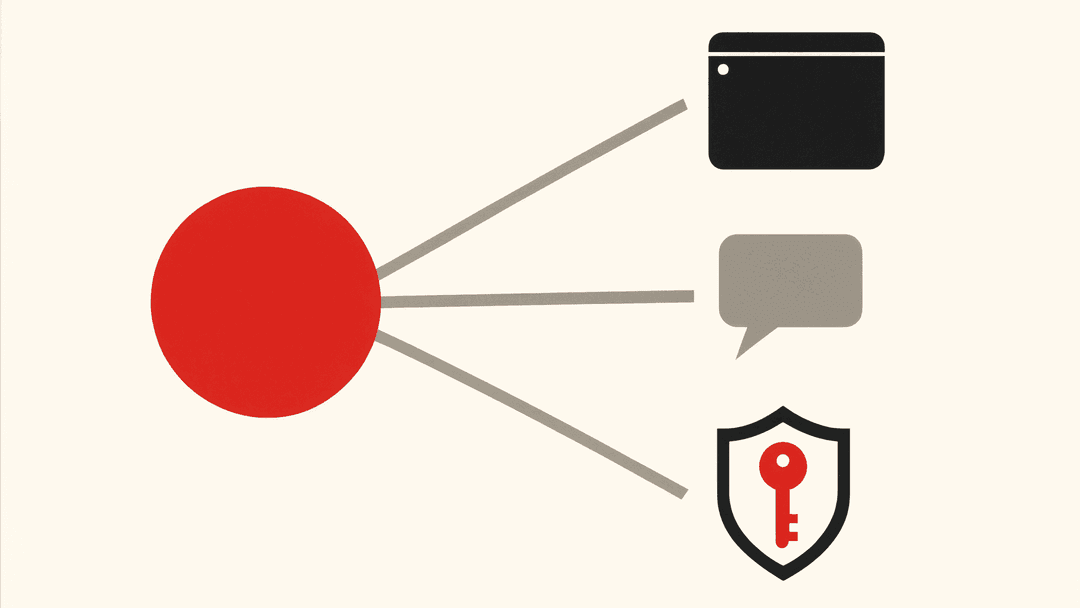
Three things fall out of the late-2026 evidence, and none of them is a better inbox.
First, interface premium is gone. The $24.99-to-$30 fast-client era priced a keyboard experience. Notion's own usage data says half its clients' users stopped looking at that experience, and Google gave the useful half of its version away for free.
Second, the durable charge is delegation plus liability. Fyxer at $49 and Carly at $35 are not selling faster reading; they are selling the act of not reading, and both hedge it with send policies. The "I review everything before it goes out" default is the feature that justifies the seat price against a free Gmail.
Third, the mailbox connector is where the trust decisions now live. OpenAI's gmail.modify scope, Anthropic's no-Mail.Send add-in, Notion's agents that outlived their own inbox: the vendors do not agree on what an AI is allowed to do with your mail, and the policies change underneath sign-ups. If the February-to-June 2026 pattern holds (connectors expanding from read to send across the industry), the permissions you approved for reading one quarter may not describe the permissions you hold the next.
Notion's shutdown note reads like marketing. But the number inside it, more than half of users never opening a client that shipped only 17 months earlier, is the cleanest market signal email software has produced this year. The inbox is not dead. It just stopped being the product.
Sources
- TechCrunch: Notion Mail shuts down amid agent takeover
- Google: Gmail is entering the Gemini era
- Gmelius: Google AI plans comparison
- Microsoft: Copilot plans and pricing
- Netsys Group: Is Copilot worth it, list prices November 2026
- Reuters: Grammarly to acquire Superhuman
- The Verge: Grammarly is changing its name to Superhuman
- Superhuman/Grammarly: Introducing the Superhuman suite
- Agentys: Superhuman pricing, verified May 2026
- Spark: Where to go after Notion Mail
- Fyxer: AI email assistant
- this+that: Fyxer AI review, pricing checked October 21, 2026
- OpenAI: Google app data controls FAQ
- BleepingComputer: OpenAI rolls out Gmail, Calendar and Contacts integration
- Anthropic: Use Claude for Outlook
- TechCrunch: Notion's email product is nearing launch
- Enterprise DNA: Why Notion Mail is shutting down
