
Every company with email employees has, somewhere in its security budget, a line item that pays someone to phish them on purpose. The category started as "security awareness training," has rebranded itself as "human risk management," and in late 2026 runs on four distinct billing lanes: published per-seat lists, quote-only adaptive platforms, suite bundles where the meter is hidden, and free open-source software you operate yourself. The prices in the same category differ by more than an order of magnitude, and the headline number is rarely what a 500-person company actually pays.
Demand is not soft. KnowBe4's 2026 Phishing by Industry Benchmarking Report, built from millions of simulated tests on its own customer base, says phishing attack volume rose 17.1% since the second half of 2025 and that the global average "phish-prone percentage" before any training sits at 33.2%. Whatever one makes of a vendor measuring its own market, the compliance calendar keeps buying the product: NIS2, DORA and ISO 27001 compliance training modules are now priced as plans in their own right by vendors like Phished.

Lane one: the published list
KnowBe4, the category's incumbent, still publishes a manufacturer's suggested price table. As of its May 2026 list, a three-year term costs $2.40 per seat per month for SAT Foundation at 25-50 seats, falling to $1.63 at 501-1,000 seats. SAT Advanced, which adds unlimited simulated campaigns, AI-selected templates per user, and simulated vishing, runs $3.75 down to $2.79 over the same brackets. Above 1,000 seats it is quote only. The list is a starting point, not a price: Vendr's purchase data puts the median KnowBe4 contract at $7,802 a year across 686 tracked purchases (range $1,943 to $19,623), with buyers saving about 20% off list on average. Negotiation-reference firm VendorBenchmark pegs the median close for its awareness cohort at 35% off list, with deals under $250,000 landing at 29% off.
Smaller published lists exist. PhishingBox sells flat annual per-seat plans: $16.50 per seat per year for Standard (simulation only), $23.93 for Professional (adds its learning management system), $31.35 for Enterprise (adds callback phishing, KillPhish AI and a security inbox), with 20% off on annual billing shown at those rates. Belgian vendor Phished publishes a floor of $175 per month before seat counts and plan level scale the quote, and sells NIS2, DORA and HIPAA compliance modules as the step up from its core simulation plan.
Lane two: the quote-only adaptive platforms
Hoxhunt, Cofense, NINJIO and usecure do not publish per-seat prices. Hoxhunt sells adaptive, per-employee learning paths and quotes after a scoping call; its simulation channels now include SMS, Teams and deepfake video, with some of that gated behind plan tiers. Cofense, which built its business on managed phishing-report triage, prices human risk programs by headcount in annual contracts. NINJSKI and NINJIO pitch coaching-style remediation tied to behavioral profiles. This lane is where most enterprise buyers land after the compliance team asks for reporting that satisfies an auditor, and it is also where the cheapest published list stops being comparable, because a quote includes admin labor the list price assumes you will do yourself.
Lane three: the bundle
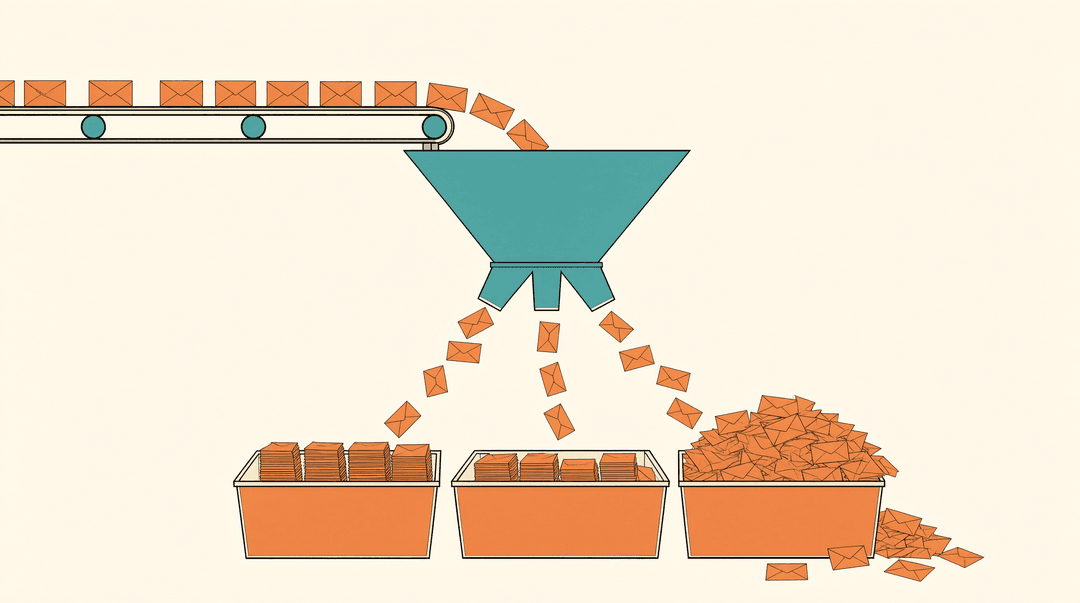
For organizations already paying for a Microsoft 365 E5 suite, phishing simulation is $0 incremental: Defender for Office 365 Plan 2, which includes Attack simulation training, ships inside E5, and standalone P2 licenses run around $5 per user per month, more than most dedicated simulators charge. The email-security vendors took the same route into the category. Proofpoint, owned by Thoma Bravo since a $12.3 billion take-private, sells awareness training as ZenGuide inside its security suite and completed a $1.8 billion acquisition of Hornetsecurity on December 8, 2025, which ships training inside a bundled email platform. KnowBe4 went the other way, starting in training and buying email security: it acquired Egress in 2025 and resold the result as KnowBe4 Defend and Prevent. The moves extend a consolidation wave that began in 2018, when Proofpoint paid $225 million for Wombat.
In the bundle lane the meter disappears into a per-user suite price. Buyers stop comparing simulation costs per seat and start defending E5 upgrades they justified on other features.
Lane four: Gophish and the free floor
Gophish, the open-source phishing framework, costs nothing and is the standard answer for teams with engineers and no budget. The honest comparison is not $0 versus $16.50: it is $0 versus the staff hours to run sender infrastructure, keep templates current, avoid getting your own domains blocked, and produce audit-ready reporting. Several comparison guides recommend it precisely for technical teams who want to self-host and skip the subscription.
What the ladder actually bills for
For a 500-person company wanting a twelve-month simulation plus training program, the published math looks like this: $10,800 a year at KnowBe4 Foundation list for the 251-500 seat bracket ($1.80/seat/month, three-year term), $17,760 at SAT Advanced list, $8,250 at PhishingBox Standard, $11,965 at PhishingBox Professional, $0 incremental if the seats are already on Microsoft 365 E5, and roughly $7,802 if the deal looks like the median one Vendr tracked, list price notwithstanding.
The line items around the ladder move the number more than the ladder does. KnowBe4's own table prices add-ons separately: PhishER Plus, the email-reporting and triage module, runs about $1.50 per seat per month in the 101-500 bracket, and a Compliance Plus library and third-party integration rider are separate SKUs. Vishing and deepfake simulation, the answer to the voice-phishing shift, are tier gates or add-ons at most vendors: included in KnowBe4's Advanced tier, sold as an add-on at Hoxhunt, kept for the Enterprise seat price at PhishingBox. AI features, once differentiators, are now line items on both sides of the fence: KnowBe4 sells AI-selected per-user templates, PhishingBox sells "KillPhish AI," and Adaptive Security generates simulations from OSINT.
The evidence deserves the same skepticism applied to the pricing. The 33.2% baseline susceptibility and the claim that a year of continuous training cuts phish-prone percentages by 87% to 4.2% come from KnowBe4, which sells the training, measured on simulated clicks by its own customers, by definition a population that bought in. Vendor-reported click-rate improvements are a marketing metric, not an outcome study, and the phish-prone percentage itself has been criticized in security research for measuring compliance with a test rather than resistance to an attack. The number to watch in a contract is not the benchmark; it is what happens at renewal, since the published lists are three-year-term MSRPs, and a one-year quote comes back higher by design.
The buyer's checklist
- Ask for the 501-1,000-seat bracket even if you have 300 people. KnowBe4's own ladder prices 501-1,000 seats lower than 251-500; volume discounts are the published default, not a favor.
- Define the seat. A per-user list price with a 25-seat minimum and separate add-on SKUs (compliance, vishing, triage) is not comparable to a flat annual per-seat plan until the add-ons are summed.
- Ask what the bundle already contains. If the tenant is on E5, the incremental cost of Defender's simulation is zero, and the paid quote is for convenience, not capability.
- Ask what the free tier tests. Baseline susceptibility numbers are strongest when the simulation mix reflects current real-world lures on the channels staff actually use (voice, Teams, QR), not email templates alone.
- Price the admin time. A $0 platform that takes eight hours a month to run costs more than a $16.50 seat; a quote-only managed program may undercut both on the hours.
Sources
- KnowBe4 security awareness training list pricing (May 2026 MSRP table, add-ons, term structure): https://www.knowbe4.com/products/security-awareness-training/pricing
- Vendr KnowBe4 purchase benchmarks (median $7,802/year, 686 purchases, 20% average savings): https://www.vendr.com/marketplace/knowbe4
- VendorBenchmark KnowBe4 discount reference (35% median off list): https://vendorbenchmark.com/price-check/knowbe4
- PhishingBox published plans ($16.50 / $23.93 / $31.35 per seat per year): https://www.phishingbox.com/pricing/
- Phished pricing floor ($175/month, NIS2/DORA compliance plans): https://www.phished.io/pricing/
- KnowBe4 2026 Phishing by Industry Benchmarking Report (17.1% attack growth, 33.2% baseline PPP, 4.2% after 12 months): https://www.knowbe4.com/resources/reports/phishing-by-industry-benchmarking-report
- Cyberduo Defender for Office 365 Plan 1 vs Plan 2 (Attack simulation training in P2, ~$5/user/month, included in E5): https://www.cyberduo.com/blog/microsoft-defender-office-365-plan-1-vs-plan-2
- CSO Online on Proofpoint acquiring Hornetsecurity (~$1.8B, closed December 8, 2025; Thoma Bravo $12.3B take-private): https://www.csoonline.com/article/3987143/proofpoint-buying-hornetsecurity-in-a-play-to-expand-email-security-scope.html
- BankInfoSecurity on KnowBe4 buying Egress and the 2018 consolidation wave (Proofpoint-Wombat $225M): https://www.bankinfosecurity.com/embargo-0424-7am-et-knowbe4-buys-egress-to-aid-awareness-training-email-defense-a-24928
- Hook Security phishing simulation tool comparison (Hoxhunt, usecure, Microsoft, Gophish lanes): https://www.hooksecurity.co/blog/phishing-simulation-tools
- Phished.io top-10 phishing platforms roundup (published-price rarity, Hoxhunt scoping call): https://phished.io/top-10-phishing-simulation-platforms-in-2026
