Archive / page 53 of 123

Latest articles, page 53

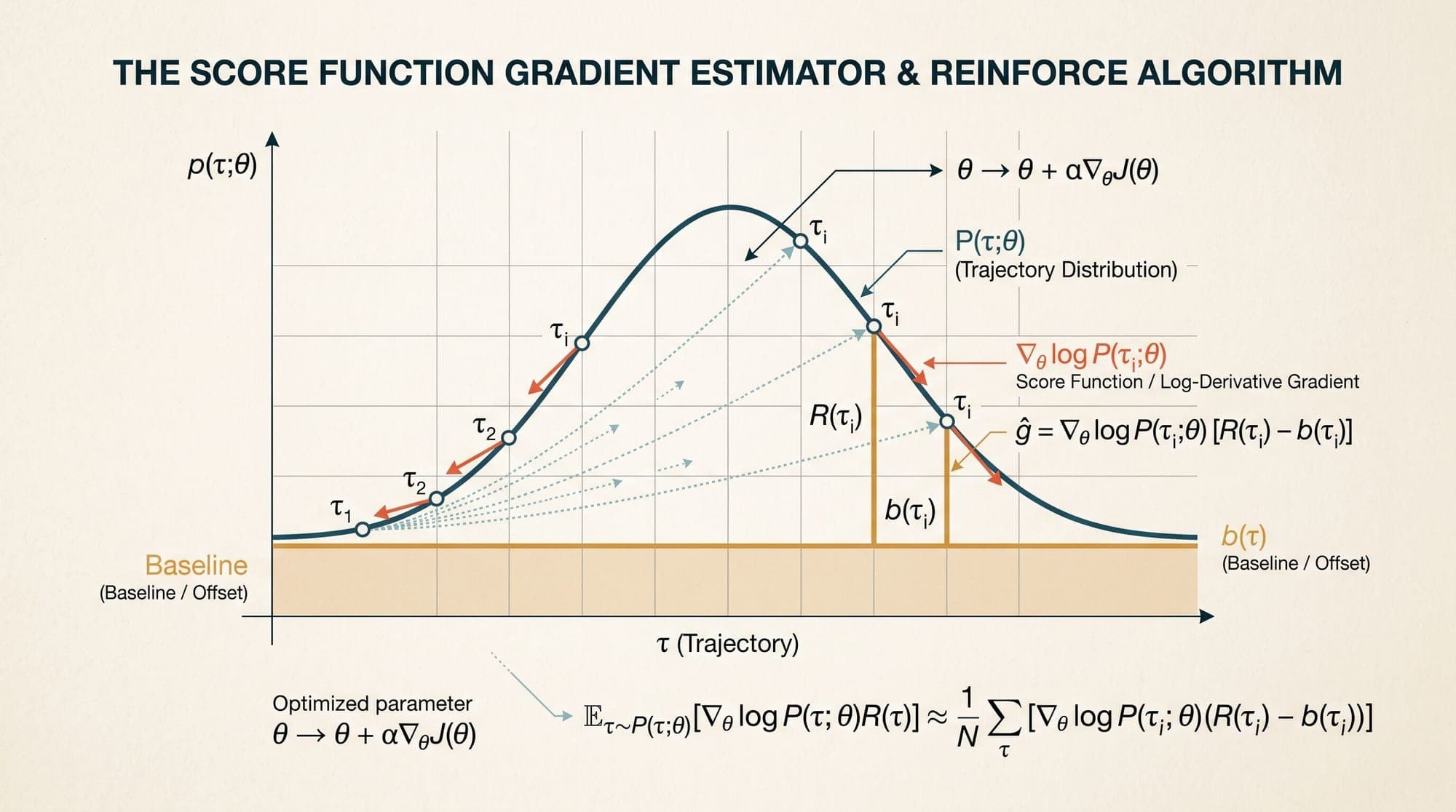
  1. The Score Function Estimator: Mathematical Foundations of REINFORCE, Log-Derivative Tricks, and Baseline Variance Reduction

    In modern artificial intelligence, standard backpropagation relies on continuous differentiability: every operation between model parameters and the final loss must provide well-behaved analytical Jacobian matrices. However, many of the most critical optimization challenges in machine learning break this continuity. Autoregressive token generation in large language models, discrete tool invocation, programmatic compiler execution, and black-box reward environments are fundamentally non-different
    Reinforcement Learning
    10 min read
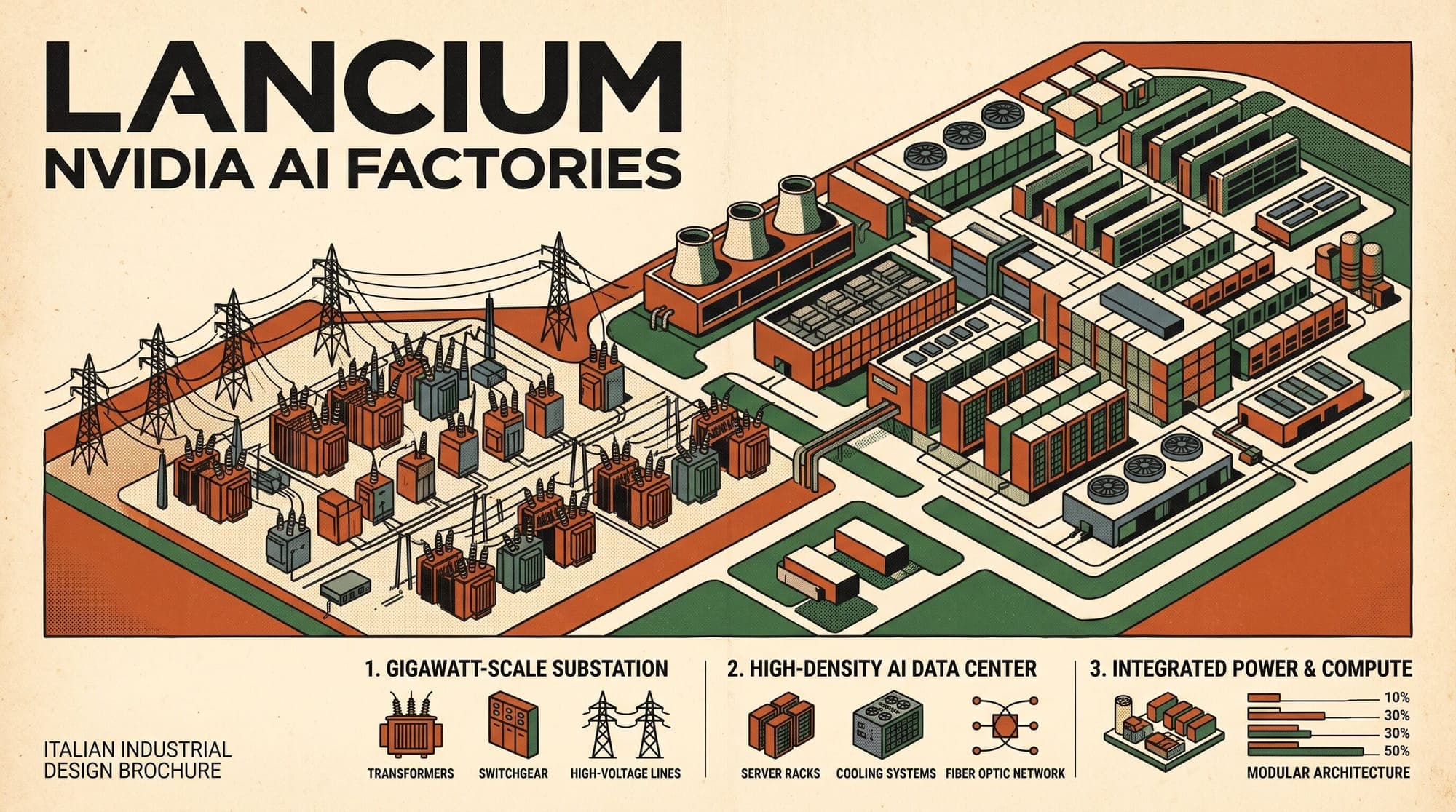
  2. Lancium and NVIDIA Partner on Gigawatt-Scale AI Factories Across 15GW Pipeline

    Texas energy infrastructure provider Lancium has entered a strategic partnership with NVIDIA to deploy NVIDIA's full AI factory technology stack across Lancium's multi-gigawatt clean energy data center portfolio. As part of the transaction, NVIDIA has taken a direct equity stake in Lancium, which is backed by funds managed by Blackstone Energy Transition Partners and Blackstone Multi-Asset Investing. The partnership combines Lancium's 4 gigawatts of operational and leased capacity and a pipelin

    AI
    2 min read
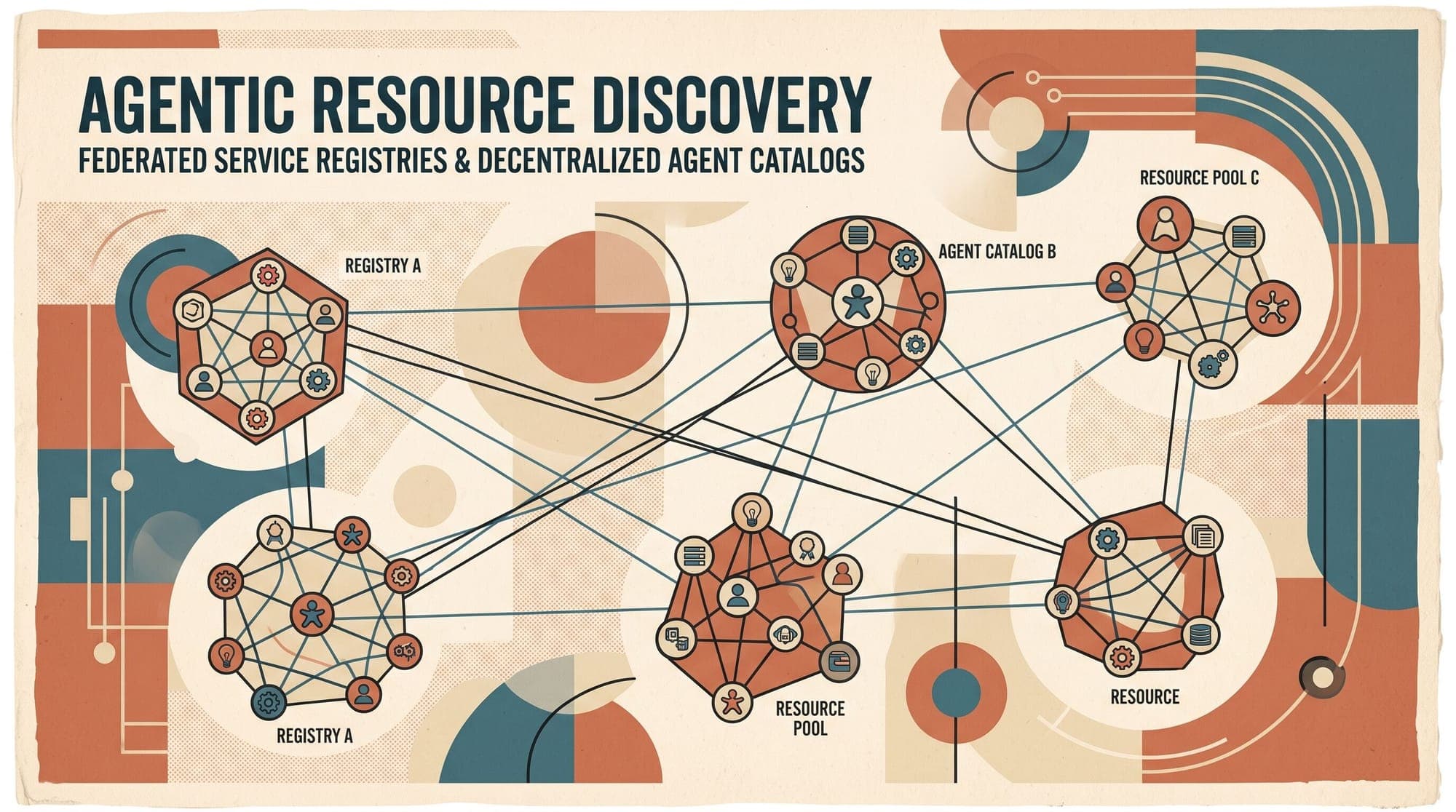
  3. AWS Backs Open Agentic Resource Discovery Specification for Agent Registry Federation

    Amazon Web Services announced support for the Agentic Resource Discovery (ARD) open specification, detailing how the federation standard will integrate with AWS Agent Registry, its managed catalog for AI agents, tools, and skills currently in preview within Amazon Bedrock AgentCore. The alignment targets cross-platform discovery across heterogeneous enterprise stacks. While AWS Agent Registry provides centralized indexing and access controls within an AWS environment, real-world deployments fre

    AWS
    2 min read
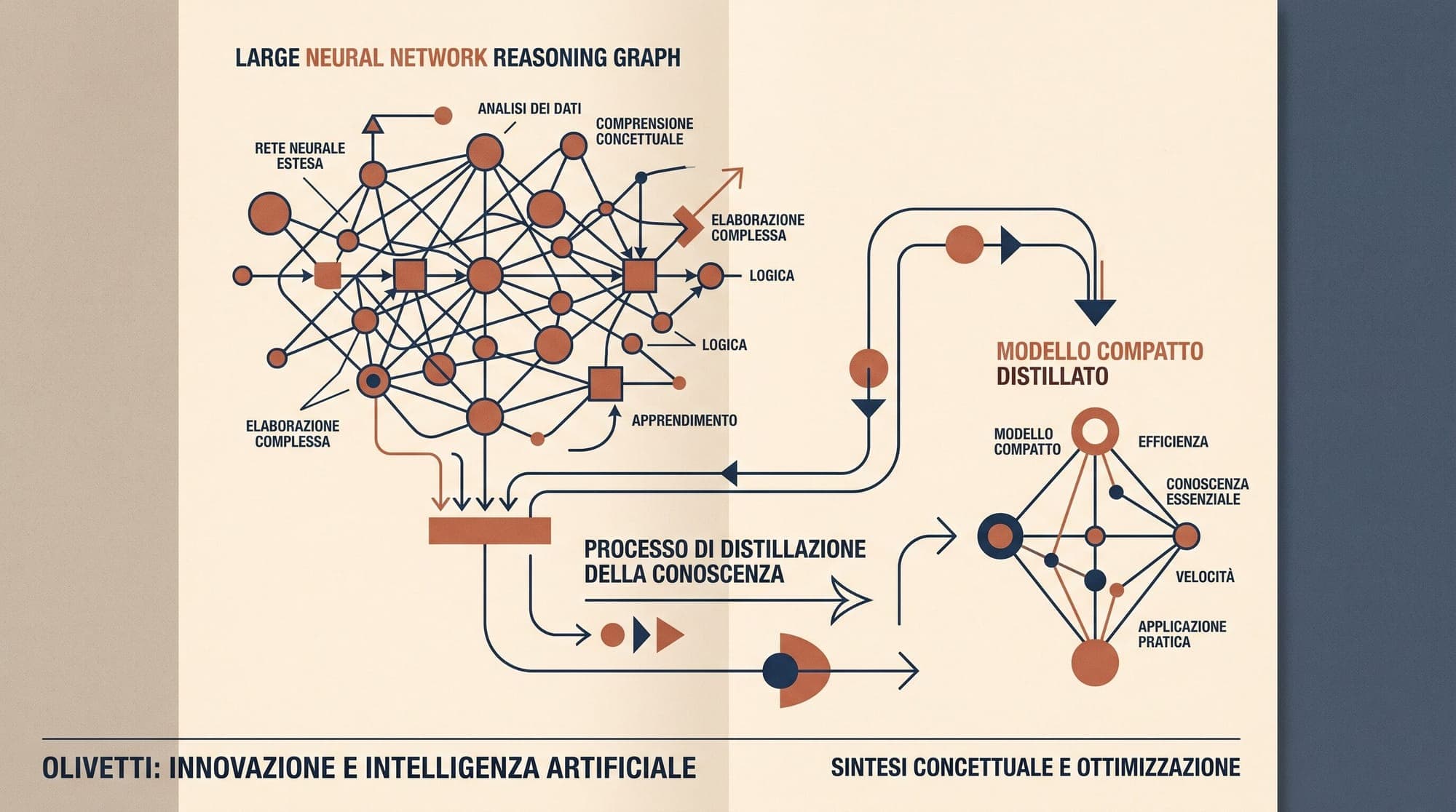
  4. Reasoning Model Distillation in Production: Trajectory Curation, Thinking-Token Formatting, Over-Thinking Mitigation, and Student RL Alignment

    Reasoning Model Distillation in Production: Trajectory Curation, Thinking-Token Formatting, Over-Thinking Mitigation, and Student RL Alignment Distilling frontier reasoning models into compact language models has emerged as one of the most effective strategies for deploying low-latency, cost-efficient inference pipelines. Rather than training small models purely on input-output answer pairs, reasoning distillation transfers the intermediate exploration, backtracking, and verification trajectori

    LLM
    5 min read
  5. Alignment and Uniformity on the Hypersphere: How Geometric Losses Govern Contrastive Representation Learning

    Alignment and Uniformity on the Hypersphere: The Geometric Foundations of Contrastive Representation Learning Contrastive representation learning serves as the foundational objective behind modern neural embeddings, powering dense retrieval systems, visual-language models such as CLIP, and metric learning pipelines. While early literature justified contrastive learning through the InfoMax principle (maximizing mutual information between augmented views), theoretical and empirical analyses have

    Machine Learning
    11 min read
  6. Valor and Point72 Back General Intuition at $6B Valuation for Physical AI and Robotics

    New York-based foundation model startup General Intuition is in discussions to secure new funding at a $6 billion pre-money valuation, according to sources familiar with the matter. The financing round includes new backing from Valor Equity Partners, Point72 Ventures, and Seven Seven Six, alongside continued participation from existing investors Khosla Ventures and General Catalyst. The potential valuation represents a steep increase from the company's previous financing round, which raised $32

    AI
    1 min read
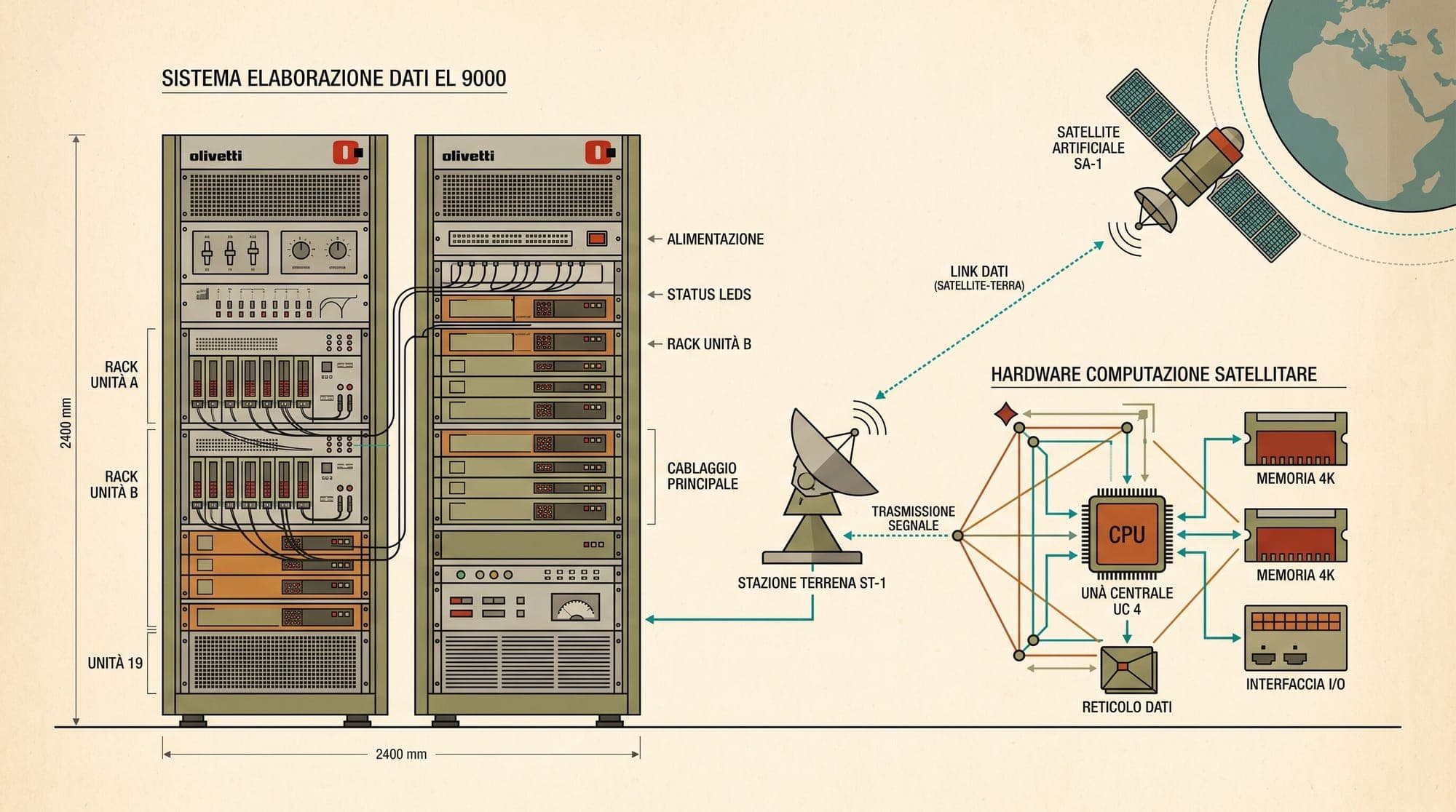
  7. SpaceXAI Deploys NVIDIA Vera CPUs for Gigawatt-Scale Agentic Infrastructure and Starmind Satellite

    SpaceXAI has selected NVIDIA's Vera central processing units to handle the CPU-bound orchestration and execution workloads powering its Grok models as its computing infrastructure expands toward gigawatts of capacity. The deployment spans both ground-based data centers and orbital systems, with SpaceXAI planning to base its first-generation Starmind AI satellite on an optimized Vera Rubin NVL72 rack architecture. While GPU clusters handle core model training and forward passes, agentic AI workf

    AI
    2 min read
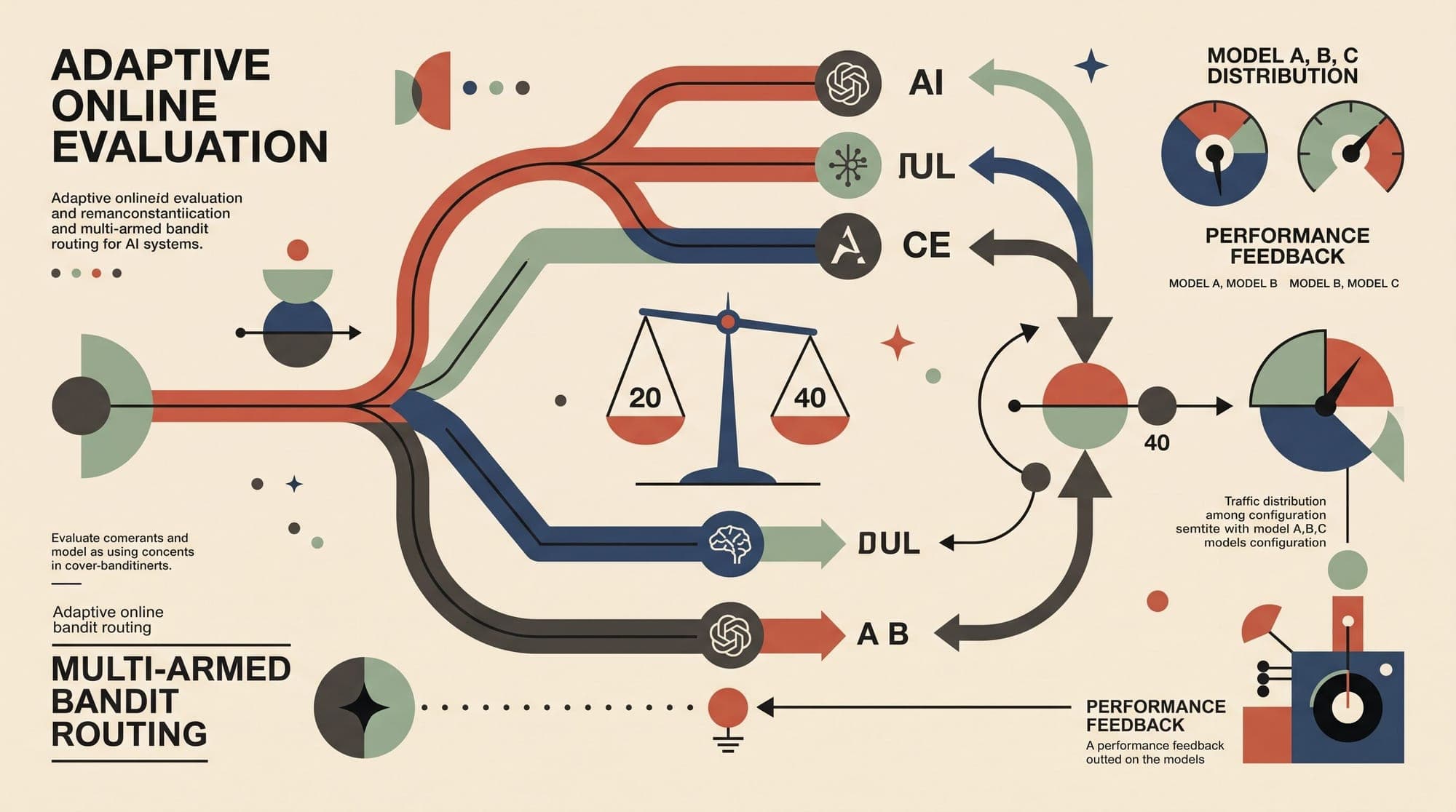
  8. Online Evaluation and Multi-Armed Bandit Routing in Production LLM Systems: Interleaving, Counterfactual Estimation, and Adaptive Traffic Allocation

    Online Evaluation and Multi-Armed Bandit Routing in Production LLM Systems: Interleaving, Counterfactual Estimation, and Adaptive Traffic Allocation Static offline benchmarks such as MMLU, HumanEval, and synthetic LLM-as-a-judge evaluation pipelines have become standard fixtures in modern AI development. However, production engineering teams frequently observe that offline benchmark improvements fail to translate into tangible user satisfaction or business outcomes. Static evaluation suites suf

    AI
    12 min read
  9. Teacher Forcing and Exposure Bias in Autoregressive Models: Mathematical Foundations, Compounding Errors, and Mitigation Strategies

    Teacher Forcing and Exposure Bias in Autoregressive Models: Mathematical Foundations, Compounding Errors, and Mitigation Strategies Autoregressive sequence models form the computational backbone of modern language modeling, code synthesis, and multi-step reasoning agents. From decoder-only Transformers like GPT and Claude to recurrent architectures, these systems factorize the joint probability of a sequence of tokens $y = (y_1, y_2, \dots, y_T)$ into a product of conditional probabilities: $$

    AI
    10 min read
  10. Study Exposes Citation Monoculture Across Frontier LLMs as Recursive Drafting Compounds Bias

    Study Exposes Citation Monoculture Across Frontier LLMs as Recursive Drafting Compounds Bias As large language models take over literature reviews and automated research workflows, a collaborative study from UT Austin, Stevens Institute of Technology, Washington University in St. Louis, Rice University, and the University of Notre Dame demonstrates that frontier models suffer from severe citation monoculture. Even when all identifying metadata is removed, LLMs across vendors converge on a narro

    research
    2 min read