Archive / page 54 of 123

Latest articles, page 54

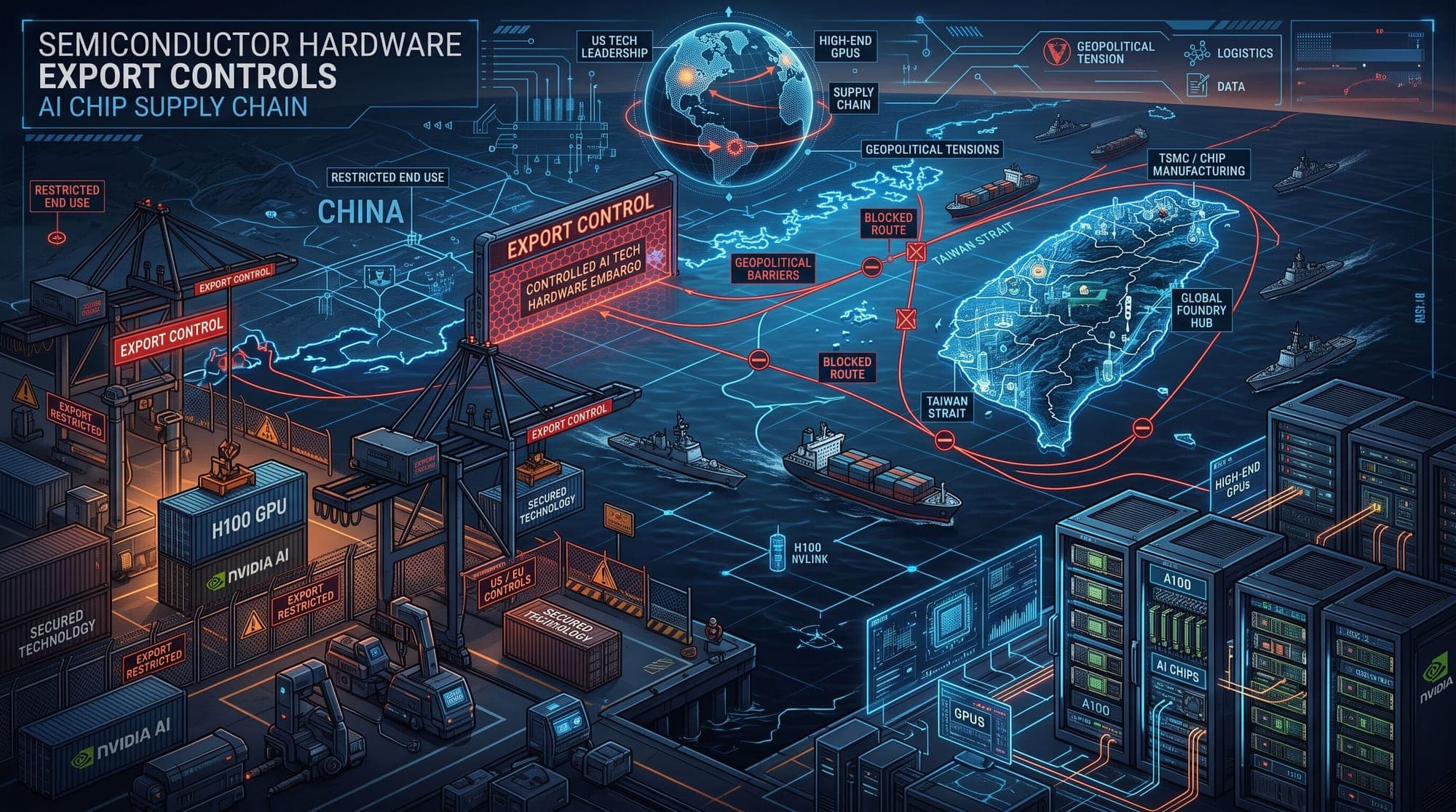
  1. Taiwan Indicts Nine in B300 AI Server Diversion Scheme to China

    Taiwan Indicts Nine in B300 AI Server Diversion Scheme to China Taiwan prosecutors have indicted nine individuals for allegedly circumventing international export controls to smuggle advanced AI servers equipped with Nvidia B300 GPUs into mainland China. The indictment, issued on August 24, 2026, by the Keelung District Prosecutors' Office, details an illicit sales channel that operated by falsifying compliance verifications from within the hardware supply chain. The defendants include a distr

    Hardware
    2 min read
  2. Virtual Memory for AI Agents in Production: Context Window Paging, Working Set Estimation, and Hierarchical Storage Architectures

    Virtual Memory for AI Agents in Production: Context Window Paging, Working Set Estimation, and Hierarchical Storage Architectures As autonomous AI agents shift from single-turn chat interactions to long-horizon workflows spanning days, weeks, or millions of execution steps, managing context has become the primary operational bottleneck. While modern foundation models support nominal context windows ranging from 128k to over 1M tokens, treating the active context window as an unbounded append-on

    AI
    9 min read
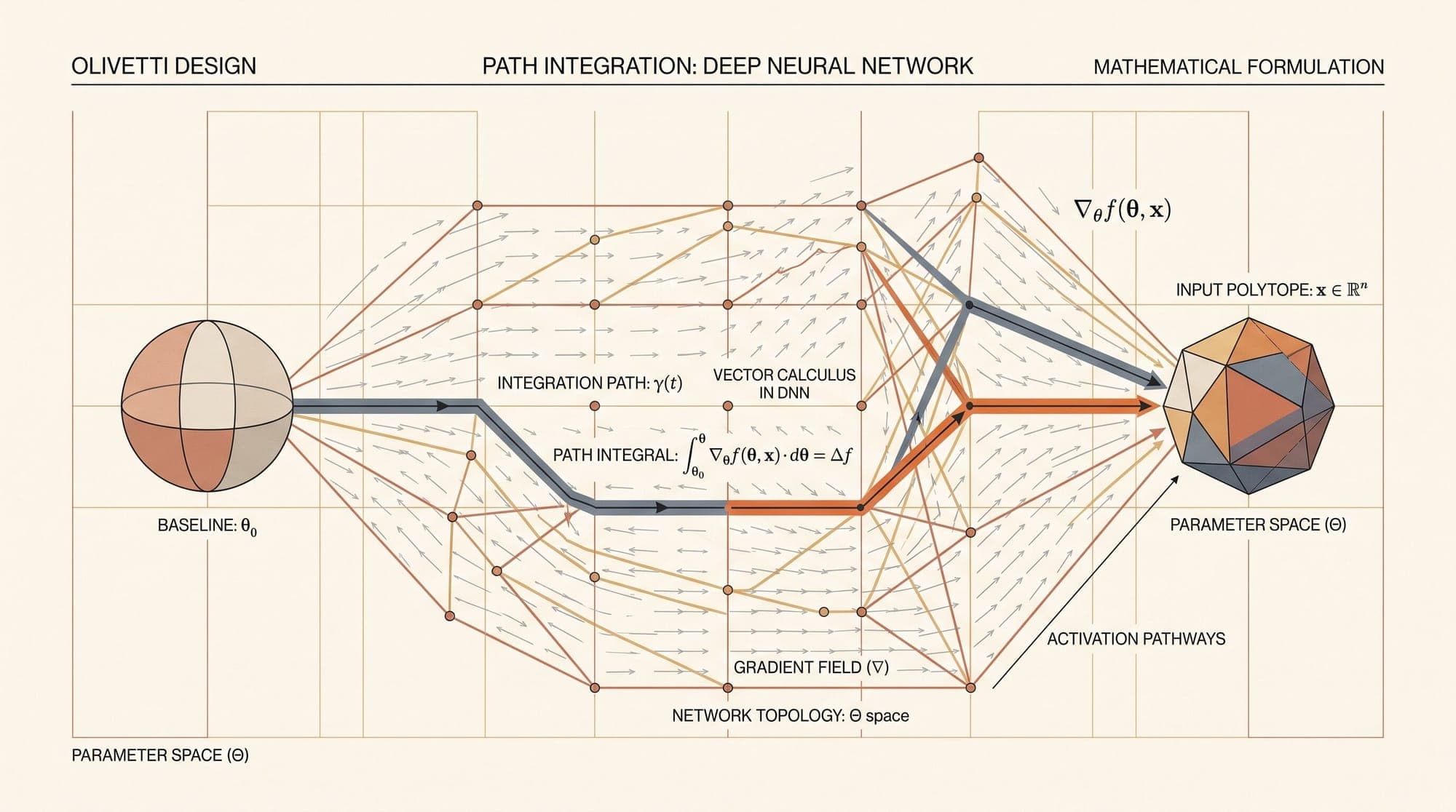
  3. Integrated Gradients: How Axiomatic Attribution Solves the Gradients-at-Saturation Problem in Deep Neural Networks

    Integrated Gradients: How Axiomatic Attribution Solves the Gradients-at-Saturation Problem in Deep Neural Networks Feature attribution methods in deep learning aim to answer a fundamental interpretability question: given an input vector and a trained neural network, how much did each input dimension contribute to the model's final output score? In natural language processing and computer vision, practitioners routinely need to identify which input tokens, pixels, or tabular variables drove a sp

    AI
    10 min read
  4. Anthropic Updates Claude Tag in Slack to Ingest Full Channel Context for Unprompted Interventions

    Anthropic has rolled out a major architecture update to Claude Tag, its enterprise agent embedded inside Slack workspaces. The update shifts the agent from evaluating isolated chat messages to processing complete conversation histories and multi-turn channel state, allowing the model to determine autonomously when to intervene in team discussions without explicit user mentions. According to internal evaluation data shared by Anthropic, eliminating single-message evaluation in favor of full-cont

    Anthropic
    2 min read
  5. Thomson Reuters Deploys In-House Legal LLM 'Thomson' on Qwen Foundation to Cut API Dependency

    Thomson Reuters has unveiled "Thomson," its first proprietary domain-specific language model built specifically for legal workflows. Developed over two years at an investment of roughly $40 million in engineering and compute infrastructure, the model is designed to perform specialized legal analysis without ongoing dependence on third-party frontier API providers like OpenAI or Anthropic. The model is built on top of Alibaba's open-weight Qwen architecture, utilizing Qwen3.5-397B as its foundat

    Legal AI
    3 min read
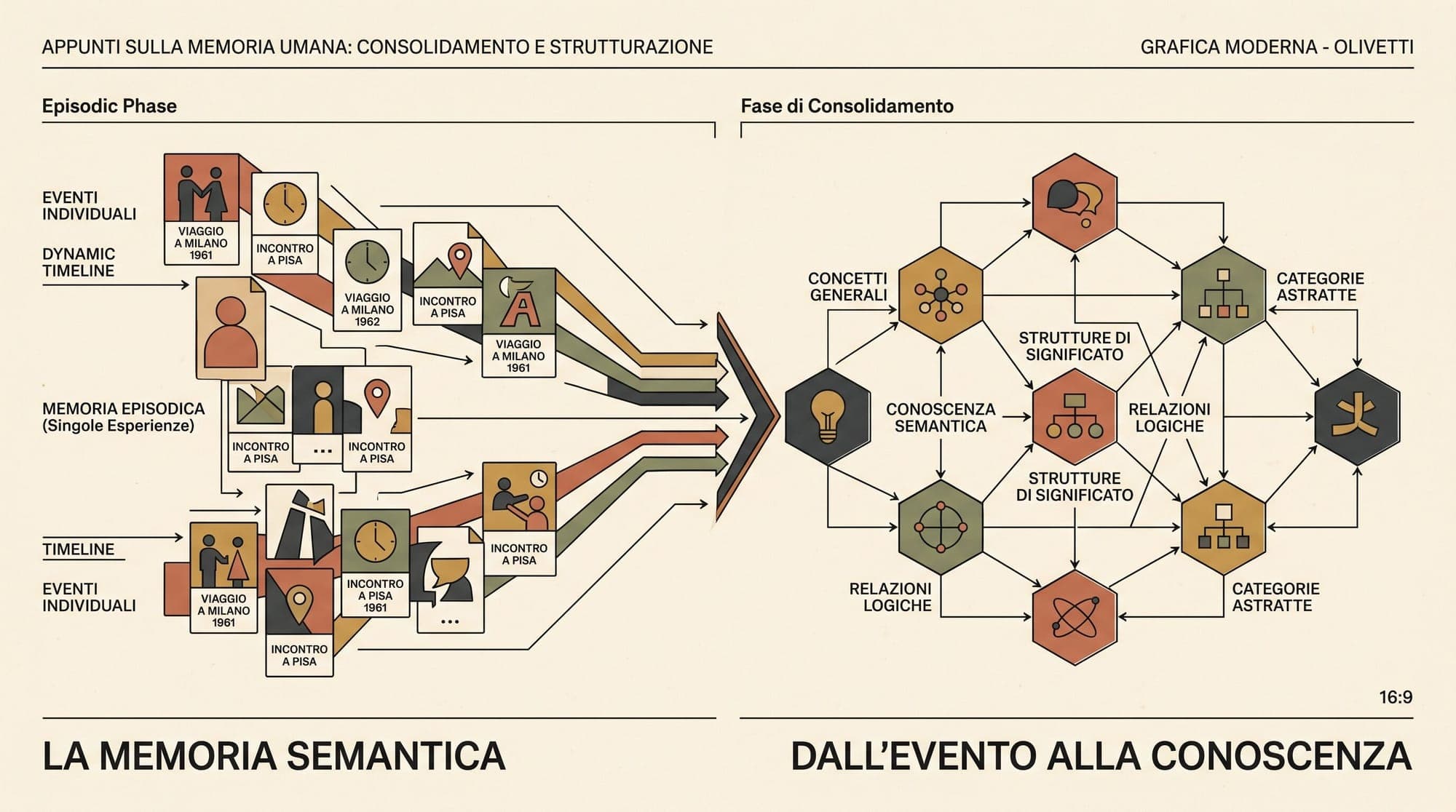
  6. Semantic Memory Consolidation in Production AI Agents: Architecture, Episodic Decay Curves, and Procedural Knowledge Distillation

    Long-running autonomous AI agents accumulate hundreds of interaction turns, tool executions, and environment observations across extended deployments. Naive implementations store these raw episodic traces directly in vector databases, retrieving past interactions via dense semantic similarity. In production, this append-only strategy degrades quickly: retrieval queries surface outdated facts, contradictory state assertions pollute prompt context, and the agent fails to extract generalizable prob

    AI
    7 min read
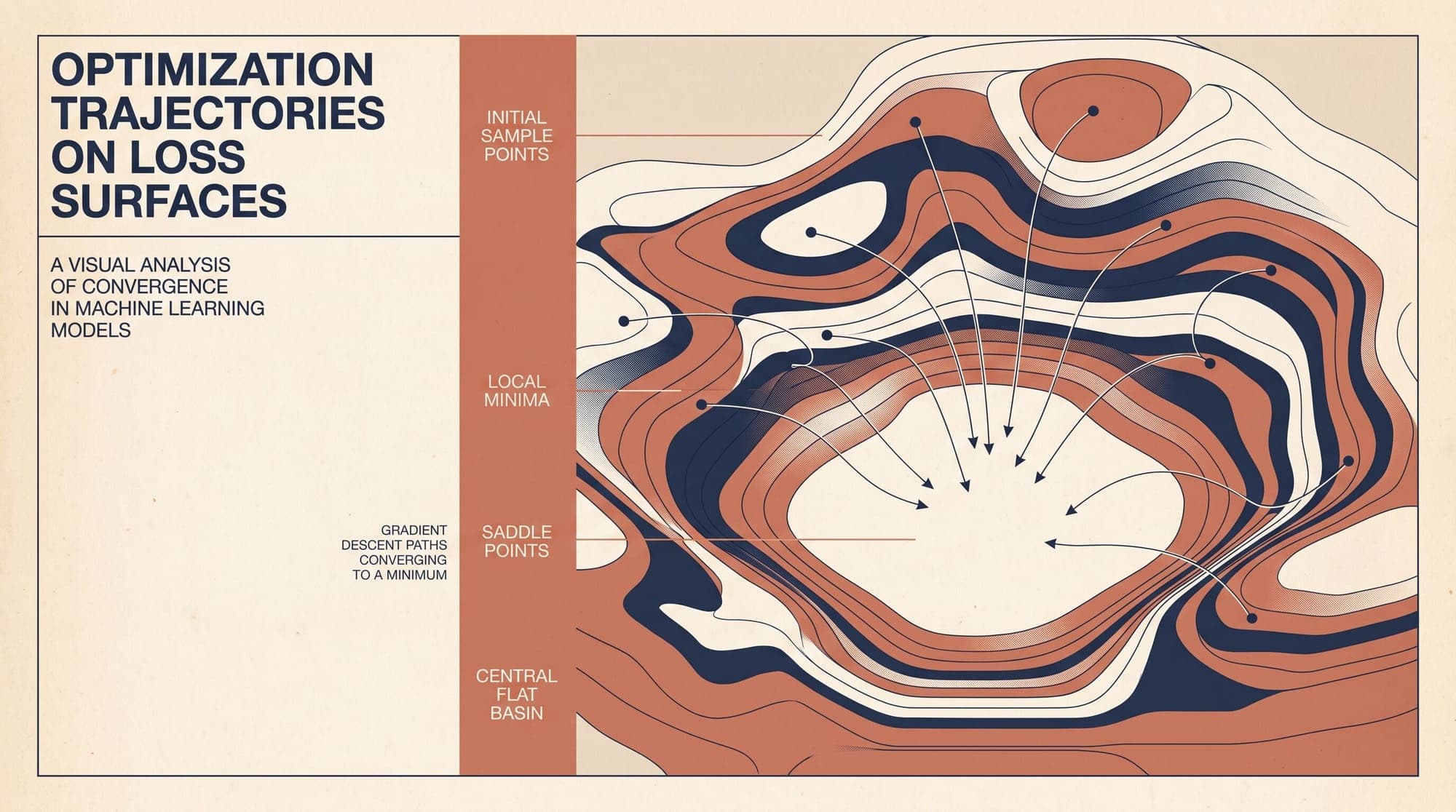
  7. Stochastic Weight Averaging: How Geometric Ensembling Finds Flatter Optima and Improves Generalization

    Stochastic Weight Averaging (SWA): How Geometric Ensembling Finds Flatter Optima and Improves Generalization During the optimization of deep neural networks, standard Stochastic Gradient Descent (SGD) and adaptive optimizers often struggle to find solutions that generalize robustly to unseen data. While learning rate decay allows optimizers to settle into local minima on the empirical training loss surface, empirical and theoretical analyses reveal that standard gradient descent tends to halt n

    AI
    8 min read
  8. Ireland Reconsiders 1999 Nuclear Ban as Data Centers Consume 25% of Grid Power

    Irish lawmakers are moving to reconsider the country's statutory ban on nuclear energy as rapidly expanding data centers push national electricity demand to record levels. Data centers in Ireland now consume approximately 21% to 25% of the state's metered electricity, surpassing the combined consumption of all urban households. Grid operators project that share could rise to 30% or more by 2032, driven by hyperscale cloud expansions and artificial intelligence infrastructure. The mounting strai

    Infrastructure
    2 min read
  9. Ukrainian Officials Identify Nvidia Jetson Orin Modules in Autonomous Russian Strike Drones

    Ukrainian forensic examiners inspecting the wreckage of Russian strike drones have recovered Nvidia Jetson Orin microcomputers, confirming that Moscow is deploying commercial edge-computing hardware to run autonomous targeting systems on the battlefield. The findings, detailed in investigations by Ukrainian military specialists and reported by The New York Times, indicate that Russian engineers have integrated off-the-shelf edge AI accelerators into modified uncrewed aerial vehicles, including

    Hardware
    2 min read
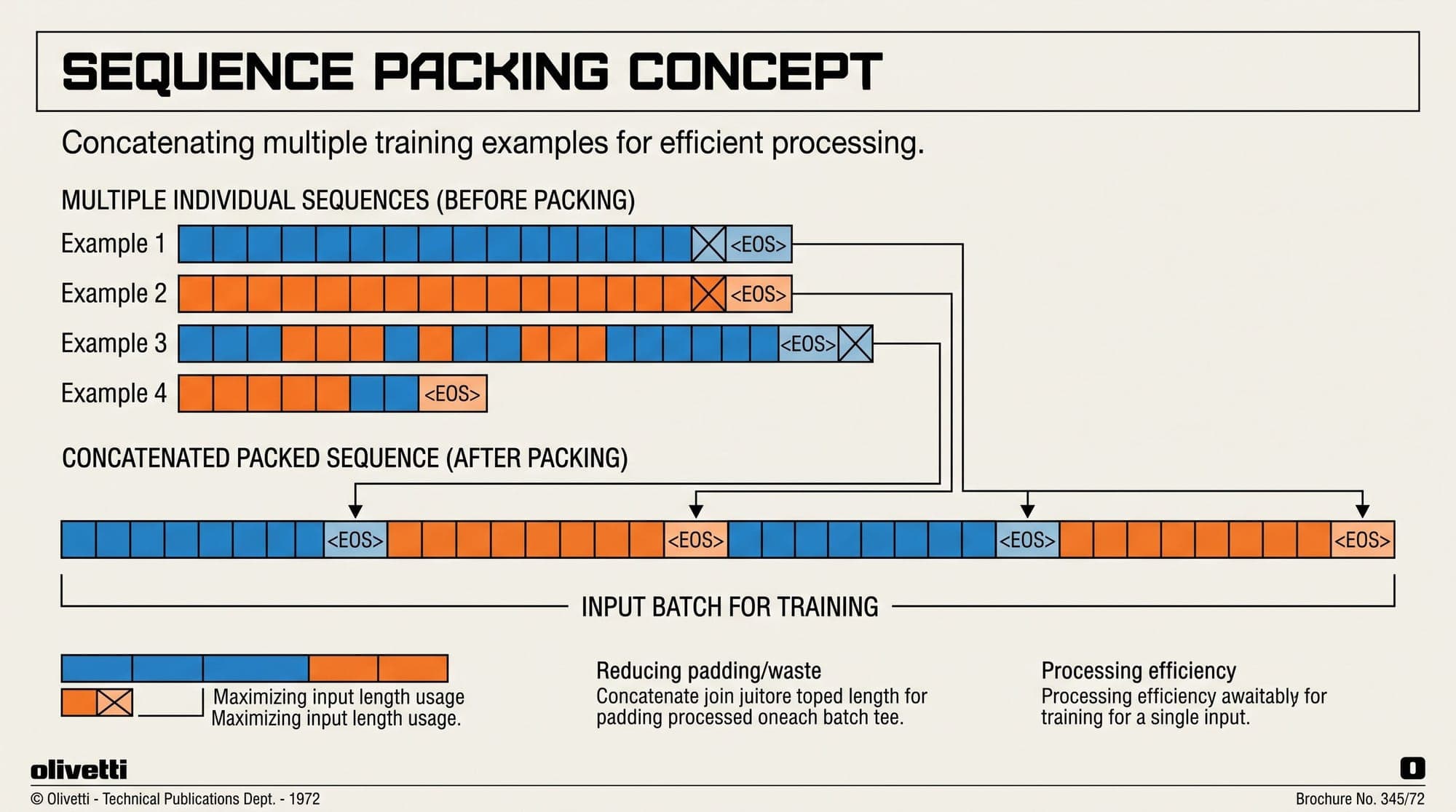
  10. Sequence Packing and Loss Masking in Production SFT: Architecture, Trade-Offs, and Framework Implementations

    Sequence Packing and Loss Masking in Production SFT: Architecture, Trade-Offs, and Framework Implementations Supervised fine-tuning pipelines routinely waste 40–70% of FLOPs on padding tokens. Sequence packing eliminates that waste by concatenating multiple training examples into a single long tensor, but it introduces three hard constraints: attention must not leak across example boundaries, loss must be computed only on the intended target spans (typically assistant responses), and the data c

    AI
    6 min read