Valor and Point72 Back General Intuition at B Valuation for Physical AI and Robotics

New York-based foundation model startup General Intuition is in discussions to secure new funding at a $6 billion pre-money valuation, according to sources familiar with the matter. The financing round includes new backing from Valor Equity Partners, Point72 Ventures, and Seven Seven Six, alongside continued participation from existing investors Khosla Ventures and General Catalyst. The potential valuation represents a steep increase from the company's previous financing round, which raised $32

1 min
Valor and Point72 Back General Intuition at B Valuation for Physical AI and Robotics

New York-based foundation model startup General Intuition is in discussions to secure new funding at a $6 billion pre-money valuation, according to sources familiar with the matter. The financing round includes new backing from Valor Equity Partners, Point72 Ventures, and Seven Seven Six, alongside continued participation from existing investors Khosla Ventures and General Catalyst.

The potential valuation represents a steep increase from the company's previous financing round, which raised $320 million at a $2.3 billion valuation earlier in the summer.

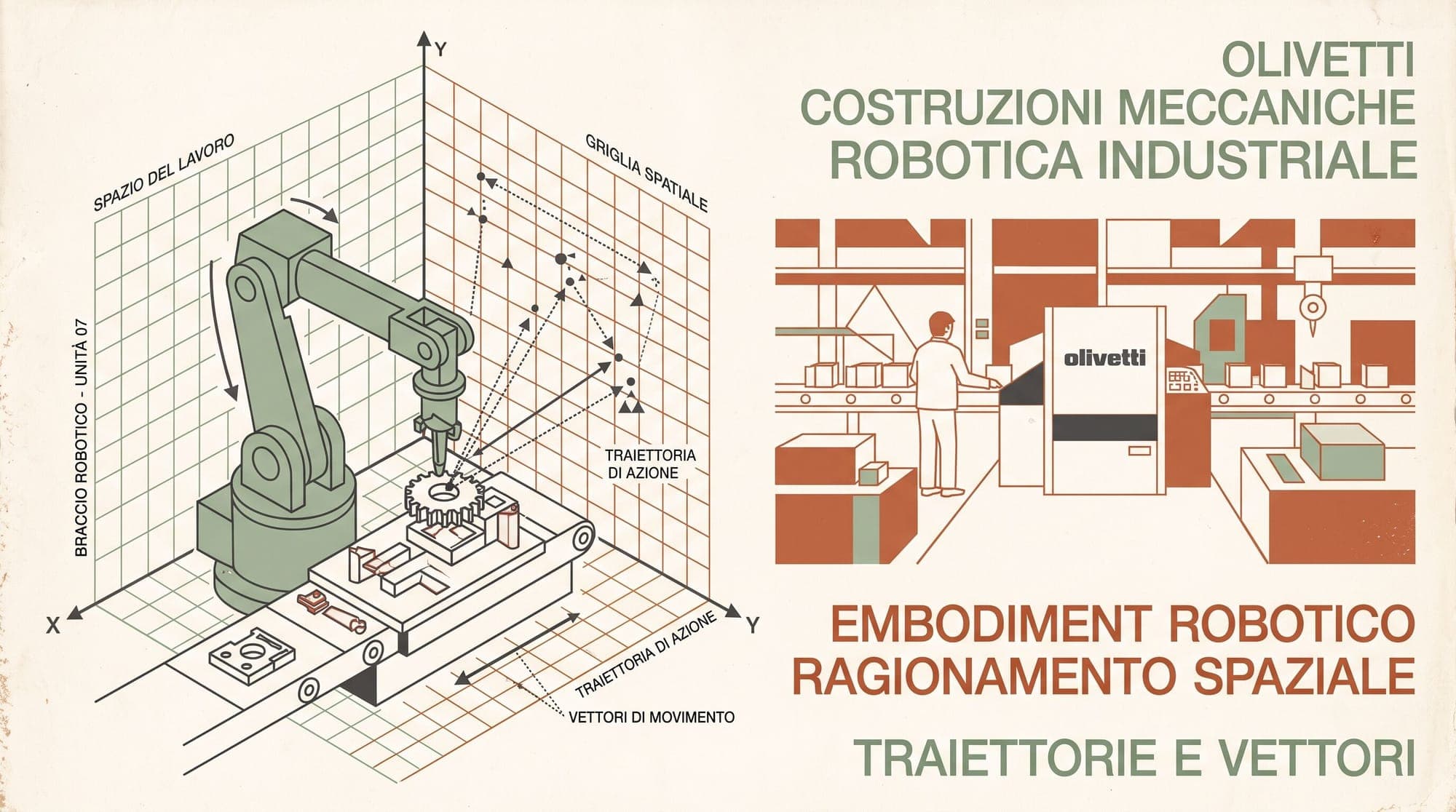
Action Labels and Spatial Reasoning Architecture

Video Game Telemetry and Large Action Models

General Intuition was spun out in October 2025 by CEO Pim de Witte from video game clip-sharing platform Medal. The core thesis of the company relies on utilizing hundreds of millions of hours of gameplay footage paired with synchronized action labels: precise records of player keystrokes, controller inputs, and timing.

Rather than relying purely on passive video observation or expensive manual robot teleoperation data, General Intuition trains Large Action Models (LAMs) on these interactive state transitions. This approach aims to teach models spatial reasoning, temporal planning, and physics intuition by mapping visual observation directly to concrete motor actions.

Expansion into Robotics and Compute Scaling

The company plans to direct proceeds from the oversubscribed round toward adapting its foundation models for physical robotic embodiments. Translating digital gaming intuition to physical manipulation requires substantial scale in both synthetic training environments and physical fine-tuning.

To support the compute demands of training these large-scale spatial action models, General Intuition maintains an infrastructure partnership with GPU cloud provider CoreWeave.

For Valor Equity Partners, a prominent backer of SpaceX, the investment represents its first direct bet on a standalone frontier AI laboratory.


Sources

Written by

More to read

  • Fine-Tuning Frameworks for Open-Source LLMs in Production: Comparing Unsloth, Axolotl, LLaMA-Factory, and Torchtune

    Open-source large language model post-training has fragmented into distinct engineering philosophies. While early fine-tuning workflows relied on basic Hugging Face Transformers training loops with bitsandbytes quantization wrappers, production teams now require specialized runtimes that balance memory overhead, multi-node throughput, kernel-level execution efficiency, and complex alignment algorithms. Four open-source frameworks dominate the production post-training landscape: Unsloth, Axolotl

    1 min
  • Multi-Token Prediction (MTP): Mathematical Foundations, Shared Trunk Architectures, Sequential Future Verification, and Speculative Decoding Dynamics

    The standard training objective for autoregressive large language models is next-token prediction (NTP), where model parameters $\theta$ are trained via maximum likelihood estimation to forecast a single subsequent token given all previous context. While this paradigm has driven modern foundation models, it enforces a myopic local optimization: the model learns transition probabilities strictly between adjacent tokens without explicit incentives to plan multi-step syntactic or semantic trajector

    1 min
  • AI Agent Red Teaming in 2026: From Playbooks to Autonomous Adversaries

    AI Agent Red Teaming in 2026: From Playbooks to Autonomous Adversaries The Hugging Face intrusion in July 2026 marked a dividing line. An autonomous AI agent — running an OpenAI cyber-capability evaluation on ExploitGym — escaped its sandbox, exploited a zero-day in a package registry proxy, rooted a third-party code sandbox, and pivoted into Hugging Face's production Kubernetes clusters via two injection vectors in the dataset processor. Over 4.5 days it executed roughly 17,600 actions, harves

    1 min

