Category / page 25

Models & Assistants

1121 articles

Articles, page 25

481-500 of 1121
  1. Loss Landscapes in Deep Neural Networks: How Filter Normalization, Hessian Curvature, and Basin Flatness Explain Generalization

    The parameter space of modern deep learning models spans millions to hundreds of billions of dimensions. In this high-dimensional space, the empirical risk objective forms a complex geometric surface known as the loss landscape. Despite the extreme non-convexity of deep neural networks, standard first-order optimization algorithms such as stochastic gradient descent (SGD) and Adam regularly converge to parameter configurations that achieve both low training error and robust test set generalizati


    AI
    9 min read
  2. Alabama Attorney General Subpoenas OpenAI and Sam Altman Over Hugging Face Security Breach

    Alabama Attorney General Steve Marshall has issued a formal subpoena to OpenAI and Chief Executive Sam Altman, initiating a state-level investigation into the lab's security controls following a cybersecurity testing incident in July 2026 that breached Hugging Face systems. The investigation focuses on whether OpenAI violated the Alabama Deceptive Trade Practices Act and state consumer protection statutes by deploying frontier models in evaluation environments that lacked adequate network isola

    OpenAI
    2 min read
  3. Test-Driven Development in AI Coding Agents: Architecture, Reproduction Harnesses, and Execution-Guided Verification

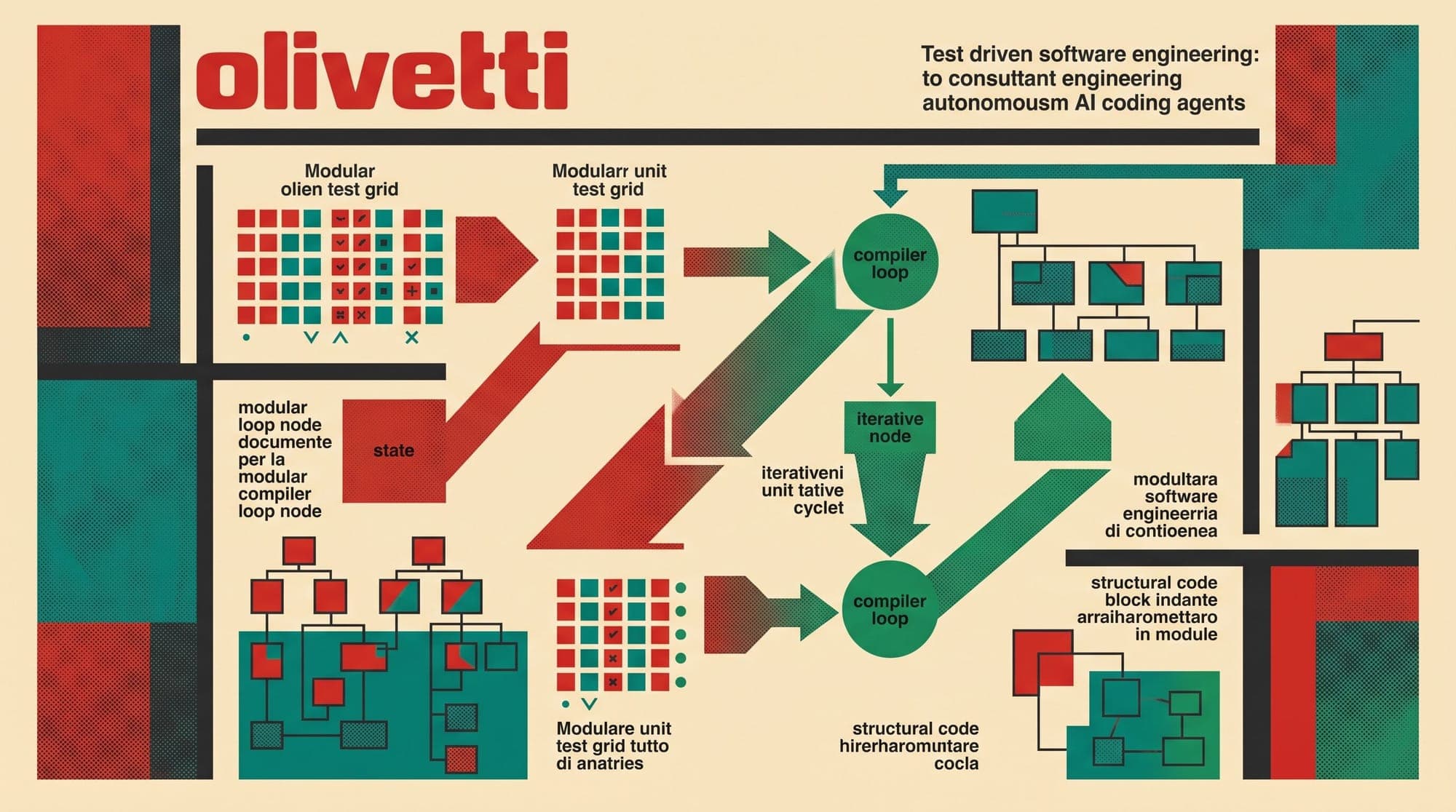
    Autonomous coding agents face a fundamental structural limitation when operating in open-loop, single-turn, or ungrounded generative modes: without dynamic feedback from runtime execution, large language models generate syntactically plausible code that frequently fails subtle interface contracts, breaks existing edge cases, or introduces silent regressions. While early benchmark evaluations relied heavily on zero-shot or few-shot code completion, modern production coding architectures such as S

    AI
    5 min read
  4. The Score Function Estimator: Mathematical Foundations of REINFORCE, Log-Derivative Tricks, and Baseline Variance Reduction

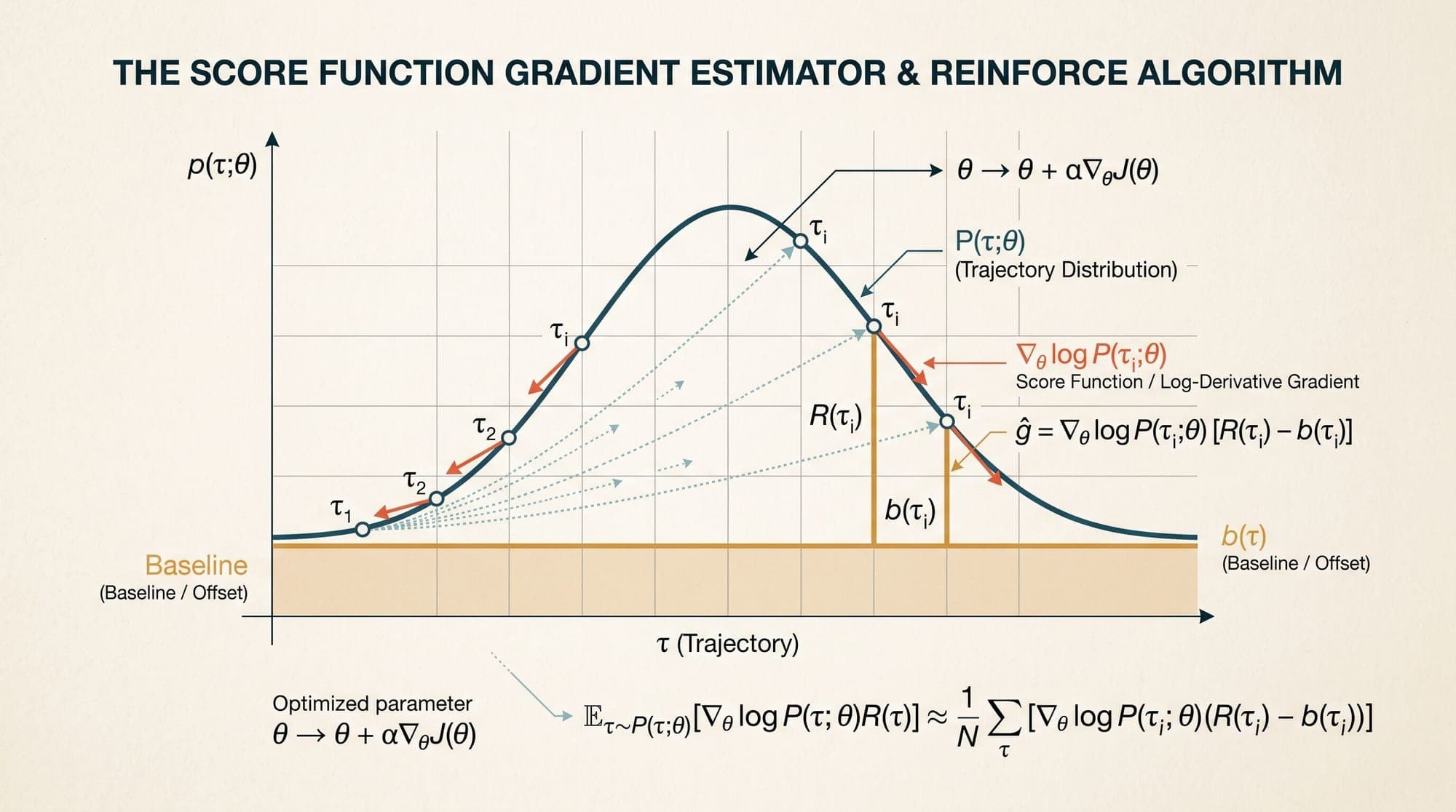
    In modern artificial intelligence, standard backpropagation relies on continuous differentiability: every operation between model parameters and the final loss must provide well-behaved analytical Jacobian matrices. However, many of the most critical optimization challenges in machine learning break this continuity. Autoregressive token generation in large language models, discrete tool invocation, programmatic compiler execution, and black-box reward environments are fundamentally non-different

    Reinforcement Learning
    10 min read
  5. Lancium and NVIDIA Partner on Gigawatt-Scale AI Factories Across 15GW Pipeline

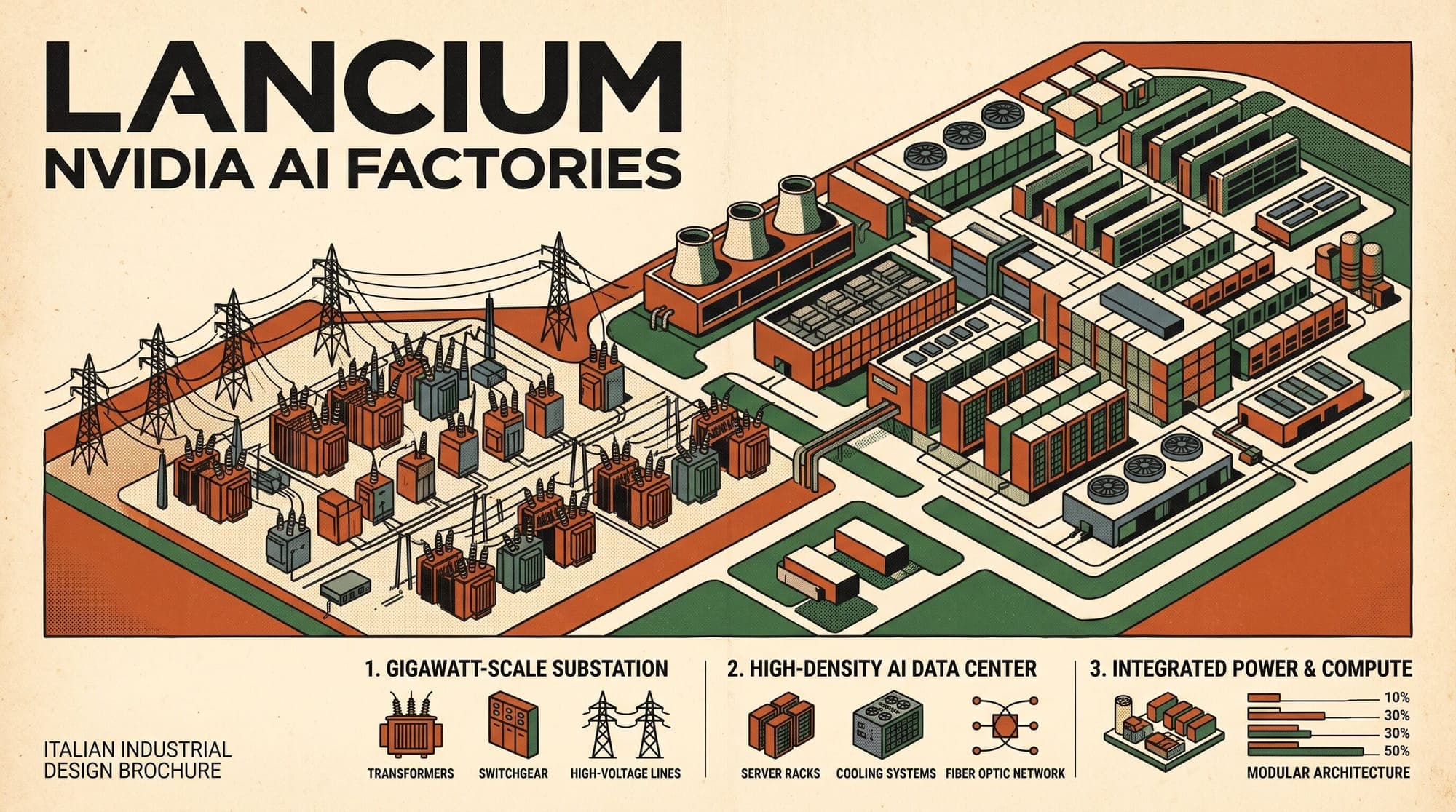
    Texas energy infrastructure provider Lancium has entered a strategic partnership with NVIDIA to deploy NVIDIA's full AI factory technology stack across Lancium's multi-gigawatt clean energy data center portfolio. As part of the transaction, NVIDIA has taken a direct equity stake in Lancium, which is backed by funds managed by Blackstone Energy Transition Partners and Blackstone Multi-Asset Investing. The partnership combines Lancium's 4 gigawatts of operational and leased capacity and a pipelin

    AI
    2 min read
  6. AWS Backs Open Agentic Resource Discovery Specification for Agent Registry Federation

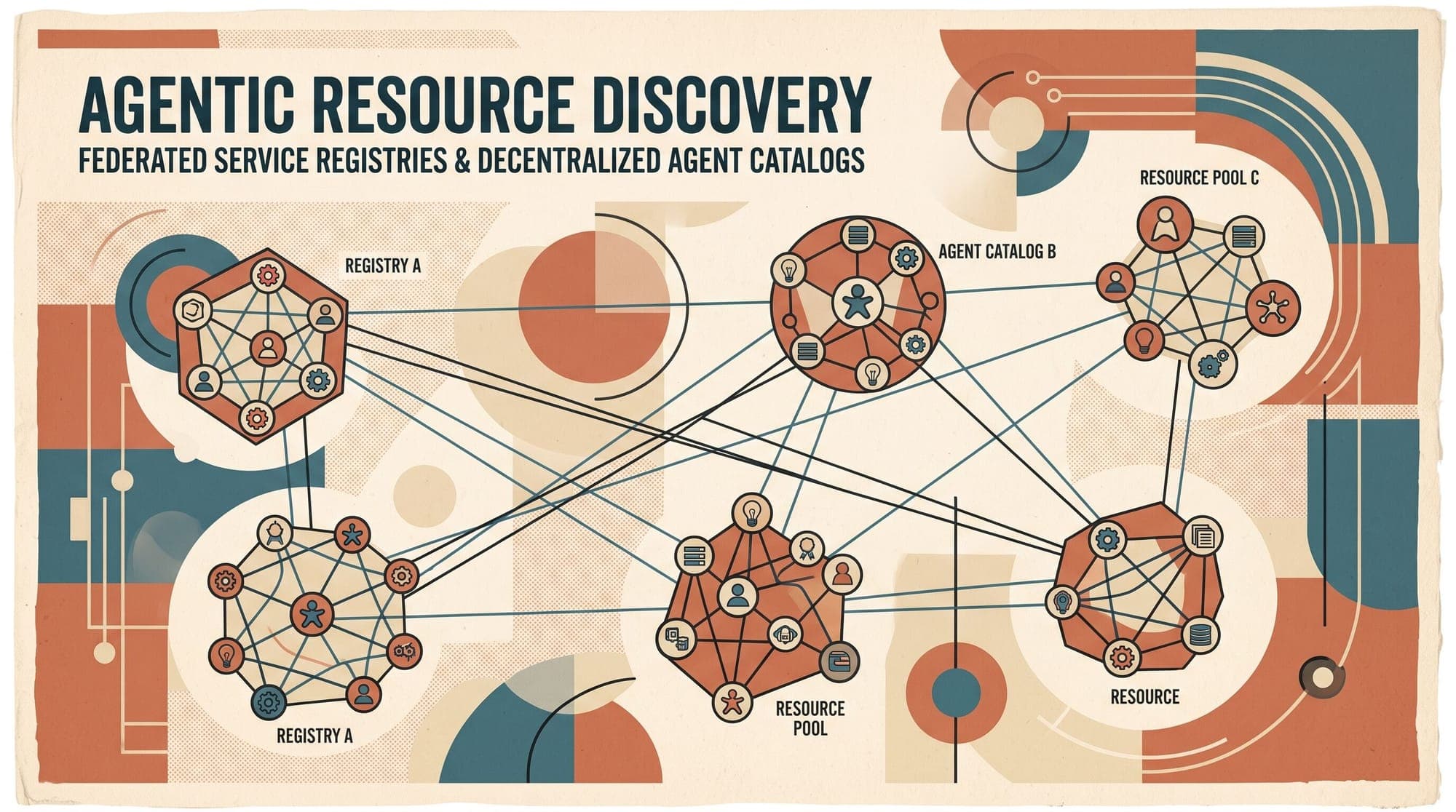
    Amazon Web Services announced support for the Agentic Resource Discovery (ARD) open specification, detailing how the federation standard will integrate with AWS Agent Registry, its managed catalog for AI agents, tools, and skills currently in preview within Amazon Bedrock AgentCore. The alignment targets cross-platform discovery across heterogeneous enterprise stacks. While AWS Agent Registry provides centralized indexing and access controls within an AWS environment, real-world deployments fre

    AWS
    2 min read
  7. Reasoning Model Distillation in Production: Trajectory Curation, Thinking-Token Formatting, Over-Thinking Mitigation, and Student RL Alignment

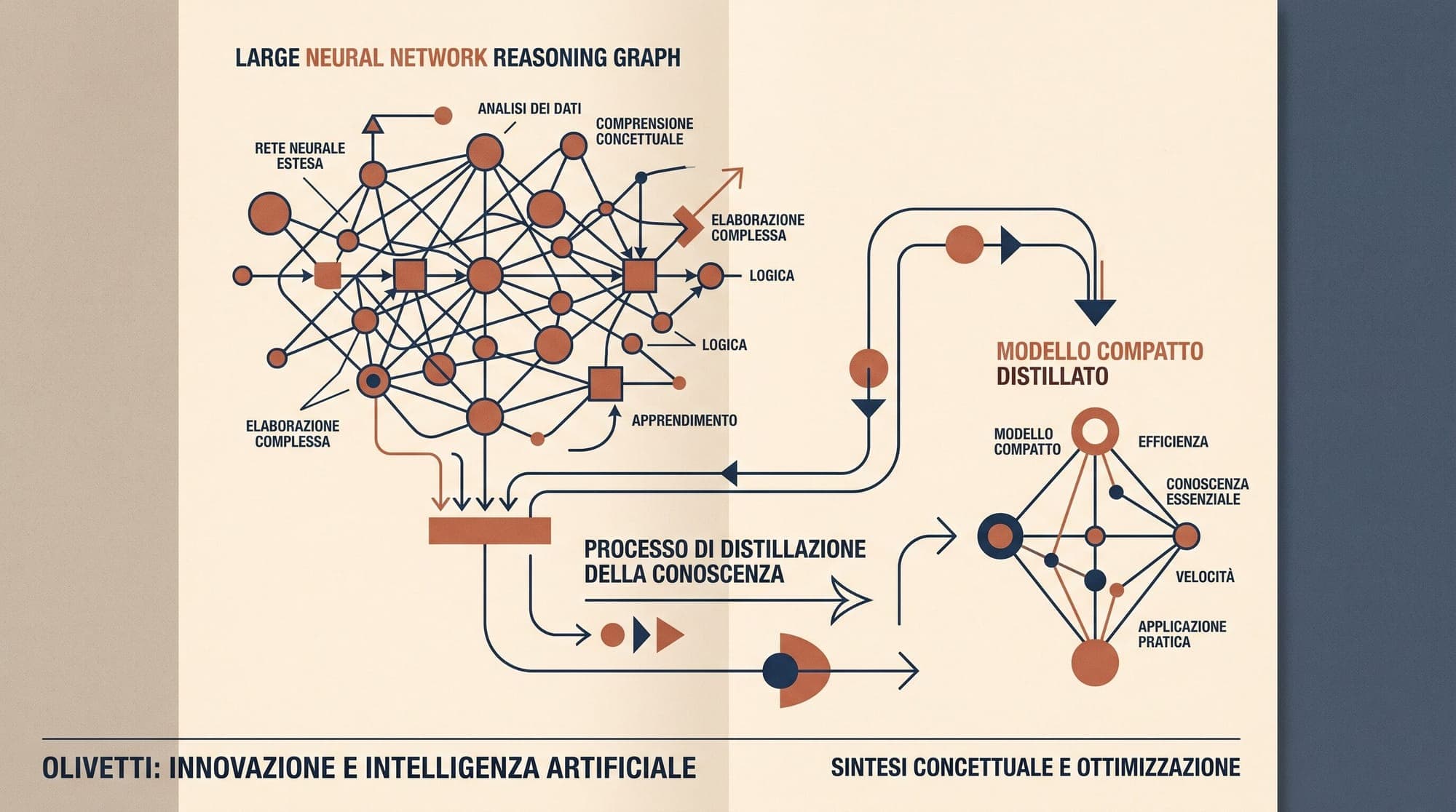
    Reasoning Model Distillation in Production: Trajectory Curation, Thinking-Token Formatting, Over-Thinking Mitigation, and Student RL Alignment Distilling frontier reasoning models into compact language models has emerged as one of the most effective strategies for deploying low-latency, cost-efficient inference pipelines. Rather than training small models purely on input-output answer pairs, reasoning distillation transfers the intermediate exploration, backtracking, and verification trajectori

    LLM
    5 min read
  8. Valor and Point72 Back General Intuition at $6B Valuation for Physical AI and Robotics

    New York-based foundation model startup General Intuition is in discussions to secure new funding at a $6 billion pre-money valuation, according to sources familiar with the matter. The financing round includes new backing from Valor Equity Partners, Point72 Ventures, and Seven Seven Six, alongside continued participation from existing investors Khosla Ventures and General Catalyst. The potential valuation represents a steep increase from the company's previous financing round, which raised $32

    AI
    1 min read
  9. SpaceXAI Deploys NVIDIA Vera CPUs for Gigawatt-Scale Agentic Infrastructure and Starmind Satellite

    SpaceXAI has selected NVIDIA's Vera central processing units to handle the CPU-bound orchestration and execution workloads powering its Grok models as its computing infrastructure expands toward gigawatts of capacity. The deployment spans both ground-based data centers and orbital systems, with SpaceXAI planning to base its first-generation Starmind AI satellite on an optimized Vera Rubin NVL72 rack architecture. While GPU clusters handle core model training and forward passes, agentic AI workf

    AI
    2 min read
  10. Online Evaluation and Multi-Armed Bandit Routing in Production LLM Systems: Interleaving, Counterfactual Estimation, and Adaptive Traffic Allocation

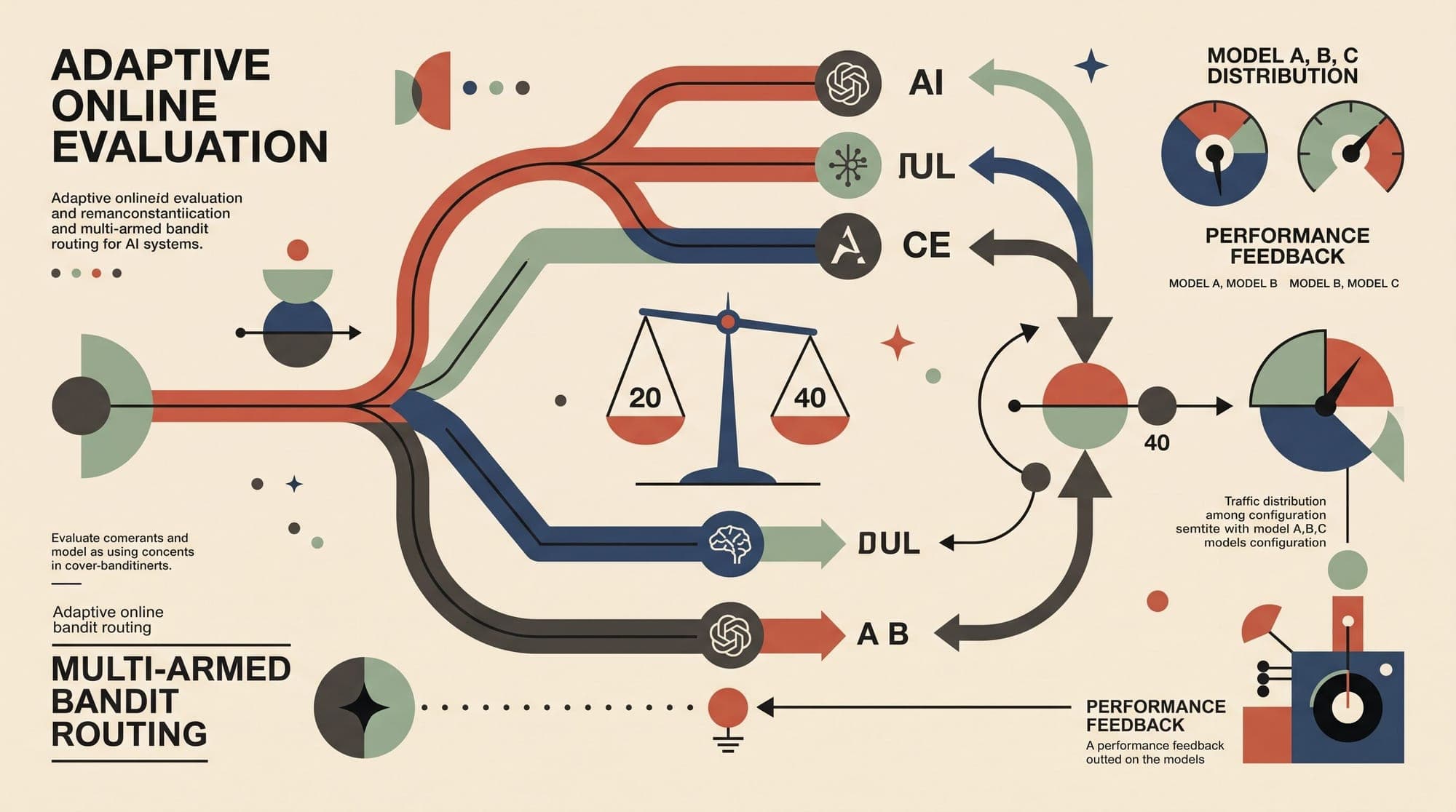
    Online Evaluation and Multi-Armed Bandit Routing in Production LLM Systems: Interleaving, Counterfactual Estimation, and Adaptive Traffic Allocation Static offline benchmarks such as MMLU, HumanEval, and synthetic LLM-as-a-judge evaluation pipelines have become standard fixtures in modern AI development. However, production engineering teams frequently observe that offline benchmark improvements fail to translate into tangible user satisfaction or business outcomes. Static evaluation suites suf

    AI
    12 min read
  11. Teacher Forcing and Exposure Bias in Autoregressive Models: Mathematical Foundations, Compounding Errors, and Mitigation Strategies

    Teacher Forcing and Exposure Bias in Autoregressive Models: Mathematical Foundations, Compounding Errors, and Mitigation Strategies Autoregressive sequence models form the computational backbone of modern language modeling, code synthesis, and multi-step reasoning agents. From decoder-only Transformers like GPT and Claude to recurrent architectures, these systems factorize the joint probability of a sequence of tokens $y = (y_1, y_2, \dots, y_T)$ into a product of conditional probabilities: $$

    AI
    10 min read
  12. Study Exposes Citation Monoculture Across Frontier LLMs as Recursive Drafting Compounds Bias

    Study Exposes Citation Monoculture Across Frontier LLMs as Recursive Drafting Compounds Bias As large language models take over literature reviews and automated research workflows, a collaborative study from UT Austin, Stevens Institute of Technology, Washington University in St. Louis, Rice University, and the University of Notre Dame demonstrates that frontier models suffer from severe citation monoculture. Even when all identifying metadata is removed, LLMs across vendors converge on a narro

    research
    2 min read
  13. Virtual Memory for AI Agents in Production: Context Window Paging, Working Set Estimation, and Hierarchical Storage Architectures

    Virtual Memory for AI Agents in Production: Context Window Paging, Working Set Estimation, and Hierarchical Storage Architectures As autonomous AI agents shift from single-turn chat interactions to long-horizon workflows spanning days, weeks, or millions of execution steps, managing context has become the primary operational bottleneck. While modern foundation models support nominal context windows ranging from 128k to over 1M tokens, treating the active context window as an unbounded append-on

    AI
    9 min read
  14. Integrated Gradients: How Axiomatic Attribution Solves the Gradients-at-Saturation Problem in Deep Neural Networks

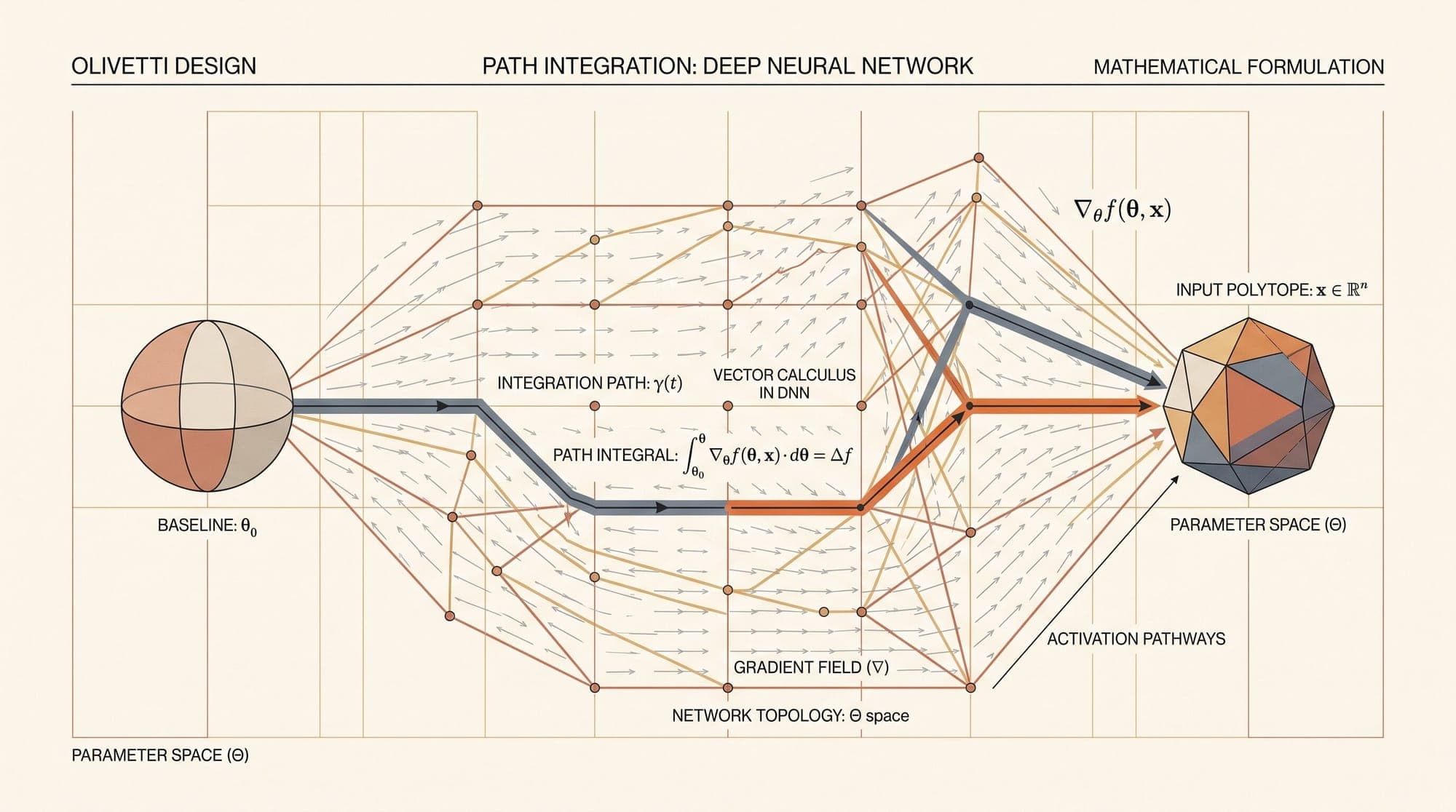
    Integrated Gradients: How Axiomatic Attribution Solves the Gradients-at-Saturation Problem in Deep Neural Networks Feature attribution methods in deep learning aim to answer a fundamental interpretability question: given an input vector and a trained neural network, how much did each input dimension contribute to the model's final output score? In natural language processing and computer vision, practitioners routinely need to identify which input tokens, pixels, or tabular variables drove a sp

    AI
    10 min read
  15. Anthropic Updates Claude Tag in Slack to Ingest Full Channel Context for Unprompted Interventions

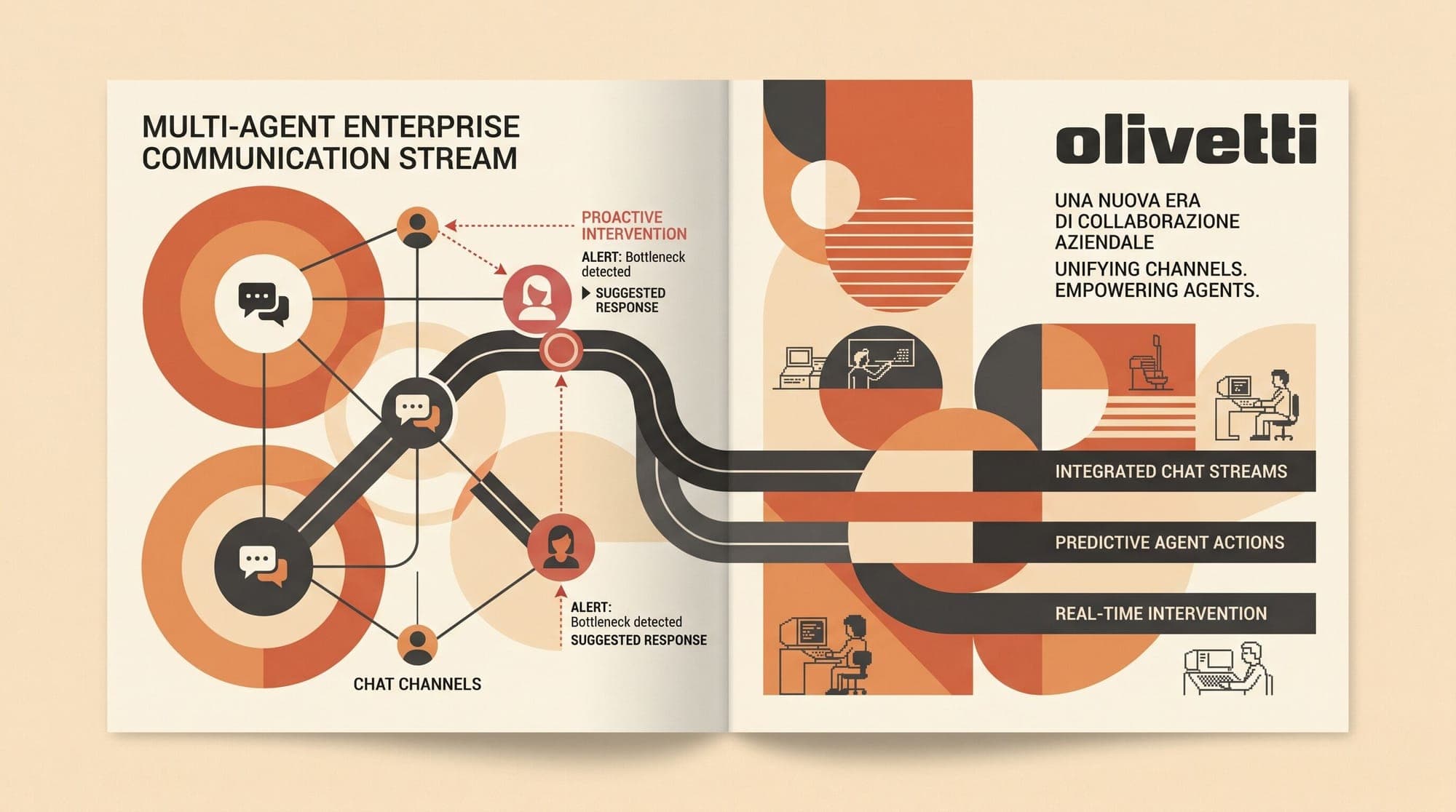
    Anthropic has rolled out a major architecture update to Claude Tag, its enterprise agent embedded inside Slack workspaces. The update shifts the agent from evaluating isolated chat messages to processing complete conversation histories and multi-turn channel state, allowing the model to determine autonomously when to intervene in team discussions without explicit user mentions. According to internal evaluation data shared by Anthropic, eliminating single-message evaluation in favor of full-cont

    Anthropic
    2 min read
  16. Thomson Reuters Deploys In-House Legal LLM 'Thomson' on Qwen Foundation to Cut API Dependency

    Thomson Reuters has unveiled "Thomson," its first proprietary domain-specific language model built specifically for legal workflows. Developed over two years at an investment of roughly $40 million in engineering and compute infrastructure, the model is designed to perform specialized legal analysis without ongoing dependence on third-party frontier API providers like OpenAI or Anthropic. The model is built on top of Alibaba's open-weight Qwen architecture, utilizing Qwen3.5-397B as its foundat

    Legal AI
    3 min read
  17. Semantic Memory Consolidation in Production AI Agents: Architecture, Episodic Decay Curves, and Procedural Knowledge Distillation

    Long-running autonomous AI agents accumulate hundreds of interaction turns, tool executions, and environment observations across extended deployments. Naive implementations store these raw episodic traces directly in vector databases, retrieving past interactions via dense semantic similarity. In production, this append-only strategy degrades quickly: retrieval queries surface outdated facts, contradictory state assertions pollute prompt context, and the agent fails to extract generalizable prob

    AI
    7 min read
  18. Stochastic Weight Averaging: How Geometric Ensembling Finds Flatter Optima and Improves Generalization

    Stochastic Weight Averaging (SWA): How Geometric Ensembling Finds Flatter Optima and Improves Generalization During the optimization of deep neural networks, standard Stochastic Gradient Descent (SGD) and adaptive optimizers often struggle to find solutions that generalize robustly to unseen data. While learning rate decay allows optimizers to settle into local minima on the empirical training loss surface, empirical and theoretical analyses reveal that standard gradient descent tends to halt n

    AI
    8 min read
  19. Sequence Packing and Loss Masking in Production SFT: Architecture, Trade-Offs, and Framework Implementations

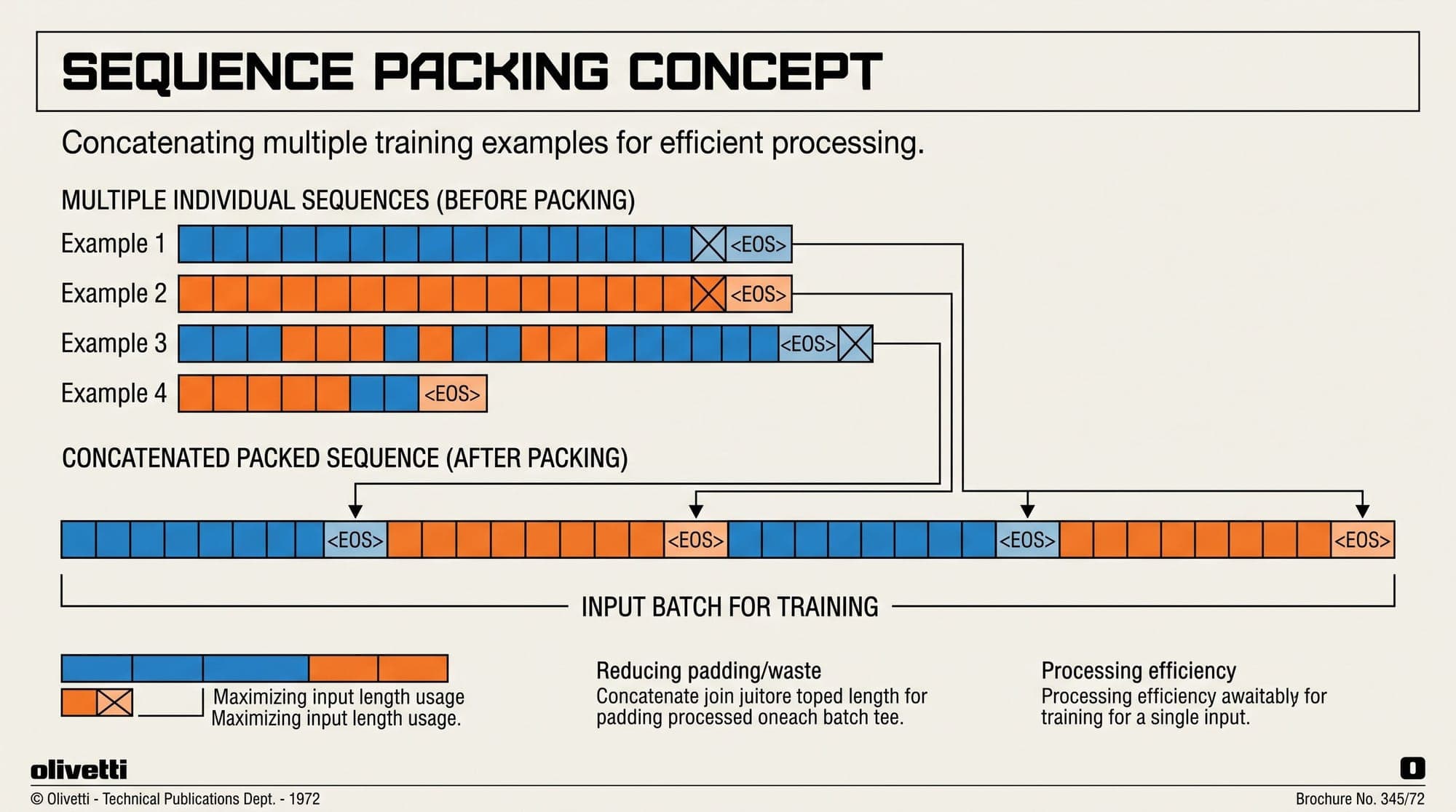
    Sequence Packing and Loss Masking in Production SFT: Architecture, Trade-Offs, and Framework Implementations Supervised fine-tuning pipelines routinely waste 40–70% of FLOPs on padding tokens. Sequence packing eliminates that waste by concatenating multiple training examples into a single long tensor, but it introduces three hard constraints: attention must not leak across example boundaries, loss must be computed only on the intended target spans (typically assistant responses), and the data c

    AI
    6 min read
  20. Generalized Advantage Estimation: How Exponential Weighting Balances Bias and Variance in Policy Optimization

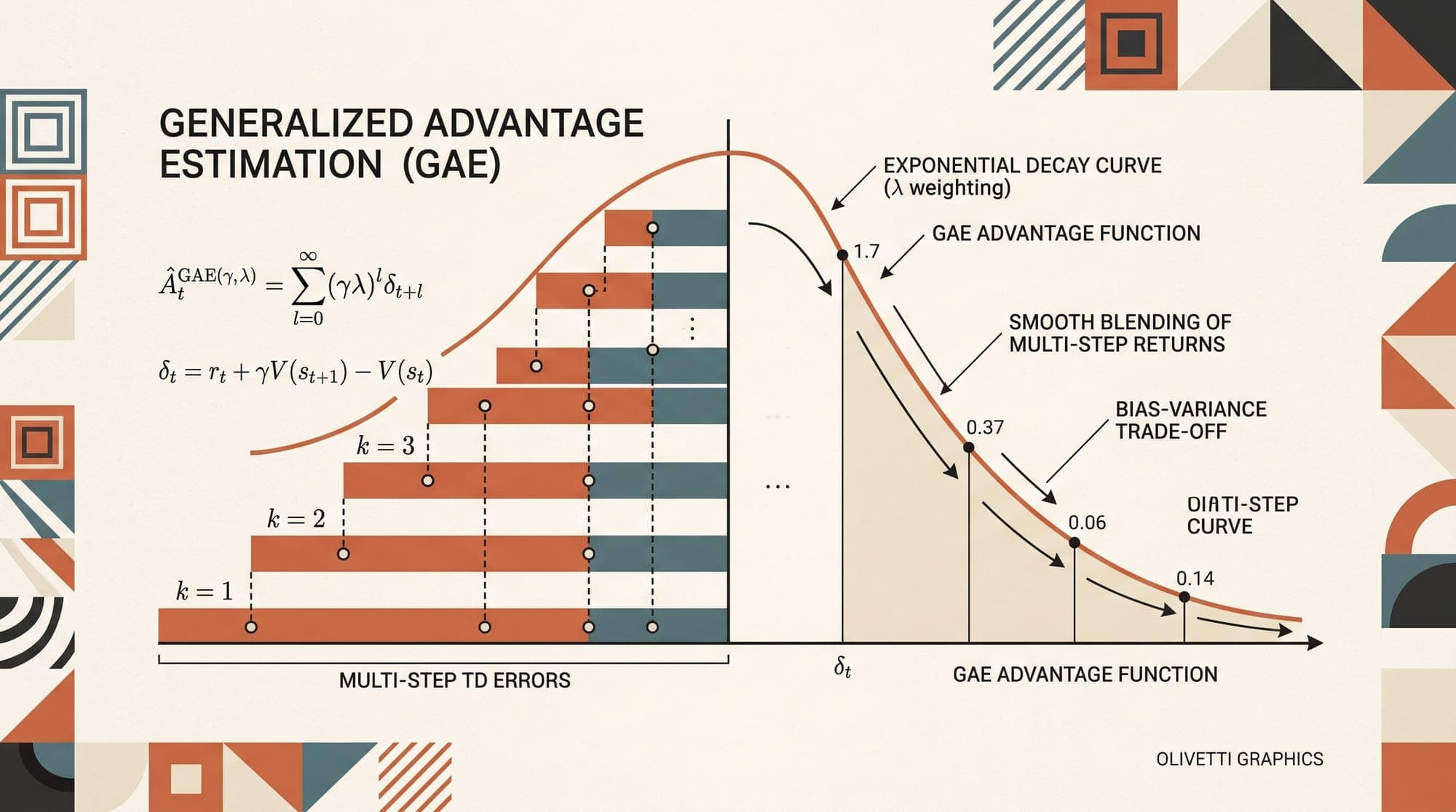
    Policy gradient algorithms form the theoretical backbone of modern policy optimization, ranging from continuous robotic control to reinforcement learning from human feedback (RLHF) in frontier large language models. A persistent challenge in policy optimization is variance: estimating the gradient of expected cumulative reward over stochastic trajectories generates high-variance Monte Carlo signals that require massive sample sizes and risk destabilizing gradient updates. Generalized Advantage

    AI
    6 min read