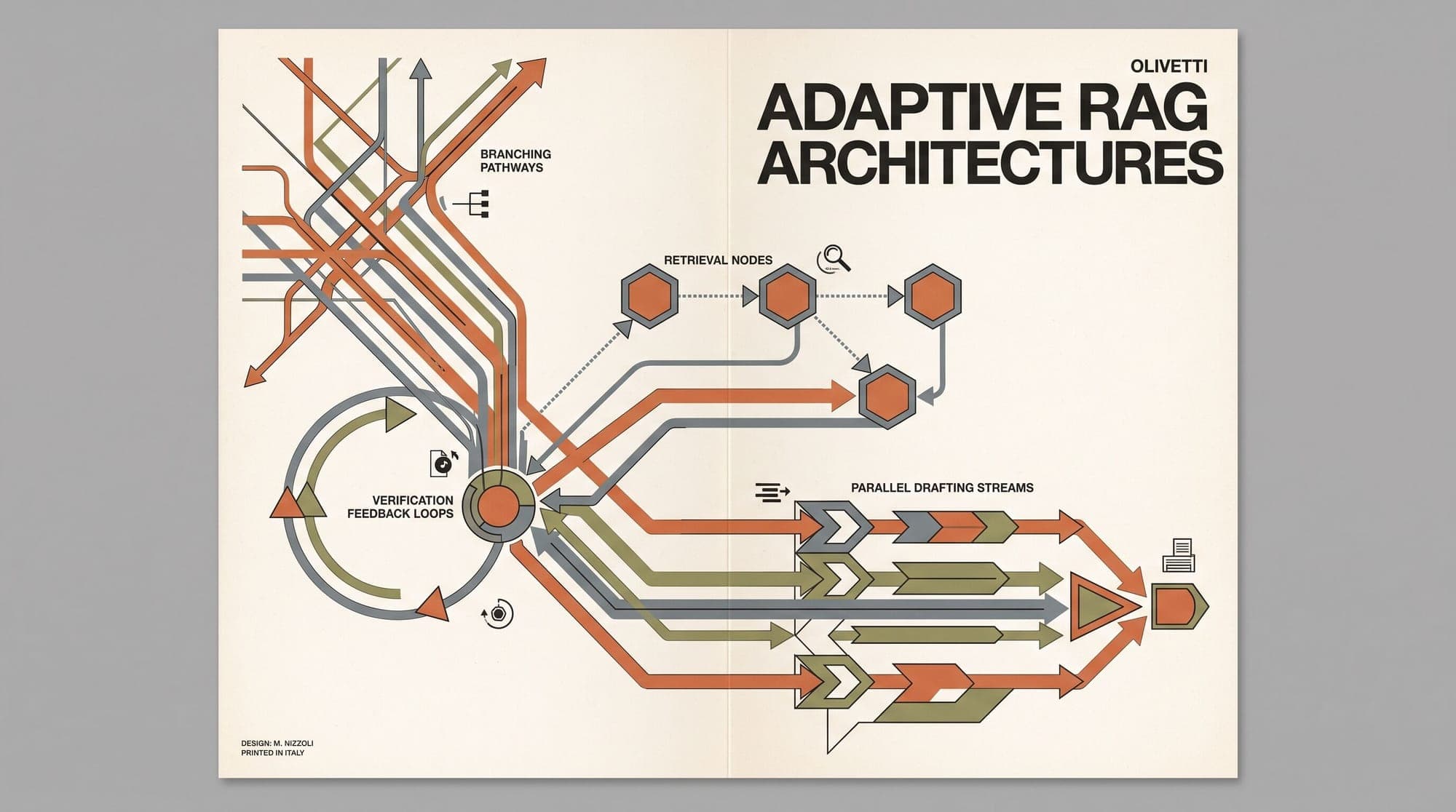
Adaptive RAG, Self-RAG, Corrective RAG, and Speculative RAG in Production: Architecture, Reflection Loops, Verification Latency, and Retrieval Economics
Standard retrieval-augmented generation follows a static, two-stage linear pipeline: embed the incoming user query, fetch top-k passages from a dense or hybrid index, insert the retrieved chunks into a prompt context window, and generate an answer. In production systems, this rigid workflow breaks down under three frequent operational failure modes: * Unnecessary retrieval overhead: Simple queries that the language model already knows accurately from parametric memory still incur vector search