Category / page 3

Content Creation

66 articles

Articles, page 3

41-60 of 66
  1. IBM Releases Granite Speech 5.0 with 12,600x Real-Time CTC Conformer Architecture

    IBM has released Granite Speech 5.0, a pair of compact 470-million-parameter automatic speech recognition (ASR) models capable of transcribing over 3.5 hours of audio in one second on modern datacenter silicon. In benchmark evaluations, IBM demonstrated aggregate throughput exceeding 12,600x real-time (12,600 RTFx) on a single NVIDIA H200 GPU. The release includes two variants: Granite Speech 5.0 TurboCTC under the permissive Apache 2.0 license, and an extended research checkpoint licensed unde


    Open Weights
    2 min read
  2. ARIA Bans Wholly AI-Generated Music from Australian Charts Under Updated Code

    The Australian Recording Industry Association (ARIA) has introduced a formal prohibition on songs created mostly or entirely by artificial intelligence, updating its official Charts Code of Practice to disqualify non-human recordings starting August 29, 2026. Under the revised framework, tracks produced through generative AI models are ineligible for the official Australian music rankings unless the work is demonstrated to be "substantially human-made" and presents no risk of streaming or chart

    AI
    2 min read
  3. Speech-to-Text Serving in Production: Comparing Faster-Whisper, Moonshine, SenseVoice, and NeMo Canary Architecture, Streaming Latency, and GPU Economics

    In conversational voice AI and real-time agentic workflows, the speech-to-text (STT) layer sets the hard lower bound on system responsiveness. Human conversational cadence expects turn-taking latencies between 200ms and 500ms. When an AI pipeline must accommodate downstream large language model (LLM) time-to-first-token generation (100ms to 250ms) and text-to-speech (TTS) audio synthesis (100ms to 200ms), the automatic speech recognition (ASR) stage cannot exceed 100ms to 150ms of processing ove

    AI
    8 min read
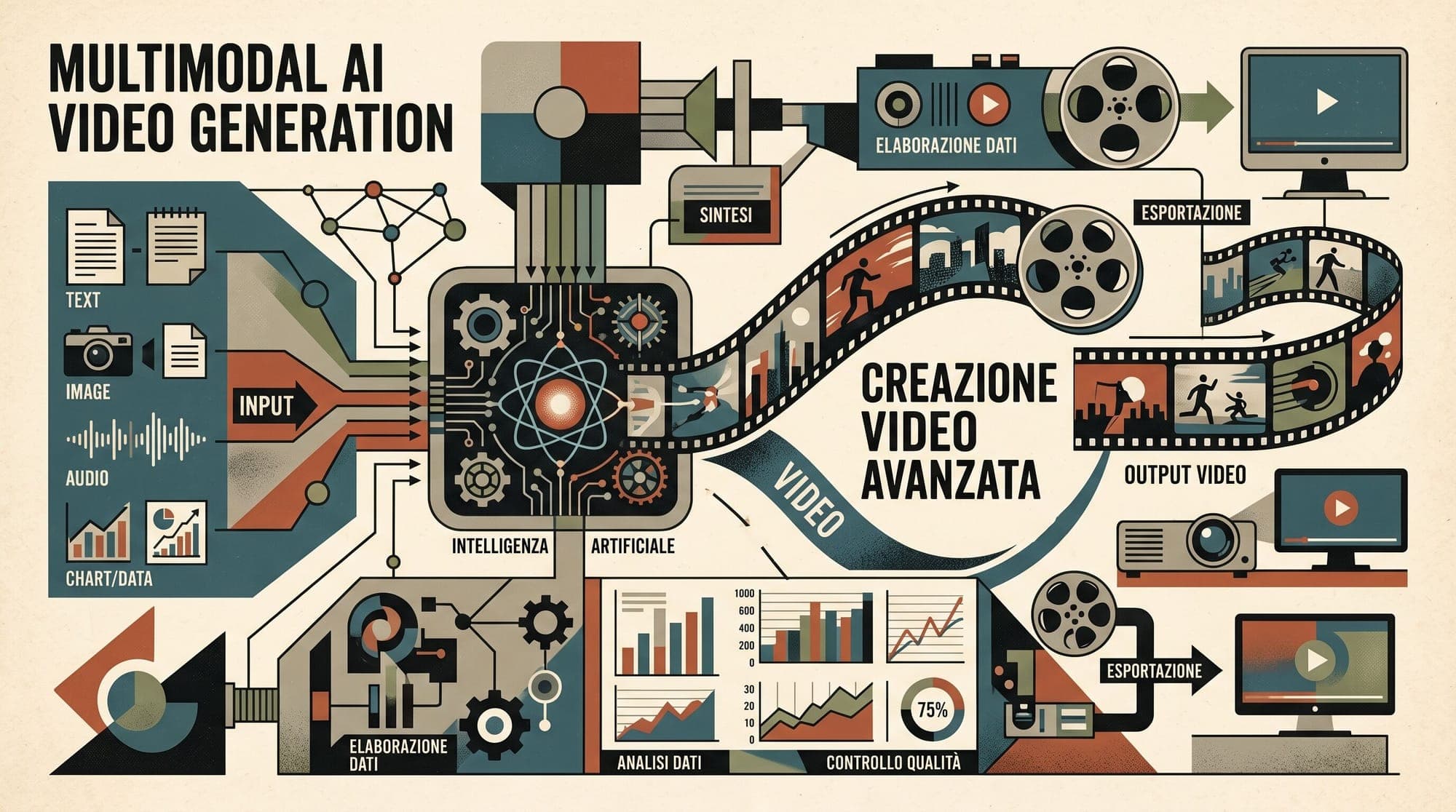
  4. Alibaba Launches Wan 3.0 AI Video Model with Native 30-Second Generation and Document Inputs

    Alibaba Tongyi Lab has launched a public beta of Wan 3.0, the latest iteration of its video generation model family. Available on Alibaba Cloud Model Studio and Qwen Cloud under the model identifier wan3.0-video, the model produces up to 30 seconds of continuous video in a single pass at resolutions up to 1080p. Unlike predecessor models such as Wan 2.7, which capped single-pass output at 15 seconds, Wan 3.0 consolidates video synthesis into a unified architecture and expands supported input mo

    AI
    2 min read
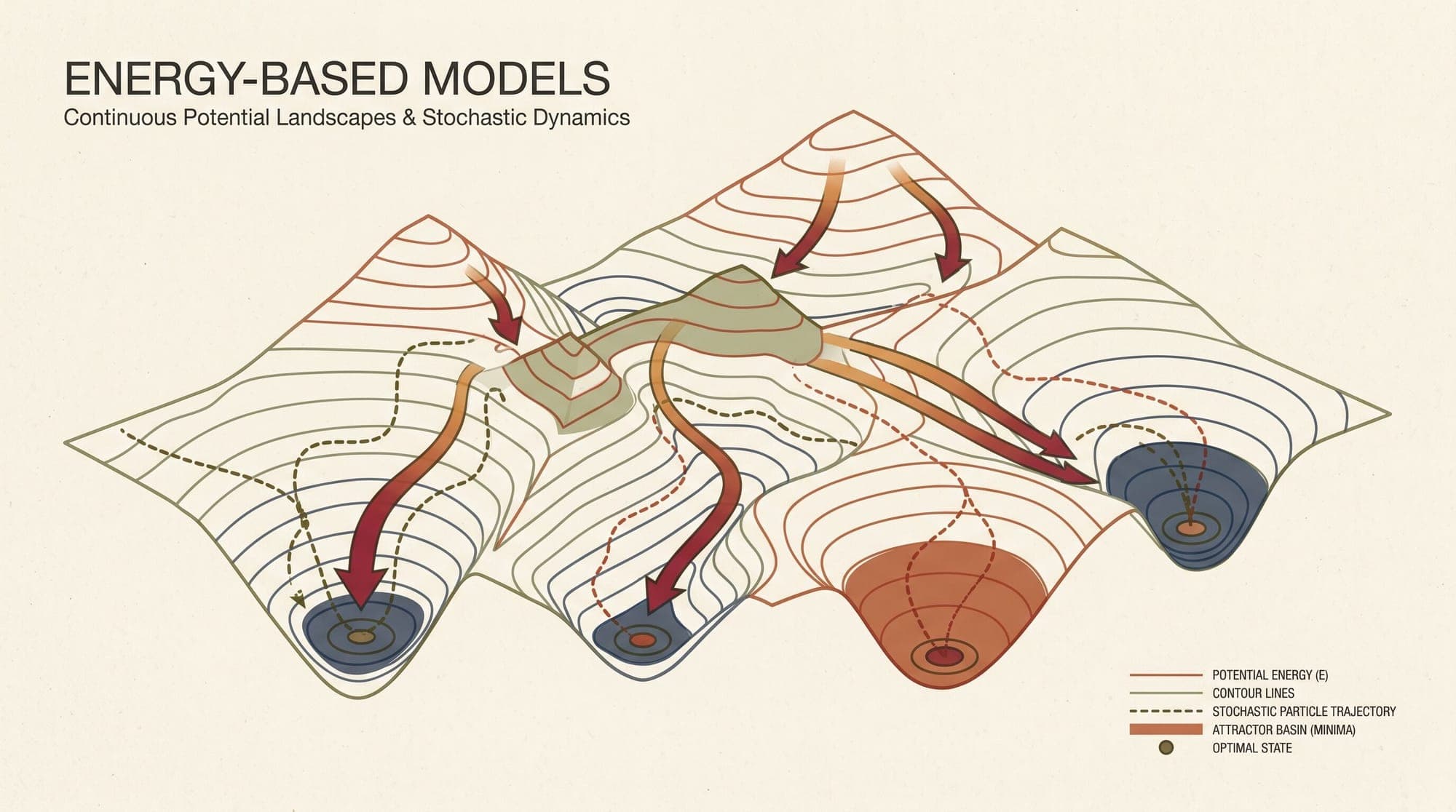
  5. Energy-Based Models: How Energy Landscapes, Contrastive Divergence, and Langevin Dynamics Unify Generative Learning

    Energy-Based Models: How Energy Landscapes, Contrastive Divergence, and Langevin Dynamics Unify Generative Learning Probabilistic modeling in machine learning fundamentally centers on estimating data distributions over high-dimensional spaces. Standard generative architectures achieve this by enforcing structural constraints: autoregressive models factorize joint distributions through causal chains, normalizing flows constrain network architectures to invertible bijections with tractable Jacobi

    AI
    9 min read
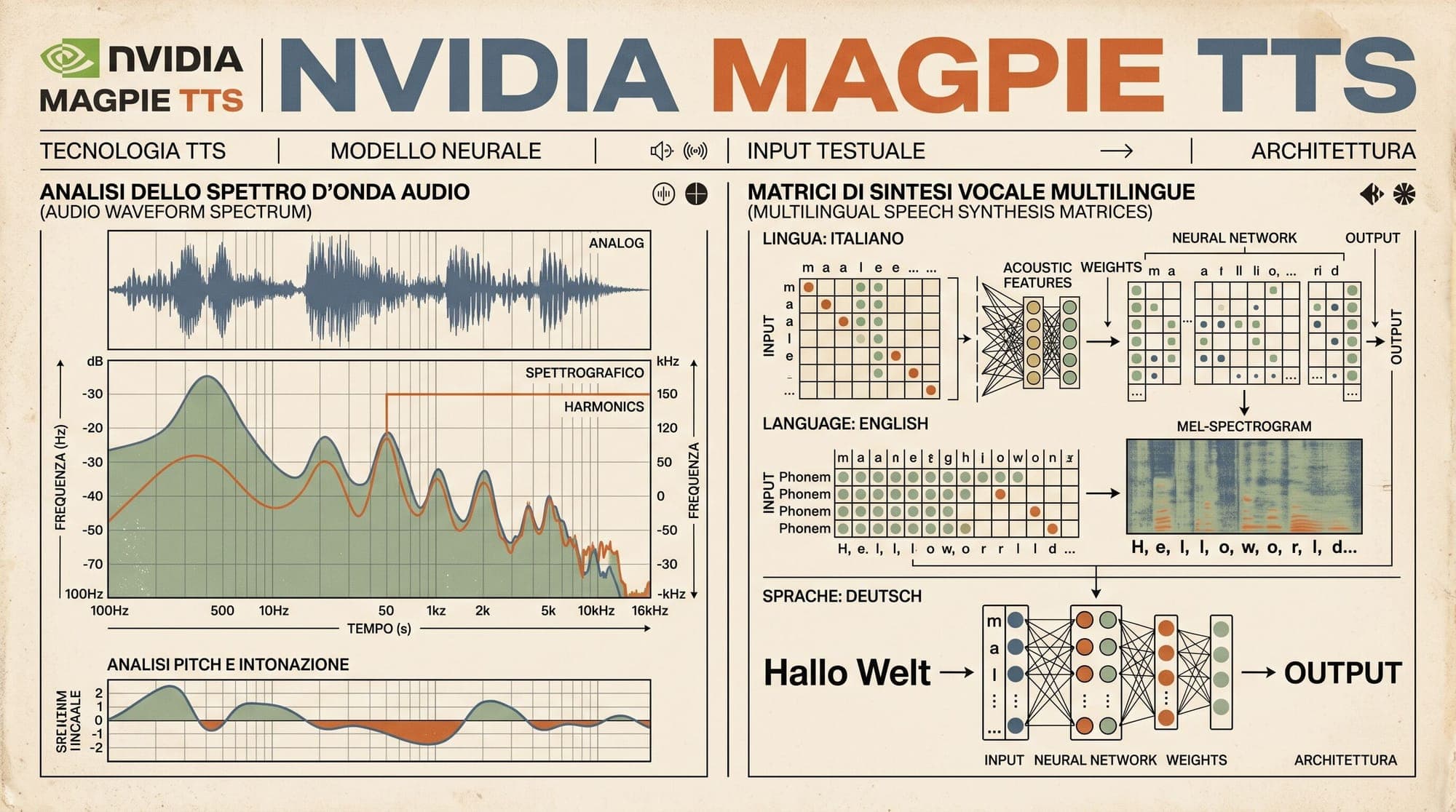
  6. NVIDIA Releases Magpie Multilingual TTS: 364M Open-Weight Model for Sub-200ms Voice Agents

    NVIDIA has released Magpie Multilingual TTS, a 364-million parameter open-weights text-to-speech model engineered for low-latency conversational AI agents. Released under the NVIDIA Open Model License, the model is available as open checkpoints on the Hugging Face Hub and as an optimized microservice container within NVIDIA NIM. The release expands language support to 12 languages: English, Spanish, French, German, Italian, Vietnamese, Mandarin, Hindi, Japanese, Modern Standard Arabic, Korean,

    AI
    2 min read
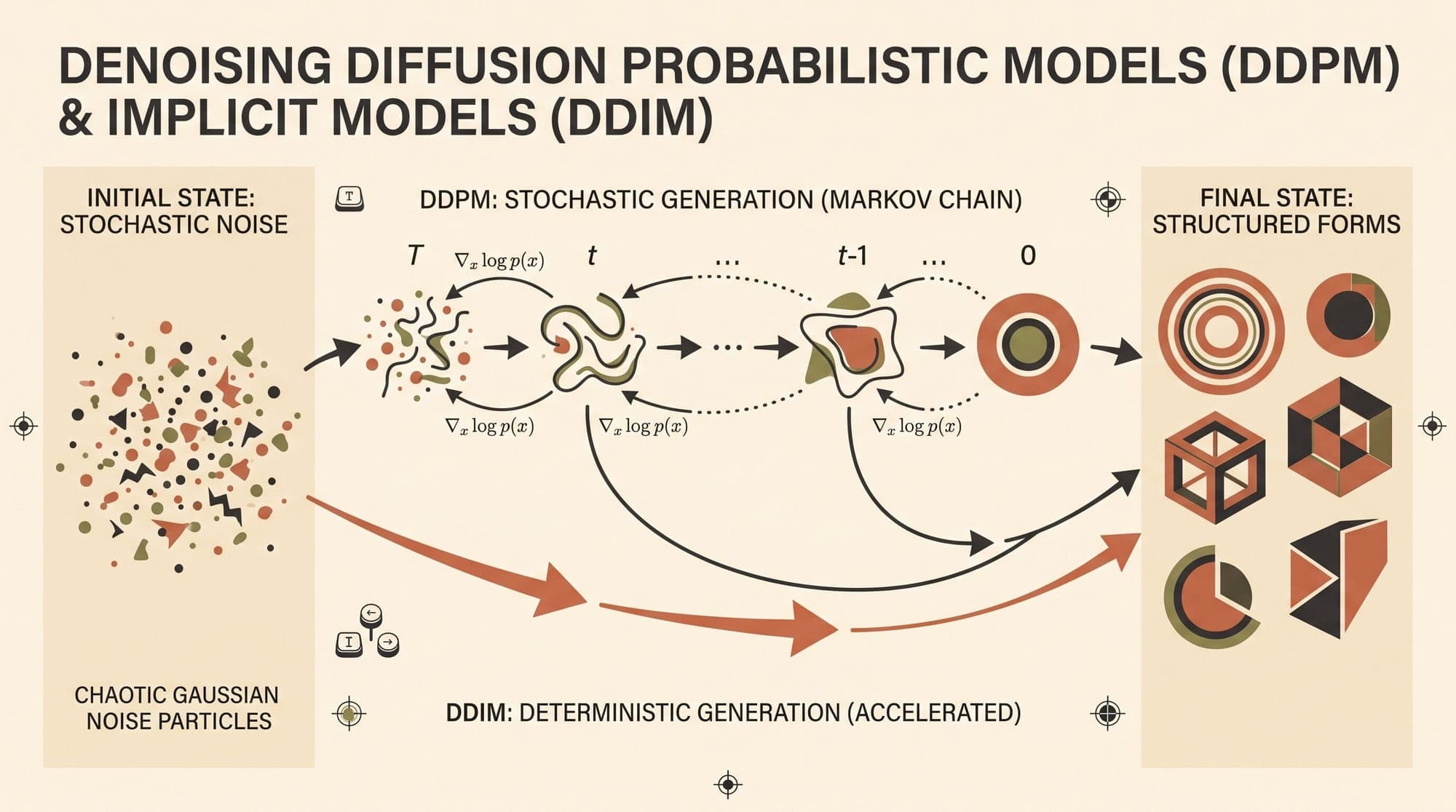
  7. Denoising Diffusion Probabilistic Models and DDIM: Mathematical Foundations, Variance Schedules, and Fast Deterministic Sampling

    Generative modeling in continuous state spaces underwent a fundamental transformation with the formulation of Denoising Diffusion Probabilistic Models (DDPM) by Ho et al. (2020), building on the non-equilibrium thermodynamics foundations established by Sohl-Dickstein et al. (2015). Prior to diffusion models, deep generative synthesis was dominated by Generative Adversarial Networks (GANs), which suffered from training instability and mode collapse, and Variational Autoencoders (VAEs), which ofte

    AI
    11 min read
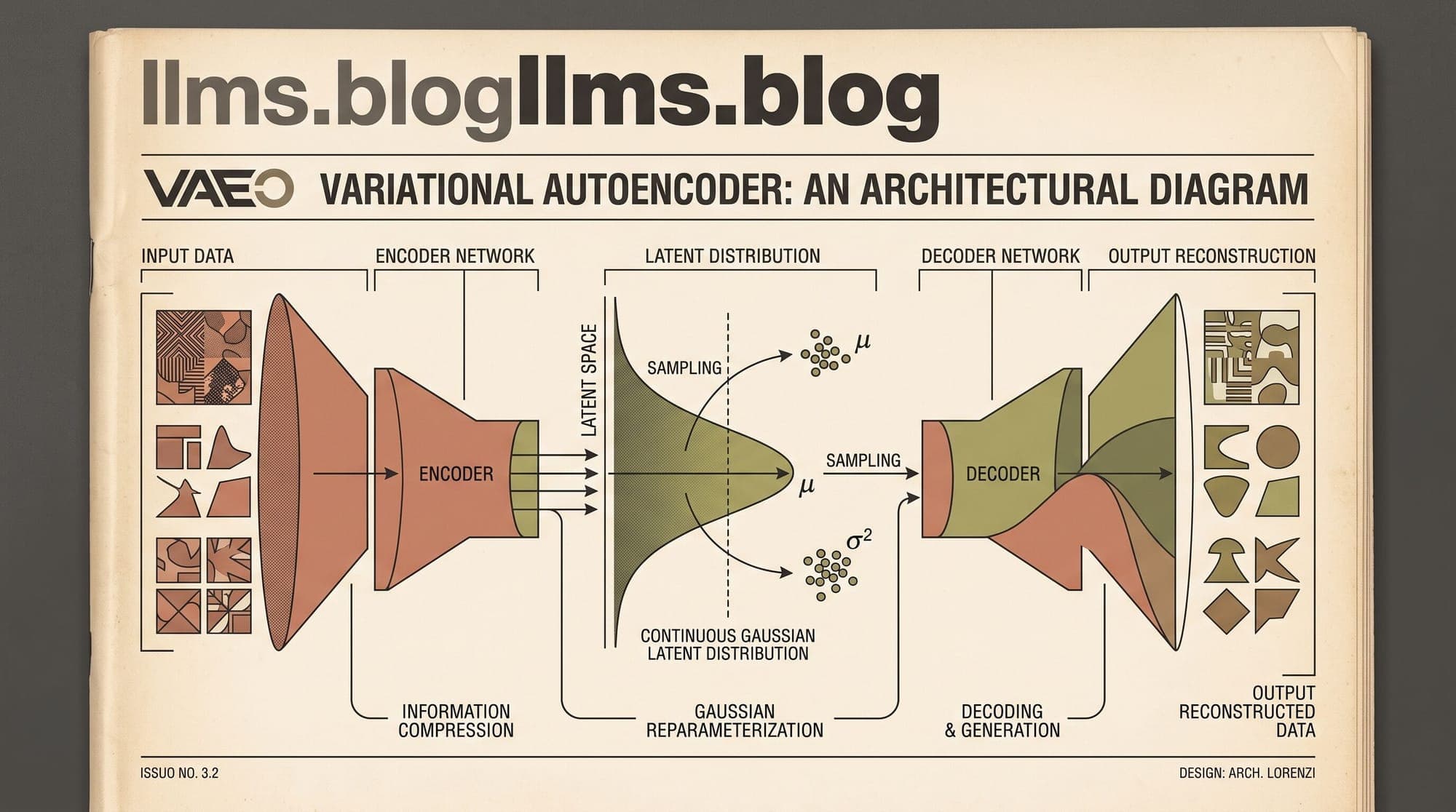
  8. Variational Autoencoders: Mathematical Derivation of the ELBO, the Reparameterization Trick, and Mitigating Posterior Collapse

    Variational Autoencoders: Mathematical Derivation of the ELBO, the Reparameterization Trick, and Mitigating Posterior Collapse Traditional autoencoders map high-dimensional data into deterministic latent vectors. While effective for dimensionality reduction and non-linear feature compression, deterministic autoencoders fail as generative models because their latent representations lack continuous probabilistic structure. Unregularized latent spaces contain wide regions of empty space and severe

    AI
    11 min read
  9. Flow Matching for Generative Modeling: How Continuous Normalizing Flows and Optimal Transport Paths Replace Diffusion SDEs

    Generative modeling underwent a structural shift with the introduction of Flow Matching (FM), formulated independently by Lipman et al. (2022), Albergo and Vanden-Eijnden (2022), and Liu et al. (2022). While Denoising Diffusion Probabilistic Models (DDPM) and score-based Stochastic Differential Equations (SDEs) established state-of-the-art sample quality across vision and audio domains, their sampling dynamics rely on curved stochastic trajectories that require extensive numerical integration st

    AI
    8 min read
  10. Score-Based Generative Modeling via Stochastic Differential Equations: How Continuous SDEs and Score Matching Unify Diffusion Models

    Diffusion and score-based models represent one of the foundational paradigms of modern generative artificial intelligence, underpinning systems across image synthesis, video generation, audio modeling, and continuous multimodal representations. For years, generative diffusion was approached from two distinct perspectives: discrete-step denoising diffusion probabilistic models (DDPM) pioneered by Sohl-Dickstein et al. and Ho et al., and score matching with Langevin dynamics (SMLD / NCSN) introduc

    AI
    8 min read
  11. Study Exposes Benchmark Overfitting and Acoustic Leakage in Speech Recognition Models

    A joint empirical study by researchers from Hugging Face and Hume AI has uncovered evidence that top-ranking automatic speech recognition (ASR) models frequently exhibit benchmark optimization, commonly referred to as "benchmaxxing." The findings demonstrate that models often achieve low word error rates on public leaderboards by memorizing test-set reference anomalies and responding to subtle acoustic channel signatures rather than generalizing audio transcription. Evaluating 11 open-source sp

    AI
    2 min read
  12. OpenAI Adds Native Alpha Transparency to GPT-Image-2 API

    OpenAI has added native transparent background generation to its GPT-Image-2 model via the developer API, enabling direct creation of PNG images with integrated alpha channels. The feature bypasses post-processing segmentation pipelines, allowing developers to generate isolated visual assets directly during the synthesis step. Direct Alpha Generation vs. Post-Processing Traditional visual asset pipelines rely on secondary background-removal models, such as semantic segmentation masks or matti

    AI
    2 min read
  13. Apple Music Mandates AI Transparency Tags Across Tracks, Compositions, and Artwork

    Apple Music has notified record labels and distribution partners that it is introducing mandatory AI transparency tags across its ingestion pipeline, establishing visible indicators for synthetic audio and visual assets later this year. Under the updated ingestion specifications, content providers must declare when artificial intelligence tools have been used to generate a material portion of a release. Four-Tier Metadata Taxonomy The framework establishes distinct metadata flags across four

    AI
    1 min read
  14. Adobe Firefly Expands Generative Audio Tools and Integrates Gemini Omni Flash

    Adobe has broadened its generative production suite with the general availability of three dedicated AI audio generation modules in Adobe Firefly, alongside the integration of Google's multimodal Gemini Omni Flash model. The audio capabilities expand Firefly from static imagery and video synthesis into integrated soundtrack design, voice synthesis, and scene audio generation, fully cleared for commercial workflows. Generative Audio Modules and Commercial Licensing The expanded audio suite in

    AI
    2 min read
  15. Classifier-Free Guidance: How Score Extrapolation and Implicit Classification Steer Generative Models

    Conditional generative models face an inherent tension between mode coverage and prompt adherence. When a model is trained to maximize data log-likelihood, its learned distribution matches the broad, messy variety of the underlying dataset. In unconditional generation, this diversity is desirable. In conditional generation, however, unconditional priors dilute the prompt: models generate generic, average samples that only weakly align with nuanced text descriptions, spatial layouts, or class lab

    AI
    9 min read
  16. Waymo Brings Gemini Voice Assistant to Custom Ojai Robotaxis

    Waymo has integrated Google's Gemini large language model into its purpose-built Ojai robotaxis, introducing a conversational in-cabin voice assistant while maintaining strict isolation boundaries between the passenger interface and the vehicle's autonomous driving system. The voice assistant allows passengers to control cabin settings (such as adjusting air conditioning), query trip details, ask about points of interest along the route, and request general information hands-free during autonom

    Waymo
    2 min read
  17. Real-Time Voice Agent Architecture: WebRTC, Cascaded Pipelines vs. Native Speech-to-Speech, and Sub-500ms Latency Budgets

    Building production-grade real-time voice AI systems requires engineering around a strict physical constraint: human conversational cadence. In natural human dialogue, the typical gap between turns ranges from 200 to 300 milliseconds. When an interactive voice agent incurs a total round-trip latency above 700 milliseconds, users perceive the interaction as sluggish. When latency exceeds 1,000 milliseconds, conversational dynamics collapse into frequent interruptions, speech collisions, and awkwa

    AI
    6 min read
  18. Higgsfield AI Raises $400M at $5.4B Valuation, Quadrupling in Seven Months

    AI video generation startup Higgsfield has raised $400 million in a Series B round that values the company at $5.4 billion, up from $1.3 billion in January. The round was led by DST Global with participation from Goldman Sachs, Liberty Global, Intel Capital, and others. The 4x valuation jump in seven months signals intense investor appetite for the AI video layer that could become the foundation for robotics, world models, and the next generation of content creation. What Higgsfield Does Hig

    AI Video
    3 min read
  19. Chinese AI labs dominate text-to-video: 9 of top 10 models are Chinese

    Outside of Alphabet's Google, nine of the world's top ten text-to-video models are now Chinese, according to the Artificial Analysis leaderboard. The ranking, based on blind human evaluation of generated clips, places Google's Gemini Omni Flash at number one. Every slot from two through ten belongs to a Chinese lab. The Chinese contingent includes: MiniMax — H3 ByteDance — Seedance 2.0 Alibaba — Wan (two builds), HappyHorse (two builds, ~15B parameters, open weight) Kuaishou — Kling (two bu

    AI
    2 min read
  20. Twitch lets streamers block their content from Amazon's generative AI training

    Twitch lets streamers block their content from Amazon's generative AI training Twitch has quietly added a control that lets creators stop their streams, clips, and chat from being used to train Amazon's generative AI models. The setting, labeled "Training for Generative AI," sits in the Security and Privacy tab of account settings and is live now, but it arrives with a design that puts the burden on users to find it. What the toggle actually blocks Flipping the control off excludes a d

    AI
    2 min read