Waymo Brings Gemini Voice Assistant to Custom Ojai Robotaxis

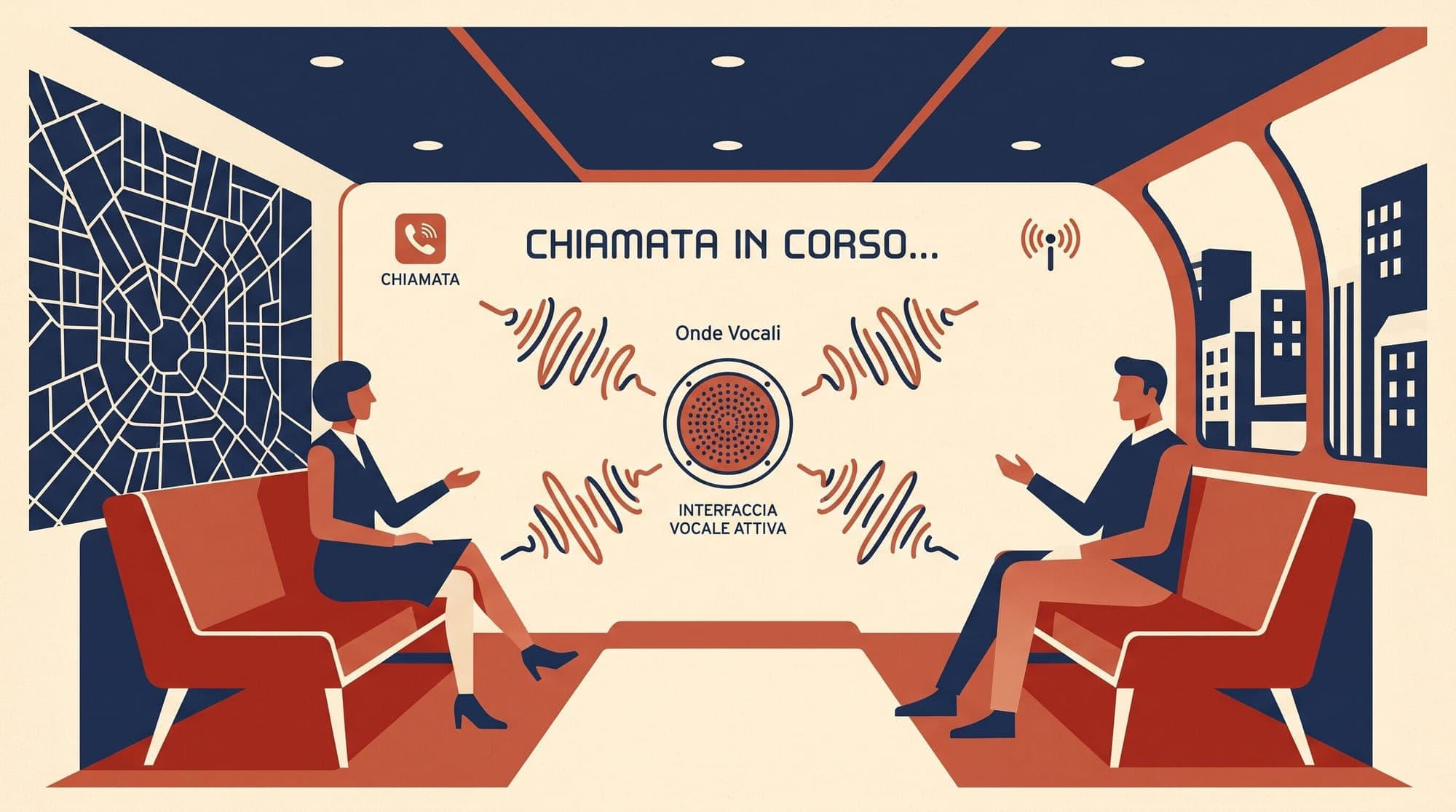
Waymo has integrated Google's Gemini large language model into its purpose-built Ojai robotaxis, introducing a conversational in-cabin voice assistant while maintaining strict isolation boundaries between the passenger interface and the vehicle's autonomous driving system. The voice assistant allows passengers to control cabin settings (such as adjusting air conditioning), query trip details, ask about points of interest along the route, and request general information hands-free during autonom

2 min
Waymo Brings Gemini Voice Assistant to Custom Ojai Robotaxis

Waymo has integrated Google's Gemini large language model into its purpose-built Ojai robotaxis, introducing a conversational in-cabin voice assistant while maintaining strict isolation boundaries between the passenger interface and the vehicle's autonomous driving system.

The voice assistant allows passengers to control cabin settings (such as adjusting air conditioning), query trip details, ask about points of interest along the route, and request general information hands-free during autonomous rides.

Waymo Ojai Cabin Architecture and Subsystem Isolation

Air-Gapping Infotainment from the Autonomy Stack

A critical design parameter of the integration is the architectural separation between Gemini and the Level 4 Waymo Driver. Waymo confirmed that Gemini operates strictly within the cabin compute layer and has no access to real-time driving sensor streams, perception pipelines, or vehicle control actuators.

The sole interaction point between the conversational agent and vehicle operation is a passenger-initiated pullover request, which the assistant can pass to the driving stack as a high-level passenger preference. Beyond this, Gemini remains completely dormant until explicitly activated by riders via on-screen controls or voice triggers.

Cabin Interface and Hardware Redesign

The Gemini rollout coincides with a broader redesign of the Ojai's passenger environment:

  • Choreographed Tri-Screen Display: The cabin features three independent screens that dynamically adjust content based on passenger occupancy. Active seats receive full interactive controls, while unassigned displays transition to ambient media or route status views.
  • Calm Mode: A low-distraction visual mode that dims display brightness and reduces the interface to essential arrival times and route indicators.
  • Purpose-Built Rider Architecture: Unlike modified commercial vehicles, the Ojai is built from the ground up for autonomous ride-hailing with a flat floor, no steering wheel or driver controls, and integration with Waymo's 6th-generation Driver hardware.

Waymo is currently offering the Gemini-equipped Ojai experience to participants in its Trusted Tester program across San Francisco, Phoenix, and Los Angeles, with future operational expansions planned for Denver, Las Vegas, and San Diego.


Sources

Written by

More to read

  • Data Filtering and Deduplication in Large Language Models: How Heuristics, MinHash LSH, SemDeDup, and Quality Classifiers Curate Pre-Training Corpora

    Data Filtering and Deduplication in Large Language Models: How Heuristics, MinHash LSH, SemDeDup, and Quality Classifiers Curate Pre-Training Corpora Pre-training data quality governs the downstream reasoning, factual accuracy, and sample efficiency of foundation large language models (LLMs). While early pre-training efforts relied on uncurated or lightly processed dumps from web repositories like Common Crawl, modern state-of-the-art models depend on multi-stage data curation pipelines that fi

    1 min
  • Agentic Search and Multi-Hop Retrieval in Production: Query Decomposition, Evidence-Gap Loops, and Synthesis Architecture

    Standard retrieval-augmented generation (RAG) relies on a single-pass paradigm: an incoming prompt is embedded, matched against a vector or hybrid index, and the top-k passages are injected into the generator's context window. This linear workflow functions reliably for direct fact retrieval, but it breaks down on complex research tasks. When a query requires chained dependencies, comparative analysis across isolated documents, or multi-step reasoning, single-shot retrieval fails because the req

    1 min
  • Supervised Fine-Tuning in Large Language Models: Loss Masking, Sequence Packing, and Alignment Dynamics

    Pre-training endows a large language model with broad linguistic patterns, world knowledge, and reasoning primitives by predicting the next token across trillions of uncurated web tokens. However, a raw base model remains a document completer rather than an interactive assistant. Given a prompt such as "Explain how a compiler works," a base model is as likely to generate additional exam questions or web navigation headers as it is to answer the query. Supervised Fine-Tuning (SFT), frequently te

    1 min

