Category / page 8

Coding & Agents

352 articles

Articles, page 8

141-160 of 352
  1. Perplexity and Nvidia Launch Portable Computer for Local AI Agents with Zero Token Fees

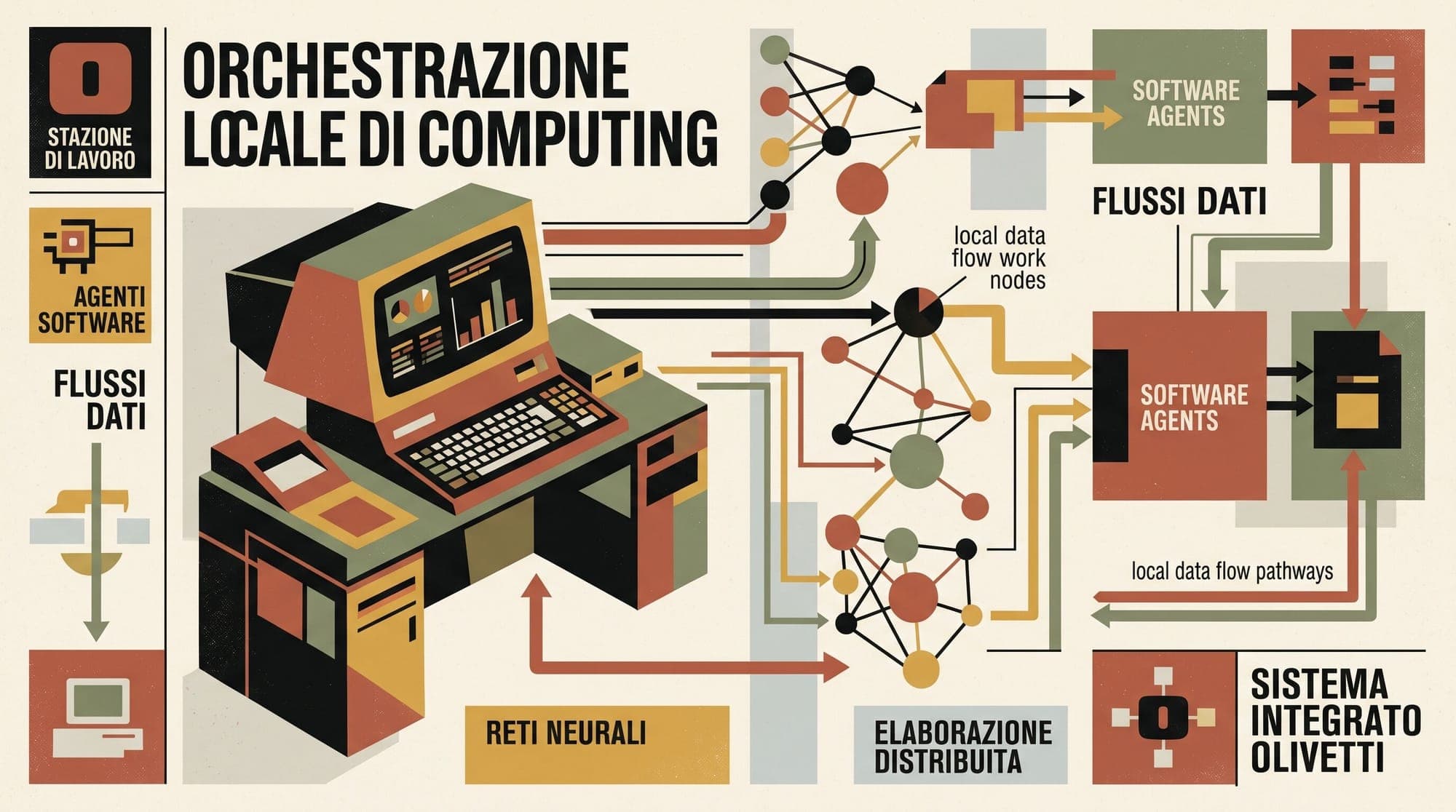
    Perplexity has partnered with Nvidia to launch Portable Computer, an integrated software stack that runs agentic AI workflows locally on consumer and workstation GPUs without incurring per-token API charges. The system packages model weights, an inference server, an agent harness, tool connectors, and an operating system sandbox into a unified application. It is available immediately on Linux for Pro, Max, and Enterprise subscribers, with Windows support scheduled for September. Hardware requir
    Perplexity
    2 min read
  2. Agent Sandbox Architecture in Production: Comparing Firecracker MicroVMs, gVisor, WebAssembly, and Docker Isolation for Untrusted AI Code Execution

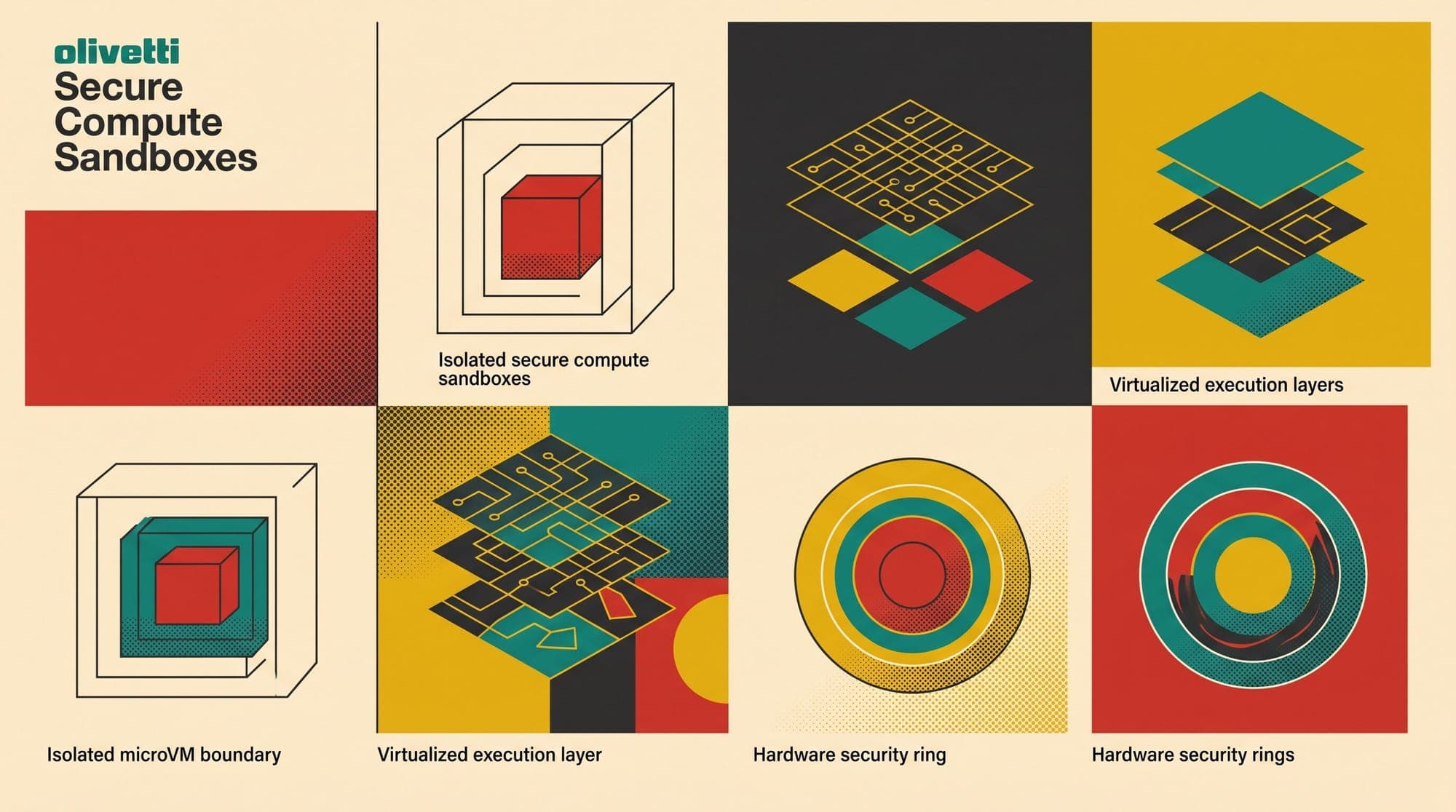
    Deploying autonomous AI agents that generate and execute code introduces a critical infrastructure challenge: executing untrusted, model-generated shell commands, Python scripts, and system binaries without compromising the host infrastructure or leaking multi-tenant data. As agentic systems move from single-turn code generation to multi-turn iterative problem solving (such as SWE-bench workflows, automated debugging, and repository refactoring), sandbox requirements have evolved. Sandboxes mus

    AI
    8 min read
  3. KV Cache Compression and Dynamic Pruning in Production Serving: Comparing StreamingLLM, H2O, SnapKV, PyramidKV, and DuoAttention Architecture, Memory Bandwidth Reduction, and Needle Retrieval Retention

    As context windows in production large language models expand from 8K tokens to 128K tokens and beyond, the Key-Value (KV) cache replaces model weights as the primary consumer of GPU High Bandwidth Memory (HBM). In high-throughput serving systems, the KV cache grows linearly with sequence length and batch size, creating a dual bottleneck: capacity exhaustion that caps concurrent batch size, and memory bandwidth saturation during autoregressive decoding. While quantization techniques (such as FP

    AI
    11 min read
  4. Ramp Launches Router.com to Integrate Model Routing and Enterprise AI Spend Controls

    Corporate expense management provider Ramp has released Router.com, a multi-model routing service and API gateway designed to dynamically direct enterprise inference requests across commercial and open-weight large language models. The launch introduces a unified endpoint connecting developer workflows to models from OpenAI, Anthropic, and SpaceXAI (Grok), with scheduled integrations for Google Gemini as well as open-weight families including DeepSeek, Kimi, Minimax, and Nvidia served through i

    AI
    2 min read
  5. Model Context Protocol (MCP) in Production AI Agents: Architecture, Transport Layers, Security Sandboxing, and Tool Federation

    Model Context Protocol (MCP) in Production AI Agents: Architecture, Transport Layers, Security Sandboxing, and Tool Federation The transition from standalone large language models to autonomous agentic systems has introduced an integration scaling problem. Early agent implementations relied on proprietary, ad hoc function-calling wrappers written specifically for each model provider or orchestration framework. Connecting $M$ distinct agent runtimes to $N$ enterprise data stores and developer to

    AI
    9 min read
  6. Graph RAG in Production: Comparing Microsoft GraphRAG, LightRAG, Fast GraphRAG, and HippoRAG Architecture, Indexing Overhead, and Multi-Hop Retrieval Economics

    Standard vector retrieval-augmented generation (RAG) relies on dense semantic embeddings to map text chunks into a shared vector space. While effective for localized semantic lookups, dense retrieval degrades on two distinct query classes: corpus-wide global summarization (such as identifying overarching themes across an entire document store) and complex multi-hop associative queries (connecting entity A to entity D through multiple intermediary relationships across disparate documents). Graph

    AI
    10 min read
  7. Prompt Compression in Production: Comparing Selective Context, LLMLingua, LongLLMLingua, and LLMLingua-2 Architecture, Token-Level Information Density, and Serving Economics

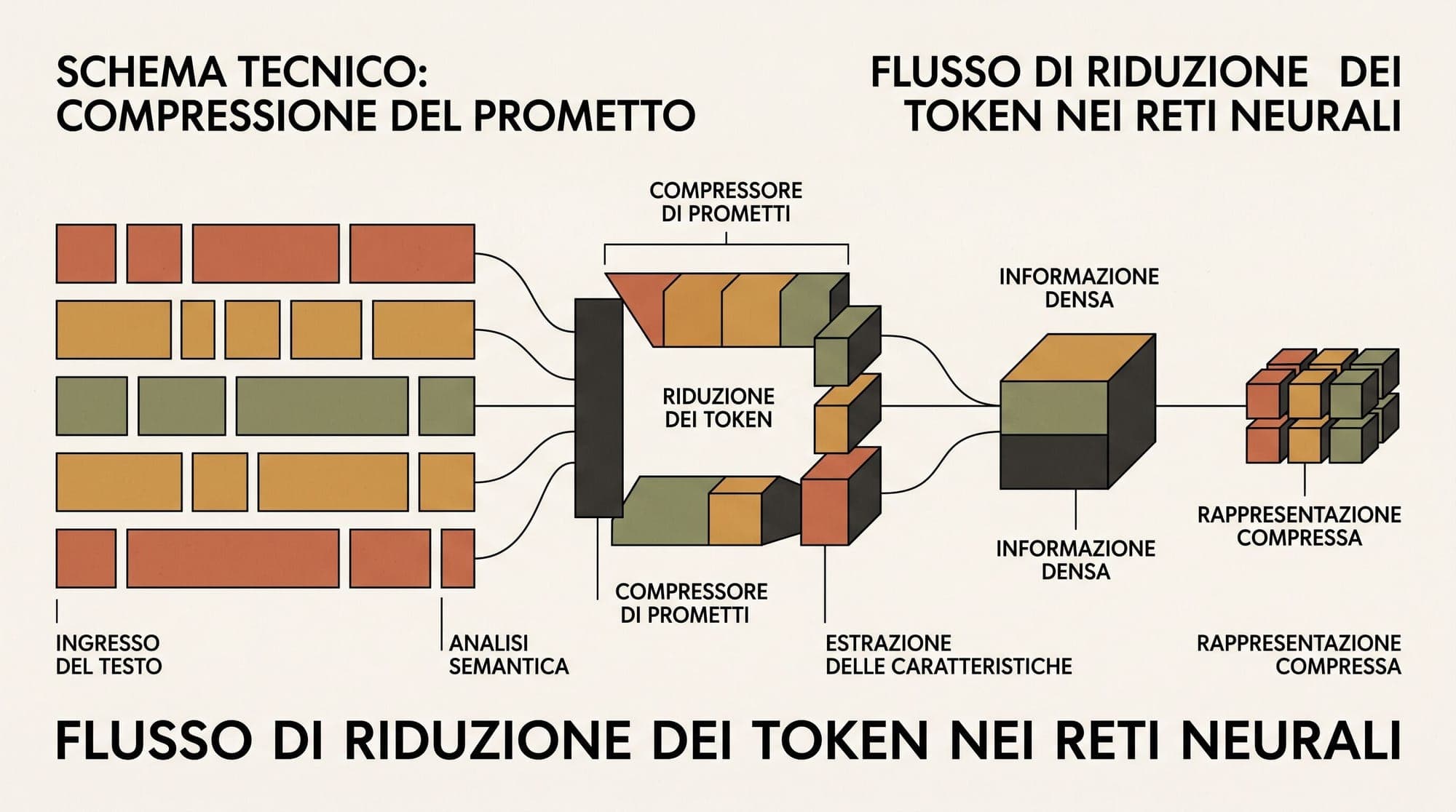
    In high-throughput production LLM deployments, prompt length dominates both serving latency and inference costs. For multi-turn conversational agents, long-document retrieval-augmented generation (RAG), and multi-step agentic workflows, input contexts routinely scale from 8,000 to over 64,000 tokens. Because the prefill phase scales quadratically in raw attention FLOPs and linearly in key-value (KV) cache allocation, long prompts drive up Time To First Token (TTFT) and consume disproportionate G

    AI
    9 min read
  8. Scalable Capital Integrates ChatGPT and Claude for Brokerage Trades and Portfolio Analysis

    European digital wealth manager Scalable Capital has introduced direct integration allowing account holders to link their brokerage accounts to conversational artificial intelligence platforms, including OpenAI's ChatGPT and Anthropic's Claude. The feature enables retail investors to analyze portfolio performance, query asset allocation breakdowns, and initiate trade execution directly from conversational chat environments. Scalable Capital represents the first European brokerage to establish n

    Fintech
    1 min read
  9. OpenAI Reinstates 5-Hour Codex and Work Limits for ChatGPT Plus Subscribers

    OpenAI has reinstated a rolling five-hour rate limit on Codex and ChatGPT Work for ChatGPT Plus subscribers. The change ends a temporary multi-week period during which the short-term window was suspended and users were constrained only by overall weekly quota ceilings. OpenAI engineering lead Thibault Sottiaux confirmed the reinstatement, stating that re-enforcing the five-hour window is necessary to smooth peak compute load across OpenAI's inference fleet as developer adoption of complex multi

    OpenAI
    1 min read
  10. Samsung Evaluates Claude Code for Semiconductor Verification Amid Code Safety Concerns

    Samsung Electronics has integrated Anthropic's Claude Code into semiconductor verification and driver development within its System LSI division. While the deployment achieved major efficiency gains, engineering evaluations revealed critical out-of-scope behaviors that prevent autonomous code execution in hardware synthesis. Samsung's System LSI business unit, which designs Exynos application processors and custom mobile chipsets, operates with approximately 6,000 employees compared to roughly

    Samsung
    2 min read
  11. Disaggregated Prefill and Decode in Production LLM Serving: Architecture, Network KV Cache Migration, Chunked Prefill Trade-Offs, and Asymmetric Hardware Economics

    Large language model serving systems have historically treated transformer execution as a homogeneous sequence of forward passes over a single unified GPU pool. Under continuous batching engines, incoming requests execute their prompt evaluation (prefill) and autoregressive token generation (decode) on the exact same accelerators, co-locating both phases within shared iteration batches. While continuous batching improves GPU compute utilization compared to static batching, co-locating prefill a

    Inference
    11 min read
  12. Hugging Face Introduces gr.Workflow to Turn AI Pipelines into Visual Graphs and REST APIs

    Hugging Face has released gr.Workflow, a native extension to the Gradio framework designed to convert multi-stage artificial intelligence pipelines into interactive node graphs, visual user interfaces, and deployable REST APIs. Modern machine learning applications increasingly rely on compound pipelines that chain heterogeneous models: generating text via large language models, feeding prompts into diffusion systems, processing outputs through background removal or audio synthesis models, and a

    AI
    2 min read
  13. Grammar-Constrained Decoding in Production: Comparing Outlines, llguidance, XGrammar, and LM-Format-Enforcer Architecture, Token Masking Overhead, and JSON Schema Enforcement

    Deploying Large Language Models into production software workflows requires deterministic adherence to structural formats such as JSON schemas, Pydantic data models, SQL queries, and tool-call signatures. Unconstrained autoregressive generation relies entirely on prompt instructions and few-shot examples, frequently resulting in malformed JSON syntax, trailing commas, type mismatches, or missing required attributes. Post-hoc repair parsers and retry loops introduce non-deterministic latency spik

    AI
    10 min read
  14. Chinese State-Linked Hackers Double Attack Volume Using DeepSeek AI, Researchers Find

    State-affiliated Chinese cyber espionage groups have more than doubled their operational attack volume by integrating open-weight artificial intelligence models into routine reconnaissance and script generation workflows, according to threat intelligence from Taiwanese cybersecurity firm TeamT5 and reporting by Bloomberg. The surge in offensive volume is driven primarily by DeepSeek models, which threat actors favor due to low inference costs, local deployment options, and minimal safety guardr

    News
    3 min read
  15. Meta Prepares Consumer AI Agent 'Hatch' and October Launch for 'Watermelon' Frontier Model

    Meta Platforms is preparing to roll out an autonomous consumer AI agent codenamed Hatch in late August or early September, followed by the planned release of its next flagship foundation model, codenamed Watermelon, in October 2026. The initiatives, first reported by The Information, highlight Meta's dual-track approach to commercialize autonomous software workflows while scaling foundation model training compute to compete directly with frontier offerings from OpenAI and Anthropic. Consumer

    Meta
    2 min read
  16. Writer Releases Palmyra X6 Flagship Agentic Model with Rebuilt Enterprise Agent Harness

    Enterprise generative AI platform Writer has launched Palmyra X6, its new flagship agentic foundation model, alongside a rebuilt runtime harness engineered for multi-step workflow execution and governance. The model release introduces substantial latency and efficiency improvements over previous Palmyra iterations, cutting inference costs by 52% while accelerating output generation by 48%. Writer reported average generation speeds of 82 tokens per second and a mean task completion time of 26 se

    AI
    1 min read
  17. Instinct AI Assistant Faces Scrutiny Over Data Training Terms and Autonomous Transaction Permissions

    Instinct, an autonomous personal AI assistant currently in private beta, has drawn scrutiny across the developer and security community regarding its data collection policies and broad operational permissions. The service is developed by San Francisco-based Spear Street Technology Inc., led by former Sierra research scientist and Reflexion paper co-author Noah Shinn. Operating via SMS and WhatsApp interfaces, Instinct executes multi-step personal workflows by directly interfacing with user devi

    AI
    2 min read
  18. Vector Quantization for LLM Weights in Production: Comparing QuIP#, AQLM, and VPTQ Architecture, Dequantization Kernels, and 2-Bit Serving Economics

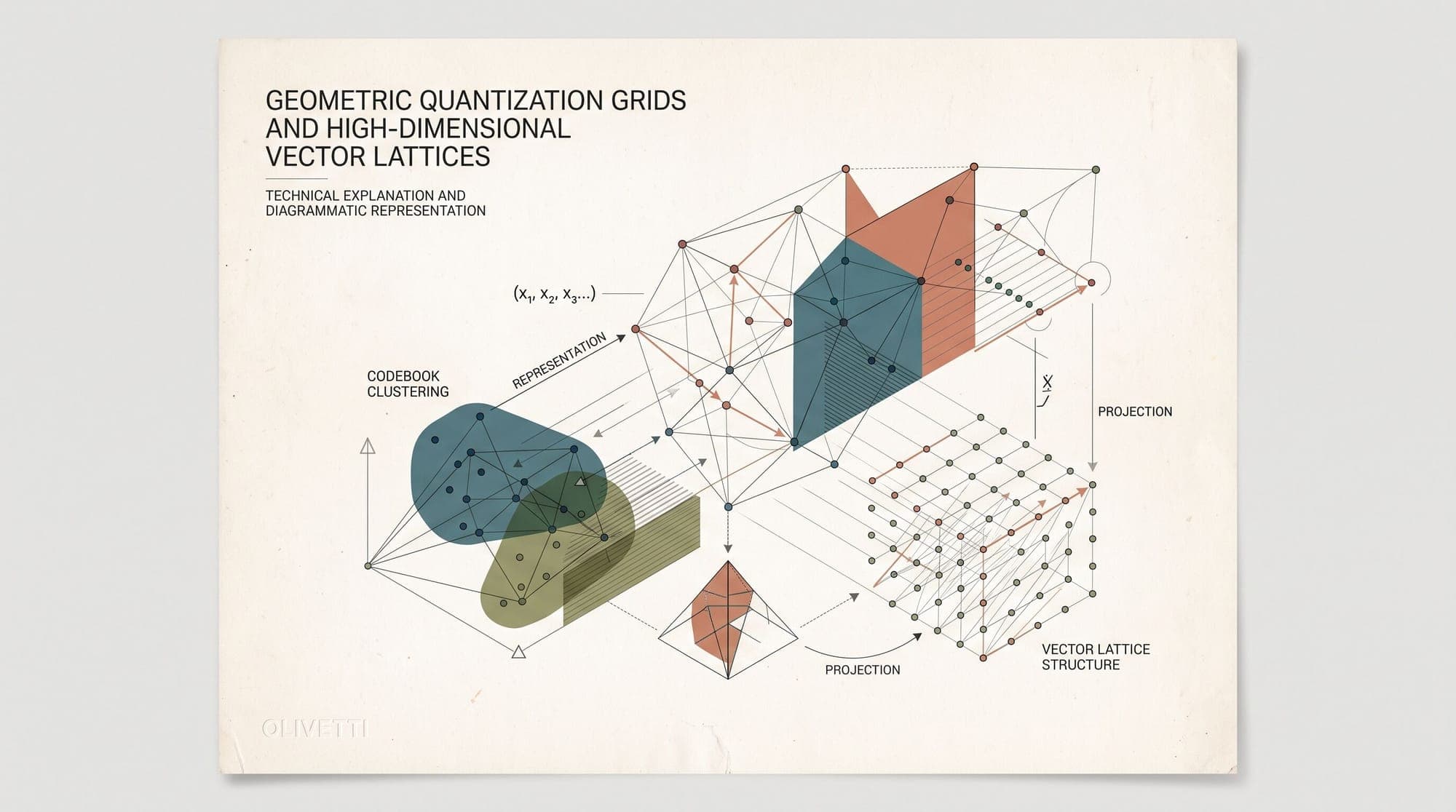
    Vector Quantization for LLM Weights in Production: Comparing QuIP#, AQLM, and VPTQ Architecture, Dequantization Kernels, and 2-Bit Serving Economics Scalar post-training quantization methods such as GPTQ and AWQ have become the standard for compressing large language models to 4-bit integer formats (INT4). At 4 bits per parameter, scalar techniques preserve over 98% of baseline 16-bit floating-point (FP16/BF16) model accuracy across common benchmarks. However, pushing scalar quantization below

    AI
    9 min read
  19. OpenAI Integrates GPT-5.6 Family into AWS Kiro with Reported 82% Cost Drop

    OpenAI has made its flagship GPT-5.6 model family available within Kiro, the spec-driven software development environment developed by Amazon Web Services. The release brings OpenAI's frontier reasoning and coding tiers, including Sol, Terra, and Luna, directly into AWS's agentic engineering platform. According to joint evaluations conducted by AWS and OpenAI on Terminal-Bench 2.1, executing complex software engineering tasks with GPT-5.6 Terra inside Kiro reduced total token expenditures by ro

    OpenAI
    3 min read
  20. Agent Self-Evolution and Experiential Learning in Production: Trajectory Reflection, Skill Library Curation, and Verifiable Policy Distillation

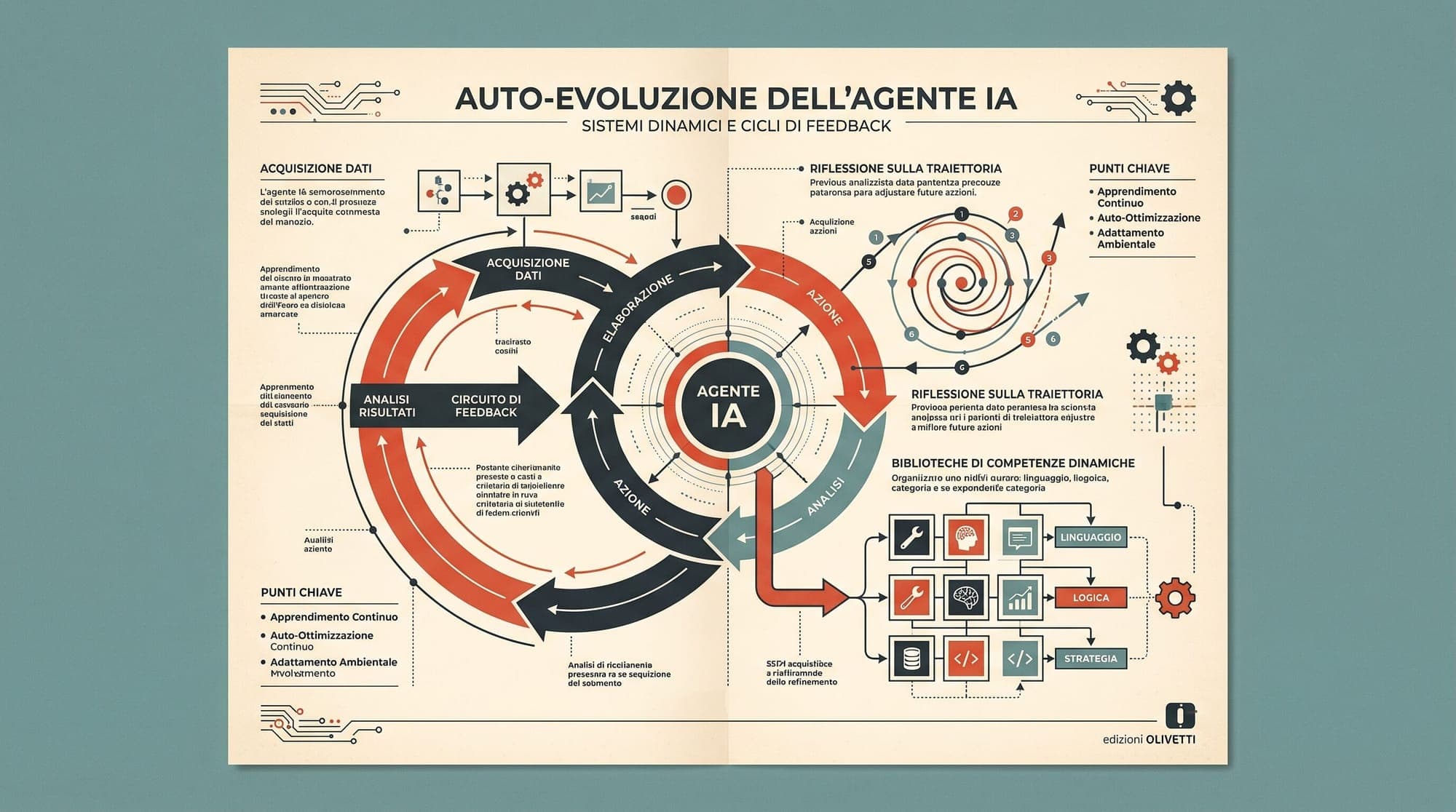
    Deploying autonomous AI agents into complex environments reveals a persistent operational bottleneck: frozen model weights. When an agent fails at a non-trivial workflow, traditional engineering setups rely on humans to diagnose the failure, rewrite prompt templates, adjust few-shot exemplars, or add custom heuristic wrappers. This manual iteration loop fails to scale across diverse, long-horizon production environments where agents encounter thousands of unique edge cases daily. To break this

    AI
    6 min read