Category / page 9

Chips & Infrastructure

314 articles

Articles, page 9

161-180 of 314
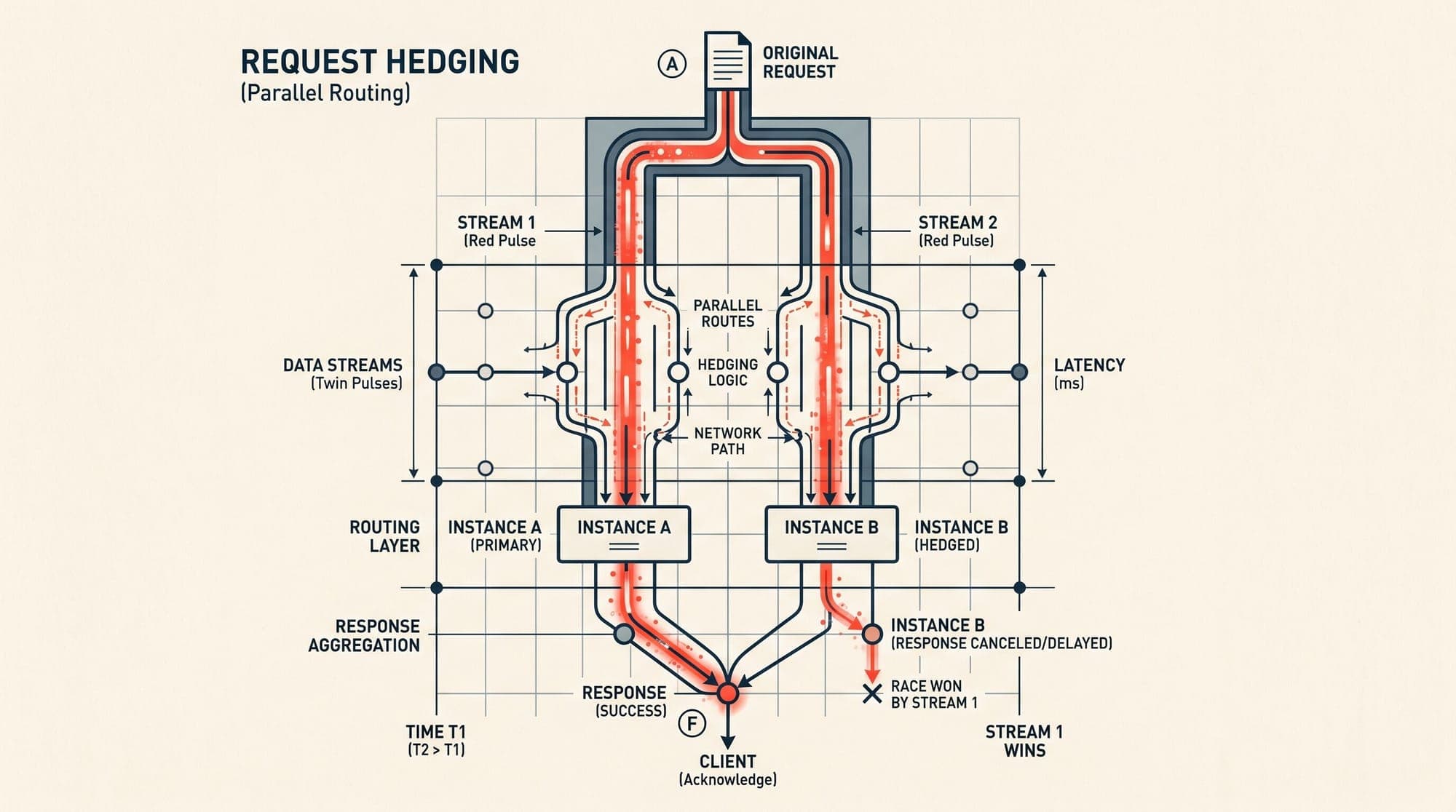
  1. Request Hedging in Production LLM Serving: Architecture, Tail-Latency Mitigation, and Cancellation Protocols

    In distributed computing, tail latency—the 95th, 99th, and 99.9th percentiles—dictates overall user experience, service-level agreements (SLAs), and multi-step agent execution reliability. While median response times (P50) in large language model (LLM) serving often appear acceptable, tail latencies frequently degrade by 4x to 10x. In multi-turn chat applications, real-time voice agents, and multi-agent DAG pipelines, a single straggler request stalls entire execution chains. Request hedging, a

    LLM
    8 min read
  2. LayerSkip and Self-Speculative Decoding: How Layer Dropout and Shared Early Exits Accelerate LLM Generation

    LayerSkip and Self-Speculative Decoding: How Layer Dropout and Shared Early Exits Accelerate LLM Generation Standard autoregressive large language model (LLM) inference is severely bottlenecked by memory bandwidth. In transformer decoders, generating a sequence of $N$ tokens requires loading all model parameters from High Bandwidth Memory (HBM) to on-chip SRAM $N$ separate times. While speculative decoding mitigates this bandwidth tax by using a smaller draft model to propose candidate tokens v

    AI
    8 min read
  3. Inside Ulanqab: How Inner Mongolia Became the 12.5GW Epicenter of China's AI Data Center Boom

    Located approximately 350 kilometers northwest of Beijing, the grassland municipality of Ulanqab in Inner Mongolia has transformed into China's primary hub for artificial intelligence compute infrastructure. Historically recognized for agriculture and mineral extraction, the city now hosts nearly 100 enterprise data centers operating or under active construction, with technology firms pledging an aggregate capacity of 12.5 gigawatts (GW). According to a research note published by Goldman Sachs,

    Infrastructure
    2 min read
  4. RayNeo Launches iO Smart Glasses with Waveguide Text Display, Omitting Cameras and Speakers

    Augmented reality hardware maker RayNeo has introduced the RayNeo iO Smart Glasses, a 33-gram wearable designed around discreet text projection rather than spatial media playback or computer vision. The device omits outward-facing cameras and integrated acoustic speakers, aiming to bypass privacy bans in enterprise workplaces and reduce social friction. The glasses deploy a monochrome green MicroLED optical waveguide with 97 percent transparency and roughly 1,300 nits of peak brightness across

    AI
    2 min read
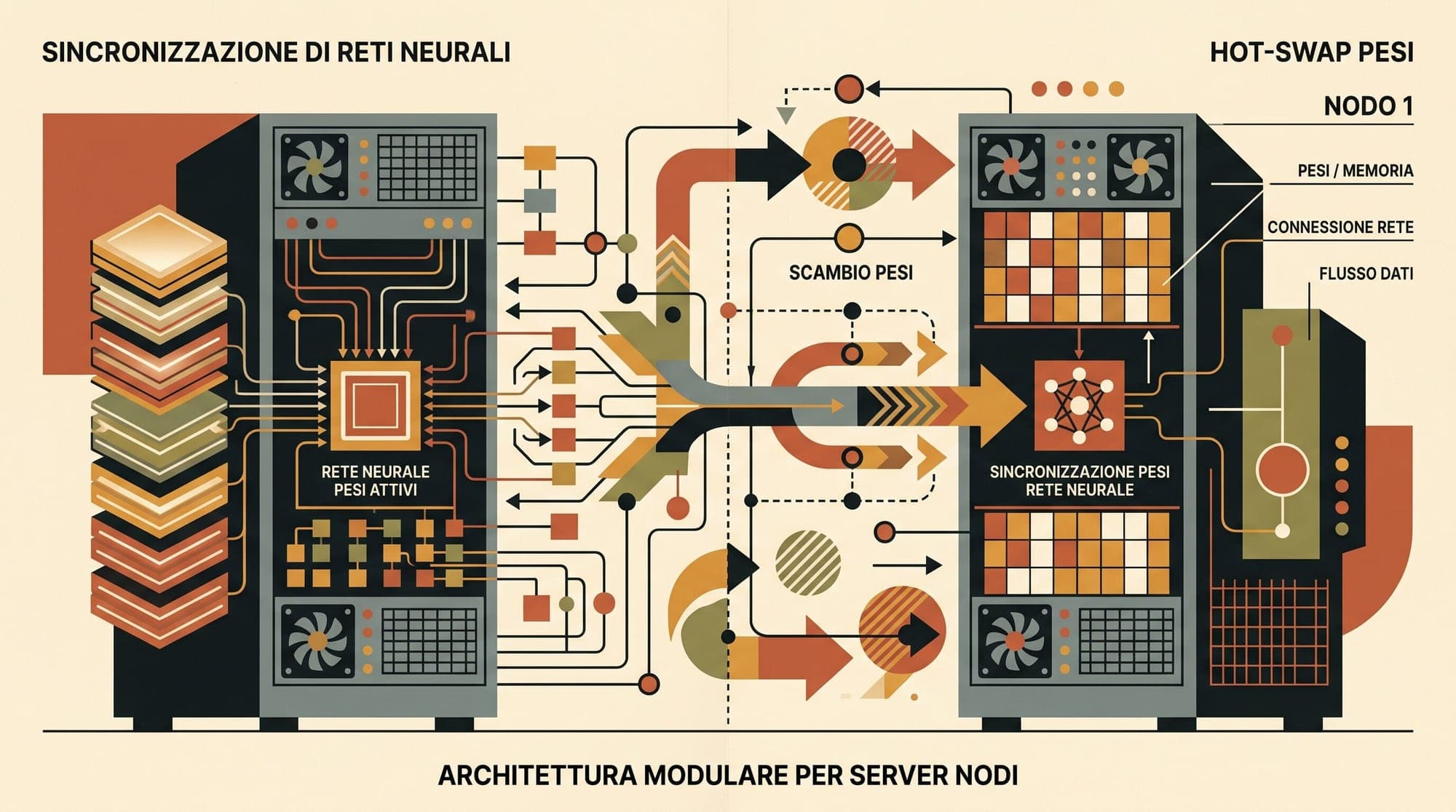
  5. Zero-Downtime Model Updates in Production LLM Serving: In-Place Weight Transfer, CUDA IPC vs. NCCL Syncing, and Traffic Draining Architectures

    Zero-Downtime Model Updates in Production LLM Serving: In-Place Weight Transfer, CUDA IPC vs. NCCL Syncing, and Traffic Draining Architectures In high-throughput LLM serving infrastructure, updating model checkpoints presents a severe operational dilemma. Traditional microservice deployment patterns such as blue-green deployments or rolling pod restarts fail to scale economically when applied to multi-GPU LLM clusters. Tearing down a serving instance to load a newly fine-tuned checkpoint or pol

    AI
    6 min read
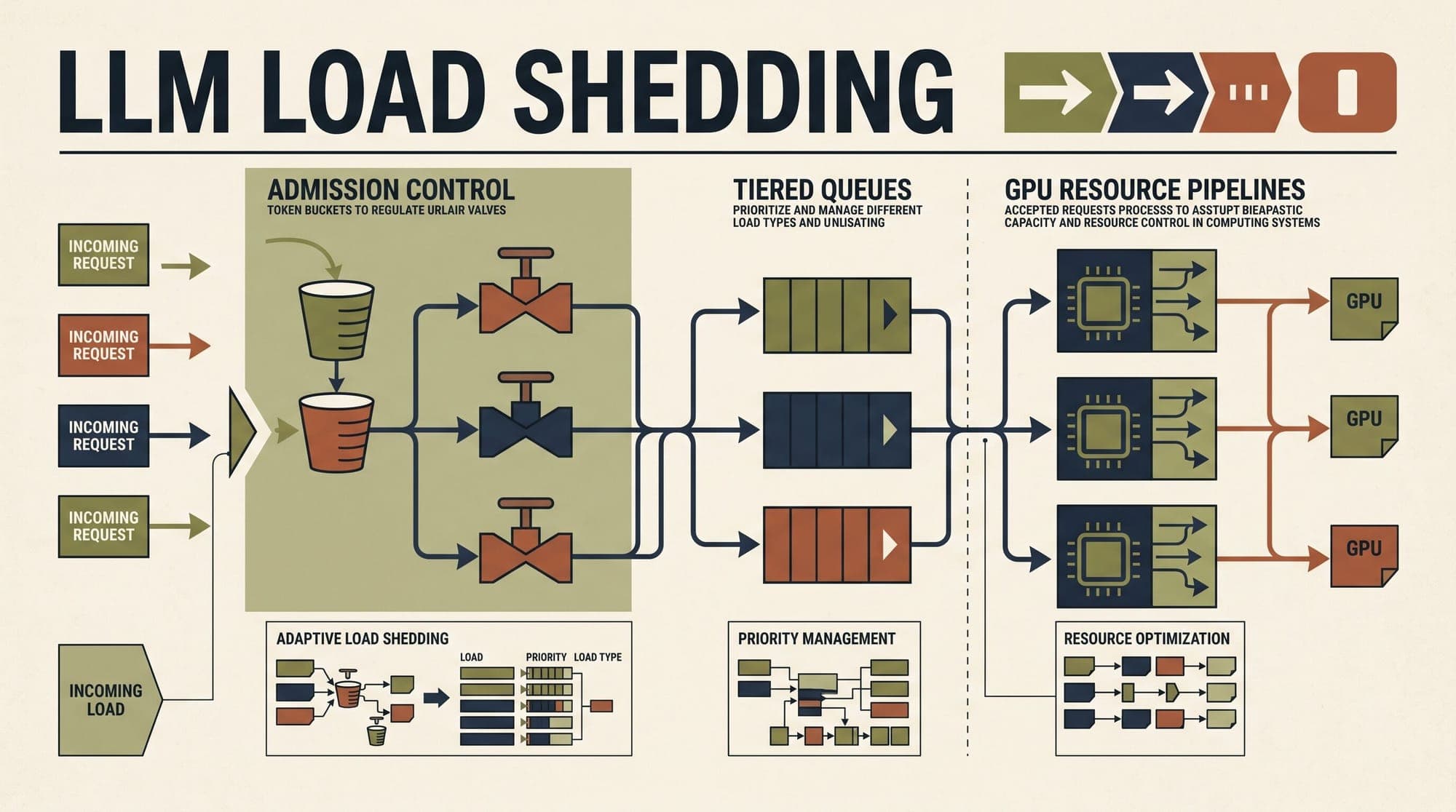
  6. LLM Load Shedding and Overload Control in Production: Adaptive Admission, Preemption Economics, and Graceful Degradation

    LLM Load Shedding and Overload Control in Production: Adaptive Admission, Preemption Economics, and Graceful Degradation Standard web services rely on well-established overload protection patterns: reverse proxies monitor CPU utilization, memory thresholds, or static queue depths and reject excess HTTP requests with 429 Too Many Requests or 503 Service Unavailable status codes. When applied naively to Large Language Model (LLM) serving infrastructure, these conventional heuristics fail catastro

    LLM
    9 min read
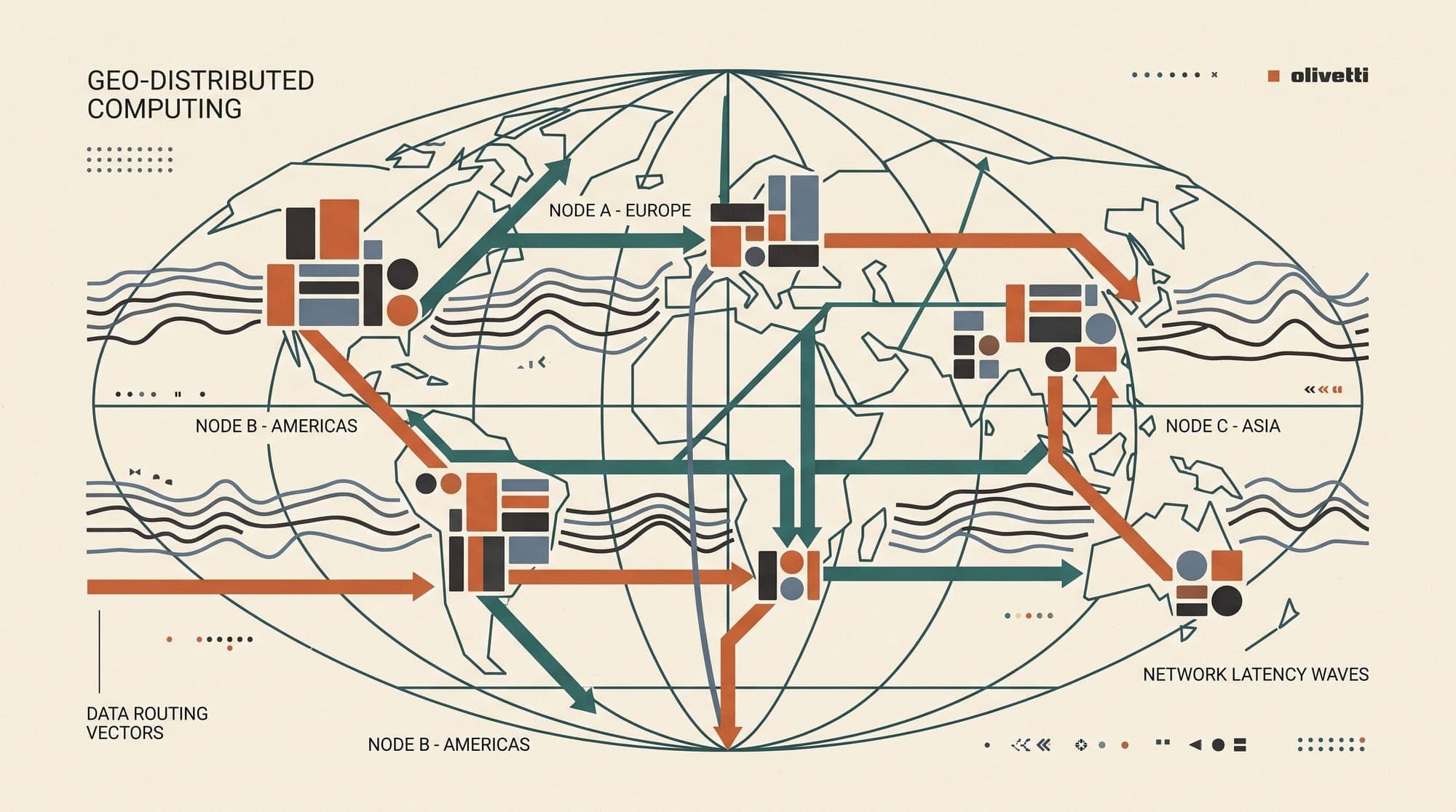
  7. Geo-Distributed LLM Inference in Production: Cross-Region Routing, Wide-Area KV Cache Dynamics, and Data Residency Architecture

    Serving large language models at enterprise scale quickly encounters geographic constraints. When users, microservices, and autonomous agents are distributed across North America, Europe, and Asia-Pacific, routing all traffic to a single centralized GPU cluster introduces significant wide-area network (WAN) round-trip times (RTT). An interactive request from Singapore to a US-East data center carries 180ms to 240ms of baseline network latency before the GPU executes a single token. However, dis

    AI
    7 min read
  8. Netflix Details GenRec LLM-Native Recommendation Architecture in Production A/B Trials

    Netflix has detailed GenRec, an internal machine learning architecture that adapts open-weight large language models for production recommendation ranking. The system replaces hand-crafted feature pipelines with natural-language context engineering, achieving measurable improvements in live A/B trials while reducing required training labels by up to 40 times. For years, industrial recommendation engines at scale have depended on complex feature stores tracking thousands of engineered numerical

    Netflix
    3 min read
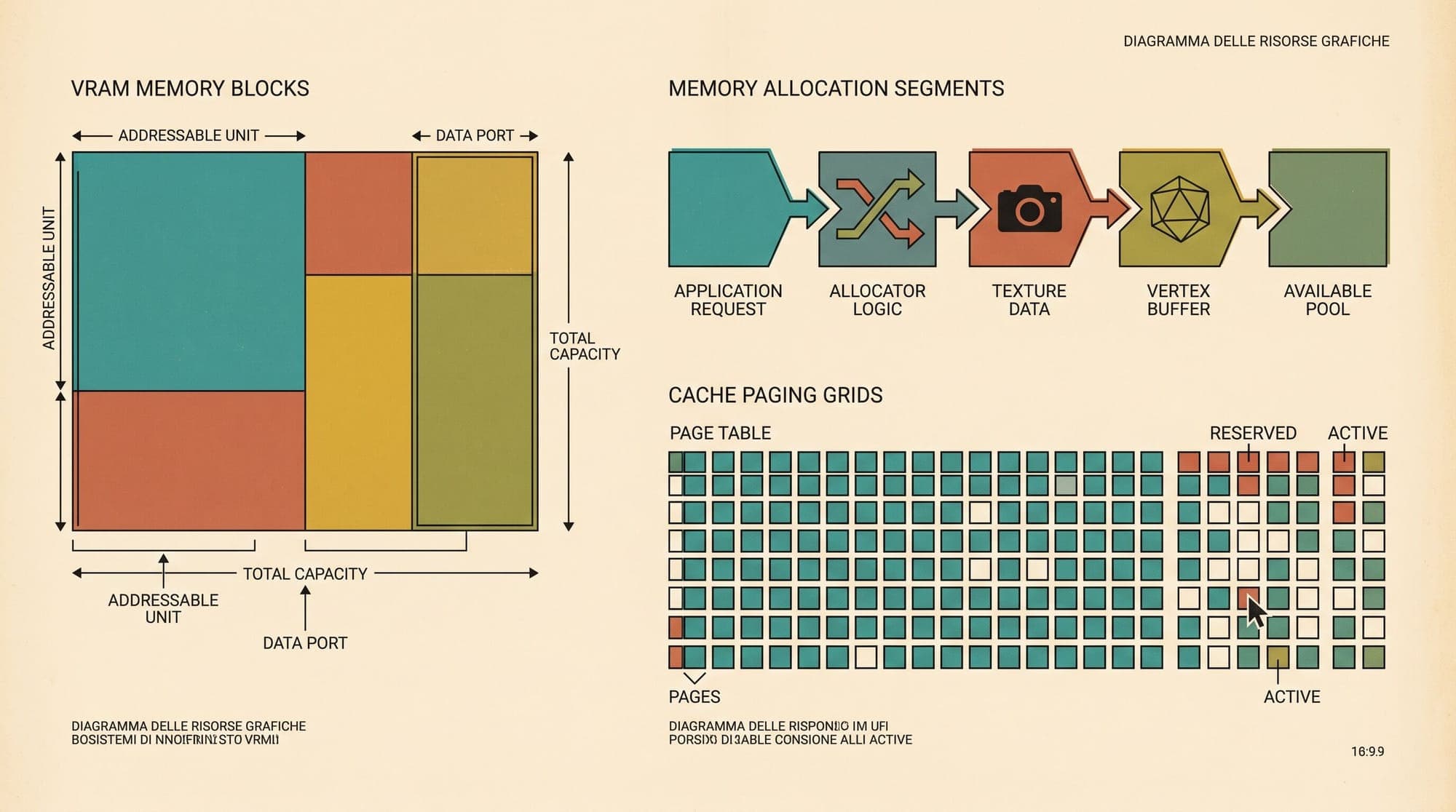
  9. GPU Memory Profiling in Production LLM Serving: CUDA Allocator Internals, PyTorch Snapshots, and VRAM Optimization

    In high-throughput large language model serving, memory is the primary constraint governing latency, batch concurrency, and context length. While model parameter footprints are static and easily calculated, runtime GPU memory (VRAM) dynamics are governed by low-level caching allocators, dynamic key-value (KV) cache allocation pools, transient activation spikes, and memory fragmentation. When an inference worker crashes with torch.cuda.OutOfMemoryError, default system diagnostics such as nvidia-

    LLM
    6 min read
  10. Semantic Drift and Data Distribution Monitoring in Production LLM Systems: Embedding Shift Detection, Output Entropy Tracking, and Quality Decay Metrics

    Semantic Drift and Data Distribution Monitoring in Production LLM Systems: Embedding Shift Detection, Output Entropy Tracking, and Quality Decay Metrics Large language model applications rarely fail with loud runtime crashes once deployed. Instead, production systems suffer from silent performance decay caused by data distribution shifts. User queries evolve, real-world domain vocabularies change, retrieval corpora expand, and upstream model providers quietly alter model weights or system promp

    AI
    7 min read
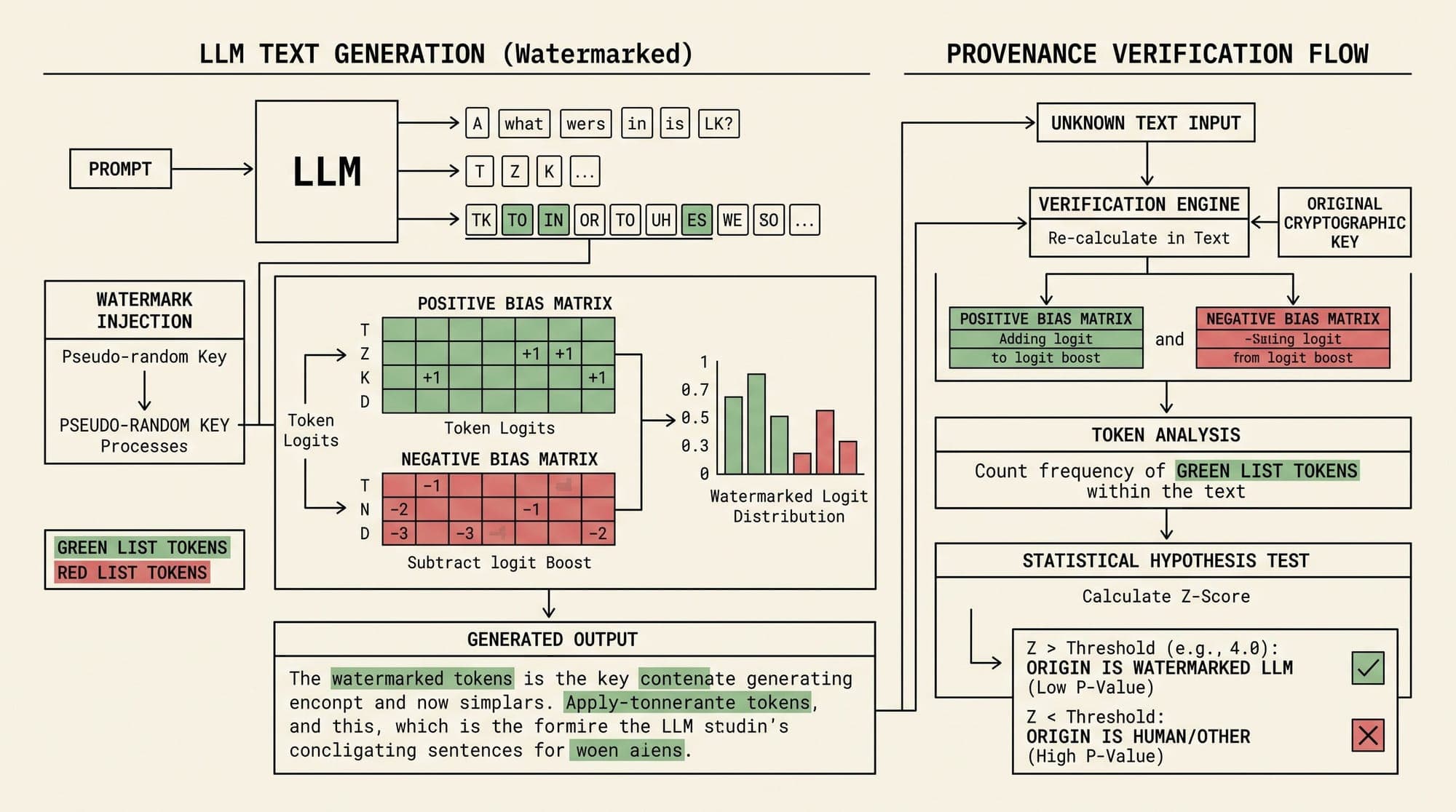
  11. LLM Text Watermarking in Production: Statistical Logit Biasing, Cryptographic Signatures, and Evasion Vectors

    As regulatory frameworks such as Article 50 of the EU AI Act enforce machine-generated content provenance, text watermarking has transitioned from academic theory to a core component of production LLM serving stacks. Unlike post-hoc classifiers that evaluate perplexity or burstiness and suffer from high false-positive rates on formal or non-native writing, generation-time watermarks embed imperceptible statistical or cryptographic signals directly into the token sampling process. When engineere

    AI
    5 min read
  12. Serverless GPU Inference in Production: Cold Starts, GPU Memory Snapshotting, and Weight Paging Architectures

    Serverless GPU Inference in Production: Cold Starts, GPU Memory Snapshotting, and Weight Paging Architectures Deploying large language models on dedicated cloud GPUs creates an uncomfortable financial trade-off: keeping enterprise accelerators such as NVIDIA H100s or A100s warm 24/7 costs thousands of dollars per instance each month, yet scaling instances to zero introduces severe latency penalties. When traffic arrives at a dormant node, a standard inference server cold start can take anywhere

    Infrastructure
    7 min read
  13. Anthropic Bankers Pitch $100B+ Capital Raise at $2T Valuation Ahead of Historic IPO

    Investment banks underwriting Anthropic's planned initial public offering have initiated preliminary discussions with institutional investors and sovereign wealth funds, outlining a potential capital raise exceeding $100 billion at a valuation of up to $2 trillion, according to reporting from The New York Times. If executed at those terms, the flotation would represent the largest public market debut in history, surpassing both Saudi Aramco's $29.4 billion raise in 2019 and SpaceX's $75 billion

    Anthropic
    2 min read
  14. Amazon Hikes Hardware Prices Across Echo, Fire TV, Kindle, and Eero Over AI-Driven Memory Costs

    Amazon has quietly increased retail prices across its first-party consumer hardware lines, raising MSRPs on Echo smart speakers, Fire TV streaming devices, Kindle e-readers, and Eero mesh networking systems to offset rising component costs for memory and storage. The price adjustments reflect how the enterprise artificial intelligence infrastructure buildout is impacting consumer electronics supply chains. Surging hyperscaler demand for high-bandwidth memory (HBM3e and HBM4) alongside high-dens

    Hardware
    2 min read
  15. Anthropic IPO Filing to Cite AI Backlash and Data Center Resistance as Material Risk Factors

    Anthropic is preparing to disclose public backlash against artificial intelligence and community opposition to data center construction as material risk factors in its upcoming initial public offering prospectus, according to reports from CNBC. The San Francisco-based AI laboratory, which recently crossed a $65 billion annualized revenue run rate and is valued near $1 trillion in private transactions, is drafting the S-1 registration statement as it conducts preliminary investor meetings. The d

    AI
    2 min read
  16. OpenAI Cuts GPT-5.6 Sol API and Coding Tool Pricing by Over 20%

    OpenAI has lowered developer pricing for its flagship GPT-5.6 Sol model across its API and developer toolchain for a three-month promotional window. The rate adjustment reduces input token costs by 20% and output token costs by 33.3%, bringing standard short-context inference to $4.00 per million input tokens and $20.00 per million output tokens. The revision comes amid intensified developer pricing pressure across the frontier model ecosystem, particularly following aggressive pricing from com

    OpenAI
    2 min read
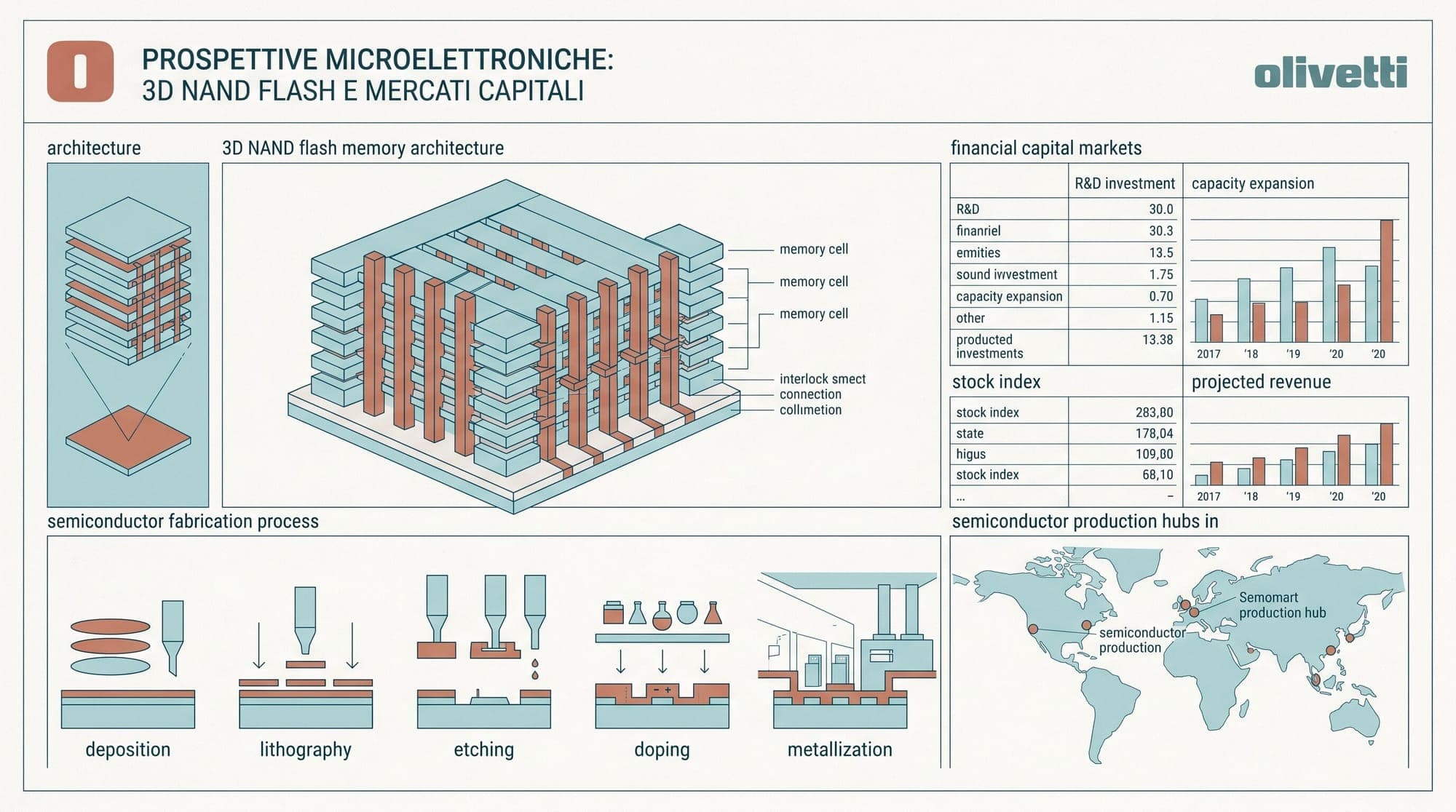
  17. Chinese NAND Flash Maker YMTC Files for $4.9B Shanghai STAR Market IPO

    The Shanghai Stock Exchange has accepted the listing application for Yangtze Memory Technologies Corp (YMTC) and parent entity CCSH Corporation, setting up a 33 billion yuan ($4.9 billion) initial public offering on China's science and technology-focused STAR Market. The offering marks the third-largest float in the history of the STAR Market, trailing only foundry Semiconductor Manufacturing International Corporation (SMIC) and DRAM manufacturer ChangXin Memory Technologies (CXMT). Offering

    Hardware
    1 min read
  18. FlashAttention-3: How Warp Specialization, Asynchronous TMA Tiling, and FP8 Hardware Acceleration Scale Attention on Hopper GPUs

    FlashAttention-3: How Warp Specialization, Asynchronous TMA Tiling, and FP8 Hardware Acceleration Scale Attention on Hopper GPUs The emergence of Transformer architectures scaled deep learning across language, vision, and multimodal domains, but standard exact attention has historically imposed severe compute and memory bandwidth bottlenecks. The standard multi-head self-attention operation computes: $$\text{Attention}(Q, K, V) = \text{softmax}\left(\frac{QK^T}{\sqrt{d}}\right)V$$ For a seque

    AI
    10 min read
  19. Apple Cuts 200 Jobs Across Siri and Vision Pro Teams in AI Realignment

    Apple has eliminated approximately 200 roles across its Siri voice assistant organization and the Vision Products Group, according to reporting from Bloomberg and AppleInsider. The personnel reductions reflect an internal reallocation of engineering resources as Apple shifts from legacy voice parsing architectures to foundation model pipelines and redirects hardware focus toward lightweight AI-enabled wearable devices. The workforce reductions impact roughly 100 employees in the Vision Products

    News
    2 min read
  20. US Public Opposition to Local AI Data Centers Surges to 75%, Heatmap Survey Finds

    Public opposition to local data center construction in the United States has accelerated sharply over the past twelve months, according to a survey conducted by Heatmap News and Embold Research. The nationwide survey found that 75 percent of American adults now oppose the development of a data center facility near their community, with 61 percent reporting they are strongly opposed. The shift marks a substantial reversal from August 2025, when public sentiment was evenly divided at 43 percent i

    News
    2 min read