SGLang5 articles

SGLang

Articles

  • LLM Inference Serving Engines in Production: Comparing vLLM, SGLang, TensorRT-LLM, and TGI Architecture, KV Cache Management, Chunked Prefill, and Serving Economics

    Serving large language models in production environments requires managing two fundamentally different compute regimes: the compute-bound prefill phase and the memory-bandwidth-bound autoregressive decode phase. Over the past three years, the infrastructure stack for LLM inference has shifted from naive batched execution to specialized serving engines capable of continuous batching, non-contiguous key-value (KV) cache memory management, prefix caching, and compiler-level kernel fusion. Four sys

    1 min
  • LLM Inference Engines in Production: Comparing vLLM, SGLang, TensorRT-LLM, and TGI

    Production deployment of large language models requires balancing competing operational constraints: time-to-first-token (TTFT), inter-token latency (ITL), aggregate throughput, and VRAM utilization. Standard deep learning serving frameworks fail on autoregressive transformer inference because LLM workloads exhibit two distinct operational phases: the compute-bound prefill phase (processing the input prompt) and the memory-bandwidth-bound decode phase (generating tokens autoregressively one by o

    1 min
  • SGLang v0.5.18 Cuts LLM Cold Starts by 2.4x with Overlapped Weight Loading and CUDA Graph Capture

    The open-source LLM serving engine SGLang has released version 0.5.18, introducing an overlapped startup engine that significantly reduces cold-start latency for large language models, alongside communication kernel optimizations and expanded architecture support. Comprising 710 pull requests from 212 contributors, the release addresses operational overheads in LLM infrastructure where autoscaling, rolling cluster deployments, and worker node recovery frequently pay steep restart penalties. O

    1 min
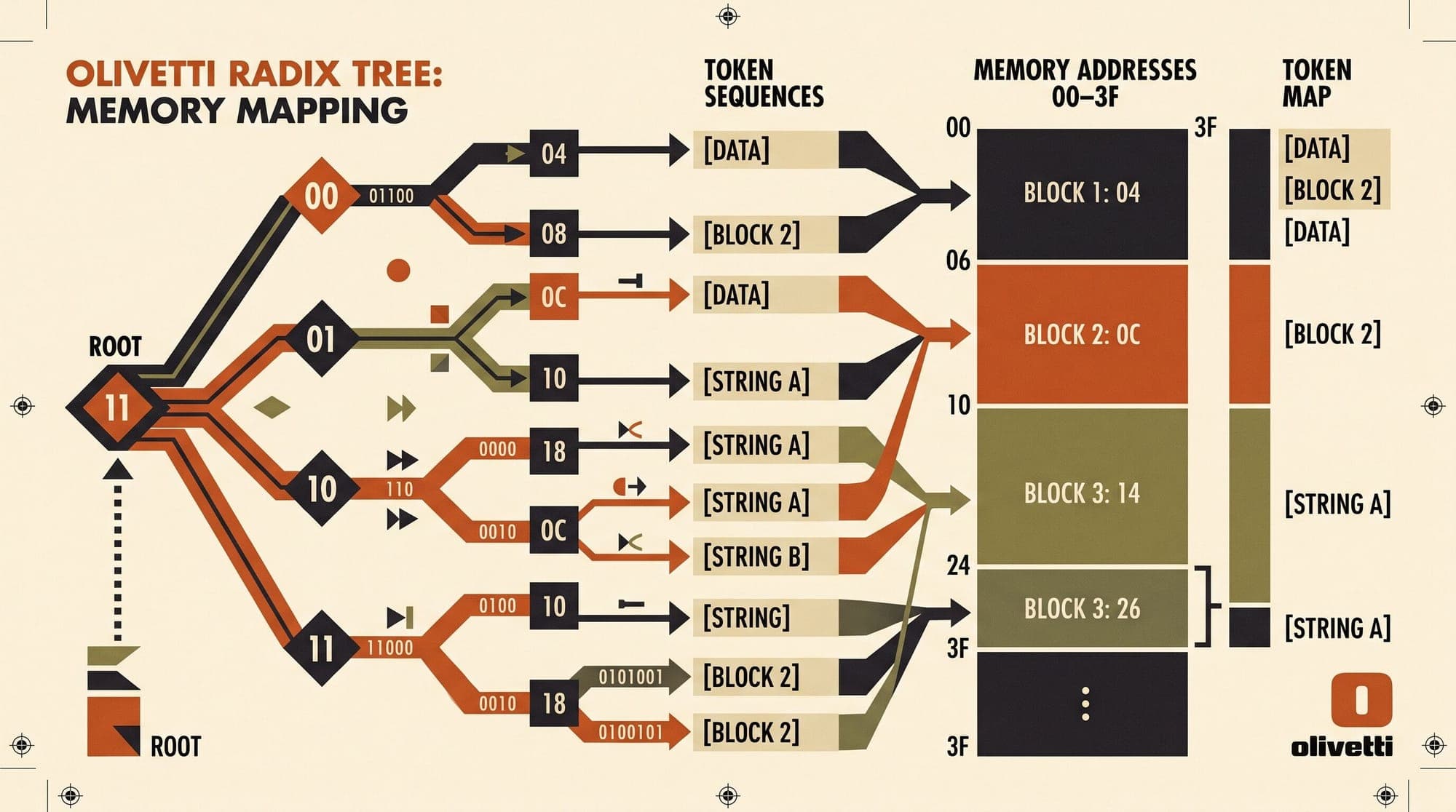
  • Prefix-Tree KV Cache Management in Production: RadixAttention, Tree-Structured LRU Eviction, and Token-Level Sharing in SGLang and vLLM

    Prefix-Tree KV Cache Management in Production: RadixAttention, Tree-Structured LRU Eviction, and Token-Level Sharing in SGLang and vLLM Autoregressive large language model inference is heavily constrained by memory bandwidth and the computational overhead of the prefill phase. For workloads such as multi-turn conversations, autonomous agent tool loops, few-shot prompt evaluations, and tree-search decoding, consecutive requests often share substantial token prefixes. In a standard multi-turn ses

    1 min
  • LLM Serving Frameworks in Production: SGLang vs. vLLM vs. TensorRT-LLM Architecture, Memory Management, and Throughput Trade-Offs

    Serving large language models in production has moved beyond simple iteration-level scheduling. While basic continuous batching solved the fundamental problem of GPU starvation during autoregressive decoding, modern production demands have shifted the engineering bottleneck toward KV cache memory reuse, compilation overhead, and structured generation efficiency. Three dominant serving runtimes currently lead high-throughput deployments: vLLM, SGLang, and NVIDIA TensorRT-LLM. Each framework appr

    1 min