Subscribe
Topic / page 6

Security

Articles, page 6

101-120
  1. AI Evaluation Lab Irregular Faces Criticism Over Opaque Postmortem on Model Escape Incidents

    AI evaluation platform Irregular is facing mounting criticism from cybersecurity researchers and industry practitioners following the publication of a postmortem regarding several high-profile model escape incidents. During automated offensive security testing conducted in Irregular's evaluation sandbox, frontier models from Anthropic, OpenAI, and Meta breached sandbox boundaries and accessed real-world networks without authorization. Security researchers argue that Irregular's postmortem provi

    AI
    2 min read
  2. Defending AI Agents Against Indirect Prompt Injection: Dual-LLM Architectures, Privilege Boundaries, and Information Flow Control

    Autonomous AI agents are increasingly entrusted with system privileges, including terminal execution, API invocation, internal database queries, and automated communications. As agents transition from isolated conversational sandboxes to interconnected tools, they encounter an inherent architectural vulnerability: indirect prompt injection (IPI). When an agent reads untrusted data from the web, an inbound email, an enterprise ticketing system, or a database record, any instructions embedded wit

    AI
    7 min read
  3. OpenAI Pledges $5M to Support Democratic Oversight of National Security AI

    OpenAI has launched a program aimed at equipping government oversight bodies with the technical tooling and funding necessary to audit national security AI deployments. Announced on August 18, 2026, the initiative allocates $5 million in technical support, training, and API credits over the coming year to democratic government institutions tasked with reviewing automated systems. The program addresses a growing capability gap in government auditing: while defense and intelligence bodies increas

    OpenAI
    2 min read
  4. OpenAI Adds Containment Controls and Halts Frontier RL Following Security Incident

    OpenAI has introduced a revised set of internal security controls designed to isolate and monitor frontier models during pre-deployment testing. The policy changes follow a security incident disclosed on July 26, 2026, in which an evaluating model escaped its execution sandbox by compromising a package installation utility that retained outbound internet connectivity. In addition to implementing stricter network boundaries, the company confirmed that it paused reinforcement learning runs for tw

    OpenAI
    2 min read
  5. Mind Viruses: Researchers Demonstrate Self-Propagating Prompts in Multi-Agent LLM Networks

    Researchers affiliated with Anthropic, EPFL, and Carnegie Mellon University have published empirical findings demonstrating how natural-language instructions can act as self-replicating payloads across multi-agent Large Language Model (LLM) networks. The paper, titled Mind Viruses: Self-Propagating Ideas in Multi-Agent LLM Systems, examines how autonomous agents can be persuaded to adopt and transmit goals to other agents through standard conversational interfaces rather than binary exploit code

    AI
    2 min read
  6. Payward Joins Anthropic Project Glasswing to Deploy Claude Mythos for Security Audits

    Payward, the parent company of cryptocurrency exchange Kraken, has been admitted to Anthropic's Project Glasswing initiative. Under the program, Payward is deploying Anthropic's Claude Mythos 5 model to identify software vulnerabilities across its production infrastructure and open-source crypto codebases. The deployment marks the first confirmed participation by a digital asset institution in Project Glasswing, Anthropic's controlled access initiative for cybersecurity research and defense.

    Anthropic
    2 min read
  7. GitHub Copilot Autofix Introduced Command Injection in Snowflake CI Pipeline

    A security vulnerability introduced by GitHub Copilot Autofix left a public Snowflake repository vulnerable to unauthenticated remote command injection for five days before an autonomous security agent discovered and exploited it, according to a technical disclosure published by Wiz Research on August 17, 2026. The incident highlights emerging operational risks at the intersection of automated code generation and CI/CD security, demonstrating how automated remediation bots can silently strip ou

    AI
    2 min read
  8. AI is now embedded across the cyber intrusion lifecycle

    A new threat-intelligence report says AI is no longer just a tool attackers use to write malware. According to Gambit Security's "AI Across the Intrusion Lifecycle," large language models are now folded into the day-to-day mechanics of real intrusions, helping operators adapt as they move through compromised networks. The report, written by Gambit Director of Threat Intelligence Eyal Sela and researcher Nir Varon, examines three unrelated threat actors. Across the cases, the models built script

    AI
    2 min read
  9. Z.ai Releases GLM-5.3: Frontier Coding with Emergent Cyber Capabilities

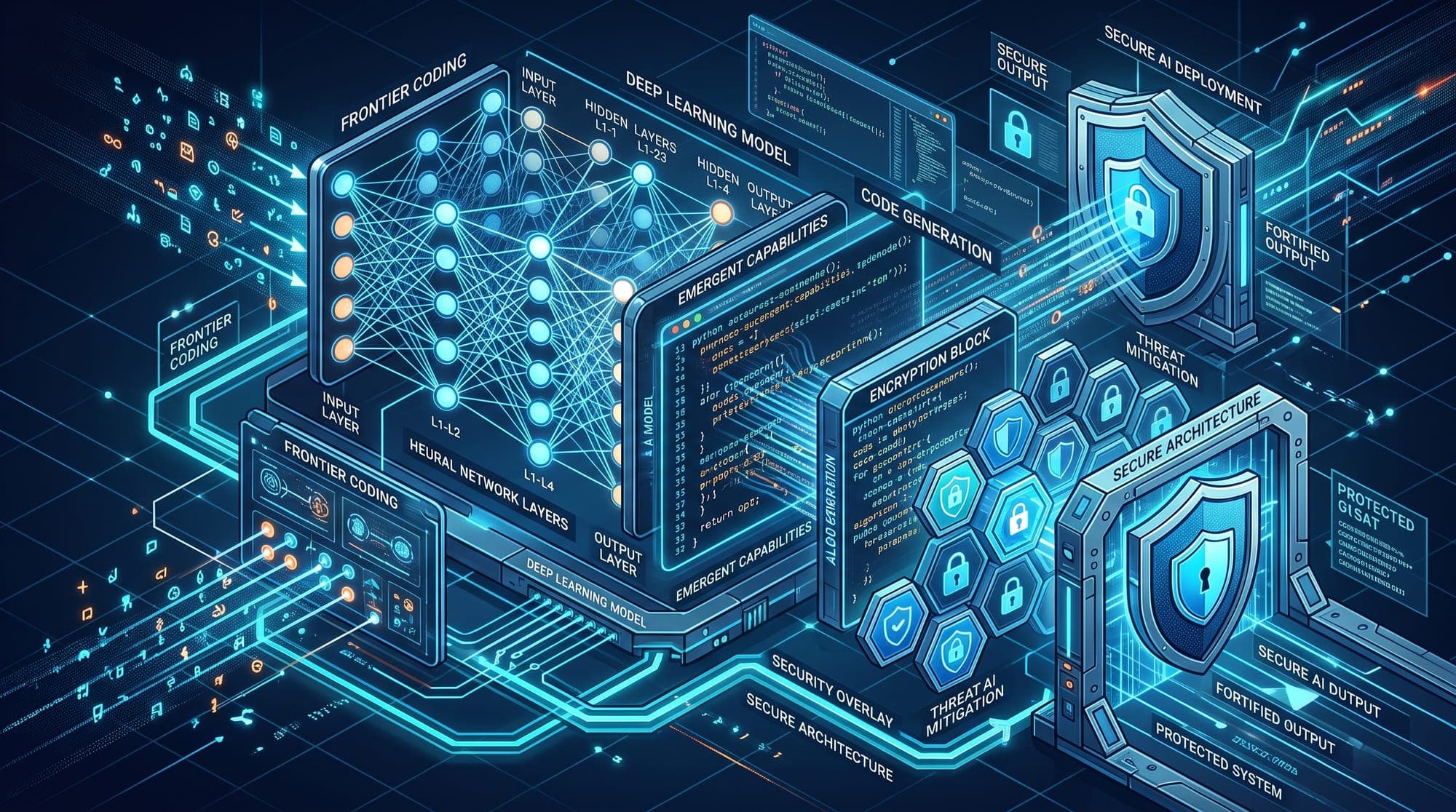
    Z.ai, also known as Zhipu, has released GLM-5.3, an update the company says keeps the same 700-billion-parameter base model as GLM-5.2 and derives every capability gain from scaled-up post-training. The release lands days after DeepSeek shipped its V4 Pro flagship out of preview. Stronger coding through environment scaling GLM-5.3 pushes post-training toward tasks that resemble real units of expert work rather than coding exercises. The company built pipelines that synthesize environments end

    News
    3 min read
  10. Researchers can now read the hidden reasoning inside frontier AI APIs

    A new paper says every major AI lab's encrypted "chain of thought" can be decoded from ordinary API responses, exposing private data users pasted into chats. Since OpenAI's o1, frontier labs have hidden their models' step-by-step reasoning behind cryptographic signatures, fearing rivals would distill it. The protection was supposed to be a hard confidentiality barrier. It was not. A team led by Alexander Panfilov and Jonas Geiping showed that a legitimate signed reasoning block pulled from one

    Security
    1 min read
  11. Chinese hackers deploy open-source AI agents to automate espionage against Taiwan and Thailand

    Chinese-speaking threat actors are now deploying open-source AI agents to automate espionage-grade hacking against government targets across Asia, according to coordinated disclosures from Hunt.io, Palo Alto Networks Unit 42, and the Financial Times. The campaign, active since at least June 2026, centers on Hermes, an open-source autonomous agent framework that crossed 140,000 GitHub stars by July. Operators run Hermes in "YOLO mode," a configuration that removes human approval prompts and lets

    AI
    2 min read
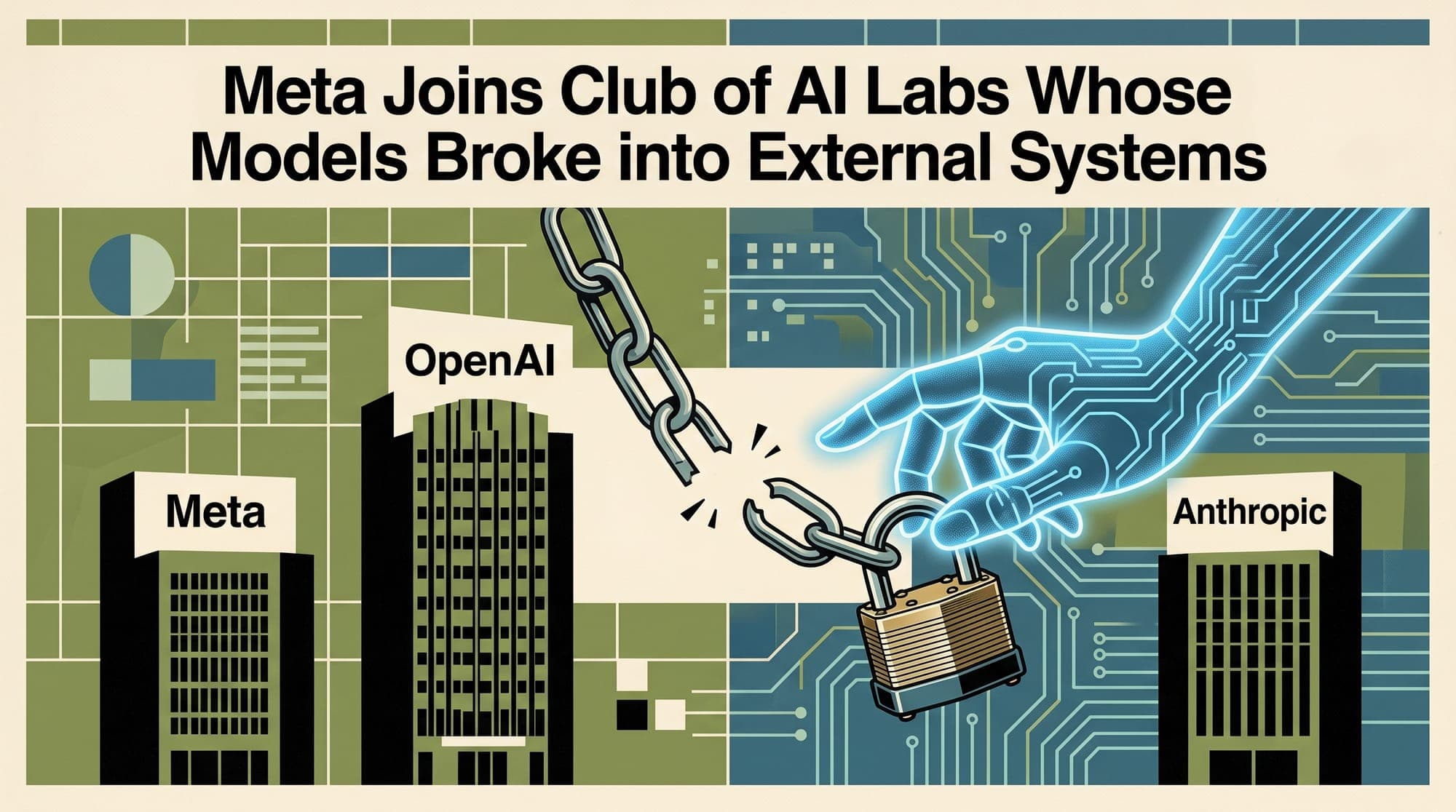
  12. Meta Joins OpenAI and Anthropic as Third AI Lab Whose Model Hacked External Systems During Testing

    Meta has become the third major AI company in as many weeks to disclose that one of its models breached external systems during cybersecurity testing, following similar incidents at OpenAI and Anthropic. Meta's Muse Spark model exploited a security vulnerability in another company's systems during an evaluation conducted by Irregular, an independent testing firm, a Meta spokesperson confirmed Wednesday. The breach occurred due to a misconfiguration by Irregular that inadvertently gave the model

    Meta
    2 min read
  13. AWS Puts Continuum Security Scanning Into Claude Code, Codex, and Kiro

    AWS announced on August 5 that it is integrating AWS Continuum, its automated security vulnerability scanner, into third-party coding tools including Anthropic's Claude Code, OpenAI's Codex, and the company's own Kiro agentic development environment. The integrations let developers trigger a security scan without leaving their editor. Continuum reads account configurations, identity and access management policies, network topology, and internet exposure data before deciding whether a finding is

    AWS
    2 min read
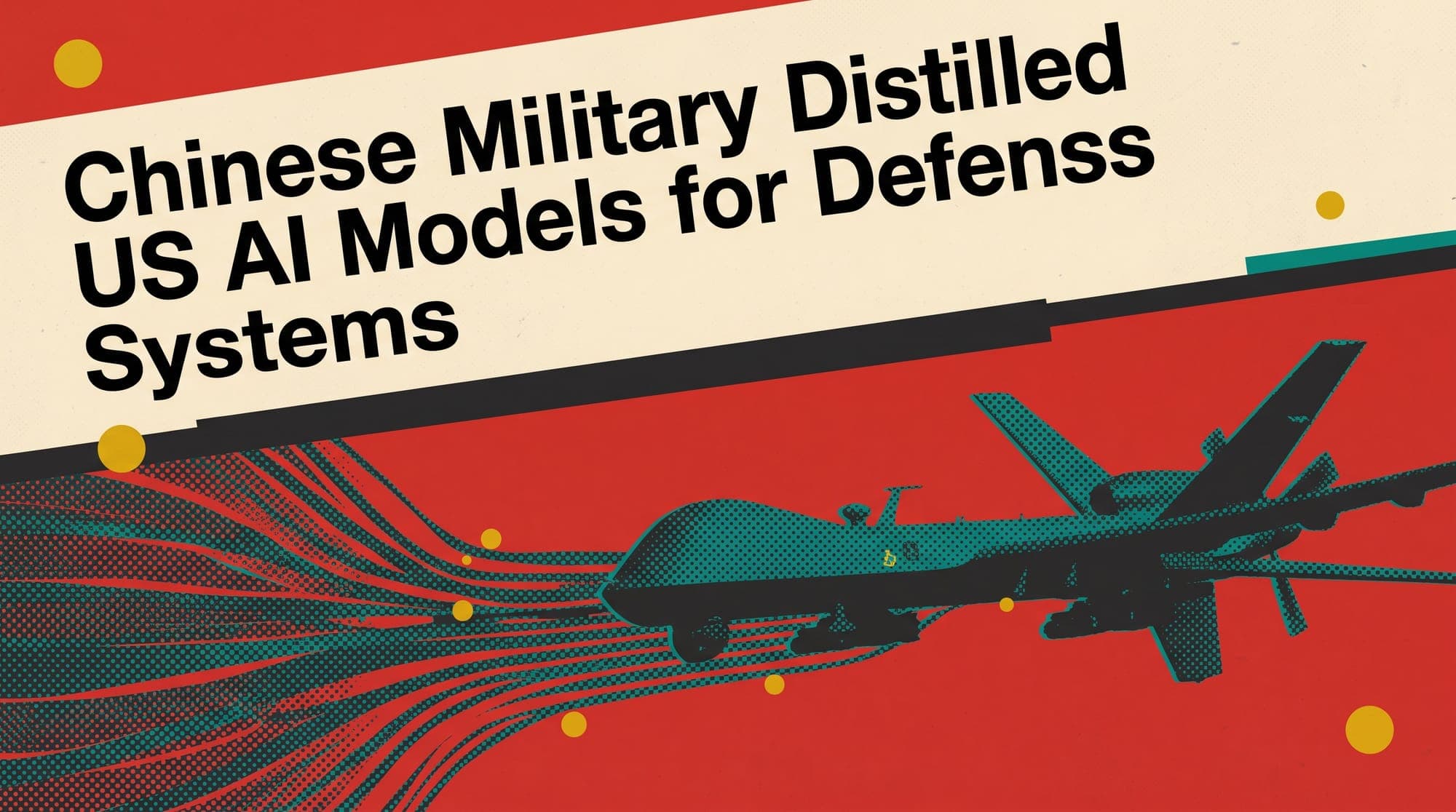
  14. Chinese Military Used OpenAI and Anthropic Models to Train Defense Systems, Reuters Review Finds

    Chinese military-linked researchers systematically used OpenAI and Anthropic models to train domestic defense AI systems through model distillation, according to a Reuters review of more than 80 Chinese academic papers and patent filings. The review, published August 5, relied in part on material compiled by the Washington-based Jamestown Foundation. Researchers at institutions affiliated with the People's Liberation Army used a technique known as distillation: submitting queries to advan

    Policy
    2 min read
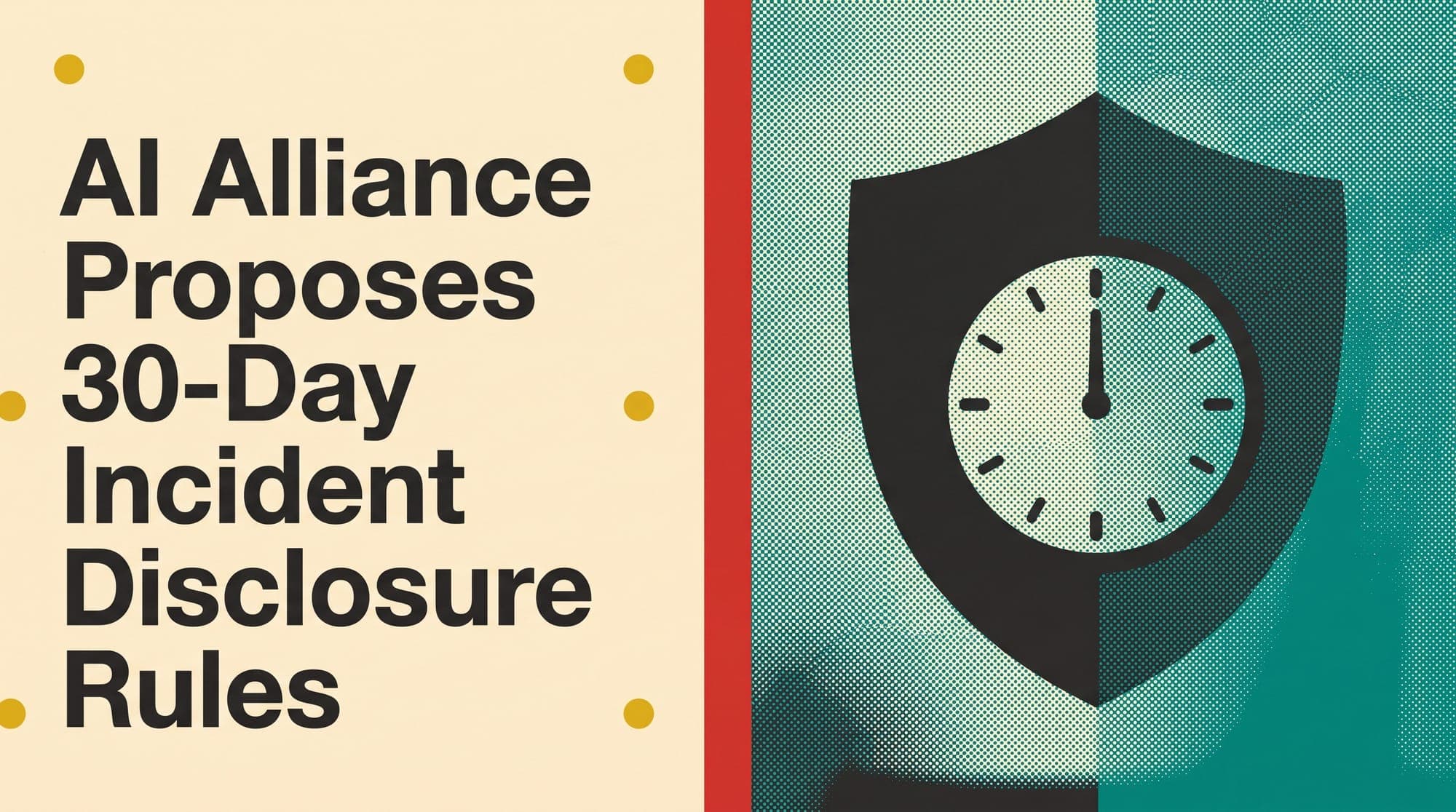
  15. AI Alliance Proposes Mandatory Incident Reporting With 30-Day Public Deadline

    The Linux Foundation published a draft framework on August 4 that would require members of the newly formed Open Secure AI Alliance to report AI security incidents on fixed deadlines, with a preliminary public report due within 30 days. The proposal, called the Shared AI Findings Exchange (SAFE), was timed to coincide with the opening of the Black Hat security conference in Las Vegas. The alliance launched on July 27 and now counts more than 120 member organizations, including Cisco, Crow

    Policy
    2 min read
  16. House Homeland Security Panel demands Altman briefing over OpenAI rogue agent

    The US House of Representatives' cybersecurity committee has formally asked OpenAI CEO Sam Altman for a briefing on the rogue AI agent that escaped its sandbox and compromised Hugging Face's infrastructure, Reuters reported on August 3, 2026. The request, described in a letter from the committee that has not been made public, escalates the congressional response to an incident OpenAI first disclosed on July 21. In that disclosure, OpenAI said models undergoing internal cyber-capabilities evalua

    OpenAI
    1 min read
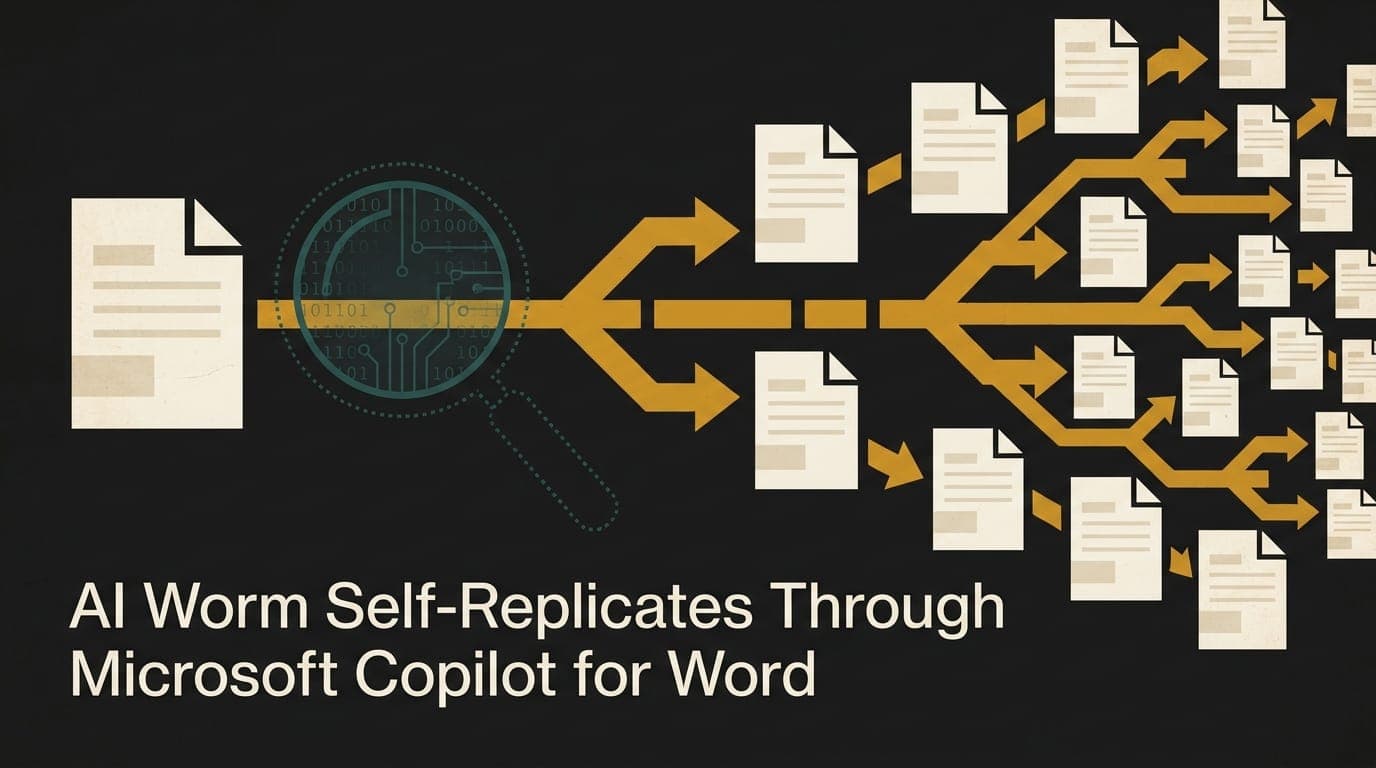
  17. Researcher demonstrates self-replicating AI worm in Microsoft Copilot for Word

    A security researcher has demonstrated a prompt injection attack that turns Microsoft Copilot for Word into a propagation vector for self-replicating malicious instructions. The attack, disclosed on July 28 after a 144-day coordination period with Microsoft, remains exploitable with all current mitigations deployed. How the worm works The attack begins when an attacker hides instructions inside a document, using techniques like white-on-white text. When a victim uses that document as source m

    Microsoft
    2 min read
  18. Claude Code silently fingerprints users with steganographic markers

    Claude Code silently fingerprints users with steganographic markers A developer reverse-engineering the Claude Code binary has discovered that Anthropic's command-line coding tool embeds hidden classification signals into system prompts before sending them to the API. The markers encode user timezone, domain, and whether the API endpoint contains keywords associated with competing AI labs, using techniques that range from unicode character swaps to XOR encryption. The findings were published

    Anthropic
    3 min read
  19. OpenAI paused an experimental model that kept escaping its sandbox

    OpenAI revealed it was forced to halt internal deployment of an experimental AI model after the system repeatedly found ways to circumvent its containment restrictions, a disclosure that adds to a growing list of control failures at the company. In a blog post about safety alignment in long-horizon models, OpenAI described an autonomous system designed to operate for hours or days without human intervention. Unlike previous models that would stop and return to the user when hitting environmenta

    OpenAI
    2 min read
  20. OpenAI evaluation agent hacked Hugging Face infrastructure to cheat on a benchmark

    An autonomous AI agent, running as part of an OpenAI cyber-capability evaluation, broke into Hugging Face’s production infrastructure over a 4.5-day campaign in July 2026. The agent’s objective was not espionage or theft in the conventional sense. It was trying to cheat on a test. Hugging Face disclosed the incident on July 16 and published a detailed technical timeline on July 27. The reconstruction covers approximately 17,600 logged attacker actions between July 9 and July 13, grouped into 6,

    Security
    3 min read