
Robotaxis are no longer a demo. Waymo sells more than half a million paid rides a week across 15 US cities. Baidu's Apollo Go has passed 20 million cumulative rides. Tesla runs an unsupervised pilot fleet in Texas. What the industry has not delivered is the headline promise that started it: the cheap ride. The fares on apps today mostly do not undercut human-driven ride-hailing, and the cost stacks behind them still lean on someone else's balance sheet.
The scale is real, the growth has stalled
Waymo said in February 2026 that it was giving more than 400,000 rides a week and had tripled annual volume to 15 million rides in 2025. By March, reporting put the number above 500,000 paid rides a week, and co-CEO Tekedra Mawakana set a target of 1 million weekly rides by the end of 2026. Then the number stopped moving. Alphabet's Q2 earnings call on July 22 repeated the same "past 500,000" milestone it had cited a quarter earlier, which reads as a flat quarter, with a freeway-ride suspension from May into July as one visible cause. FutureSearch's October re-run of its forecasts put the Q4 median at 750,000 weekly rides, short of the 1 million target, and the target is a target, not a result.
Relative to the incumbents, the category is still small. Waymo's weekly rides amount to roughly 2.5% of Lyft's weekly rides, against an industry where Uber Mobility booked $97.5 billion of gross ride value in fiscal 2025.
What riders actually pay
This is the part the hype got wrong. Robotaxi fares are not cheaper than an Uber by default.
An analysis of 94,000 simulated San Francisco Bay Area ride requests by fare-tracking firm Obi, run from November 2025 to January 2026, put the average fare benchmark at $19.69 per ride. Obi's pricing tracker found Tesla's San Francisco robotaxi prices rose 41% in a single quarter, the largest jump of any provider in its panel, and that even after the increase Tesla is roughly twice as cheap as a Waymo ride, while still undercutting Uber and Lyft on a per-mile basis. Waymo's own average fares rose 18% between Obi's reporting periods.
So the honest late-2026 fare table looks like this: Tesla is the discount option, Waymo prices somewhere between UberX and Uber Black depending on the market, and Amazon's Zoox charges nothing at all because it is still a pre-commercial test, free to riders while it waits on regulatory sign-off for paid service. Analysts who project robotaxi trips at more than 60% below human-driven cost are forecasting a future state contingent on fleet scale, not describing the receipts people hold today. Human-driven rides average around $3.25 per mile in those models, which is the number every robotaxi fare sheet is priced against.
What it costs to earn those fares
The operator-level numbers are the clearest evidence available, because none of the players publish cost per mile.
Alphabet's Other Bets division, which houses Waymo, reported $372 million of revenue in Q3 2026, up 8% year over year, and an operating loss of $2.05 billion, widened from $1.43 billion a year earlier. That is roughly five dollars of loss per dollar of revenue, and Other Bets includes non-transport businesses, so the robotaxi loss-to-revenue ratio is at least that bad. The enterprise behind it does not look like a company closing the gap from operations: Waymo raised $16 billion of equity in February 2026 at a $126 billion post-money valuation, with the Financial Times reporting Alphabet expected to fund about $13 billion of it, and added a $5 billion term loan in October 2026.
Third-party cost math circulates in two flavors, both estimates, neither from the company. Marginal operating cost per mile (depreciation, charging, insurance, teleoperations, software overhead) has been modeled at roughly $1 to $1.60 at current fleet sizes. Fully burdened cost per mile, spreading Waymo's total annual spend over revenue miles, has been modeled at $35 to $45. The gap between those two numbers is the entire business case: at the margin the ride almost pays, and with engineering included it does not come close until revenue miles multiply by roughly an order of magnitude.
China sells the rides, but not the economics
The Chinese operators publish harder numbers, and they cut both ways. Pony.ai's Q2 2026 filing shows robotaxi services revenue of $12.1 million, up 691% year over year, across a fleet of 1,975 vehicles. That works out to about $67 of revenue per vehicle per day. Q3 improved: $17.8 million of robotaxi revenue across 2,768 vehicles at quarter end, roughly $70 per vehicle per day, with robotaxi now about 40% of total revenue and gross profit near $7.9 million. WeRide reported better utilization, more than 21 daily orders per vehicle and a 37.5% gross margin, on a 3,400-vehicle L4 fleet.
Waymo's implied gross fare per vehicle-day, dividing its published ride counts by an Obi average fare, runs at $400 or more. The Chinese fleets are not losing more money per car; they are earning a tenth as much per car, on cheaper rides and lower hardware costs. Apollo Go, which peaked above 350,000 weekly rides and passed 20 million cumulative rides by February 2026, also spent June and July 2026 suspended in Wuhan pending a regulatory review, with licenses resuming gradually city by city. Scale in China is real. Unit economics, disclosed in filings rather than estimates, are still thin.
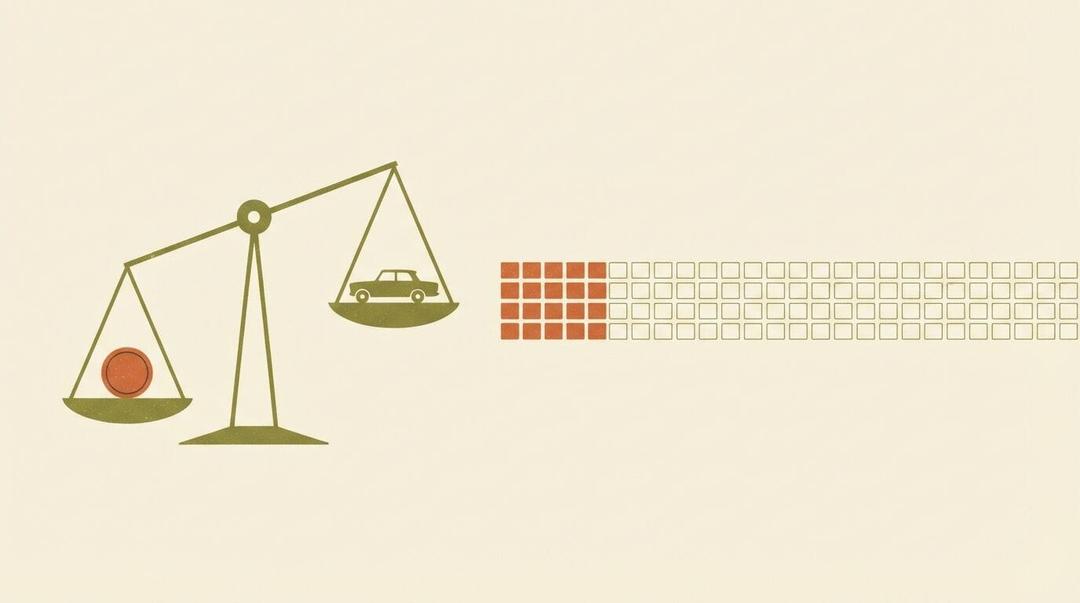
What to watch instead of the hype
Three numbers tell the story better than any ride count.
Gross fare per vehicle per day. This is the utilization-times-price product that decides whether the capital stack ever closes. Pony.ai discloses it implicitly at about $70. Waymo's implies several times that. Watch whether Chinese fare growth or American cost cuts close the middle.
Loss per dollar of revenue. Alphabet gives it away quarterly in Other Bets. Tesla's robotaxi quarter showed paid miles down 36% on a fleet too small to move its numbers, and its purpose-built Cybercab only entered commercial service in Austin in early September. Zoox has no fare at all. If the ratio stops shrinking, the model is perpetual subsidy.
Price trajectory. Obi's finding that Tesla raised San Francisco prices 41% in a quarter says what competition with human drivers looks like from the demand side: these fleets are chasing margin, not buying share. Cheap robotaxi rides were the pitch. The receipts show premium ones.
The category works. Half a million people a week pay Waymo, and filings show Chinese operators growing revenue at triple-digit percentages. What late 2026 does not support is the claim that removing the driver makes the ride cheap. Right now it makes the ride, for the operator, expensive, and for the rider, not a discount.
Sources
- Waymo raises $16 billion at a $126 billion valuation: https://waymo.com/blog/2026/02/waymo-raises-usd16-billion-investment-round
- Fortune on Alphabet Other Bets Q3 revenue and loss: https://fortune.com/2026/10/30/waymo-126-billion-alphabet-372-million-2-05-billion-google
- FutureSearch Waymo financial forecast and ride-progress re-run: https://futuresearch.ai/waymo-financial-forecast
- Robotaxi economics, ride-per-vehicle and fare math (AIR research): https://theprimerdesk.com/reports/robotaxi-economics-the-fare-without-the-driver-and-who-captures-the-wage-pool.html
- Obi tracker, Tesla robotaxi prices up 41% in San Francisco: https://rideobi.com/teslaq1
- Pony.ai Q2 2026 results (robotaxi revenue, fleet size): https://ir.pony.ai/news-releases/news-release-details/pony-ai-inc-reports-second-quarter-2026-financial-results-total
- Pony.ai Q3 2026 results (robotaxi revenue mix, fleet): https://blog.pony.ai/pony-ai-reports-faster-revenue-growth-as-robotaxi-expands-its-reach-and-deepens-commercial-operations
- TechTimes per-vehicle-day revenue calculation for Pony.ai: https://www.techtimes.com/articles/325005/20260819/ponyai-robotaxi-revenue-691-q2-ponyworld-scales-global-deployments.htm
- Waymo expansion status, Zoox pre-commercial, market state: https://www.softwareseni.com/robotaxi-market-state-2026-who-is-operating-where-and-at-what-scale
- Robotaxi statistics and fleet tallies: https://sqmagazine.co.uk/robotaxi-statistics
- US-China operator comparison, Apollo Go peak weekly rides: https://newmarketpitch.com/blogs/news/autonomous-vehicle-is-growing
- Apollo Go Wuhan suspension and resumption, Tesla Q2 paid miles: https://avmarketstrategist.substack.com/p/tesla-q2-2026-3-new-robotaxi-markets
- Cybercab Austin commercial start date: https://www.roadtoautonomy.com/california-paid-robotaxi-rides
- Robotaxi fare pricing and cost-per-mile estimates: https://site-one-liart-13.vercel.app/en/2026-06-18/robotaxi-fare-pricing-analysis-jun2026
- Fully burdened cost-per-mile estimate discussion: https://www.linkedin.com/posts/ezrajgoldman_gemini-estimates-waymo-is-spending-43mile-activity-7413086084714119168-GHnP
