
Anthropic put a number on its computing bill for the first time, and the number is close to a trillion dollars. The Claude maker's amended IPO filing, updated Monday, lists roughly $895 billion of commitments, nearly all of them tied to computing capacity and data centers.
The disclosure lands in the same document that added third-quarter results, and the two together frame the central question for the offering: can revenue growing at this pace outrun a purchase obligation almost seven times the company's cash position?
The commitments, by the numbers
About $70 billion of the total comes due within a year, and nearly $450 billion by the end of 2030, according to the filing. Purchase commitments alone ballooned to roughly $314 billion from $55 billion at the end of 2025.
For context, Anthropic held about $132 billion in cash and short-term investments at the end of September. The full commitment stack dwarfs that more than six-fold.
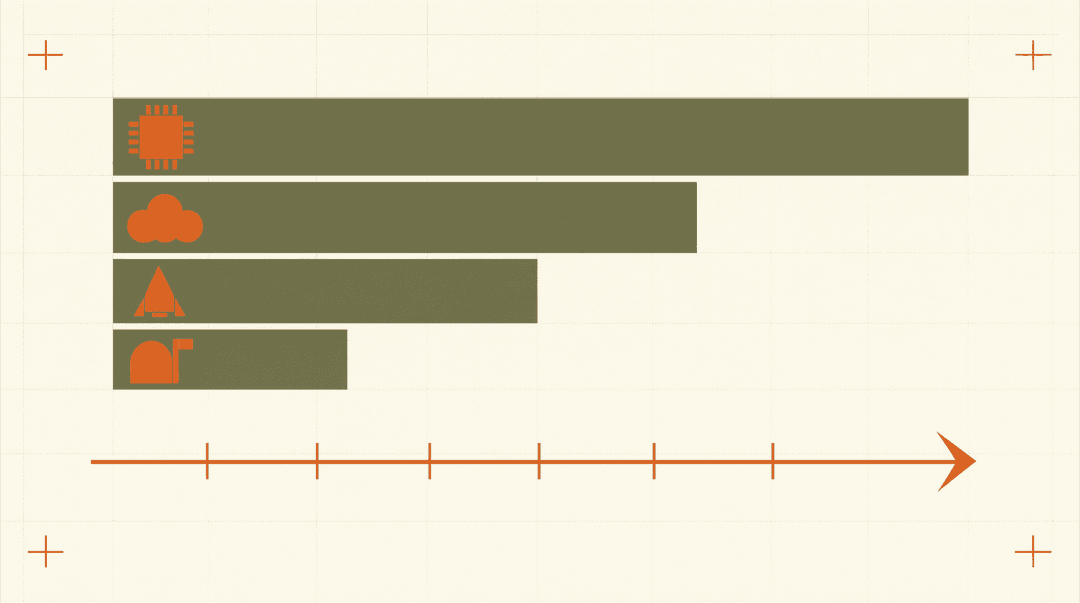
The filing itemizes who gets paid. Broadcom tops the list with about $161 billion in equipment leases. Google follows at roughly $121 billion, up from $114.5 billion in the first filing. SpaceX's AI unit accounts for up to $120.5 billion, and Amazon for $110 billion.
Two of the company's largest announced deals are not even counted in the $895 billion. A plan for another $125 billion to $150 billion of Google TPUs and an expectation of more than $20 billion in spending with AMD lack fixed dollar commitments, so they sit outside the total.
One quarter of profit, then back to losses
The amended filing also shows the economics of the buildout. Third-quarter revenue reached about $17 billion, up from $11.6 billion in the second quarter. Yet Anthropic reported a $567 million operating loss, one quarter after posting its first-ever operating profit of $974 million.
The swing has a mechanical cause. Anthropic books most of its computing capacity 12 to 18 months ahead. When demand ran past that reserved capacity last quarter, the company bought $5 billion of short-term compute that, per the filing, currently costs significantly more than its long-term deals. A $2 billion non-cash charge tied to a donation-matching program added to the loss.
Analysts had flagged the fragility of that first profit before the filing dropped. Jay Goldberg of Seaport Research Partners told Yahoo Finance three days earlier that the company would probably stay profitable for a quarter or two, then slide back into losses.
Mark Mahaney of Evercore ISI put the structural tension more bluntly in a note after the first filing: for the hyperscalers, Anthropic is at once a customer, competitor, sales channel and investment.
A revenue slice from rule-breakers
The filing carries one more disclosure worth noting for how the model economics work at the margin. Anthropic estimates that 5% to 7% of revenue in the first nine months of the year came from customers who were breaking its usage policy or commercial terms. The company stepped up enforcement in August and September and warned investors that the crackdown may reduce overall revenue and growth rates in future periods.
DIGITIMES, which first flagged the scale of the compute burden in the filings, reported that third-quarter revenue was nearly twelve times the $1.4 billion recorded a year earlier. Growth that steep is what justifies commitments of this size to prospective shareholders. Everything in the amended filing explains how expensive that justification has become.
