Resources / Guides / page 3

Guides

73 articles

Articles, page 3

41-60 of 73
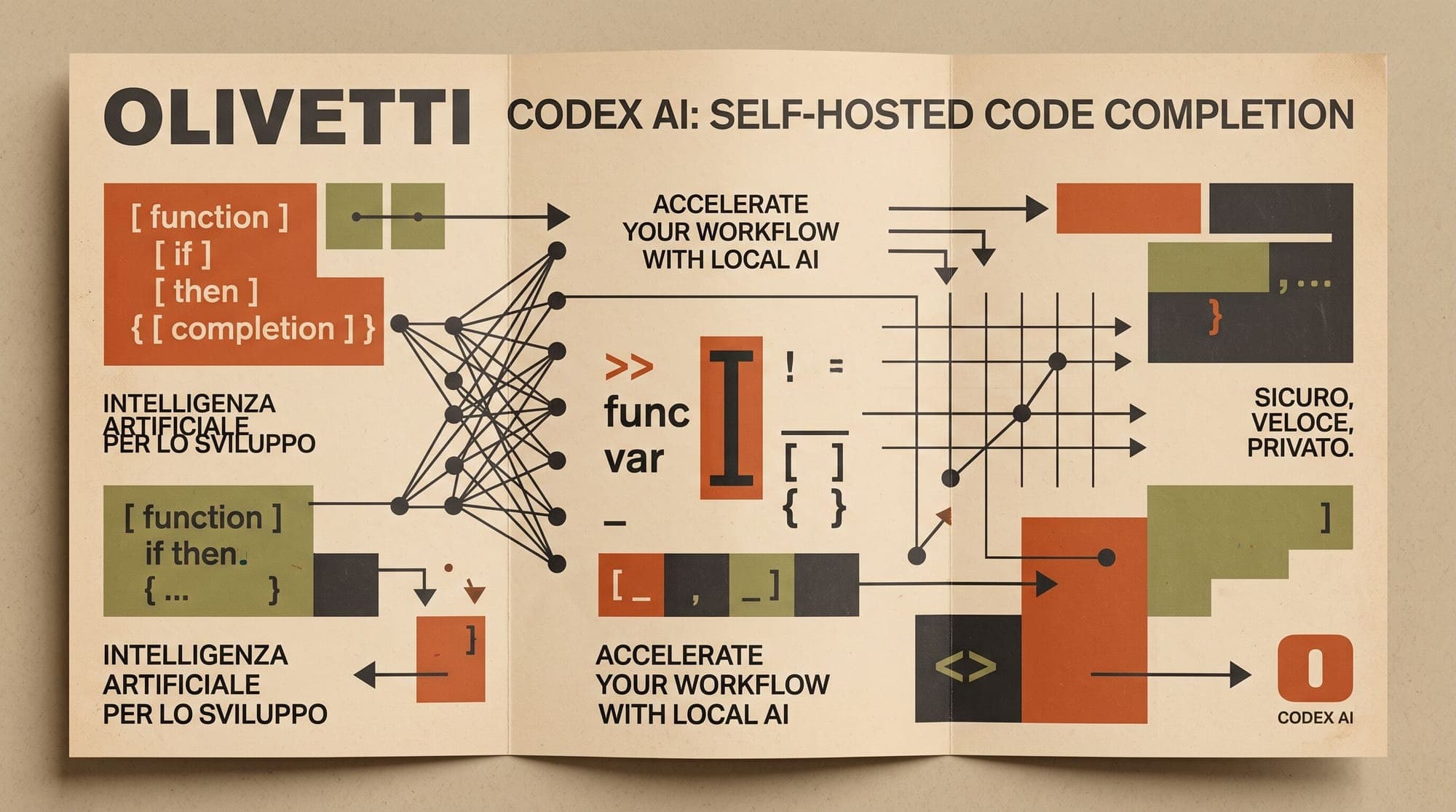
  1. Self-Hosted AI Code Completion Engines in Production: Comparing Tabby, Continue, Refact.ai, and Twinny Architecture, Fill-in-the-Middle Pipelines, AST Context Retrieval, and Serving Latency

    Deploying AI-assisted code completion within air-gapped environments, regulated enterprises, and privacy-conscious engineering teams requires decoupling developer tooling from third-party cloud APIs. While agentic coding systems focus on multi-turn planning and repository-wide refactoring with relaxed latency budgets, inline code completion operates under strict real-time constraints. Developers expect ghost-text suggestions to appear within 100 to 200 milliseconds of pausing keystrokes. Delive
    AI
    7 min read
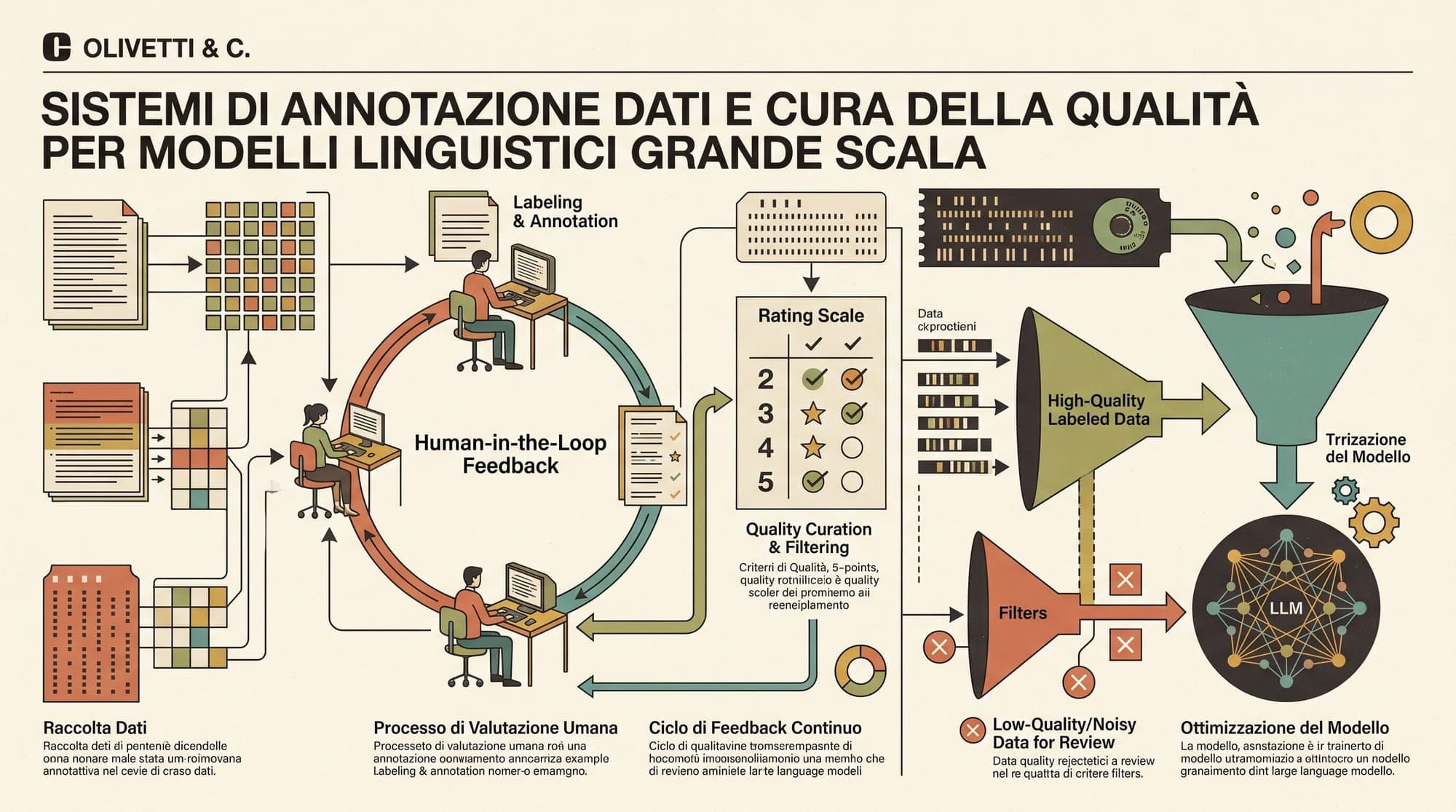
  2. Data Annotation and Preference Labeling Frameworks in Production: Comparing Argilla, Label Studio, Prodigy, and Cleanlab

    Modern frontier and open-weight large language models rely heavily on curated data pipelines across Supervised Fine-Tuning (SFT), Reinforcement Learning from Human Feedback (RLHF), and Direct Preference Optimization (DPO). While pre-training ingests trillions of uncurated tokens from the public web, post-training alignment requires high-precision preference rankings, instruction demonstrations, and safety boundary evaluations. Empirical research demonstrates that a few thousand meticulously cura

    AI
    6 min read
  3. OpenCode Breach Exposes Third-Party API Keys in Targeted Distillation Attack

    Anomaly Innovations, the developer behind the open-source AI coding tool OpenCode, confirmed that a security breach exposed third-party API credentials stored by approximately 1.4% of its Console users. The unauthorized access targeted an internal legacy system during decommissioning and was leveraged to execute automated model distillation attacks against frontier AI providers. Update, Oct 19 The exposed keys are the ones users saved in OpenCode Console, the company's optional hosted service

    Security
    3 min read
  4. Anthropic Adds Built-In Desktop Browser to Claude Cowork

    Anthropic has introduced a dedicated built-in browser within the Claude Desktop application for Claude Cowork, replacing the requirement for external browser extensions during automated web tasks. The integrated browser operates in a side panel directly adjacent to Cowork task transcripts on macOS, Windows, and Linux (beta). When an agentic workflow encounters a web target, Claude opens the site, reads rendered document object model (DOM) contents, triggers UI elements, and populates form field

    Anthropic
    2 min read
  5. Huawei Cloud Launches CodeArts Agent into General Availability Across Asia Pacific

    Huawei Cloud has officially moved its CodeArts Agent development platform from public beta to general availability across the Asia Pacific region. The commercial release makes both Basic and Professional editions accessible to international enterprise accounts, expanding the vendor's enterprise AI infrastructure stack beyond its domestic market. The rollout follows an initial open beta launched in Thailand in July 2026. CodeArts Agent is structured around multi-agent coordination across the sof

    Agents
    2 min read
  6. OpenAI Tests Persistent Mode in Codex for Long-Running Autonomous AI Agents

    OpenAI is testing an execution profile termed "Persistent Mode" within its Codex agent codebase, designed to enable continuous, self-directed task execution without standard step-count timeouts or per-turn pauses. Code commits surfaced in the public repository of the Codex command-line interface indicate that the agent can proactively generate follow-up tasks, maintain state across development sessions, and continue working autonomously until explicitly halted by the user. Architecture and Re

    OpenAI
    1 min read
  7. Anthropic Previews Model Hardware Standard for AI Agent Control of Physical and Lab Equipment

    Anthropic has introduced the Model Hardware Standard (MHS), an open interface specification intended to let AI agents control physical machinery and scientific instrumentation. Released in a research preview on August 27, 2026, the standard extends the design principles of the Model Context Protocol (MCP) to physical actuators, automated laboratory equipment, and industrial hardware. Connecting autonomous software agents to physical hardware has historically required custom integration code for

    AI
    3 min read
  8. Cognition Reaches $900M Annualized Revenue on Enterprise Devin Adoption

    Cognition AI, the startup behind autonomous software engineering agent Devin, has reached approximately $900 million in annualized revenue, according to financial data reported by The Information. The figure represents a more than threefold increase since the start of 2026, driven by accelerating enterprise adoption of autonomous developer workflows. Internal executive projections cited in the report indicate the company expects to finish 2026 with more than $1.5 billion in annualized run-rate

    AI
    2 min read
  9. OpenAI Tests Persistent Mode in Codex for Continuous Autonomous Agent Execution

    OpenAI is developing a new operational setting for its Codex developer tool called Persistent mode, designed to allow autonomous AI agents to execute tasks indefinitely until manually paused or put to sleep. The feature was identified in recent code commits to the command-line interface (CLI) repository for Codex, as reported by Wired. In the codebase, Persistent mode appears alongside standard reasoning effort settings such as medium, high, and extra-high, but introduces an entirely different

    OpenAI
    2 min read
  10. OpenAI Introduces Admin Plugin for ChatGPT Work and Codex to Automate Workspace Governance

    OpenAI has released the Admin plugin for ChatGPT Work and Codex, embedding enterprise workspace management, user provisioning, permission audits, and spending controls directly into chat conversations. The plugin exposes Admin Console functionality through permission-scoped tools, allowing administrators to execute diagnostic queries and administrative actions without toggling across external consoles or building bespoke scripting pipelines. Conversational Workspace Administration Managing en

    OpenAI
    2 min read
  11. Ramp Launches Router.com to Integrate Model Routing and Enterprise AI Spend Controls

    Corporate expense management provider Ramp has released Router.com, a multi-model routing service and API gateway designed to dynamically direct enterprise inference requests across commercial and open-weight large language models. The launch introduces a unified endpoint connecting developer workflows to models from OpenAI, Anthropic, and SpaceXAI (Grok), with scheduled integrations for Google Gemini as well as open-weight families including DeepSeek, Kimi, Minimax, and Nvidia served through i

    AI
    2 min read
  12. OpenAI Reinstates 5-Hour Codex and Work Limits for ChatGPT Plus Subscribers

    OpenAI has reinstated a rolling five-hour rate limit on Codex and ChatGPT Work for ChatGPT Plus subscribers. The change ends a temporary multi-week period during which the short-term window was suspended and users were constrained only by overall weekly quota ceilings. OpenAI engineering lead Thibault Sottiaux confirmed the reinstatement, stating that re-enforcing the five-hour window is necessary to smooth peak compute load across OpenAI's inference fleet as developer adoption of complex multi

    OpenAI
    1 min read
  13. Hugging Face Introduces gr.Workflow to Turn AI Pipelines into Visual Graphs and REST APIs

    Hugging Face has released gr.Workflow, a native extension to the Gradio framework designed to convert multi-stage artificial intelligence pipelines into interactive node graphs, visual user interfaces, and deployable REST APIs. Modern machine learning applications increasingly rely on compound pipelines that chain heterogeneous models: generating text via large language models, feeding prompts into diffusion systems, processing outputs through background removal or audio synthesis models, and a

    AI
    2 min read
  14. OpenAI Integrates GPT-5.6 Family into AWS Kiro with Reported 82% Cost Drop

    OpenAI has made its flagship GPT-5.6 model family available within Kiro, the spec-driven software development environment developed by Amazon Web Services. The release brings OpenAI's frontier reasoning and coding tiers, including Sol, Terra, and Luna, directly into AWS's agentic engineering platform. According to joint evaluations conducted by AWS and OpenAI on Terminal-Bench 2.1, executing complex software engineering tasks with GPT-5.6 Terra inside Kiro reduced total token expenditures by ro

    OpenAI
    3 min read
  15. ByteDance Consolidates TRAE and Coze into Doubao, Readies 'Doubao Work' Enterprise Brand

    ByteDance has initiated an internal organizational restructuring to consolidate its enterprise AI developer tools and agent platforms under the Doubao ecosystem. The company is merging the teams and technologies behind its AI programming suite TRAE and agent-building platform Coze into Doubao, preparing to launch a unified enterprise AI suite branded "Doubao Work." The restructuring concentrates disparate AI tools into a single corporate pillar to compete against domestic rivals, notably Tencen

    ByteDance
    2 min read
  16. LLM 0.33 Adds Template Chaining, Per-Call Embedding Keys, and Server Tool Logging

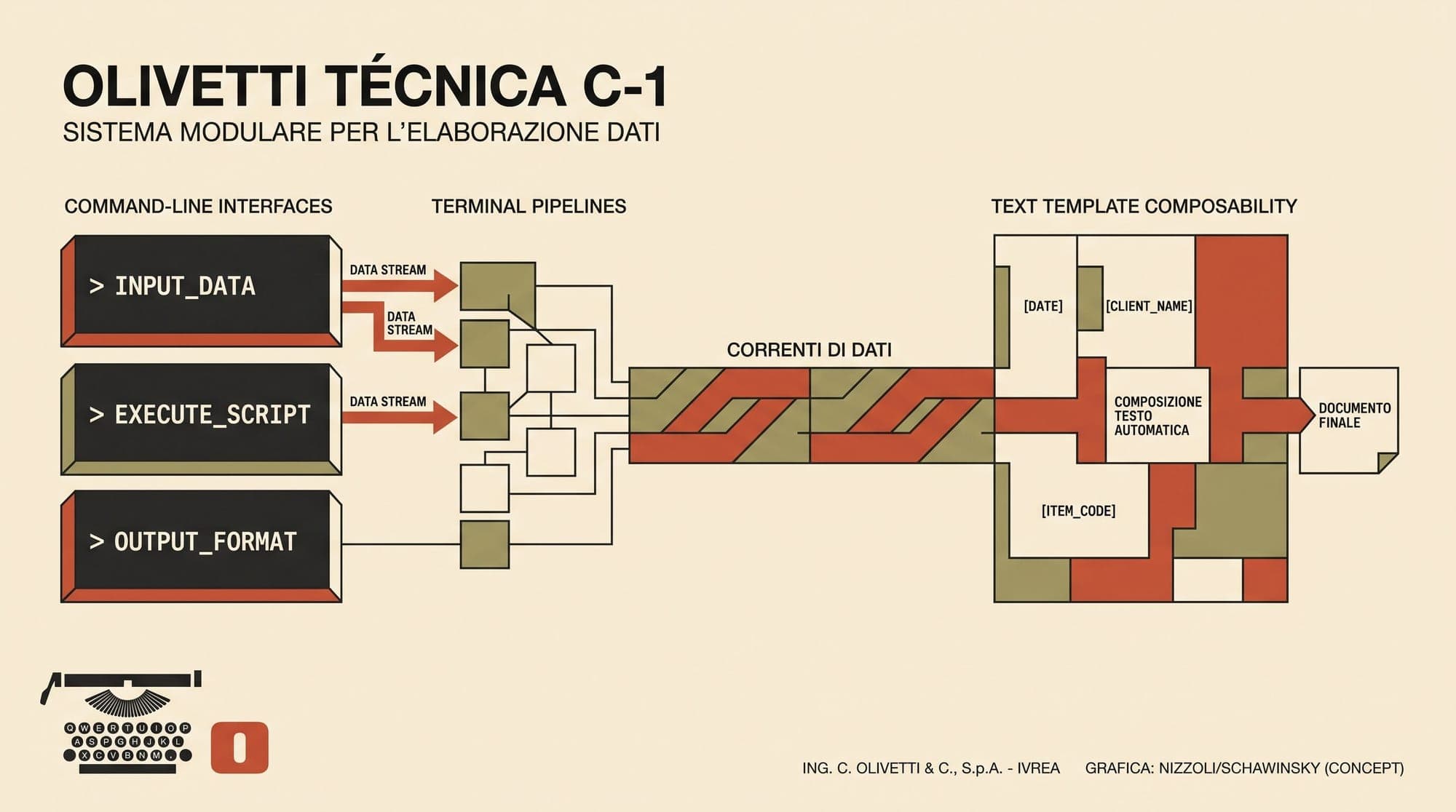
    Simon Willison has released llm 0.33, an update to the open-source command-line tool and Python library for interacting with large language models. The release introduces template composition, stateless per-call embedding credentials, and server-side tool execution visibility in logs, alongside an upgrade to the OpenAI Python 3.x client and httpx2. Template Composition and Parameter Decoupling The primary workflow enhancement in version 0.33 is the ability to repeat the -t or --template flag

    Tooling
    2 min read
  17. Meta Releases Pocket in the US for Prompt-Based Game Generation

    Meta has released Pocket in the United States, expanding access to an experimental mobile application designed to generate and share lightweight interactive games through natural language prompting. The app first launched as a regional test in Brazil in late June 2026 before receiving its broader version 26.0 update on August 20, 2026. Pocket represents the product integration of Meta's earlier acquisition of the startup Atma Sciences, the original developers behind the Gizmo mobile platform.

    AI
    2 min read
  18. Slack Launches Slack Code to Host AI Coding Agents in Dedicated Project Channels

    Slack has introduced Slack Code, a native environment that shifts AI-assisted software development out of private chat windows and into dedicated, collaborative workspace channels. Available immediately across all Slack subscription tiers, including free accounts, the feature enables engineering and product teams to summon autonomous coding agents directly into project-scoped spaces where teammates can monitor implementation progress, inspect code diffs, review live web previews, and control pro

    AI
    2 min read
  19. Binance Launches Agent OS with MCP Support for Autonomous AI Trading

    Binance has released Agent OS, an infrastructure layer designed to connect autonomous artificial intelligence agents directly to its spot, derivatives, and decentralized finance services. The release introduces official Model Context Protocol (MCP) support alongside dedicated sub-account sandboxes, allowing client-side agents to execute trades, query order books, and interact with on-chain protocols. The integration enables developers using developer tools and agent runtimes, including Anthropi

    Agents
    2 min read
  20. Unsloth Releases Dynamic V3.0 GGUFs for Qwen 3.8 27B with 1-Bit Mode and MTP

    Unsloth AI has published its Dynamic V3.0 quantization suite for Alibaba's Qwen 3.8 27B model family, releasing optimized GGUF and NVFP4 checkpoints alongside public calibration matrices. The release claims a greater than 10 percent increase in top-1 percent accuracy at identical file sizes compared to standard baseline quantizations, while introducing an ultra-low-bit dynamic tier that operates within 8GB of memory. Qwen 3.8 27B is a dense vision-language model utilizing hybrid attention layer

    Open Weights
    2 min read