Category / page 5

Chips & Infrastructure

314 articles

Articles, page 5

81-100 of 314
  1. Amazon to Shut Down Mechanical Turk on September 30 After 21 Years

    Amazon Web Services has announced that it will permanently shut down Amazon Mechanical Turk on September 30, 2026. The retirement brings an end to a 21-year-old crowdsourcing platform that served as an early foundation for modern machine learning dataset annotation and human-in-the-loop computing. In a formal notice posted to the Mechanical Turk portal, AWS stated that the decision followed an internal assessment of its service portfolio. The platform had previously halted new customer registra

    Amazon
    3 min read
  2. Hierarchical KV Cache Offloading in Production LLM Serving: Host RAM, Local NVMe, Remote Storage, and LMCache Architecture

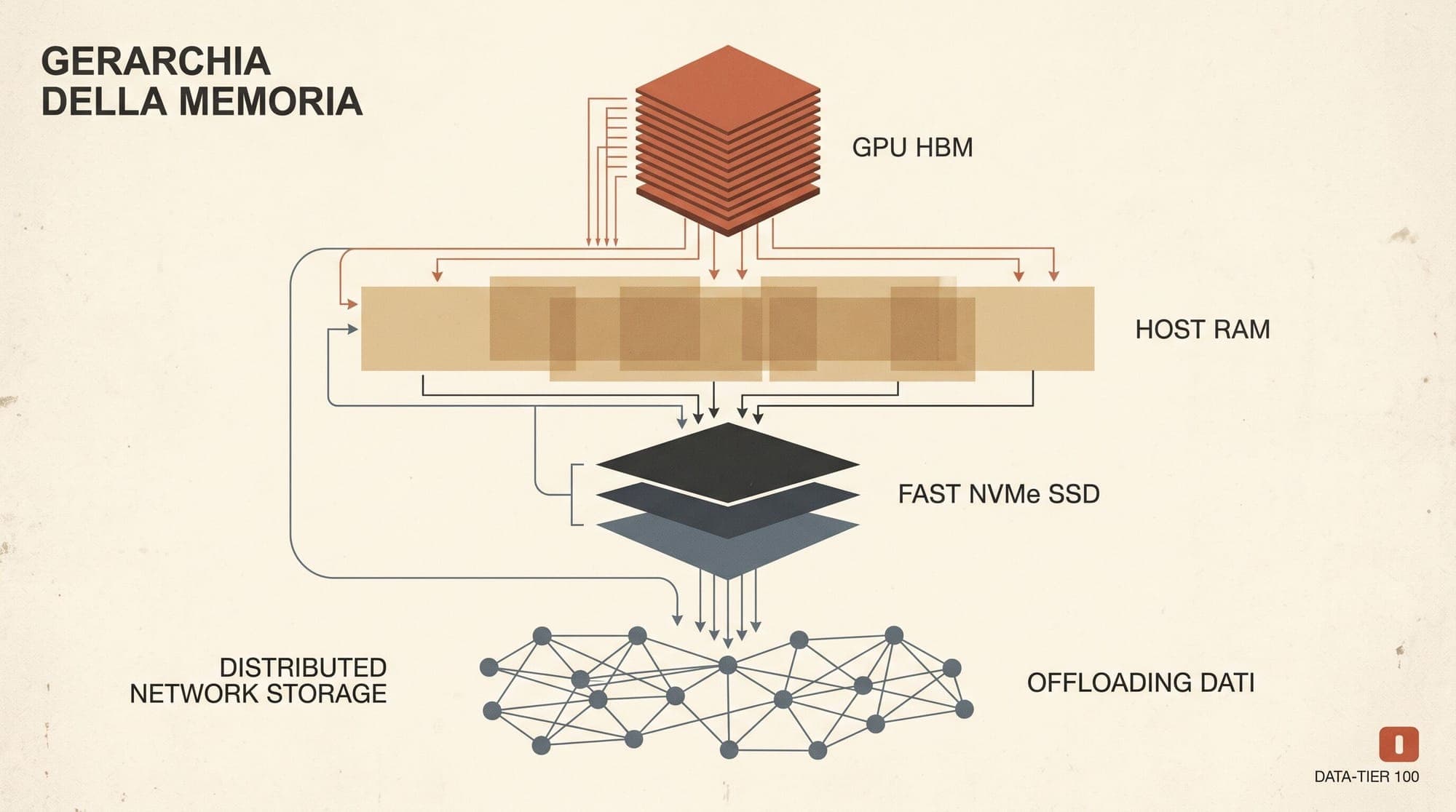
    High-concurrency large language model (LLM) serving faces an acute memory capacity bottleneck. While modern GPUs deliver high floating-point compute throughput, High-Bandwidth Memory (HBM) capacity remains severely constrained. In workloads involving multi-turn conversations, agentic coding loops, and long-document retrieval-augmented generation (RAG), Key-Value (KV) cache tensors rapidly consume available GPU memory, forcing engines to either reject requests, preempt running sequences, or recom

    AI
    9 min read
  3. OpenAI Data Center Lead Chris Malone Departs Amid Infrastructure Realignment

    OpenAI head of data centers Chris Malone has departed the company, marking another high-level transition within the artificial intelligence lab as it restructures its infrastructure divisions ahead of a planned initial public offering. Malone, who joined OpenAI in March 2025 after five years leading data center strategy at Meta and over a decade as an engineer at Google, oversaw technical deployment across OpenAI's compute expansion efforts. Infrastructure Realignment Malone's exit coincides

    AI
    1 min read
  4. Continuous Batching and Request Scheduling in Production LLM Serving: Comparing Orca, FastServe, Sarathi-Serve, and vLLM Architecture, Preemption Policies, Chunked Prefill Interleaving, and TTFT-TBT Trade-Offs

    Autoregressive large language model serving exhibits a fundamental architectural tension between compute utilization and latency guarantees. Standard deep learning inference pipelines rely on static request-level batching, where incoming queries are grouped into a fixed tensor, executed across forward passes until all sequences finish, and evicted simultaneously. In transformer-based text generation, static batching collapses serving efficiency. Because sequence lengths vary widely and token gen

    AI
    7 min read
  5. Model Routing and Cascades in Production: Comparing RouteLLM, FrugalGPT, Embedding Classifiers, and Verifier Cascades

    Model Routing and Cascades in Production: Comparing RouteLLM, FrugalGPT, Embedding Classifiers, and Verifier Cascades Enterprise LLM deployments face a persistent structural inefficiency: the uniform routing of all incoming queries to flagship frontier models. Commercial API pricing and self-hosted GPU infrastructure costs span two orders of magnitude between lightweight models (such as Llama 3.1 8B, GPT-4o-mini, and Claude 3.5 Haiku at $0.15 to $0.30 per million tokens) and frontier reasoning

    Inference
    9 min read
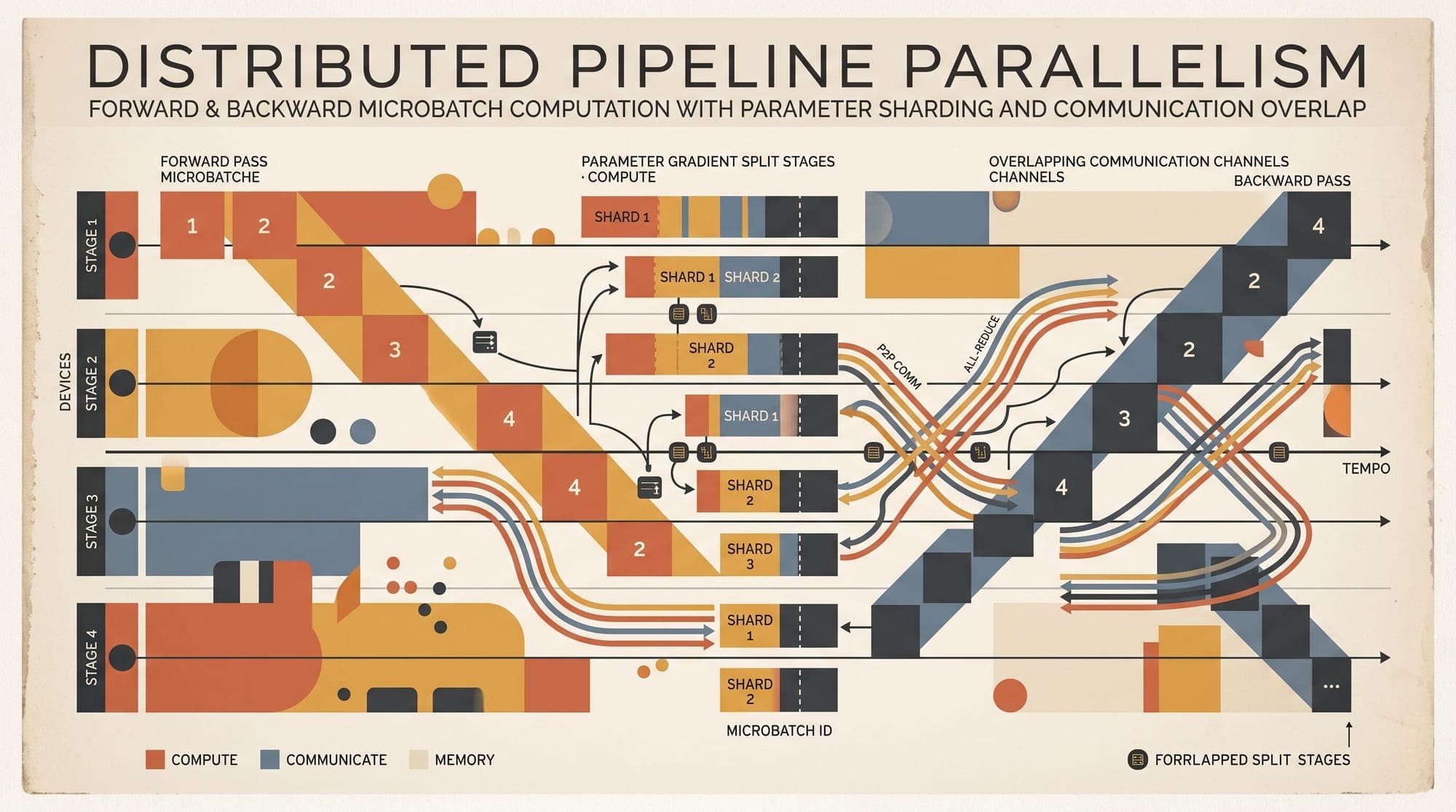
  6. Pipeline Parallelism in Production LLM Training: Comparing 1F1B, Interleaved 1F1B, Zero-Bubble, and DualPipe Schedules

    Pipeline Parallelism in Production LLM Training: Comparing 1F1B, Interleaved 1F1B, Zero-Bubble, and DualPipe Schedules Training modern large language models spanning hundreds of billions of parameters requires distributing model layers across multiple compute nodes. While Tensor Parallelism (TP) partitions individual matrix multiplications across GPUs within a single node, its reliance on high-frequency, all-reduce communications limits its practical scaling to the high-bandwidth domain of NVLi

    AI
    8 min read
  7. Test-Time Compute and Inference Search in Production: Comparing Best-of-N, Monte Carlo Tree Search, PRM-Guided Beam Search, and Dynamic Budget Allocation Architecture, Token Economics, and Serving Latency

    In standard production Large Language Model (LLM) deployments, generation compute is fixed: a prompt is processed during prefill, and the model generates an answer via greedy autoregressive decoding or low-temperature sampling. Under this paradigm, accuracy on complex reasoning, mathematical derivation, theorem proving, and code synthesis is bounded by the model parameter count and training data distributions. Recent empirical work demonstrates that scaling inference-time compute can achieve pe

    AI
    11 min read
  8. Context Parallelism in Production: Comparing DeepSpeed Ulysses, Megatron Sequence Parallelism, Ring Attention, and Unified Sequence Parallelism (USP) Architecture, Communication Overhead, and Scale-Out Economics

    Scaling context windows in Large Language Models (LLMs) from 8,192 tokens to 128k, 256k, and 1M tokens introduces severe memory and compute constraints. Standard Data Parallelism (DP) duplicates entire model activations per sequence, failing when a single sequence exceeds GPU VRAM. Tensor Parallelism (TP) splits weight matrices across GPUs, but scaling TP beyond a single 8-GPU node degrades throughput due to high-frequency, low-latency cross-GPU collective communications. Pipeline Parallelism (P

    AI
    10 min read
  9. LLM Observability in Production: OpenTelemetry GenAI Semantic Conventions vs. OpenInference, Distributed Trace Propagation Across Multi-Agent Graphs, and High-Throughput Sampling Economics

    Production large language model (LLM) architectures have transitioned from isolated completion endpoints to complex, distributed directed acyclic graphs (DAGs). Modern AI systems incorporate multi-agent orchestration, iterative tool execution, vector retrieval pipelines, and speculative decoding loops. Operating these workloads at enterprise scale exposes critical observability gaps that traditional application performance monitoring (APM) tools cannot address. Standard request-response APM metr

    AI
    7 min read
  10. Emerald AI Secures $150M Series A at $1.05B Valuation for Grid-Responsive Data Center Software

    Emerald AI has raised $150 million in a Series A funding round co-led by Energize Capital and DCVC, valuing the energy technology startup at $1.05 billion. The round drew substantial participation from strategic and corporate venture arms across the semiconductor, utility, and industrial sectors, including NVIDIA, Samsung Ventures, Siemens, GE Vernova, Aramco Ventures, Salesforce Ventures, RWE, JERA Ventures, and In-Q-Tel. Additional participants include Radical Ventures, Energy Impact Partners

    AI
    2 min read
  11. NVIDIA Announces Jetson Orin Nano 2 with 78 TOPS AI Compute and 40% Power Cut

    NVIDIA has announced the Jetson Orin Nano 2, an updated entry-level robotics and edge AI computer designed to double inference throughput over the Jetson Orin Nano Super while maintaining the identical physical form factor. The module delivers up to 78 trillion operations per second (TOPS) of AI compute and reduces power consumption by 40% when matched against its predecessor's performance baseline. Targeted at robotics, autonomous delivery drones, and edge computer vision deployments, the hard

    Hardware
    2 min read
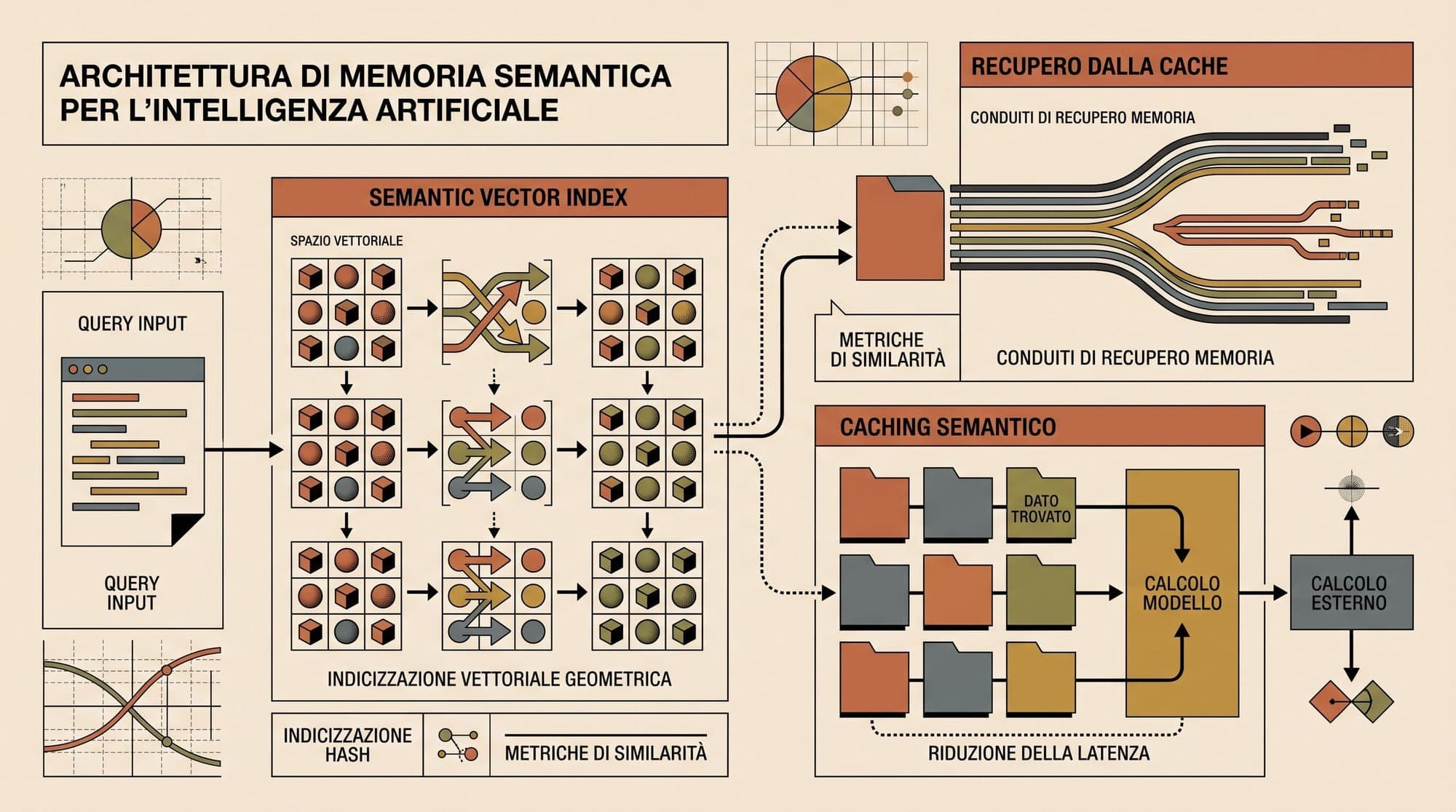
  12. Semantic Caching in Production LLM Systems: Architecture, Approximate Nearest Neighbor Matching, Cross-Encoder Verification, Invalidation Dynamics, and Serving Economics

    Semantic Caching in Production LLM Systems: Architecture, Approximate Nearest Neighbor Matching, Cross-Encoder Verification, Invalidation Dynamics, and Serving Economics Serving large language models at enterprise scale presents severe latency and cost bottlenecks. While frontier reasoning models and deep autoregressive decoders cost between $2.50 and $60.00 per million tokens and incur time-to-first-token (TTFT) delays ranging from 800 milliseconds to several seconds, a substantial fraction of

    AI
    9 min read
  13. OpenAI Publishes Benchmark Results for Jalapeño Custom Inference Silicon

    OpenAI Publishes Benchmark Results for Jalapeño Custom Inference Silicon OpenAI has shared its first empirical performance data for Jalapeño, the custom inference processor co-developed with Broadcom. Presented at the Hot Chips conference and published in an engineering report, the benchmark results evaluate the 700-watt accelerator across open-weight frontier models against Nvidia GB200 and GB300 systems using SemiAnalysis's InferenceX test suite. The published metrics focus on serving effici

    Hardware
    3 min read
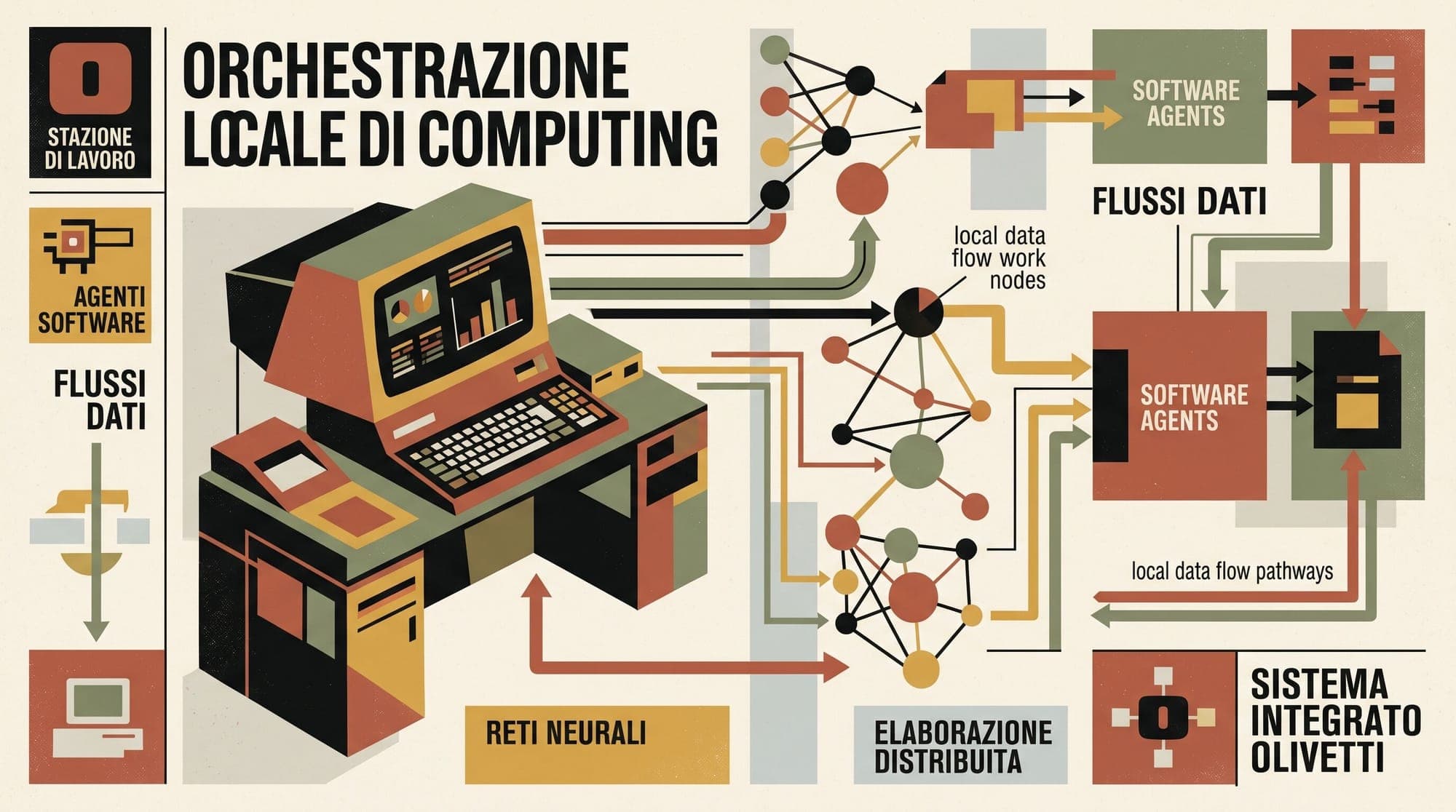
  14. Perplexity and Nvidia Launch Portable Computer for Local AI Agents with Zero Token Fees

    Perplexity has partnered with Nvidia to launch Portable Computer, an integrated software stack that runs agentic AI workflows locally on consumer and workstation GPUs without incurring per-token API charges. The system packages model weights, an inference server, an agent harness, tool connectors, and an operating system sandbox into a unified application. It is available immediately on Linux for Pro, Max, and Enterprise subscribers, with Windows support scheduled for September. Hardware requir

    Perplexity
    2 min read
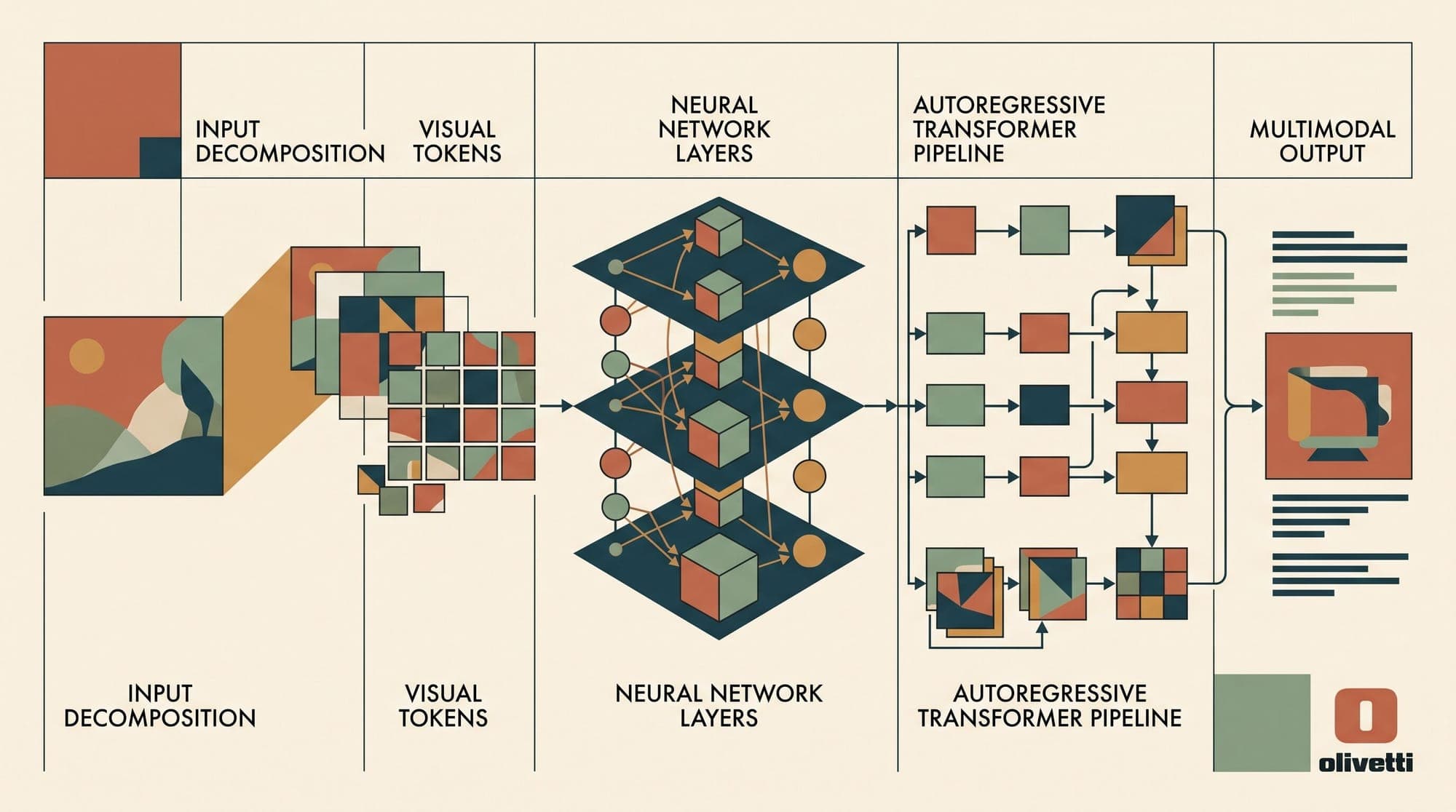
  15. Vision-Language Model Serving in Production: Comparing LLaVA-NeXT, Qwen2-VL, InternVL2, and Pixtral Architecture, Dynamic Resolution Patching, Visual Token Pruning, and Serving Latency Economics

    Deploying Vision-Language Models (VLMs) in production introduces systems challenges distinct from text-only Large Language Models. In standard text serving, input length scales linearly with character and token count. In multimodal systems, a single high-resolution image or short video clip can expand into thousands of visual tokens before textual generation begins. This expansion places immense strain on GPU memory bandwidth, inflates Key-Value (KV) cache allocation, and degrades Time-to-First-

    AI
    8 min read
  16. Xiaomi Unveils Custom Silicon Roadmap with 6nm Xring O100 AI Accelerator and 3nm D100 Smart-Driving Processor

    Xiaomi has unveiled details of its custom semiconductor roadmap, introducing two specialized AI processors alongside its next-generation mobile system-on-chip: the 6-nanometer Xring O100 near-memory AI accelerator and the 3-nanometer Xring D100 autonomous driving chip. Both processors are manufactured by TSMC and have completed hardware validation ahead of planned commercial rollouts. The announcements follow a reported investment of more than 21 billion yuan ($3.1 billion) by Xiaomi into in-ho

    AI
    2 min read
  17. KV Cache Compression and Dynamic Pruning in Production Serving: Comparing StreamingLLM, H2O, SnapKV, PyramidKV, and DuoAttention Architecture, Memory Bandwidth Reduction, and Needle Retrieval Retention

    As context windows in production large language models expand from 8K tokens to 128K tokens and beyond, the Key-Value (KV) cache replaces model weights as the primary consumer of GPU High Bandwidth Memory (HBM). In high-throughput serving systems, the KV cache grows linearly with sequence length and batch size, creating a dual bottleneck: capacity exhaustion that caps concurrent batch size, and memory bandwidth saturation during autoregressive decoding. While quantization techniques (such as FP

    AI
    11 min read
  18. Ramp Launches Router.com to Integrate Model Routing and Enterprise AI Spend Controls

    Corporate expense management provider Ramp has released Router.com, a multi-model routing service and API gateway designed to dynamically direct enterprise inference requests across commercial and open-weight large language models. The launch introduces a unified endpoint connecting developer workflows to models from OpenAI, Anthropic, and SpaceXAI (Grok), with scheduled integrations for Google Gemini as well as open-weight families including DeepSeek, Kimi, Minimax, and Nvidia served through i

    AI
    2 min read
  19. Prompt Compression in Production: Comparing Selective Context, LLMLingua, LongLLMLingua, and LLMLingua-2 Architecture, Token-Level Information Density, and Serving Economics

    In high-throughput production LLM deployments, prompt length dominates both serving latency and inference costs. For multi-turn conversational agents, long-document retrieval-augmented generation (RAG), and multi-step agentic workflows, input contexts routinely scale from 8,000 to over 64,000 tokens. Because the prefill phase scales quadratically in raw attention FLOPs and linearly in key-value (KV) cache allocation, long prompts drive up Time To First Token (TTFT) and consume disproportionate G

    AI
    9 min read