
OpenAI developed the Performance Factory, an internal autonomous system that utilizes Codex agents to automatically find, diagnose, and propose fixes for ChatGPT performance regressions. This workflow conducted more than 1,700 investigations and root-caused over 600 cases in just over three months, automating a process that previously required deep, service-specific manual knowledge.
OpenAI's Performance Factory Ran 1,700 Agent Investigations So Engineers Don't Have To
OpenAI published details this week on the "Performance Factory," an internal autonomous system that uses Codex agents to find, diagnose, and propose fixes for ChatGPT performance regressions. The headline numbers, from OpenAI's own engineering post: in just over three months the first workflow, called the Regression Workflow, tracked more than 1,700 investigations and root caused over 600 cases. That works out to roughly 17 automated investigations per day, a volume no performance team staffs by hand.
The problem OpenAI is admitting
Traditional performance engineering does not scale against agentic development. Before Codex, OpenAI's engineers examined metrics, logs, and traces manually, and the team had accumulated more than 30 specialized performance tools just to make investigations tractable. Knowing where to look required deep, service-specific knowledge. As Codex usage spread across the company, shipping accelerated, and the human-only bottleneck moved from writing code to noticing why production got slower.
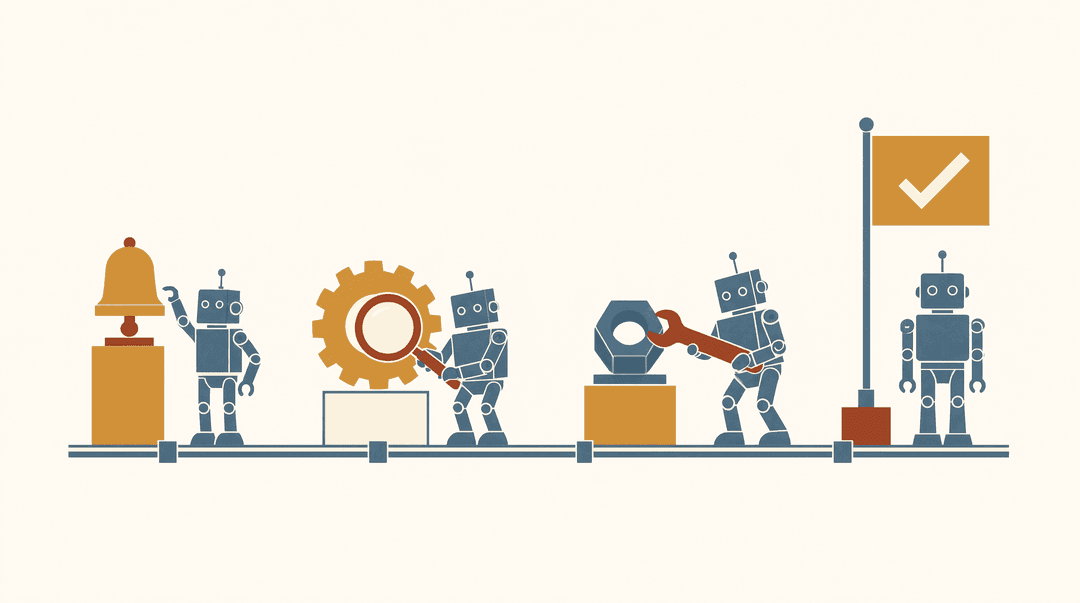
The post describes a six-step progression: engineers pairing with Codex on individual investigations; the team's investigation playbook captured as a reusable perf-forensics skill; engineers acting as a "human proxy" copy-pasting alerts into Codex; alerts automatically kicking off cloud Codex sessions; and finally the factory, where work is tracked as stateful tasks passed between agents and humans.
How the factory works
Four components: a task tracker with configurable workflows defined in Markdown, a dispatch loop that assigns agents when a task's next step is ready, an internal API that runs Codex turns in OpenAI's cloud with access to repositories and observability tools (metrics, logs, traces, CPU profiles, memory snapshots), and event subscriptions that wake an agent when a review comment lands or a deployment completes. Agents run under a service identity so their permissions and actions are auditable.
The Regression Workflow moves each task through four states: needs investigation, root caused, fix proposed, resolved. An agent traces when a metric first degraded, which requests were affected, and whether a deployment or config change explains it. It then proposes a fix as a pull request, which an engineer reviews and decides whether to merge. After deployment, an agent verifies recovery against baseline; partial recovery spawns a new task for the remaining slowdown.
Two details stand out. First, adversarial review: a separate Codex session tries to disprove each diagnosis by testing counterfactuals (did unexposed requests stay healthy? did the metric recover after rollback?). In one case a reviewer reopened an investigation after the initial agent blamed image download errors while the underlying file-location service had already recovered. Second, OpenAI reports that in a manual review of 100 root cause suggestions, only 70% were graded accurate, with the other 30% needing refinement or failing to establish causality. Fix quality, the post concedes, has been harder than diagnosis: agents propose overcomplicated changes, and some fixes (adding a cache, say) carry architectural tradeoffs a human should weigh.

The self-repairing loop
The factory also watches itself. A daily agent scans recent run logs for tool failures and access errors; when the same broken profiler blocks several investigations, it opens a task to fix that, with agents proposing repairs that engineers merge. Backtesting against historical incidents guards skill and model upgrades: past regressions become test cases, the agent investigates from the original signal with spoilers stripped, and transcripts are inspected for leaked information. Summaries get graded separately, by whether an engineer unfamiliar with the service can act on them.
OpenAI says the next step is finding regressions before alerts fire, by comparing CPU profiles, heap dumps, and traces across releases, and encoding known optimization patterns (like oversized autoscaling settings) into recurring workflows. The company is also exploring whether agents can eventually ship low-risk fixes without a human in the loop. For now, the post says, the bottleneck is engineer review time, not agent throughput.
Sources
- OpenAI: How OpenAI's Performance Factory keeps ChatGPT fast - https://openai.com/index/how-openai-performance-factory-keeps-chatgpt-fast
Frequently asked questions
How many agent investigations did OpenAI's Performance Factory complete?
In just over three months, the Regression Workflow tracked more than 1,700 investigations and root caused over 600 cases.
What components make up the OpenAI Performance Factory?
The factory consists of four components: a task tracker with configurable workflows defined in Markdown, a dispatch loop assigning agents, an internal API running Codex in the cloud, and event subscriptions that wake agents based on specific triggers.
How accurate are the root cause suggestions from Codex agents?
In a manual review of 100 root cause suggestions, only 70% were graded accurate, while the other 30% needed refinement or failed to establish causality.
Does the Performance Factory have a self-repairing mechanism?
Yes, a daily agent scans recent run logs for tool failures and access errors, opening tasks to fix broken profilers when they block multiple investigations.
