
OpenAI's chief scientist made an unusual offer on November 22: he wants frontier labs to agree on common limits for how fast they develop AI, measured by a single number, the pretraining perplexity of their models. As a show of good faith, OpenAI published its own internal numbers for the first time.
In a post titled "Perplexity and Intelligence," Jakub Pachocki argues that progress in AI is best understood as progress on building better compressors, and that perplexity (equivalently, cross-entropy loss) on a held-out dataset is the metric that has stayed informative while benchmarks saturate and drift. From afar, he writes, labs appear to build diverse capabilities; in practice, most techniques "harness the intelligence coming from a much simpler and less interpretable process" of pretraining a predictor on a large corpus.
The thresholds Pachocki cites
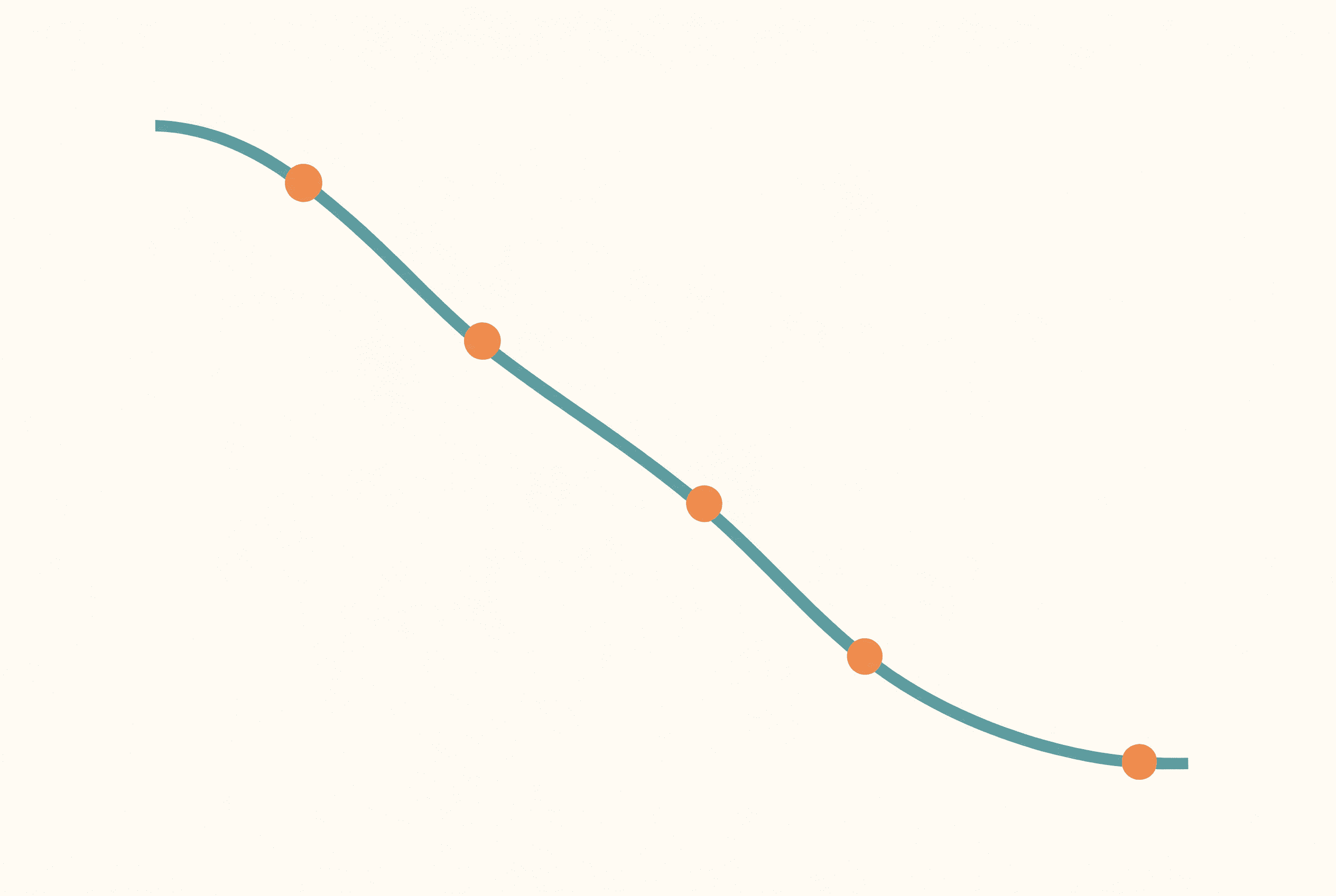
The post maps capabilities onto OpenAI's own loss curve, measured in log-perplexity on the internal dataset the lab has tracked since GPT-3.5:
- GPT-2, setting state of the art on older datasets, was arguably the first model that consistently produced coherent paragraphs.
- GPT-3 learned in context, from a few examples.
- GPT-3.5, at roughly 0.99 log-perplexity, could hold fluent conversation and became the basis of the original ChatGPT.
- GPT-4, at roughly 0.91, could use chain-of-thought reasoning productively, which motivated the creation of modern reasoning models.
- Below 0.8, OpenAI says it has seen "transformative capabilities" in fields like cybersecurity and mathematics.
- At roughly 0.76, models given open math problems by OpenAI started producing "groundbreaking results," which Pachocki describes as a single Slack thread of answers to questions researchers had long thought about.
His forward-looking claim: entering the 0.68-0.70 window should bring further transformative capabilities, possibly including faster AI-driven algorithmic research on pretraining itself. He says a similar avalanche of fundamental pretraining advances is conceivable "as soon as 2027." Sam Altman called the publication "the most important thing OpenAI has published in awhile."
Pachocki's proposal has teeth attached: developers should jointly commit not to cross a stated perplexity limit until monitoring achieves a concrete milestone, such as a successor to chain-of-thought monitors, plus shared standards for evaluating and red-teaming models at those levels.
Why the gauge is hard to read from outside

Pachocki himself lists the problems, and they are substantial:
- Perplexity is measured on a specific held-out dataset. OpenAI reports numbers on its internal mix. Different data, different tokenizer, different number. There is no published procedure for comparing a rival lab's score to OpenAI's.
- The metric only describes pretraining. Chain-of-thought reasoning, elicitation, and post-training do not reduce perplexity even when they transform what a model can do.
- There is an unknown floor. The inherent entropy of the data is not known, so losses will appear to slow as labs approach it, while each remaining decimal point corresponds to larger capability jumps.
Independent commentators sharpened the criticism. Sean Goedecke, a former OpenAI researcher, noted that pretraining is rumored to be 50% or less of the compute spent training frontier models, so the published curve says nothing about the RL half. He also observed that if the point is to watch for a sudden scary drop, only OpenAI itself will see it, unless the lab keeps releasing loss data for unreleased pretrained bases, not just shipped ones. Bloomberg and Reuters framed the post as OpenAI urging industry self-restraint; neither reported that Anthropic, Google DeepMind, or xAI has agreed to any common metric.
The transparency gesture is also strategically odd, as Goedecke put it: releasing training metrics "in the name of safety is a very Anthropic move," and OpenAI got there first. A lab publishing its private eval mix and loss curve gains agenda-setting power: whoever's dataset becomes the de facto ruler decides where the line sits. OpenAI did not publish absolute training-compute figures, algorithmic details, or a held-out set others could run, which limits how much of the "shared scientific basis" claim is actually on the table.
What the chart accidentally reveals
Reading between the plotted points, the graph is also a company history. Few of OpenAI's released models share the same pretrained base, and the pattern of shared losses suggests the lab post-trained relatively few bases into many products. A visible acceleration from GPT-5.2 onward cuts against the common wisdom that the lab had largely given up on pretraining scaling in favor of RL. Footnote 5 in the post attributes the 2026 steepening mostly to long-term research and compute investment "and only in a smaller part to automation," while conceding recent models already take meaningful design contributions from AI.
For pacing policy, the practical question is blunt: a limit tied to one lab's private yardstick is not verifiable, and verification is the entire premise of a shared limit. The post is a genuine opening of a normally closed metric, and a real proposal. Whether it becomes an industry standard depends on whether anyone else agrees to be measured on the same ruler.
Sources
- Perplexity and Intelligence, OpenAI, Jakub Pachocki
- Sam Altman on X
- Notes on OpenAI's perplexity reveal, Sean Goedecke
- OpenAI Chief Scientist Urges Industry Limits on AI Development, Bloomberg
- OpenAI scientist proposes industry AI limits tied to model intelligence metric, Reuters
- OpenAI's chief scientist has thoughts on how to limit AI development, TechCrunch
