

On November 16, Mem, one of the better-known AI-first note-taking startups, published a shutdown notice. The product closes on January 15, 2027. Notes become read-only on December 18, 2026. Charging has been paused, and a migration guide points users toward Apple Notes, Notion, Google Docs, Obsidian and OneNote (Mem announcement).
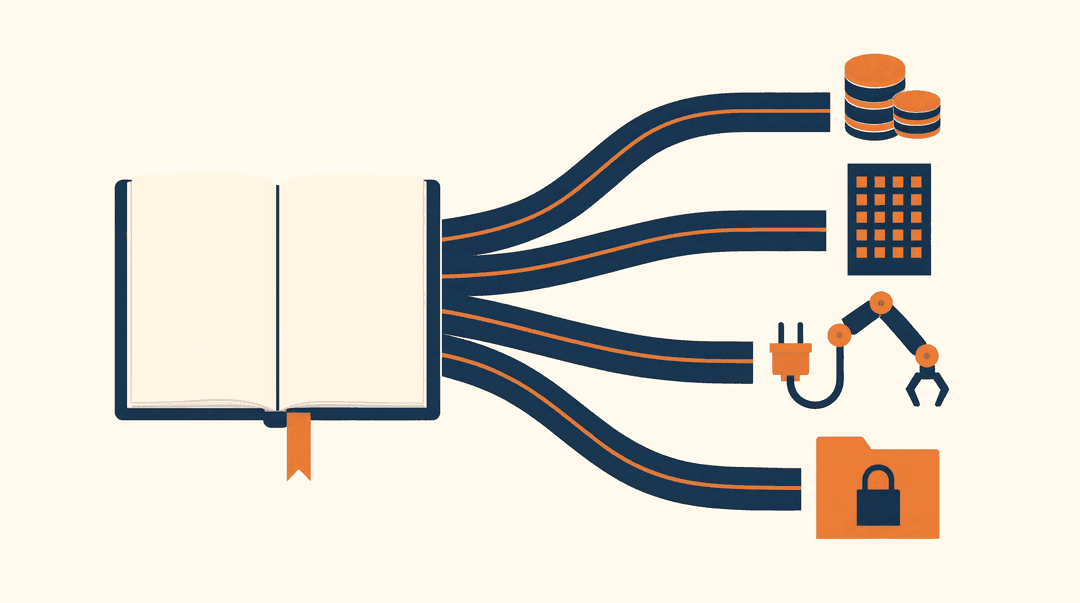
The destination list is the story. Not one migration suggestion is another startup. Nine years after the "second brain" became a product category, the standalone single-player notes app with AI at its center has effectively exited, and what is left of the market runs on four different business models.
The features converged. The economics did not
Read Mem's own retrospective of its product history (same notice) and you find the entire category playbook, shipped early: embedding-based "similar notes" in 2022, generative writing inside notes in late 2022, conversational chat over your own notes in 2023 to 2024, a botless meeting-notes layer in late 2025, a ChatGPT app and MCP connector in April 2026, and a proactive agent that messages you over iMessage, WhatsApp and Slack in July 2026.
Every one of those features now exists somewhere else, and the "somewhere else" is rarely another notes startup. Third-party trackers that watched Mem's pricing through 2026 describe a flat $12 to $15 Pro plan being replaced in August by a seven-tier usage ladder from $9 to $199 per month (AgentsAI review, checked October 2026, Nubia review). The shutdown notice itself gives no financial reason; it says only that the decision was difficult. But the pattern around it is clear: chat-with-your-notes became a commodity capability, and a commodity capability is very hard to sell at $12 per month when the alternative is bundled into something you already pay for.
Lane 1: free, because you pay for the ladder
Google's treatment of the category is the extreme case. On July 16, 2026, Google renamed NotebookLM to Gemini Notebook and disclosed that more than 30 million people and over 600,000 organizations use it (PPC Land, The Next Web). The product stays free at its core, with 100 notebooks and 50 sources per notebook, and higher limits arrive through Google's AI subscription ladder: Plus at $4.99, Pro at $19.99, and two Ultra tiers at $99.99 and $199.99, which raise the source caps to 100, 300, 500 and 600 per notebook respectively (pricing breakdown, limits table). Since September 2, 2026, usage is metered by compute rather than fixed daily counts (Notebook Toolkit). The same announcement attached a cloud computer to each notebook for Ultra and Workspace AI customers, with code execution rolling out to Pro, and Google said notebooks are headed into AI Mode in Search, a surface it put at over one billion monthly users (PPC Land).
In this lane the notes product has no price of its own. It is a retention feature for a $20 plan and an upsell reason for a $200 one. Google also ships it inside Workspace business plans and sells enterprise access through Google Cloud (pricing breakdown). A standalone app cannot win a price war against free-in-a-bundle, and this lane is where the largest user base sits.
Lane 2: the suite sells seats, then meters the agents
Notion took the category in the other direction: AI features went from a $10 per member add-on to a requirement of the $20 Business plan (annual billing; $24 monthly), with Free and Plus reduced to a capped trial, and a separate credit meter bolted on top for anything agentic (Coworker overview, CloudZero breakdown, Notion pricing page). Custom Agents, launched in February 2026, drew what the company described as one million customer-built agents within three months (Enterprise DNA). On October 19, Notion rebuilt the agent harness for tasks of up to 24 hours and moved all AI usage onto credits: $10 per 1,000 monthly credits, $13 per 1,000 annual, no rollover, plus per-seat pools listed by trackers at 1,500 standard and 500 select credits (Okara history, Sentra pricing guide, Breeze guide).
The unit economics are visible in Notion's own disclosures: the company crossed 100 million users in August 2024 and said more than half of its ARR came from AI-enabled customers by end of 2025 (SQ Magazine compilation). In this lane, "chat with your notes" is the entry to a seat, and the real money is in metered agent runs.
Lane 3: bring your own agent
Tana, a notes outliner that raised its round in the same cohort as Mem, pivoted the other way. Its current pricing page sells a botless meeting agent for Zoom, Teams and Google Meet that runs "the agents you already pay for": Claude, ChatGPT, Grok, Gemini or Codex, with a free tier of unlimited meetings and roughly 50 AI queries, Pro at $15 per member per month for unlimited history and full MCP, and Business from $35 for SSO, audit logs and EU hosting (Tana pricing). The page commits to not training models on customer data, and the FAQ says the tool "can replace a large portion of your AI assistants" because the models are the ones already on your bill.
This is the only lane that solves the inference-cost problem by refusing to own it. The notes product becomes a context and capture layer for frontier agents, and the token bill stays with OpenAI or Anthropic.
Lane 4: local files, your own API key
The fourth lane charges nothing for AI because it does not resell any. Reflect, which sold a $10-per-month encrypted notes app for years, now fronts an open-source product, Reflect Open: free on Mac, paid on iPhone and iPad, notes stored as local Markdown files you sync through iCloud or Git, and optional AI that requires your own API key, with requests going directly to your provider and usage billed by them (Reflect). Obsidian never had native AI and does not apologize for it: the app is free without limits, the data sits on your device, and the company sells only Sync ($4 per user per month annually), Publish ($8 per site) and licenses (Obsidian pricing). Its FAQ states flatly that notes are "stored locally on your device, making it inaccessible to us."

What the shakeout actually settled
Mem's exit does not prove that nobody wants AI over their notes. Gemini Notebook's 30 million users and Notion's agent adoption show the demand is enormous. What the last 24 months settled is where the willingness to pay lives: not in a notes app, but in the subscription that carries it.
Each surviving lane is a different answer to the same two costs. The first is inference, which a bundle absorbs, a suite re-meters as credits, a bring-your-own-agent layer exports to your existing ChatGPT or Claude plan, and an open-source app declines to intermediate at all. The second is lock-in liability: Mem users learned on November 16 that a venture-backed second brain is a rented one, while the local-files lane sells exactly the opposite promise, and the bundlers can point at balance sheets that will not disappear before December 18.
The practical read for anyone choosing a tool in this category: decide who pays for your tokens, then decide who holds your files. The four lanes answer those two questions in four different ways, and only the shutdown lane answers neither.
Sources
- Mem is shutting down, November 16, 2026
- Mem pricing review, AgentsAI (checked October 2026)
- Mem.ai Review 2026, Nubia Magazine
- Google kills NotebookLM name, moving 30 million users to Gemini Notebook, PPC Land
- Google renames NotebookLM to Gemini Notebook, The Next Web
- NotebookLM / Gemini Notebook pricing breakdown, Justin McElvey
- NotebookLM pricing tiers, NotebookLM.link
- Gemini Notebook pricing guide, Notebook Toolkit
- Notion AI pricing, Coworker
- Notion AI pricing, CloudZero
- Notion pricing page
- Notion AI agent platform, Enterprise DNA
- How Notion grew, Okara
- Notion AI pricing and credits, Sentra
- Notion AI pricing, Breeze
- Notion statistics, SQ Magazine
- Tana pricing
- Reflect
- Obsidian pricing
