
"We're In A Bubble": OpenAI's Chairman On Anthropic's IPO, Debt-Funded Data Centres, And The Compute Shortage
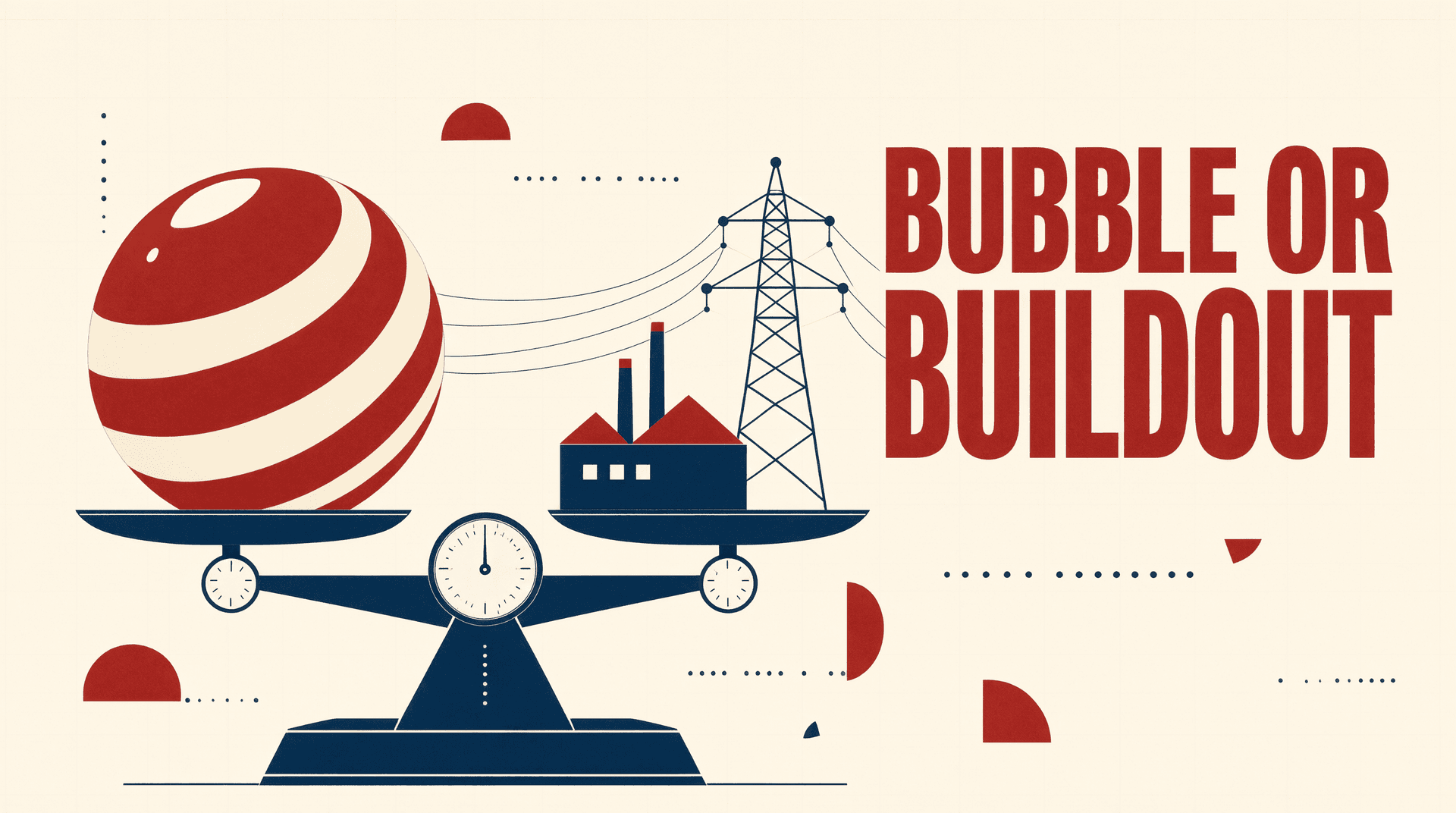
Hours before Anthropic priced the largest IPO on record, Bret Taylor offered the most direct assessment yet from inside the AI industry's top tier: the sector is in an investment bubble, and the market's job now is to tell the good bets from the bad ones.
"We're in a bubble - that is, there's not just smart money but dumb money, and we're delivering real economic value," Taylor, chairman of OpenAI and CEO of enterprise AI startup Sierra, told The Business Times in an interview at the Singapore Fintech Festival on Wednesday, November 18.
Welcome to the public markets, with caveats
Taylor, whose remarks come as the company he chairs competes directly with the newly public Anthropic, called the listing good for the industry. Broader ownership of AI "demonstrates the sort of maturity of the market overall," he said, adding he was "really happy for the folks at Anthropic for reaching that milestone." Going public is "something OpenAI will obviously consider in the future," he said. OpenAI has targeted a listing as early as 2027.
His cautionary note was about which companies survive the boom. Taylor drew an explicit parallel to the dotcom era, when infrastructure overbuild preceded both a wave of collapses and the rise of Amazon. In AI, he named the vulnerable category with unusual precision: companies that serve other AI companies exclusively, and individual data centers financed with debt. Some investors and companies, he said, "take a lot of risk and take a lot of leverage."
Compute is still scarce, and that is the real constraint
Despite the bubble language, Taylor's core complaint was shortage, not oversupply. "There's not enough data centres. There's not enough power. Almost every part of the stack of AI is a scarce supply," he said in a fireside chat, pointing to vendor concentration as an aggravating factor. He urged governments to treat data centers and compute production as critical resources, "just like energy, we never really have enough. I just hope we build more and more and more."
Asked about OpenAI's own economics ahead of its eventual debut, Taylor declined to discuss numbers or a profitability timeframe, but split model-maker economics into two parts worth separating: the margin on serving an already-trained model, and the fixed cost of training it. "I think there's a real credible path there to develop a really healthy business," he said.
Security and liability: the next 12 to 18 months
Taylor also flagged a narrower, less-discussed risk. He expects the next 12 to 18 months to be a period of heightened cybersecurity vulnerability, as attackers use AI to find and exploit weaknesses faster than companies can patch. "The uncomfortable truth is all of these vulnerabilities existed before AI, and AI just shone a light on them," he said. "It's easier to create chaos than it is to patch systems."
On AI agents acting for companies, he rejected any diffusion of responsibility: "AI is a tool, and so if a company uses AI, they're accountable, just like if an employee did it. I don't think using AI changes accountability." That is a pointed statement while courts and regulators, including in an Arizona criminal inquiry into rogue AI agents in banks, are still working out who answers for agent behavior.
Why it matters
Anthropic raised $81.3 billion in its debut offering at an $83 share price, with a roughly $1.5 trillion fully diluted valuation, according to Reuters. The industry's own governance voice calling that a bubble, in the same breath as welcoming it, is the clearest signal yet that the people closest to frontier AI expect a cull. Taylor's discernment test for investors is which companies monetize real demand and which are leveraged bets on someone else's AI spend.
