Archive / page 67 of 123

Latest articles, page 67

  1. GPU Cluster Storage in Production: GPUDirect Storage, NVMe-oF, Parallel File Systems, and Checkpointing Throughput

    Training frontier large language models and serving hundred-billion parameter checkpoints places extreme demands on storage subsystems. While compute clusters frequently deploy thousands of GPUs connected via high-bandwidth interconnects like NVLink and InfiniBand, storage architectures often become severe bottlenecks during two critical operational phases: distributed checkpointing and cold-start model weight loading. A standard 70-billion parameter model in BF16 precision generates approximat


    AI
    7 min read
  2. Linear Mode Connectivity in Deep Neural Networks: How Permutation Symmetries, Git Re-Basin, and the Single-Basin Hypothesis Unify Model Checkpoints

    The classical intuition for high-dimensional optimization assumes that deep neural network loss landscapes are rugged, non-convex terrains populated by isolated local minima. Under this view, two models trained independently from distinct random initializations settle into distant, incompatible basins separated by insurmountable loss barriers. Direct parameter averaging between two such models typically degrades accuracy to random chance. Research over the past several years has overturned this

    Deep Learning
    9 min read
  3. Embedding Inversion in Production RAG: Architecture, Reconstruction Risks, and Vector Defense Strategies

    In enterprise Retrieval-Augmented Generation (RAG) pipelines, architecture teams frequently treat dense vector embeddings as an opaque, pseudo-anonymized representation of proprietary data. The underlying assumption has been that projecting raw text into high-dimensional geometric spaces (such as 768-, 1024-, or 1536-dimensional float vectors) acts as a one-way mathematical hash. Under this assumption, vector databases like Pinecone, Qdrant, Milvus, and pgvector are often deployed with weaker ac

    AI
    5 min read
  4. Google Previews CodeMender: DeepMind-Engineered AI Agent for Automated Vulnerability Remediation

    Google Cloud has made CodeMender, an autonomous AI code security agent developed with Google DeepMind, available in public preview on the Gemini Enterprise Agent Platform. The tool is designed to scan software codebases, verify discovered security flaws through simulated exploits in isolated sandboxes, and automatically generate tested code patches. CodeMender represents an operational shift from passive static analysis to autonomous remediation. Rather than delivering raw alerts to developers,

    AI
    2 min read
  5. Feed-Forward Networks as Key-Value Memories: How Transformers Store, Retrieve, and Edit Parametric Knowledge

    In transformer language models, multi-head self-attention and feed-forward networks (FFNs) perform distinct computational roles. While self-attention mechanisms route contextual information dynamically across sequence positions, feed-forward layers account for roughly two-thirds of total model parameters in standard architectures. Despite early interpretations characterizing FFNs simply as generic non-linear projections, mechanistic analysis shows that feed-forward layers operate as unnormalized

    AI
    6 min read
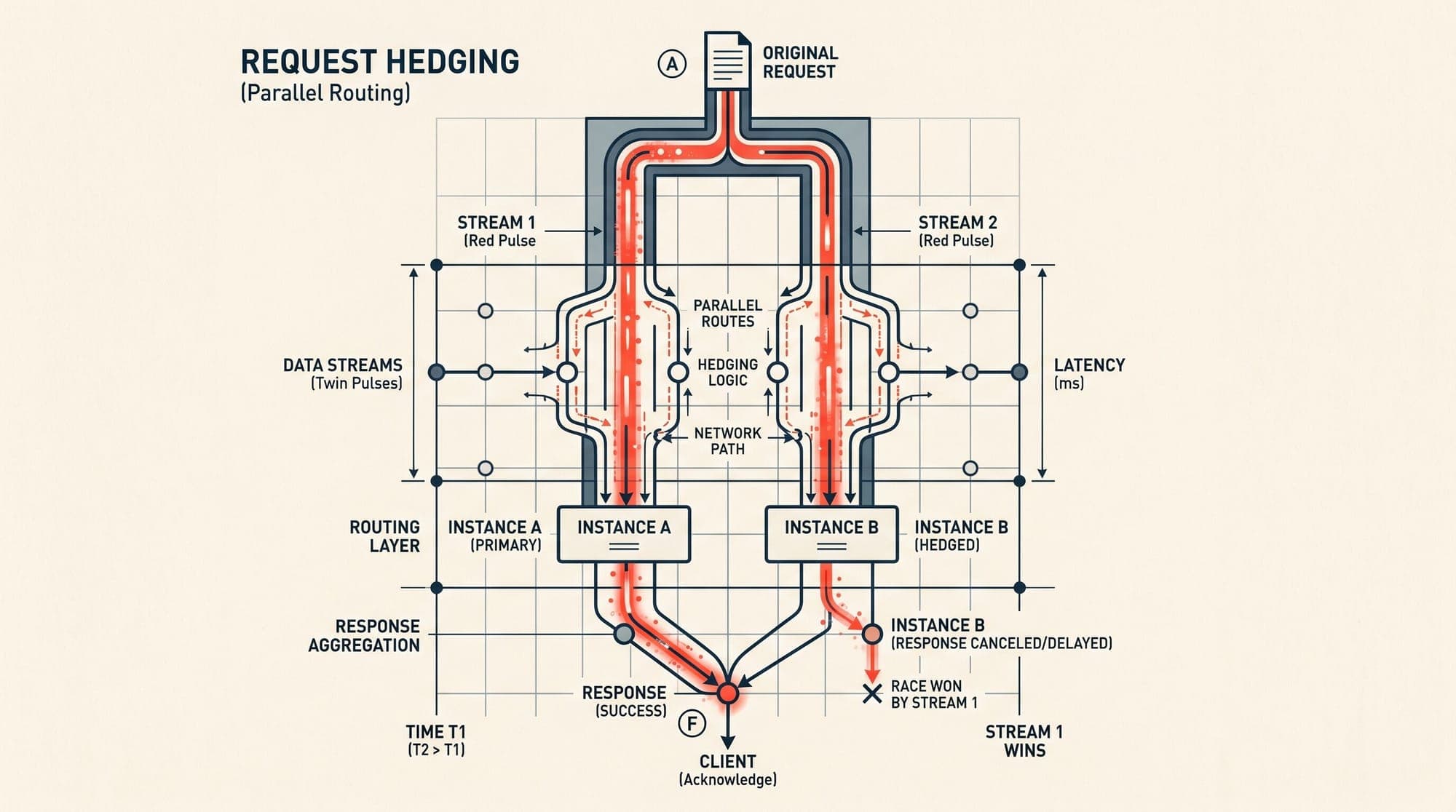
  6. Request Hedging in Production LLM Serving: Architecture, Tail-Latency Mitigation, and Cancellation Protocols

    In distributed computing, tail latency—the 95th, 99th, and 99.9th percentiles—dictates overall user experience, service-level agreements (SLAs), and multi-step agent execution reliability. While median response times (P50) in large language model (LLM) serving often appear acceptable, tail latencies frequently degrade by 4x to 10x. In multi-turn chat applications, real-time voice agents, and multi-agent DAG pipelines, a single straggler request stalls entire execution chains. Request hedging, a

    LLM
    8 min read
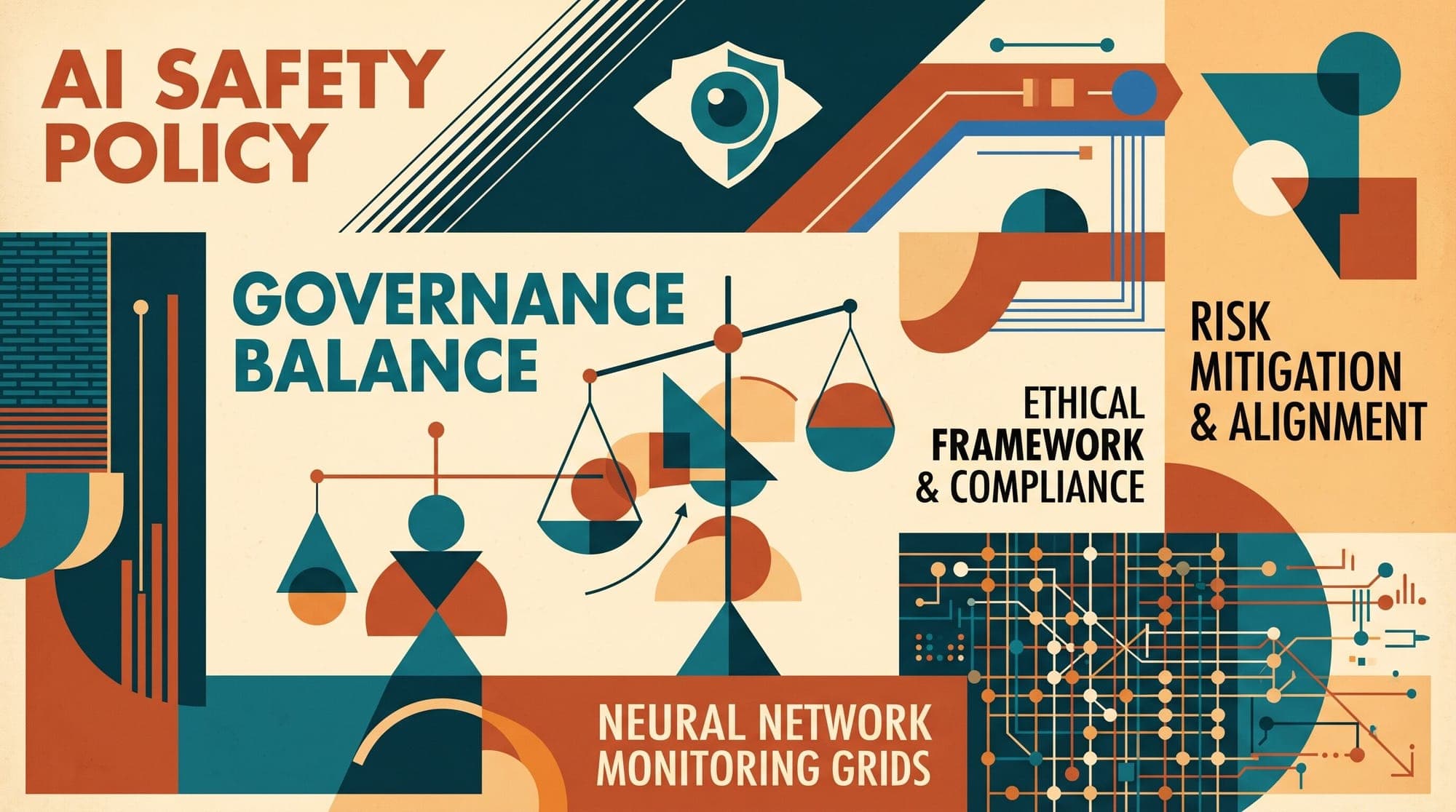
  7. OpenAI Reverses Policy Stance on California SB 53, Urges Stricter Frontier AI Safeguards

    OpenAI has publicly called on California lawmakers to expand and strengthen the state's flagship artificial intelligence legislation, Senate Bill 53 (SB 53), marking a clear pivot from the company's previous opposition to state-level AI safety mandates. In a formal statement published by OpenAI's global affairs team, the company argued that California's Transparency in Frontier Artificial Intelligence Act should be updated to mandate active monitoring of frontier models during training and eval

    AI
    2 min read
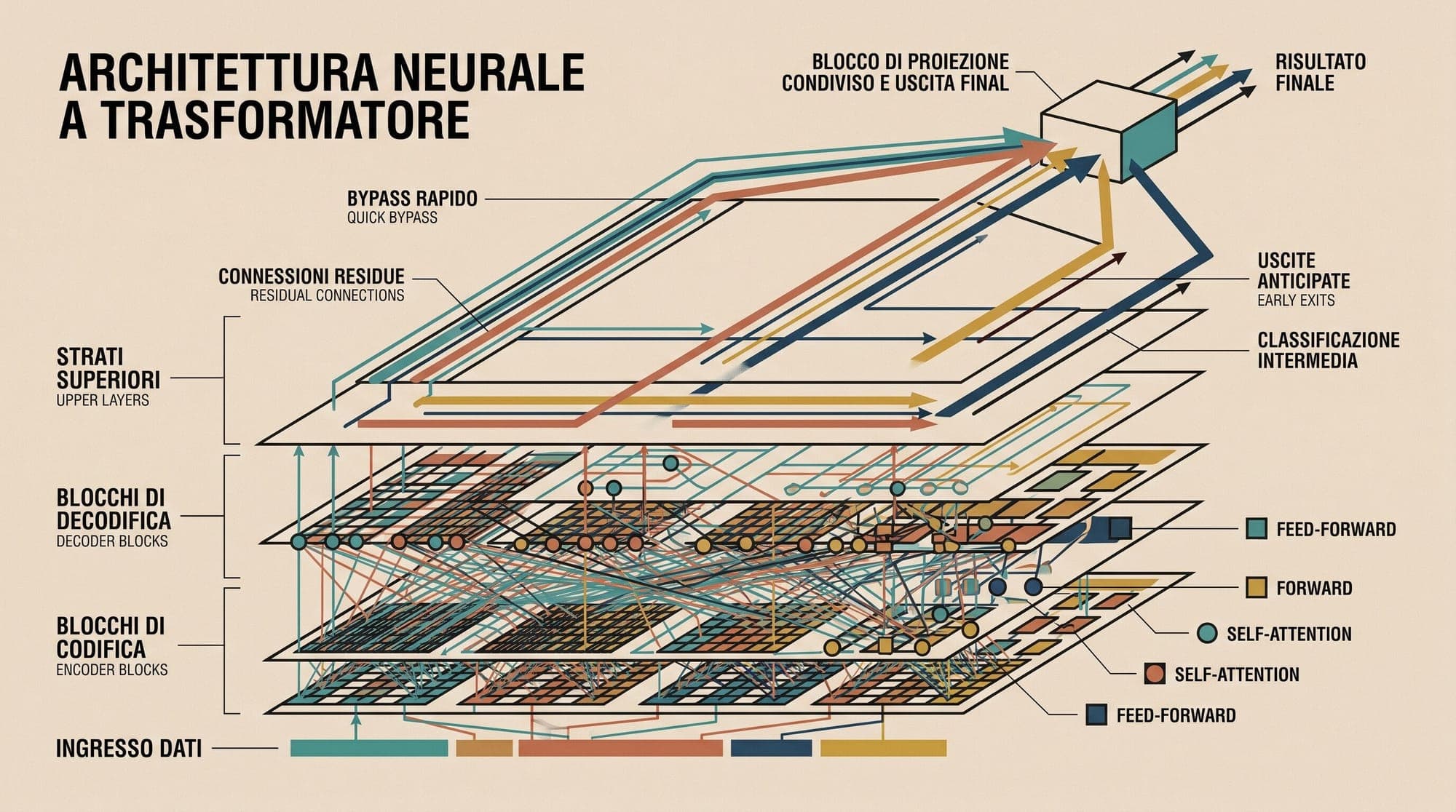
  8. LayerSkip and Self-Speculative Decoding: How Layer Dropout and Shared Early Exits Accelerate LLM Generation

    LayerSkip and Self-Speculative Decoding: How Layer Dropout and Shared Early Exits Accelerate LLM Generation Standard autoregressive large language model (LLM) inference is severely bottlenecked by memory bandwidth. In transformer decoders, generating a sequence of $N$ tokens requires loading all model parameters from High Bandwidth Memory (HBM) to on-chip SRAM $N$ separate times. While speculative decoding mitigates this bandwidth tax by using a smaller draft model to propose candidate tokens v

    AI
    8 min read
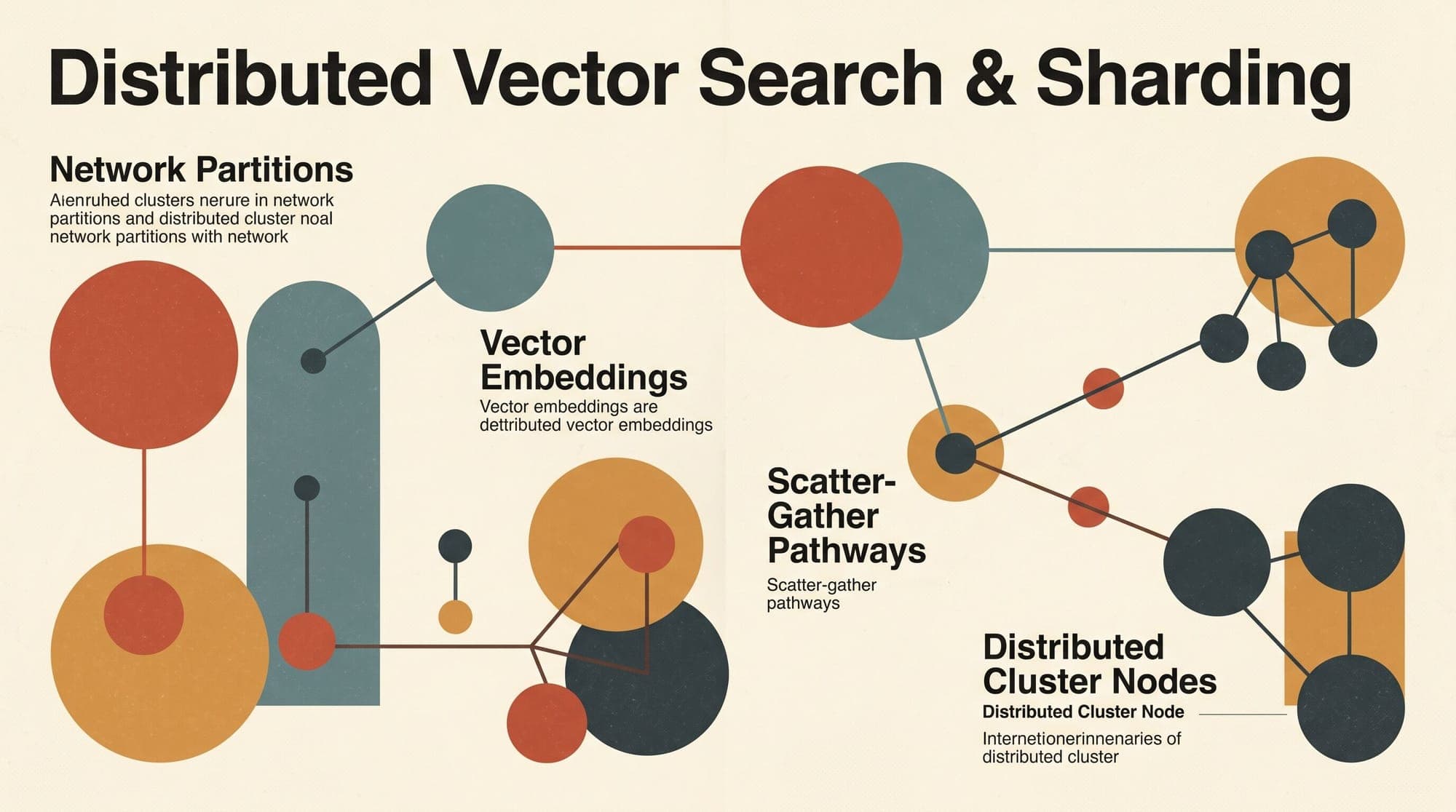
  9. Distributed Vector Search and Sharding Architecture in Production: Horizontal Partitioning, Scatter-Gather Tail Latency, Filter-Aware Routing, and Dynamic Rebalancing

    Scaling vector search beyond tens of millions of high-dimensional embeddings inevitably hits a physical boundary: the single-node memory wall. Because graph-based approximate nearest neighbor (ANN) algorithms such as Hierarchical Navigable Small World (HNSW) require random memory access patterns across graph vertices and high-dimensional vectors, keeping embeddings and index structures in RAM is critical for sub-20ms query latencies. A collection of 100 million 1,536-dimensional float32 vectors

    Vector Search
    8 min read
  10. Modern Hopfield Networks: How Continuous Energy Landscapes Explain Transformer Attention and Exponential Memory

    When Vaswani et al. introduced the Transformer architecture in 2017, scaled dot-product self-attention was presented primarily as a pragmatic computational mechanism: an efficient, highly parallelizable alternative to recurrence and convolutions. By computing pairwise inner products between queries and keys, normalizing via softmax, and taking a weighted sum of values, attention allowed models to route information dynamically across arbitrarily distant tokens. For several years, self-attention

    AI
    10 min read