Archive / page 65 of 123

Latest articles, page 65

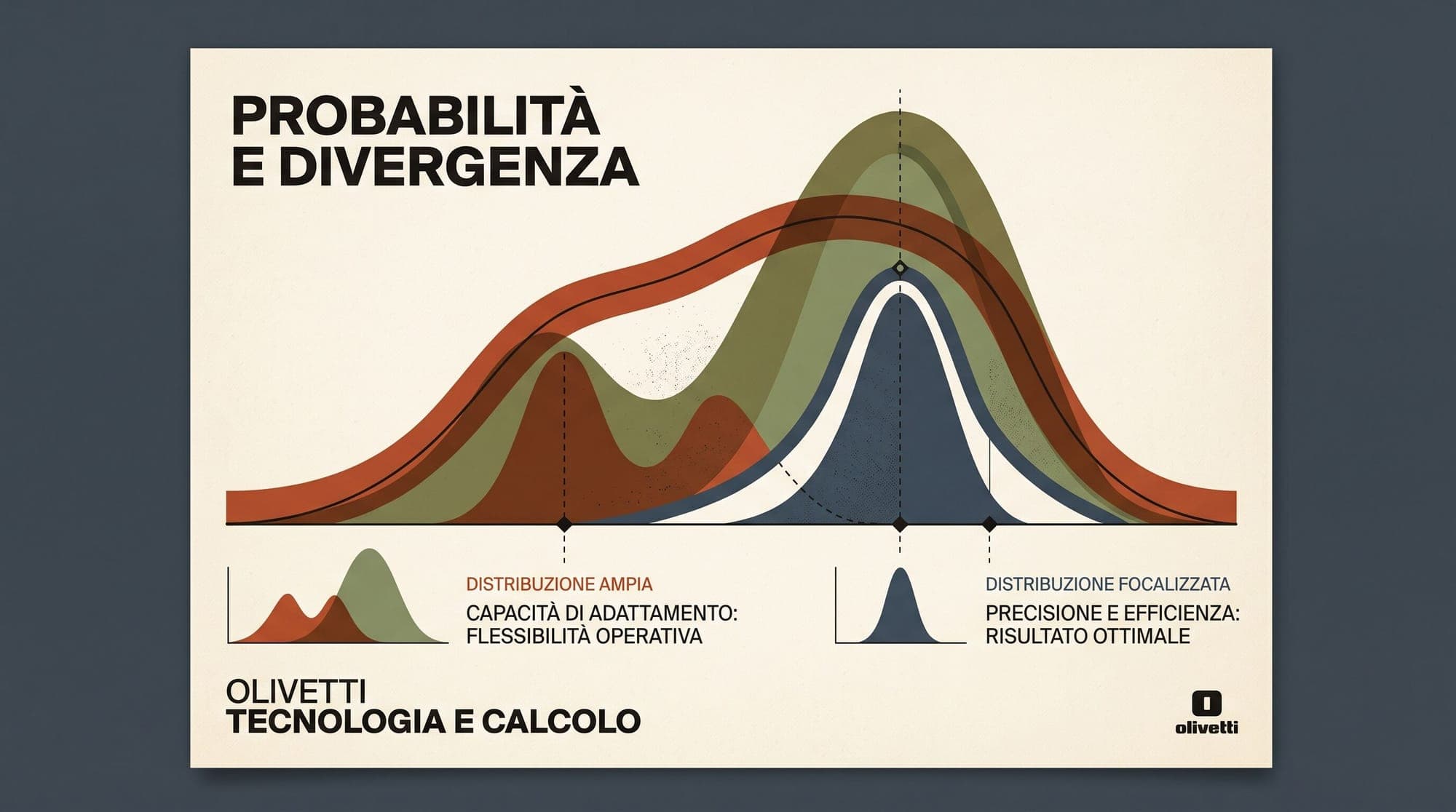
  1. Forward KL vs. Reverse KL Divergence: Mode Covering, Mode Seeking, and the Alignment Dynamics of Large Language Models

    Forward KL vs. Reverse KL Divergence: Mode Covering, Mode Seeking, and the Alignment Dynamics of Large Language Models Every phase of modern large language model development, from multi-trillion token pre-training to reinforcement learning from human feedback (RLHF) and student model distillation, fundamentally revolves around minimizing statistical distance between probability distributions. The primary mathematical tool utilized for this purpose is the Kullback-Leibler (KL) divergence, introd
    AI
    9 min read
  2. Embedding Model Fine-Tuning in Production: Hard Negative Mining, Synthetic Data Pipelines, and Contrastive Distillation

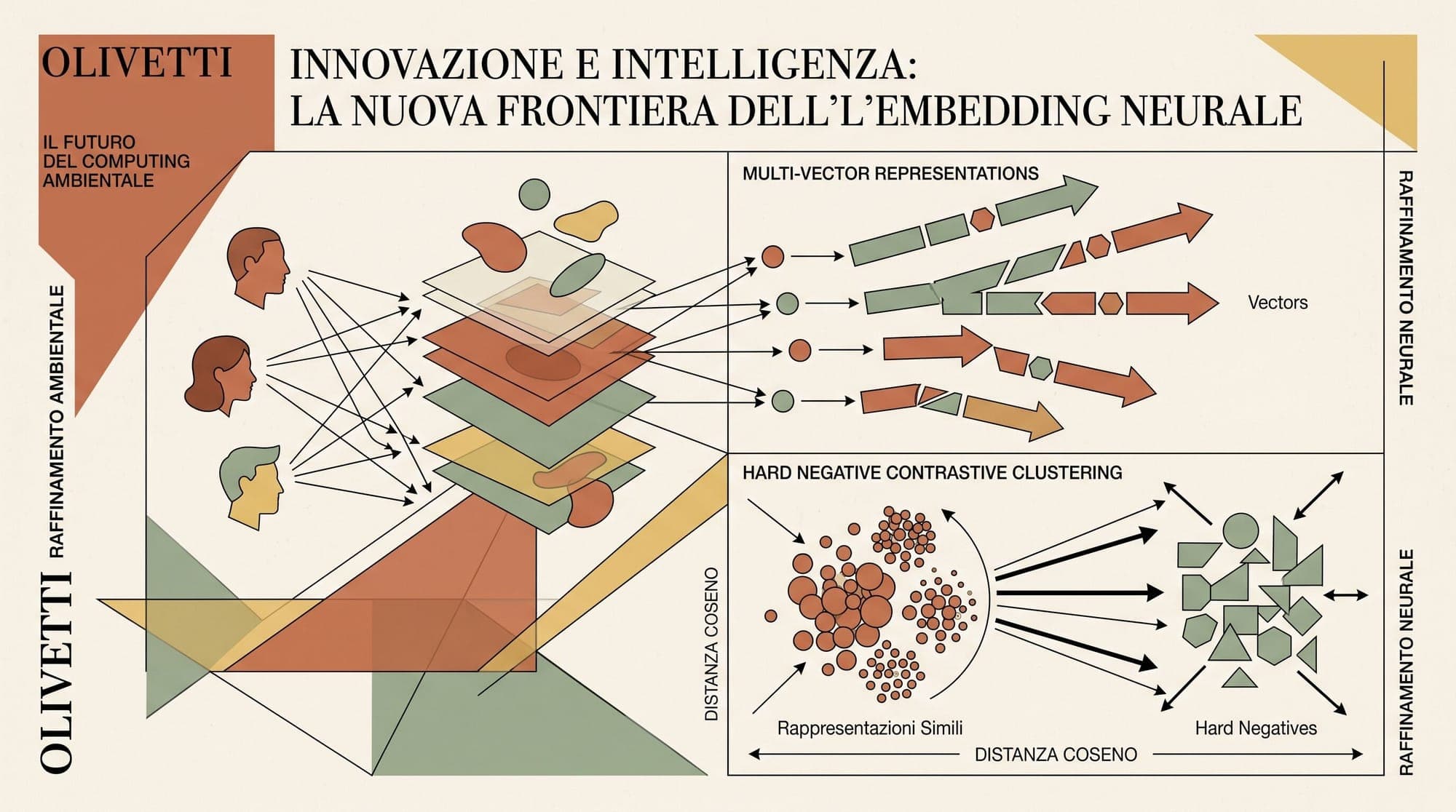
    Production retrieval-augmented generation (RAG) and semantic search architectures frequently suffer from domain mismatch when relying on general-purpose embedding models. Off-the-shelf bi-encoders trained on broad web corpora often experience a 15% to 30% degradation in retrieval metrics such as NDCG@10 and MRR@10 when deployed on specialized enterprise corpora, including proprietary codebases, internal API schemas, clinical trials, and technical documentation. While downstream cross-encoder re

    RAG
    8 min read
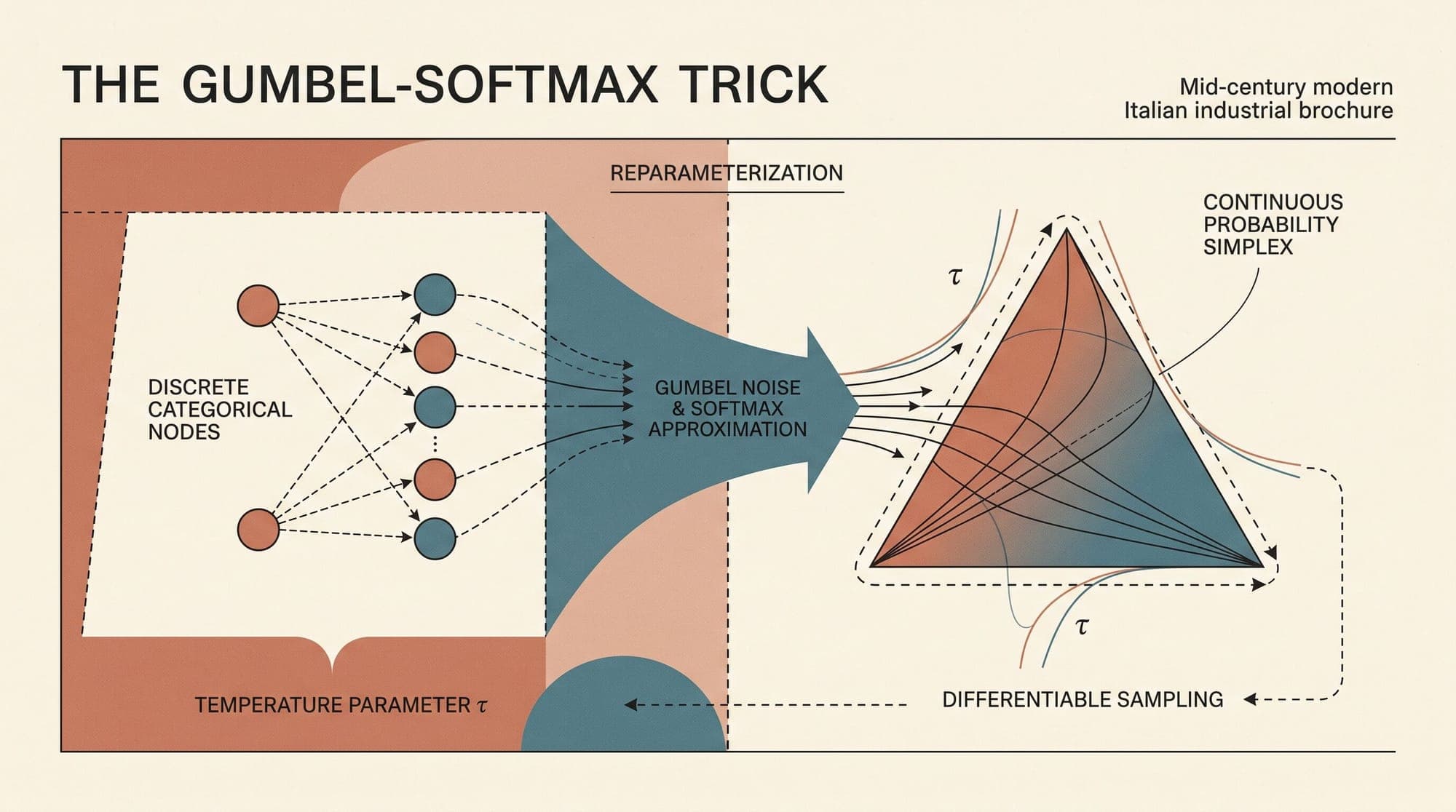
  3. The Gumbel-Softmax Trick: How Continuous Relaxations Enable Differentiable Discrete Sampling

    The Gumbel-Softmax Trick: How Continuous Relaxations Enable Differentiable Discrete Sampling In modern deep learning, end-to-end training depends on reverse-mode automatic differentiation. When an architecture operates on continuous tensors, computing gradients via the chain rule is straightforward. However, many foundational artificial intelligence problems involve discrete choices: selecting tokens from a fixed vocabulary, routing tokens to expert networks in a Mixture-of-Experts (MoE) archit

    Education
    11 min read
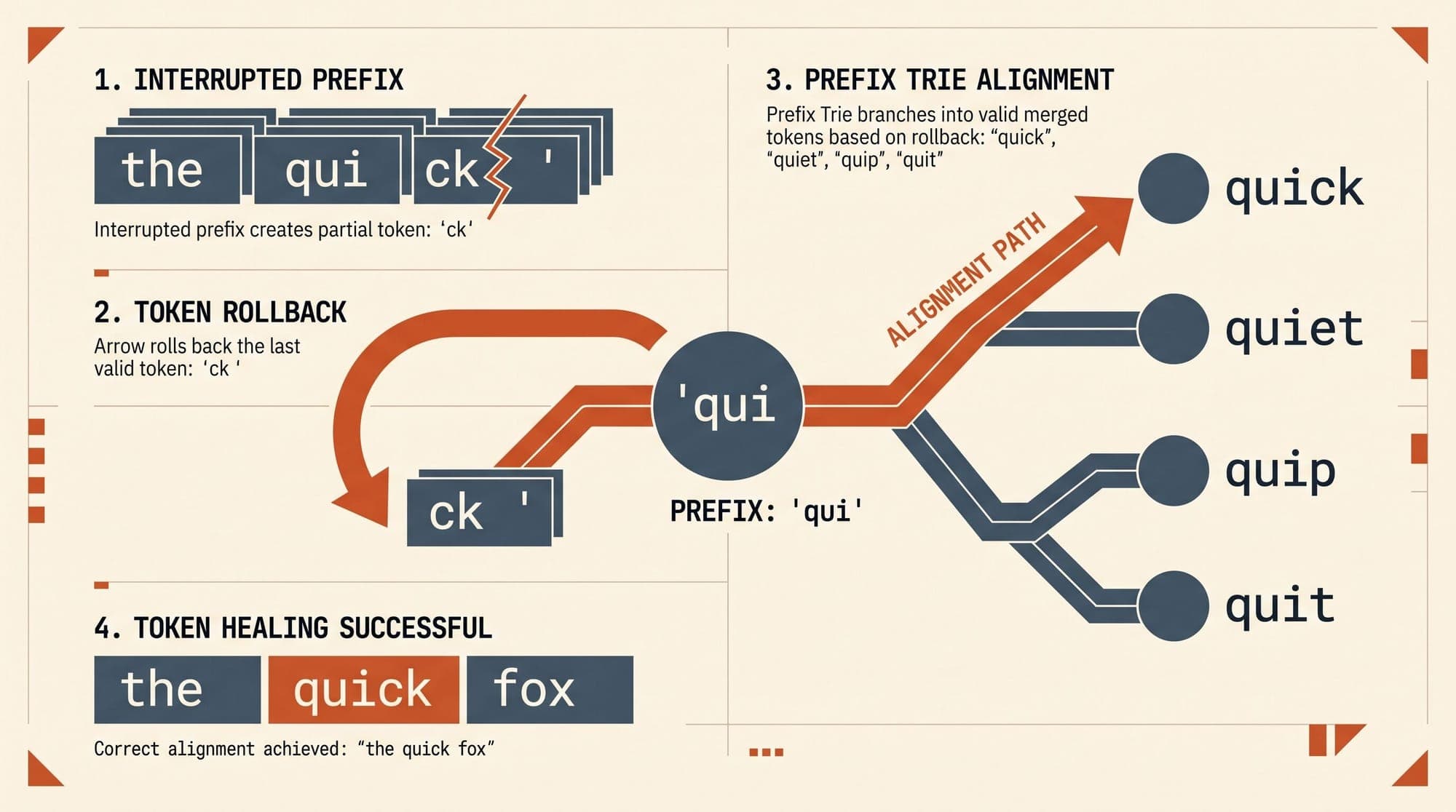
  4. Token Healing and Partial Token Alignment in Production LLM Serving: Architecture, Prefix Trie Rollback, and Serving Trade-Offs

    Modern large language models operate on discrete subword tokens generated by greedy compression algorithms like Byte-Pair Encoding (BPE), WordPiece, or Unigram. While subword tokenization enables high compression rates and fixed vocabulary sizes, it introduces a structural defect at the interface between raw user text and autoregressive inference: the partial token problem, commonly known as the prompt boundary problem. When a user prompt terminates mid-token or at a punctuation boundary that c

    LLM
    7 min read
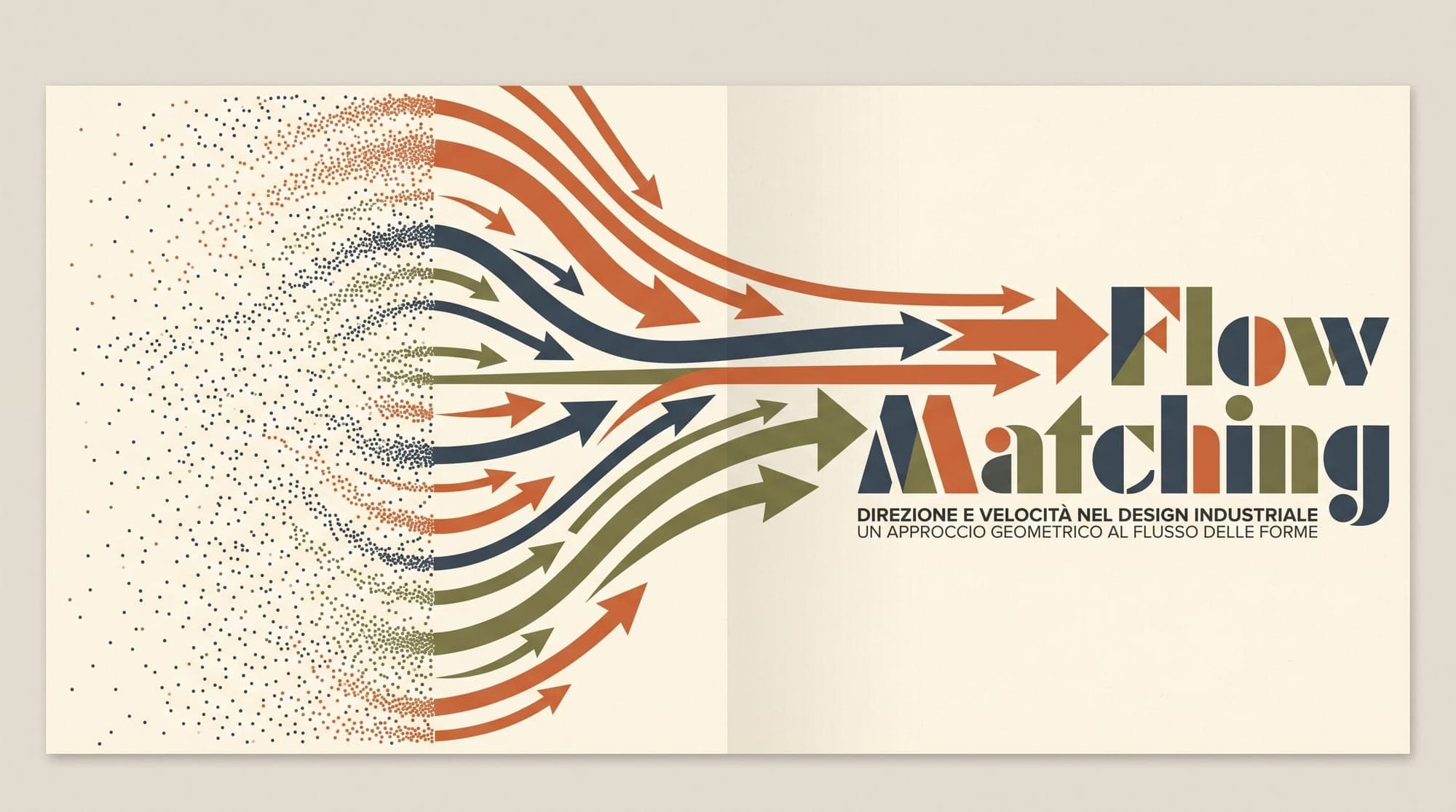
  5. Flow Matching for Generative Modeling: How Continuous Normalizing Flows and Optimal Transport Paths Replace Diffusion SDEs

    Generative modeling underwent a structural shift with the introduction of Flow Matching (FM), formulated independently by Lipman et al. (2022), Albergo and Vanden-Eijnden (2022), and Liu et al. (2022). While Denoising Diffusion Probabilistic Models (DDPM) and score-based Stochastic Differential Equations (SDEs) established state-of-the-art sample quality across vision and audio domains, their sampling dynamics rely on curved stochastic trajectories that require extensive numerical integration st

    AI
    8 min read
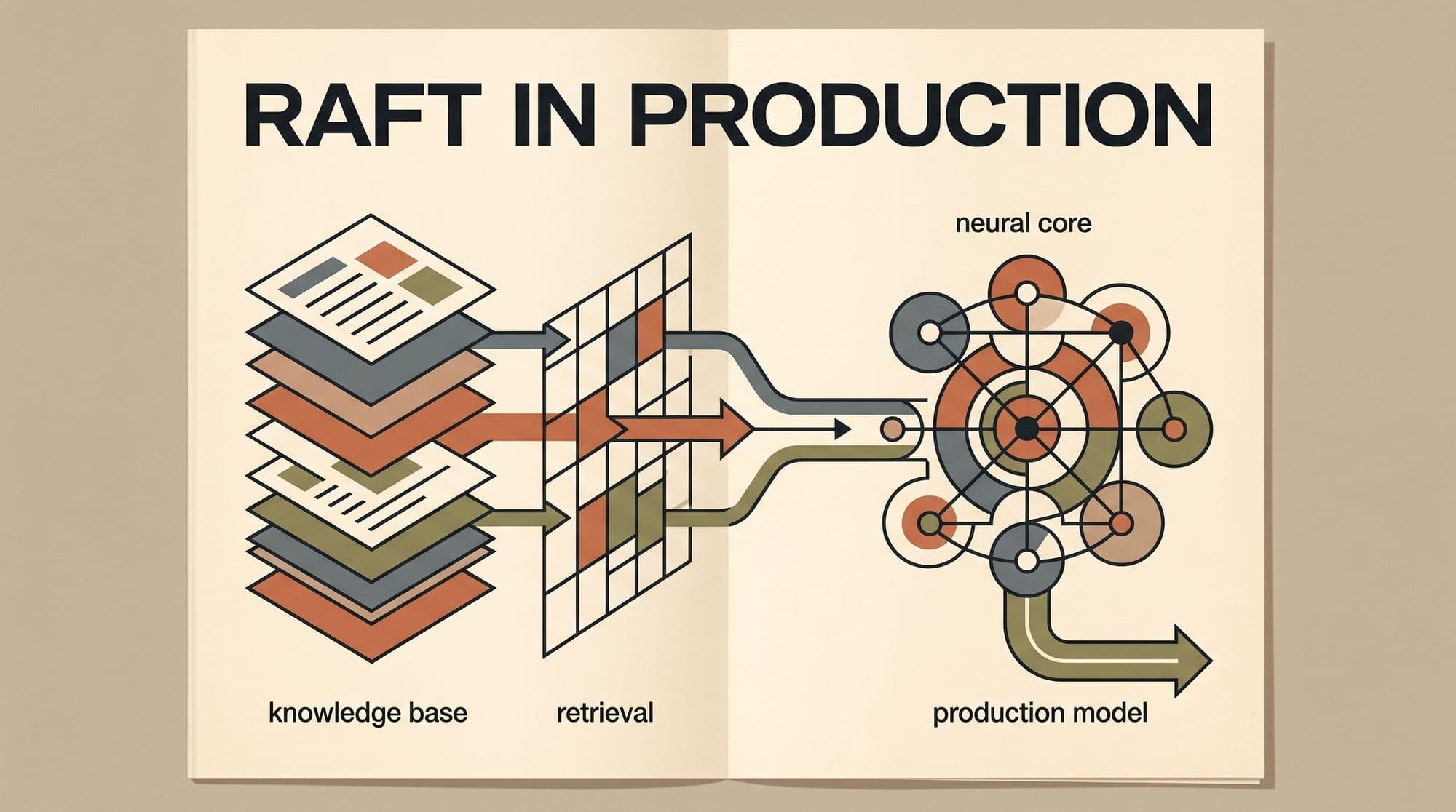
  6. Retrieval-Augmented Fine-Tuning (RAFT) in Production: Architecture, Synthetic Distractor Pipelines, and Evaluation

    Standard approaches to enterprise domain adaptation typically force a choice between two paradigms: Supervised Fine-Tuning (SFT) or Retrieval-Augmented Generation (RAG). SFT bakes domain knowledge directly into model weights, functioning like a closed-book exam. When facts change or precise source attribution is required, SFT models often hallucinate or fail to incorporate updated context. Conversely, standard RAG operates like an open-book exam without prior preparation. The base model reads re

    AI
    5 min read
  7. The Information Bottleneck in Deep Learning: How Mutual Information Compression Shapes Generalization and Neural Representations

    The Information Bottleneck in Deep Learning: How Mutual Information Compression Shapes Generalization and Neural Representations Classical statistical learning theory struggles to explain why overparameterized deep neural networks generalize well to unseen test data. Traditional complexity measures such as Vapnik-Chervonenkis (VC) dimension and Rademacher complexity scale with the raw count of tunable weights, predicting severe overfitting when parameter counts exceed dataset sample sizes. Yet

    AI
    10 min read
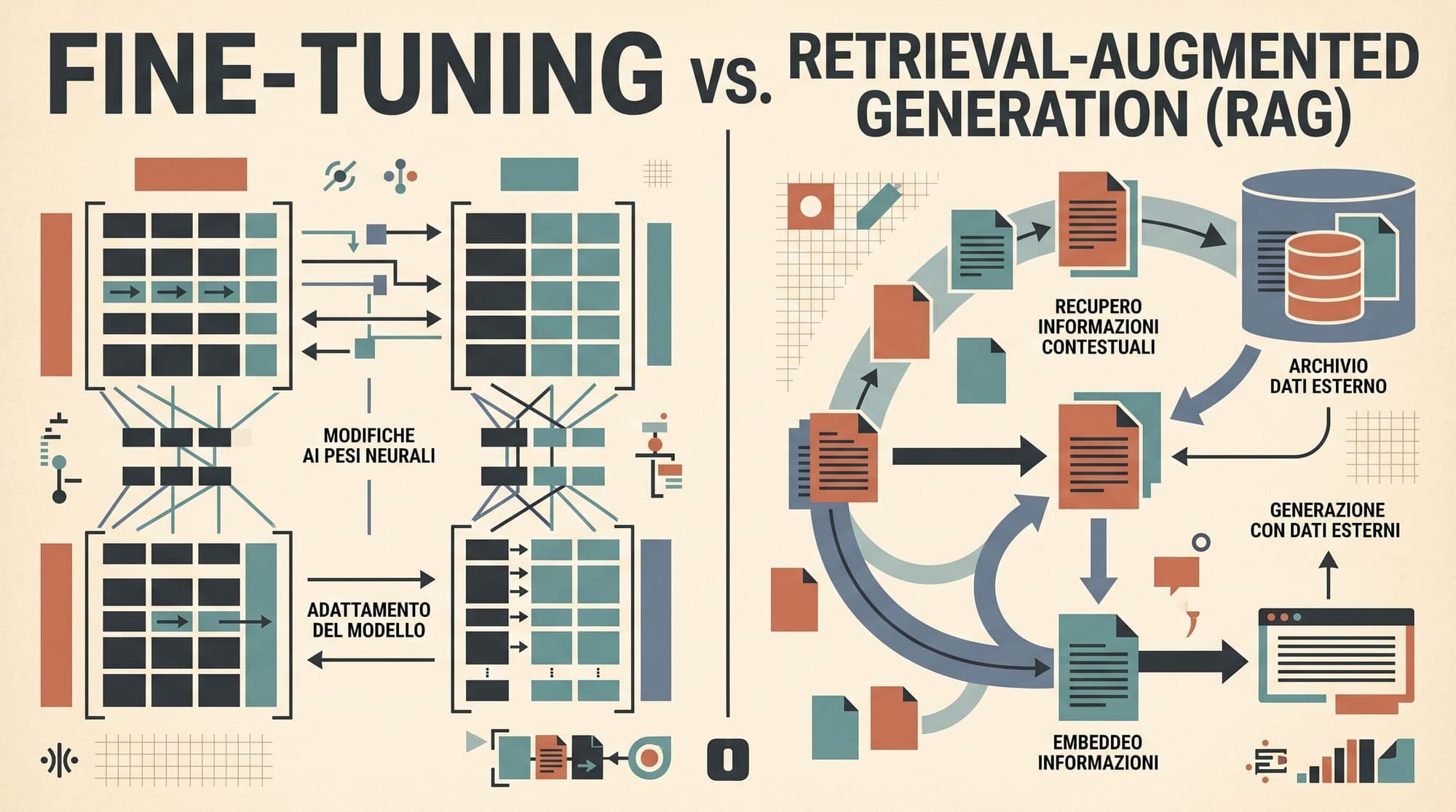
  8. Fine-Tuning vs. RAG in Production: Knowledge Injection, Task Adaptation, Latency Economics, and Hybrid Architecture Trade-Offs

    Fine-Tuning vs. RAG in Production: Knowledge Injection, Task Adaptation, Latency Economics, and Hybrid Architecture Trade-Offs When adapting large language models to domain-specific enterprise workloads, engineering teams face a fundamental architectural choice: modify the model's parametric weights via fine-tuning, or supply dynamic context at inference time via Retrieval-Augmented Generation (RAG). While early discussions often framed this decision as a binary trade-off, empirical evaluation

    AI
    6 min read
  9. Score-Based Generative Modeling via Stochastic Differential Equations: How Continuous SDEs and Score Matching Unify Diffusion Models

    Diffusion and score-based models represent one of the foundational paradigms of modern generative artificial intelligence, underpinning systems across image synthesis, video generation, audio modeling, and continuous multimodal representations. For years, generative diffusion was approached from two distinct perspectives: discrete-step denoising diffusion probabilistic models (DDPM) pioneered by Sohl-Dickstein et al. and Ho et al., and score matching with Langevin dynamics (SMLD / NCSN) introduc

    AI
    8 min read
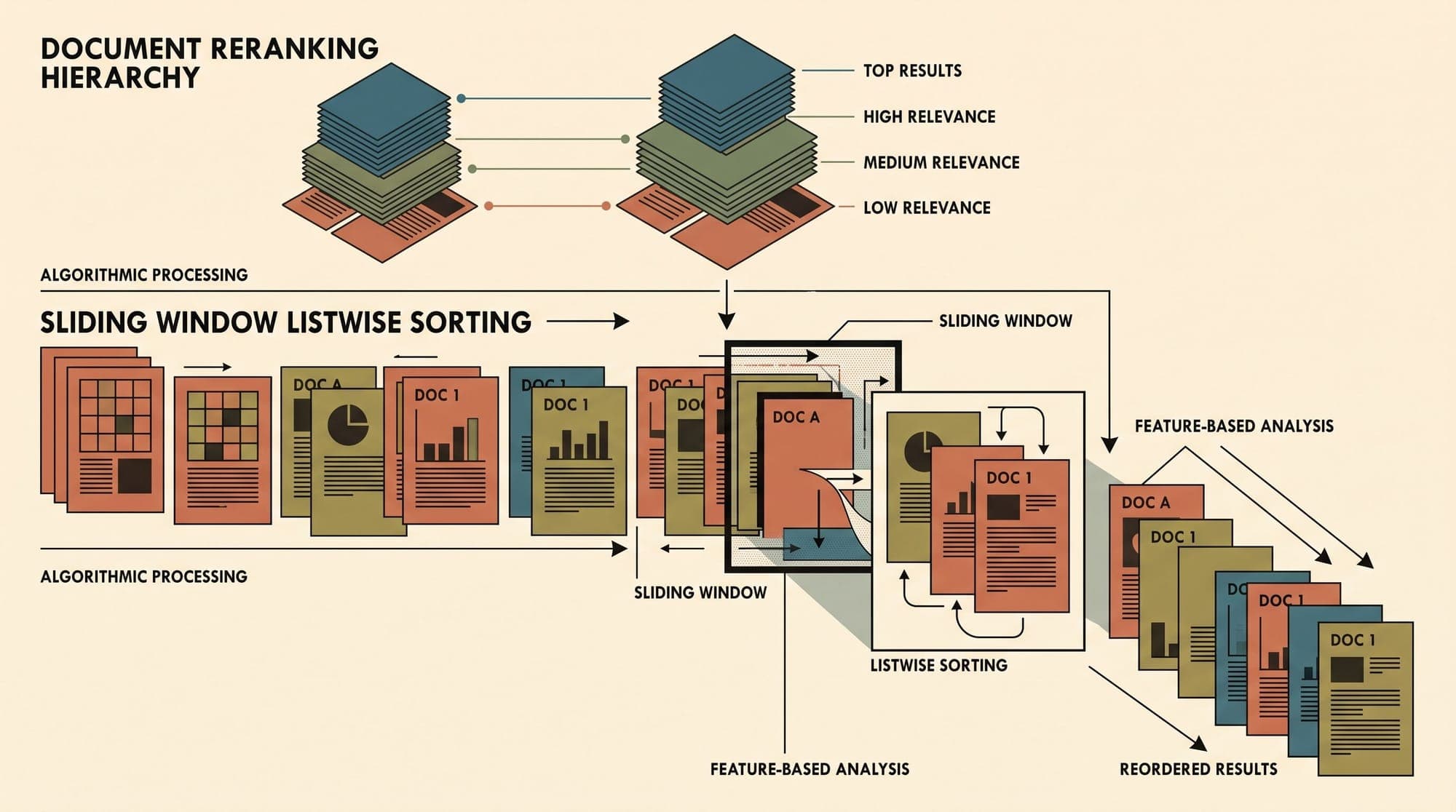
  10. Listwise Reranking in Production: Comparing Pointwise, Pairwise, and Listwise LLM Architectures, Sliding-Window Permutations, and Serving Economics

    Information retrieval systems in production Retrieval-Augmented Generation (RAG) and enterprise search have transitioned through multiple reranking paradigms. While first-stage retrieval (dense vector embeddings and sparse lexical BM25/SPLADE) retrieves candidate sets of 50 to 200 documents in under 20 milliseconds, the precision of downstream generation depends heavily on the reranking stage. Traditional neural rerankers evaluate candidates through pointwise scoring or pairwise classification.

    Information Retrieval
    5 min read