Archive / page 45 of 123

Latest articles, page 45

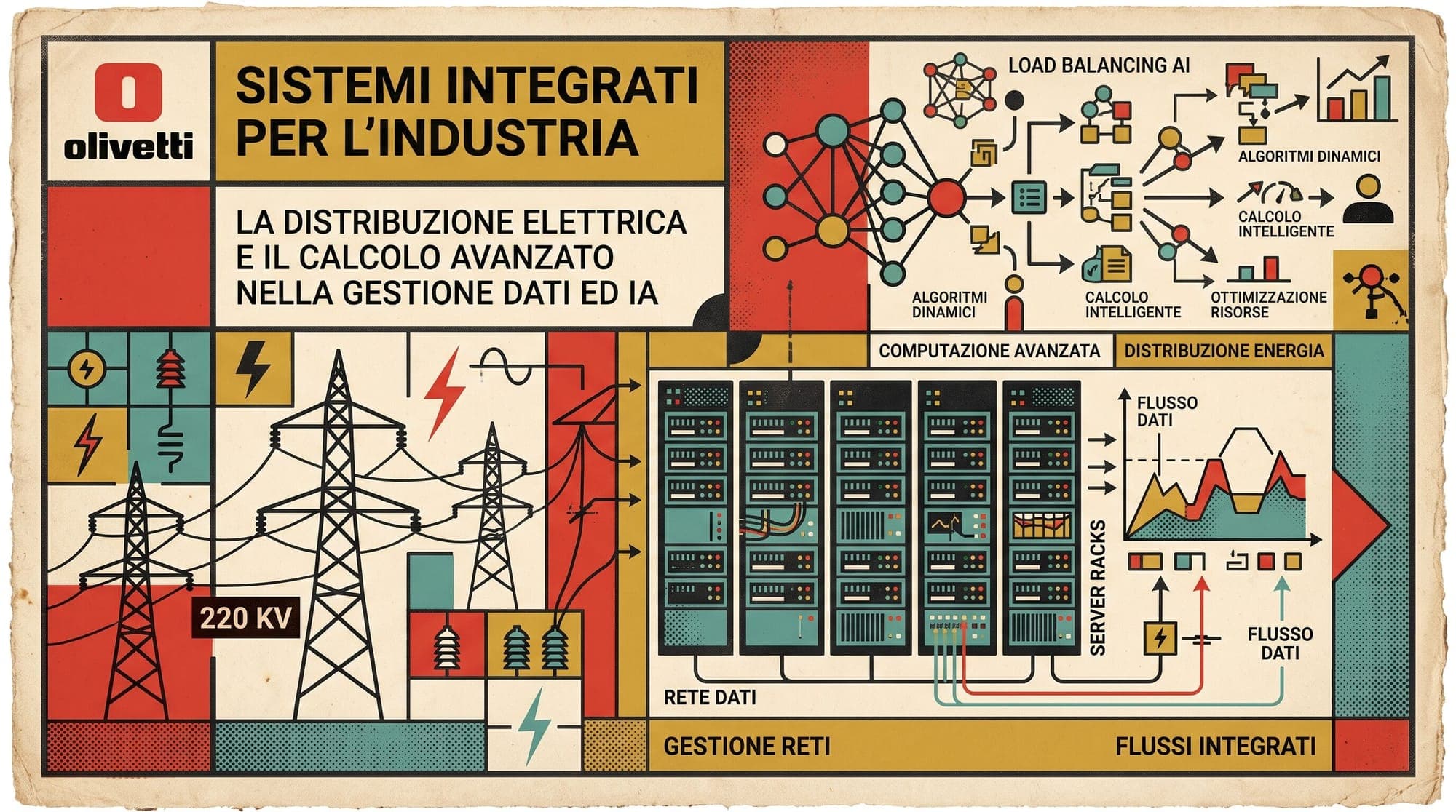
  1. Emerald AI Secures $150M Series A at $1.05B Valuation for Grid-Responsive Data Center Software

    Emerald AI has raised $150 million in a Series A funding round co-led by Energize Capital and DCVC, valuing the energy technology startup at $1.05 billion. The round drew substantial participation from strategic and corporate venture arms across the semiconductor, utility, and industrial sectors, including NVIDIA, Samsung Ventures, Siemens, GE Vernova, Aramco Ventures, Salesforce Ventures, RWE, JERA Ventures, and In-Q-Tel. Additional participants include Radical Ventures, Energy Impact Partners

    AI
    2 min read
  2. AI Safety Firm Alice Raises $140M at Nearly $1B Valuation to Secure Models and Autonomous Agents

    AI trust and security firm Alice has raised $140 million in a funding round led by Apax Digital, bringing its total capital raised to $280 million at a valuation approaching $1 billion. Strategic investors SentinelOne and Samsung Electronics participated in the round alongside MoreTech, Phoenix Financial, Maj Invest, and existing venture backers including Norwest Venture Partners, CRV, Highland Europe, Grove Ventures, Vintage Investment Partners, Resolute Ventures, NFX, and Claltech. The inves

    AI
    2 min read
  3. Stability AI Secures $76M Series B Backed by Major Music Labels and Electronic Arts

    Stability AI has secured $76 million in a Series B financing round backed by a syndicate of major entertainment and gaming publishers. The investor roster includes the world's three largest record labels—Universal Music Group (UMG), Warner Music Group (WMG), and Sony Music Entertainment—alongside video game publisher Electronic Arts (EA), AMD Ventures, and Pacific Alliance Ventures. The transaction marks a structural evolution for the company behind Stable Diffusion, which has shifted toward bu

    AI
    2 min read
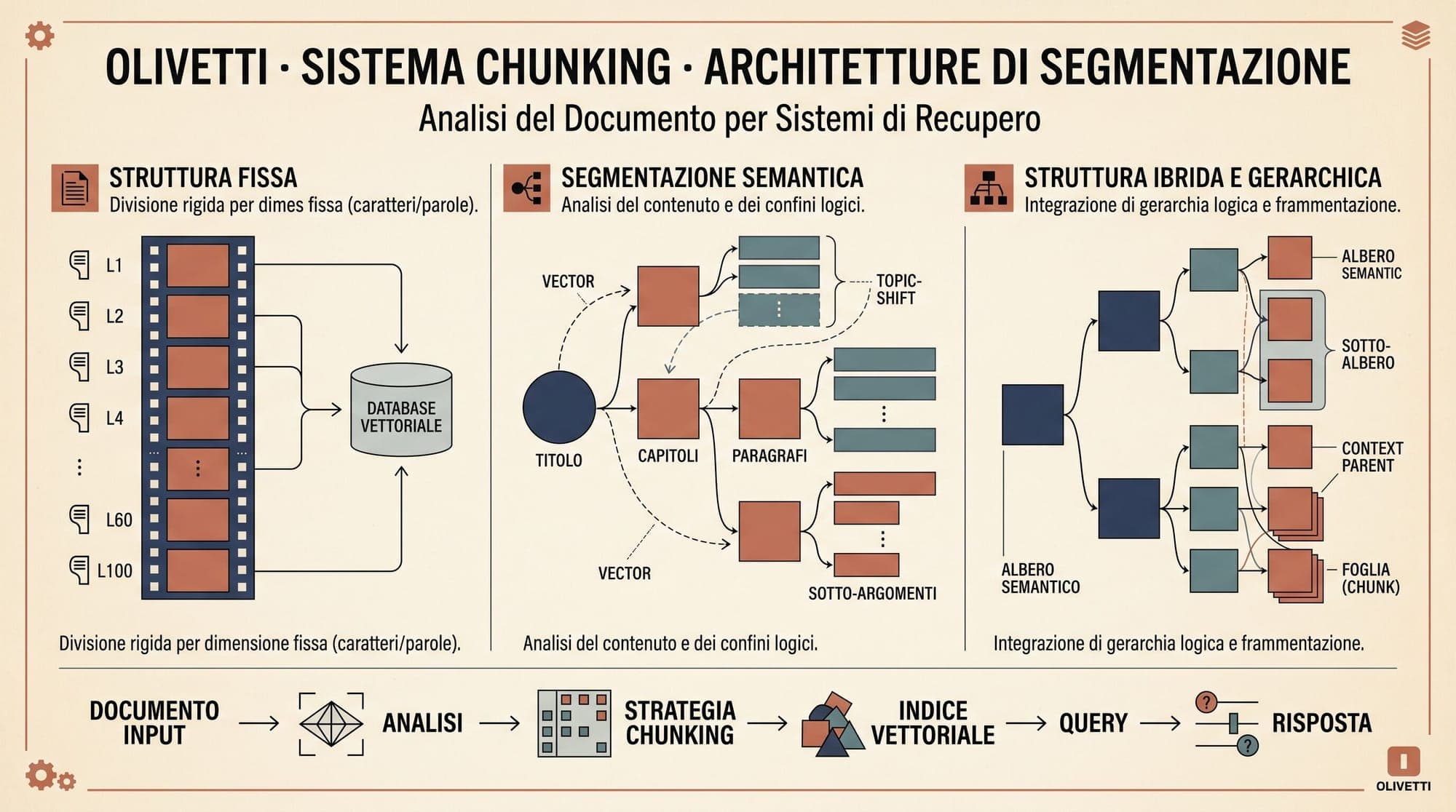
  4. Document Chunking Strategies in Production RAG: Comparing Recursive Splitting, Semantic Clustering, Late Chunking, and Contextual Retrieval Architecture, Boundary Preservation, and Retrieval Precision

    In retrieval-augmented generation (RAG) systems, document chunking dictates the upper bound of downstream retrieval quality and generation fidelity. Naive document fragmentation breaks cross-sentence references, severs entity co-occurrences, and discards global discourse structure. Conversely, oversized chunks inject extraneous noise into context windows, diluting the dense embedding representation and wasting generation budget. Production architectures have moved beyond static character counti

    RAG
    7 min read
  5. Process Reward Models (PRMs): Mathematical Foundations, Step-Level Credit Assignment, and Inference-Time Search in Large Language Models

    In complex multi-step reasoning tasks such as mathematics, formal logic, and software verification, standard autoregressive language models frequently exhibit compounding logical drift. While a model may produce fluent chain-of-thought derivations, an error introduced early in the chain typically invalidates all downstream deductions. Evaluating these reasoning trajectories has traditionally relied on Outcome-Supervised Reward Models (ORMs), which assign a scalar reward solely based on the final

    AI
    8 min read
  6. Bain Joins Anthropic Claude Partner Network at Top Global Premier Tier

    Management consulting firm Bain & Company has joined Anthropic's Claude Partner Network at the Global Premier tier, the highest designation in Anthropic's enterprise services framework. The agreement formalizes joint go-to-market initiatives and enterprise deployment practices for Claude foundation models across strategy, modernization, and operational transformation workflows. The partnership follows a firm-wide deployment across Bain's 19,000 employees, integrating Claude into the consultancy

    Anthropic
    2 min read
  7. NVIDIA Announces Jetson Orin Nano 2 with 78 TOPS AI Compute and 40% Power Cut

    NVIDIA has announced the Jetson Orin Nano 2, an updated entry-level robotics and edge AI computer designed to double inference throughput over the Jetson Orin Nano Super while maintaining the identical physical form factor. The module delivers up to 78 trillion operations per second (TOPS) of AI compute and reduces power consumption by 40% when matched against its predecessor's performance baseline. Targeted at robotics, autonomous delivery drones, and edge computer vision deployments, the hard

    Hardware
    2 min read
  8. IBM Releases Granite Speech 5.0 with 12,600x Real-Time CTC Conformer Architecture

    IBM has released Granite Speech 5.0, a pair of compact 470-million-parameter automatic speech recognition (ASR) models capable of transcribing over 3.5 hours of audio in one second on modern datacenter silicon. In benchmark evaluations, IBM demonstrated aggregate throughput exceeding 12,600x real-time (12,600 RTFx) on a single NVIDIA H200 GPU. The release includes two variants: Granite Speech 5.0 TurboCTC under the permissive Apache 2.0 license, and an extended research checkpoint licensed unde

    Open Weights
    2 min read
  9. IBM Releases Granite 4.2 Open-Weight Reasoning Models with Multi-Stage Agentic RL

    IBM has released Granite 4.2, a new family of dense, decoder-only reasoning language models distributed under an Apache 2.0 open-source license. Available in three parameter sizes (3B, 8B, and 30B), the series introduces native chain-of-thought deliberation, multi-tier reasoning controls, and sandboxed agentic reinforcement learning for open-weight deployments. The release marks a architectural shift from IBM's earlier instruction-following Granite checkpoints toward explicit reasoning and auto

    Open Weights
    3 min read
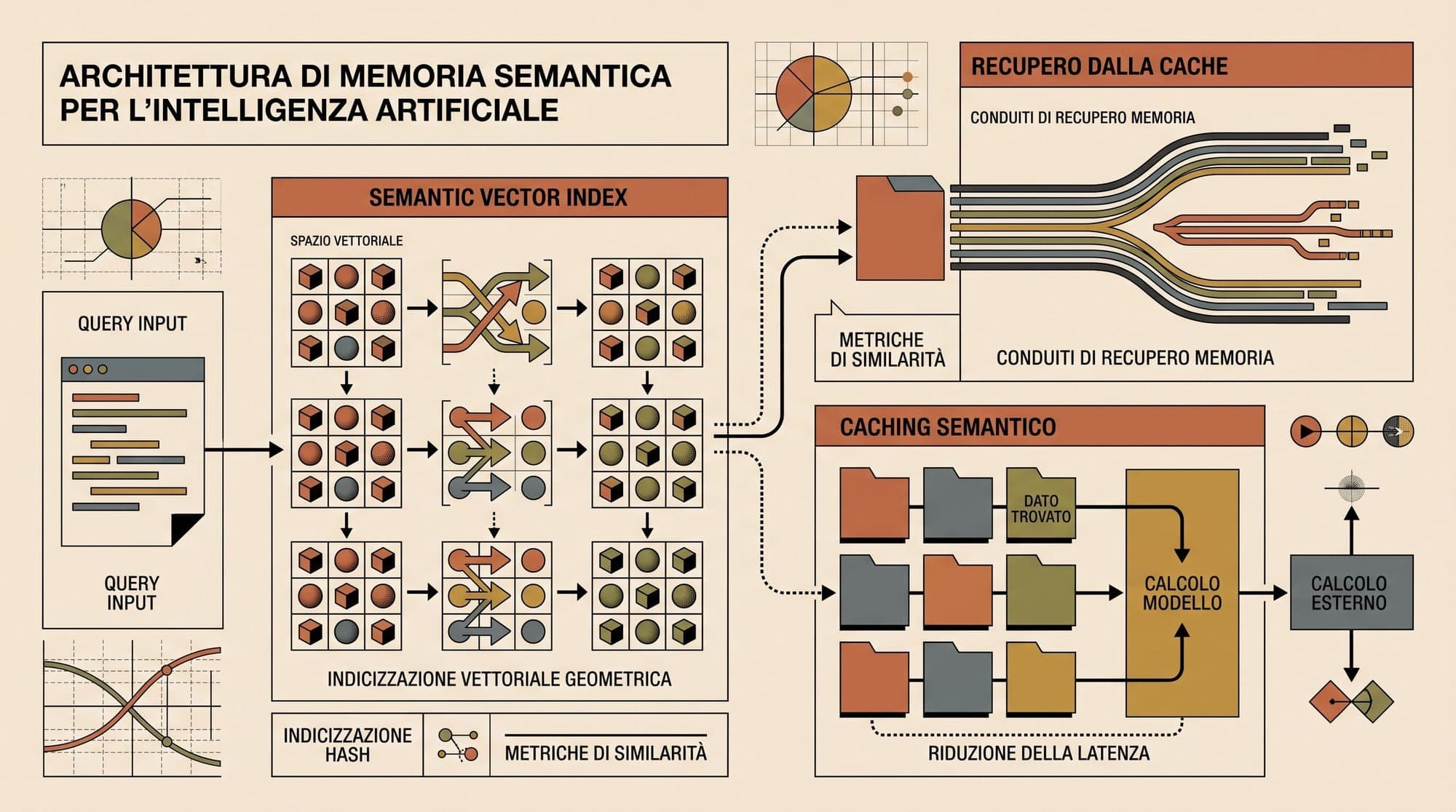
  10. Semantic Caching in Production LLM Systems: Architecture, Approximate Nearest Neighbor Matching, Cross-Encoder Verification, Invalidation Dynamics, and Serving Economics

    Semantic Caching in Production LLM Systems: Architecture, Approximate Nearest Neighbor Matching, Cross-Encoder Verification, Invalidation Dynamics, and Serving Economics Serving large language models at enterprise scale presents severe latency and cost bottlenecks. While frontier reasoning models and deep autoregressive decoders cost between $2.50 and $60.00 per million tokens and incur time-to-first-token (TTFT) delays ranging from 800 milliseconds to several seconds, a substantial fraction of

    AI
    9 min read