
At 3 a.m. in Jakarta, the chief executive of one of Indonesia's largest data center operators watched the US Department of Commerce website until the new chip-export rules loaded, ordered a damage assessment by phone, and caught a red-eye to Singapore to meet Nvidia's team, Bloomberg reports in a Big Take published November 22. The document he was waiting for put shipments of advanced chips to four Southeast Asian countries behind a Washington permission slip, and announced a coming global clampdown on data centers that give Chinese firms remote access to hardware Beijing cannot buy directly.
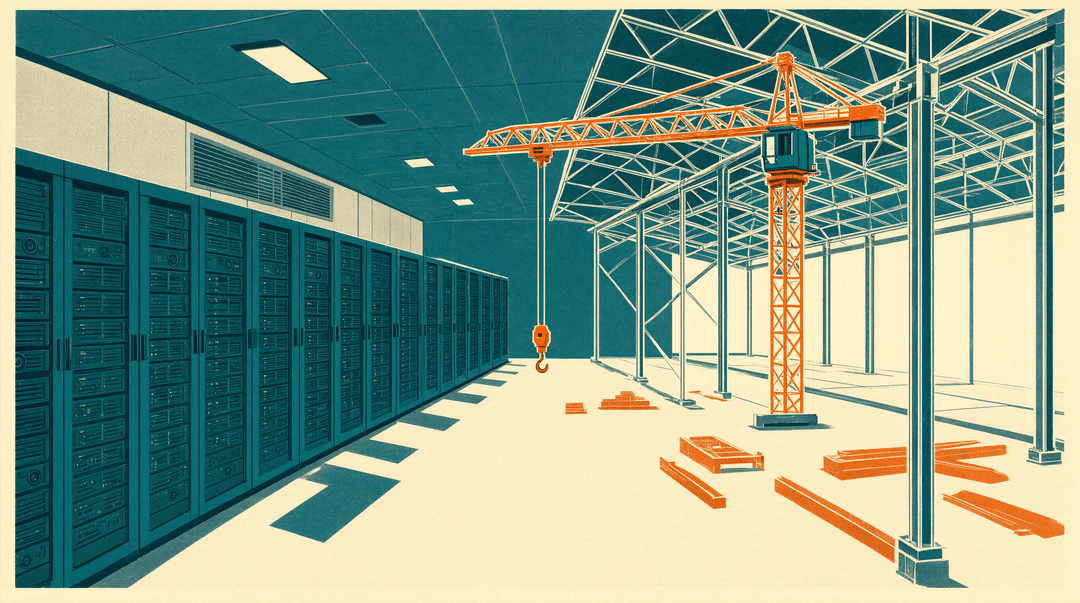
The rules themselves are not new. The interim rule, released by Commerce on November 16 just before President Trump's regional visit, requires data centers in Singapore, Malaysia, Thailand and Indonesia to obtain US licenses to purchase advanced AI chips, CNBC reported. Facilities already serving large Chinese customers get 90 days to apply or face future export restrictions. What Bloomberg's reporting adds is the on-the-ground consequence: builders across the region risk incomplete and abandoned projects, and the neoclouds that grew rich renting GPU capacity to Chinese customers are being forced to replace them.
How big the exposure is
The numbers explain why the 3 a.m. phone call happened. The Washington-based think tank Institute for Progress estimated in October that about 75% of China's overseas AI compute would be concentrated in Southeast Asia by the end of 2026. US restrictions on Nvidia's most advanced chips had pushed Chinese firms, including Alibaba and ByteDance, to rent capacity in the region, and Bloomberg reported that banks and private credit funds that lent billions against those data centers and chip purchases are now confronting the loss of critical Chinese customers. Bloomberg's regional newsletter puts China-linked operators at a significant share of the region's data-center capacity.
Malaysia looks most exposed. More than half of its data center capacity is colocation, with Chinese firms carrying a sizeable share of the workloads, said Capital Economics' senior China economist Leah Fahy, and a slowdown in investment could knock 0.2 percentage points off Malaysian GDP growth through 2028. In Thailand, which has more than 60 data centers operating and about 30 under construction, vice commerce minister Kirida Bhaopichitr said new projects that fail to secure US approval for advanced chips may "not be able to complete construction," and that her government will scrutinize imports and crack down on re-exports. Malaysia's trade minister Johari Abdul Ghani put the compliance posture plainly: "If you want to be in the game, you have to follow U.S. regulations." Singapore is seeking to negotiate "trusted access" for its companies.

The narrow gate
The rule exempts US-linked firms, which leaves a thin path for Chinese customers to keep renting advanced compute through American cloud giants. Jessica Brandt of the Council on Foreign Relations expects buildouts to become slower and costlier and says the rules could undercut the neocloud business model itself. Chris McGuire, a former National Security Council official now at CFR, warns the more likely pivot is geographic: "There is a significant risk that Chinese companies will pivot from renting compute from data centers in Southeast Asia, to renting compute from data centers in Virginia." Some high-end capacity may shift to Japan, South Korea and Taiwan, though power and land constraints limit how much those markets can absorb.
The region's troubles began before the rule. Washington's scrutiny intensified during the investigation into Nvidia's former CEO Jensen Huang and alleged smuggling channels through Singapore and Malaysia, and the interim rule was timed to land as Trump traveled. For now the practical picture is a queue: four governments signaling compliance, operators filing license applications, lenders repricing deals, and a class of projects whose completion now depends on a permitting decision made in Washington.
Sources
- Bloomberg: Trump's AI Chip Crackdown Inflicts Collateral Damage Across Asia, November 22, 2026
- CNBC: New U.S. chip curbs put Southeast Asia's data center boom at risk
- Bloomberg: US Chip Curbs Threaten Billions in Loans to Southeast Asia Data Centers
- Bloomberg: New US AI Chip Rules Against China Threaten Pain for Southeast Asia
- Techmeme: New US chip export rules threaten SEA's data center boom, November 23, 2026
