

Nscale must apply for a US license from the Bureau of Industry and Security to maintain its arrangement with ByteDance, as new export control rules now prohibit providing remote access to American AI chips without specific permission. This regulatory shift targets the previously legal practice of leasing Nvidia hardware through foreign data centers to circumvent direct import bans on Blackwell-class GPUs. The requirement forces Nscale to navigate unresolved compliance risks that may impact its planned IPO and financial projections.
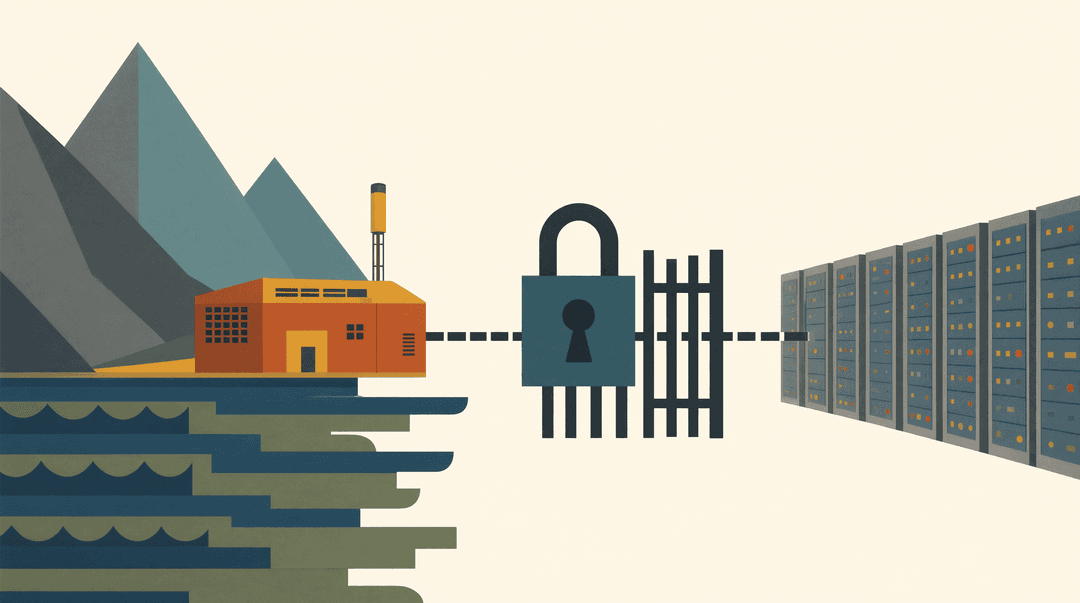
A Norwegian fjord has become a test case for the newest layer of US chip export controls.
Bloomberg reported, citing people familiar with the matter, that Nscale must apply for a US license to keep providing ByteDance with remote access to Nvidia GPUs at data centers in countries including Iceland and Norway. The requirement stems from new Bureau of Industry and Security rules, issued with a November 16 effective date, that require any data center giving customers in China, Russia, Iran and similar countries remote access to American AI chips to hold a special license. A reported 90-day transition window gives operators time to comply.
The rule targets what was one of export control's softer edges. Chinese firms cannot import Blackwell-class GPUs, but they could rent compute from overseas clouds built with the same silicon. Washington has now closed the rental loophole, and no company illustrates its blast radius better than Nscale.
The 73% customer
Nscale, a UK-based "neocloud" backed by Nvidia, built its early business around Spring (SG) Pte Ltd, a Singapore subsidiary of TikTok owner ByteDance. According to the company's IPO filing, as summarized by Tom's Hardware, Spring accounted for $24 million of Nscale's $33 million in 2025 revenue, roughly 73%. The contract gave ByteDance access to 2,304 Nvidia B200 chips at Nscale's Glomfjord data center in Norway, a converted crypto mining site with 30 megawatts of planned capacity. The deployment was financed in part by a $105 million loan from Macquarie alongside $35 million of equity.
The deal was legal. It was also never quiet. Macquarie required Nscale to monitor how Spring used the chips and to report "compute anomalies or suspicious configurations" that might violate US export controls, and a third party conducted due diligence on ByteDance itself, Tom's Hardware reported from the filing. When Nscale filed its S-1 in September, the Financial Times noted the prospectus did not name ByteDance anywhere; only an appendix mentioned Spring.
What it costs to be compliant now
The exposure is shrinking by design. Nscale reported $140.6 million in revenue for the first half of 2026 against $10.4 million a year earlier, and its filing shows the largest customer at 52% of first-half revenue; the company has expected that share to fall below 20% this year as contracts with Microsoft and Anthropic scale up, TraderInsight and The Decoder reported.
Still, timing is unkind. Nscale is pursuing a US listing at a reported target valuation near $30 billion, a figure some investors privately consider high against a range of $16 to 19 billion, BigGo Finance reported. A pending BIS license decision on its former anchor customer is precisely the kind of unresolved risk IPO buyers discount. And the license is not promised: nothing in the rules guarantees Washington grants access requests from ByteDance, a company whose algorithm exports Beijing already treats as strategic.
The larger read is about enforcement reach. The first era of chip controls policed shipping manifests. This one polices network sessions, in Norwegian fjords, after the racks are already lit. Whoever the customer is, the operator now needs a permission slip from the Commerce Department to turn on the machine.
Sources
- Nscale's ByteDance Deal Faces Scrutiny Under US Chip Curbs — Bloomberg
- Filing reveals how ByteDance gained access to over 2,000 Nvidia B200 chips through Nscale's Norway data center — Tom's Hardware
- Nvidia-backed Nscale keeps its biggest customer, ByteDance, out of its IPO filing — The Decoder
- ByteDance Accounts for 70% of Nscale's Revenue as New U.S. Chip Rules Stall IPO Path — BigGo Finance
Frequently asked questions
Why does Nscale need a US license for ByteDance?
Nscale must apply for a US license because new Bureau of Industry and Security rules, effective November 16, require data centers providing customers in China, Russia, or Iran with remote access to American AI chips to hold a special license.
What percentage of Nscale's revenue came from ByteDance?
According to Nscale's IPO filing summarized by Tom's Hardware, Spring Pte Ltd, a subsidiary of ByteDance, accounted for $24 million of Nscale's $33 million in 2025 revenue, representing roughly 73%.
Where is the data center used for these GPU rentals located?
The deployment utilized Nscale's Glomfjord data center in Norway, which is a converted crypto mining site with 30 megawatts of planned capacity.
