Archive / page 97 of 123

Latest articles, page 97

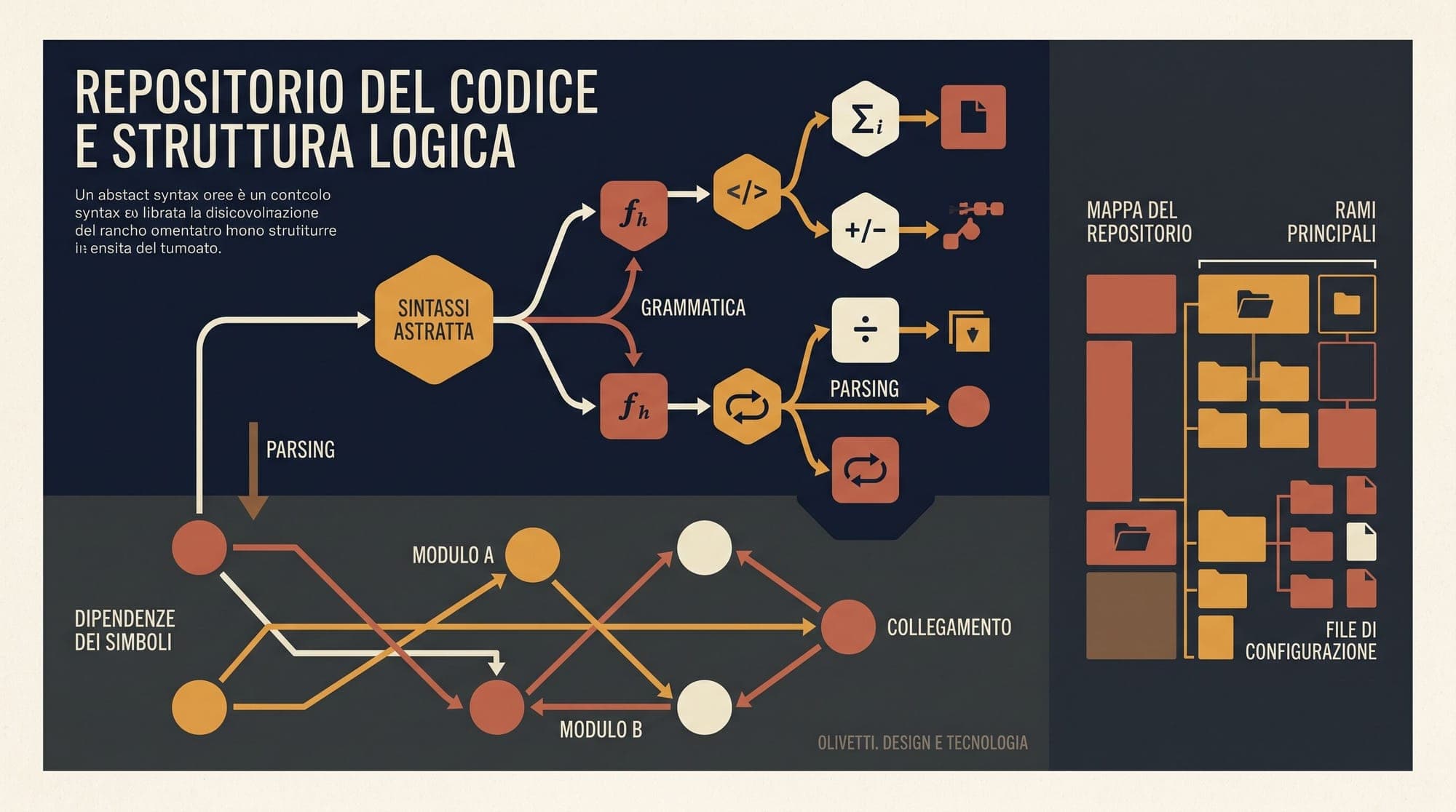
  1. Codebase Context Engineering for AI Agents: Repo Maps, AST Indexing, and Retrieval Architectures

    Modern software repositories routinely contain hundreds of thousands or millions of lines of source code. A medium-sized production project with 500 files and 100,000 lines of code typically spans 3 million to 5 million tokens. While frontier models have expanded context windows to 200,000 tokens or more, stuffing an entire repository into a prompt remains fundamentally impractical. Beyond exponential inference costs and KV cache memory bloat, long-context attention suffers from severe retrieval
    AI
    6 min read
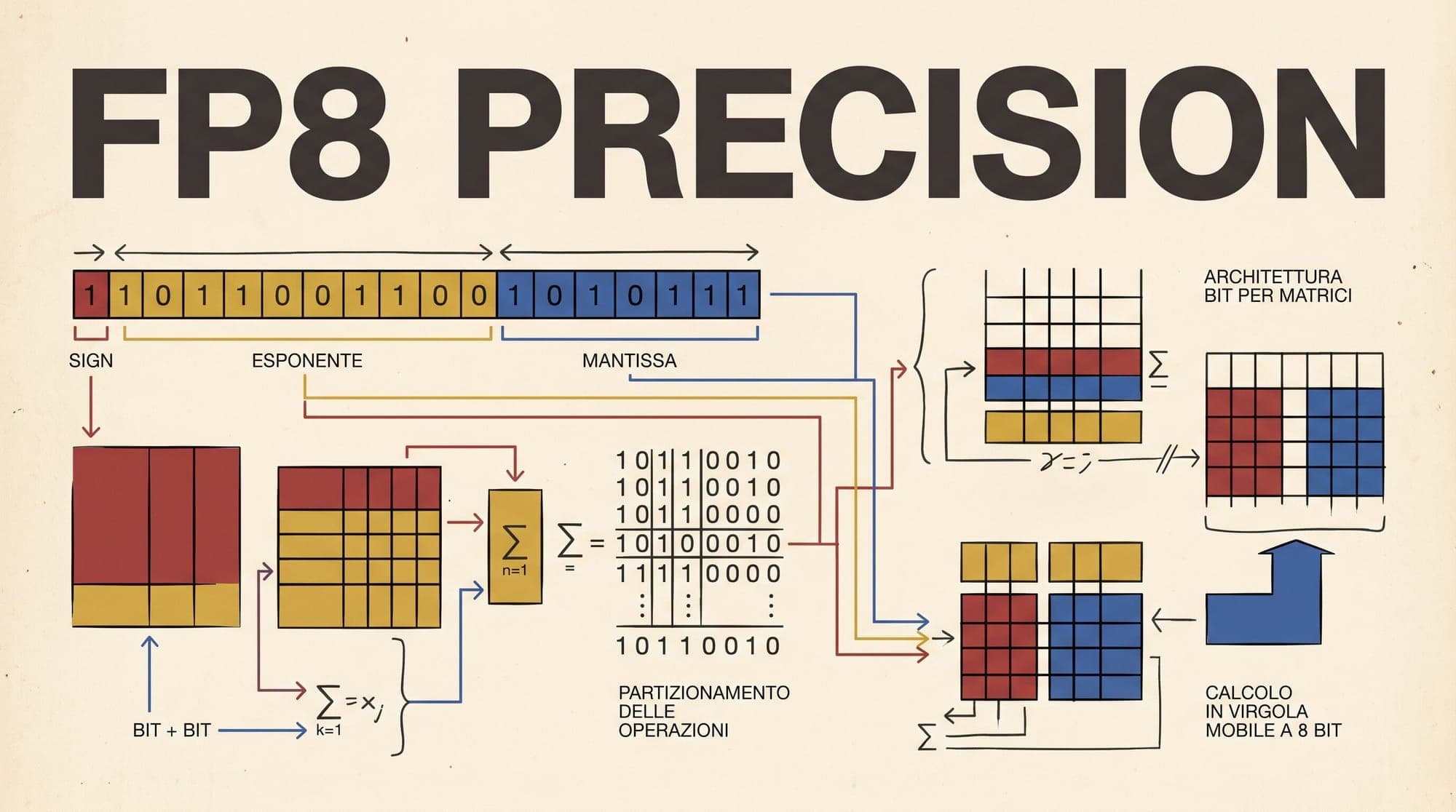
  2. FP8 Mixed-Precision Training: Formats, Scaling Recipes, and Fine-Grained GEMMs

    FP8 Mixed-Precision Training: Formats, Scaling Recipes, and Fine-Grained GEMMs Training frontier large language models requires navigating harsh memory bandwidth and compute boundaries. For years, 16-bit formats such as IEEE FP16 and Brain Floating Point (BF16) served as the standard arithmetic precision for deep learning workloads. While BF16 provided sufficient dynamic range to prevent gradient underflow without manual loss scaling, training clusters still spent substantial time bounded by me

    AI
    8 min read
  3. Z Lab Releases DFlash 2 for Qwen 3.8 27B: Block Diffusion Speculative Decoding with Target KV Injection

    Z Lab has released DFlash 2 checkpoints for Alibaba's Qwen 3.8 27B model family, advancing block-diffusion speculative decoding for open-weights LLM serving. By replacing conventional autoregressive draft models with a non-causal diffusion mechanism paired with direct target key-value (KV) cache injection, the framework achieves up to 3x to 4.3x throughput speedups in production inference engines like SGLang and vLLM without altering output token distributions. For where the 27B fits in the line

    Inference
    2 min read
  4. Pennsylvania Restricts Speculative AI Data Centers in Executive Order 2026-05

    Pennsylvania Governor Josh Shapiro has signed Executive Order 2026-05, introducing strict regulatory standards on high-capacity data center construction and ending the state's expedited permitting program for computing facilities. The directive requires prospective developers of large-scale facilities to enter legally binding commitments with the Commonwealth to safeguard local power grids, protect municipal water supplies, and secure approval from local governments before receiving state enviro

    Policy
    2 min read
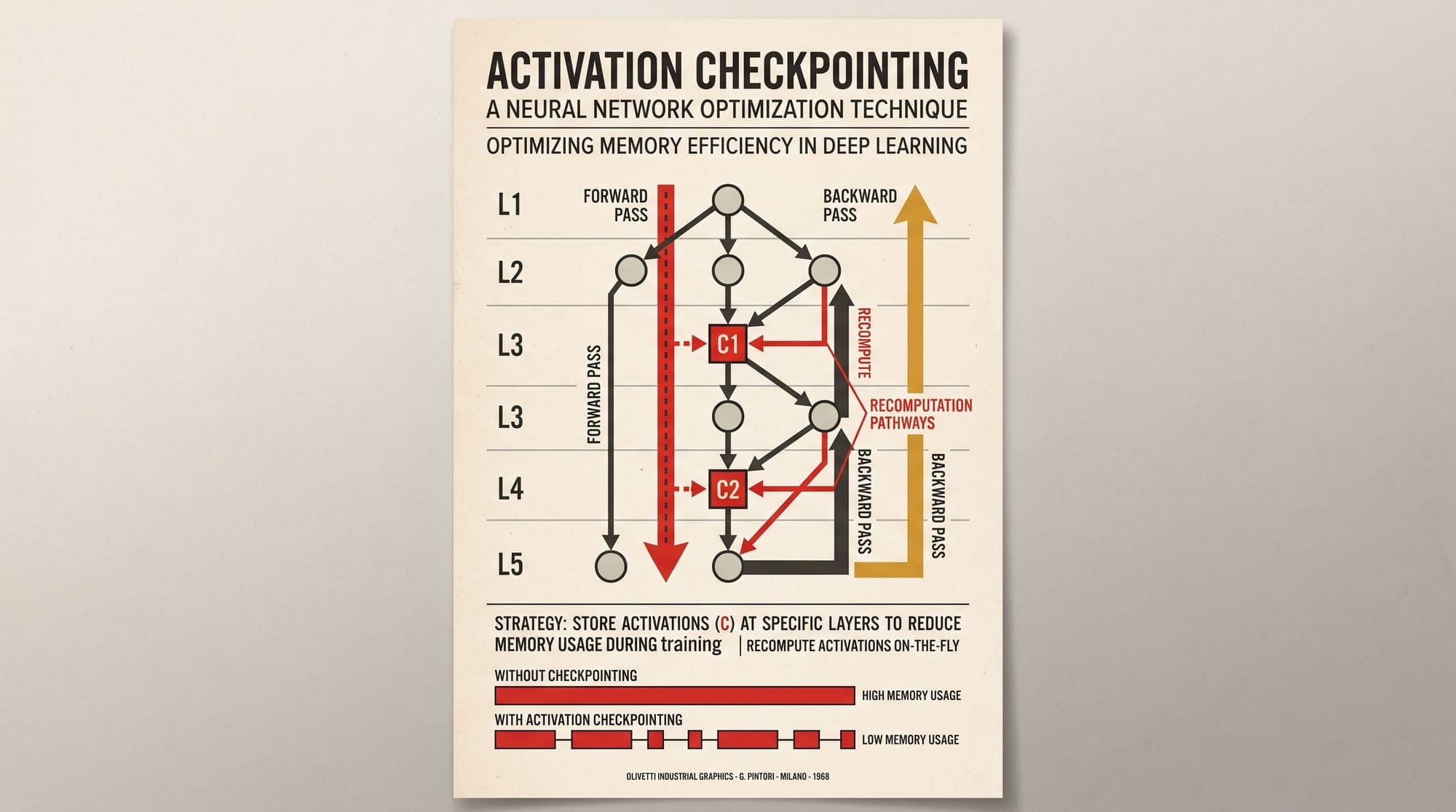
  5. Activation Checkpointing in Large Language Models: How Selective Recomputation Eliminates Memory Bottlenecks

    Large language model pre-training and fine-tuning are fundamentally constrained by GPU memory (VRAM). While distributed techniques such as Fully Sharded Data Parallel (FSDP), ZeRO, and Tensor Parallelism successfully shard model parameters, optimizer states, and gradients across hundreds or thousands of GPUs, activation memory presents a distinct scaling bottleneck. During the forward pass of a transformer model, intermediate tensor outputs must be preserved in GPU memory so that backpropagatio

    AI
    8 min read
  6. Cerebras Unveils CS-4 Rack-Scale System Powered by Three WSE-3 Turbo Chips and Nexus Architecture

    Cerebras Unveils CS-4 Rack-Scale System Powered by Three WSE-3 Turbo Chips and Nexus Architecture Cerebras Systems has announced the CS-4, a rack-scale AI accelerator system designed around three of its next-generation Wafer Scale Engine 3 Turbo (WSE-3 Turbo) chips and a modular hardware architecture dubbed Nexus. Cerebras confirmed that initial customer shipments for the CS-4 are scheduled to begin in the current quarter. The new system marks a structural shift from Cerebras's single-wafer CS

    Hardware
    2 min read
  7. AI FinOps: Cutting LLM Inference Costs by 30-60% Through Model Tiering, Caching, and GPU Optimization

    AI FinOps: Cutting LLM Inference Costs by 30-60% Through Model Tiering, Caching, and GPU Optimization Inference costs have become the second-largest line item in enterprise AI budgets, trailing only talent spend according to RapidData's State of Enterprise AI 2026. This shift represents a fundamental inversion from the 2021-2023 era when training dominated AI expenditure. The compounding nature of serving costs—accumulating every hour as long as users hit the API—means that even modest producti

    AI
    4 min read
  8. Sequence Parallelism in Large Language Models: How Megatron-SP, DeepSpeed Ulysses, and RingAttention Distribute Long Contexts

    Sequence Parallelism in Large Language Models: How Megatron-SP, DeepSpeed Ulysses, and RingAttention Distribute Long Contexts Training and serving frontier large language models on context windows spanning hundreds of thousands to millions of tokens introduces a fundamental memory barrier. While model parameters can be distributed across GPUs using Tensor Parallelism (TP) or Fully Sharded Data Parallelism (FSDP / ZeRO), activation memory scales directly with sequence length $S$. For sequence le

    AI
    9 min read
  9. GLM-5.3 Scores 60 on Artificial Analysis Intelligence Index, Matching Kimi K3

    Independent AI evaluation platform Artificial Analysis has published its benchmark results for Z.ai's GLM-5.3, awarding the reasoning model a score of 60 on its Intelligence Index v4.1.1. The result places GLM-5.3 level with Moonshot AI's Kimi K3 and three points behind frontier leader Claude Opus 5 (63). The evaluation tested GLM-5.3 at its maximum reasoning effort configuration across a nine-part battery that measures agentic tool execution, terminal coding, graduate-level scientific problem-

    AI
    2 min read
  10. Block Open-Sources Berd: Apache 2.0 Desktop Workspace for Multi-Model AI Agents

    Block has open-sourced Berd, an Apache 2.0-licensed desktop application designed to serve as a unified workspace for managing AI agents across different foundation models, toolsets, and execution harnesses. Originally built for internal use across Square, Cash App, and Tidal, the desktop client reached version 0.6.2 on August 18, 2026, with builds available for macOS, Windows, and Linux. The release addresses growing operational fragmentation as developers juggle specialized agent environments

    AI
    2 min read