Archive / page 74 of 123

Latest articles, page 74

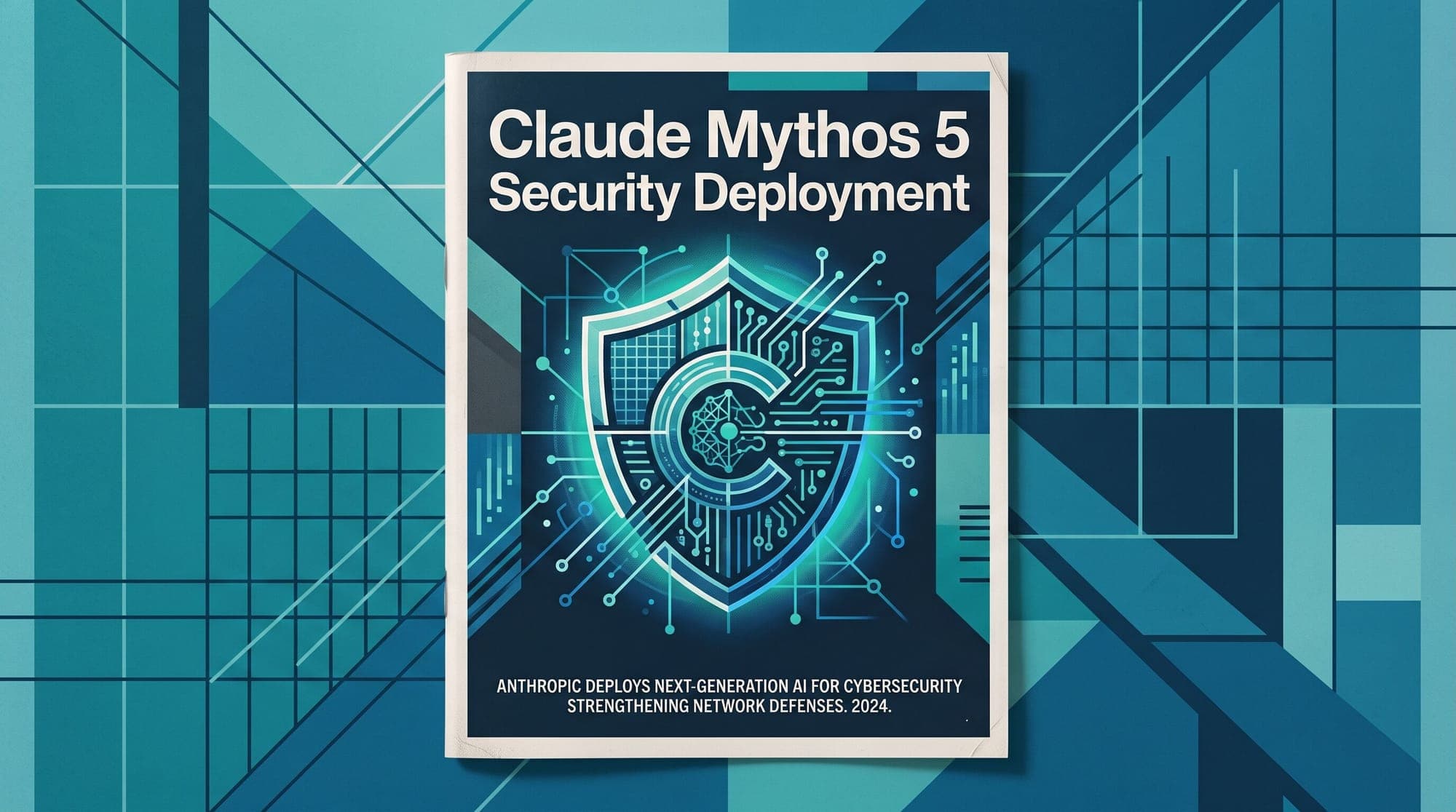
  1. Anthropic Deploys Claude Mythos 5 in Security Tools, Commits $35M to Open-Source Defense Fund

    Anthropic Deploys Claude Mythos 5 in Security Tools, Commits $35M to Open-Source Defense Fund Claude Mythos 5 is now running vulnerability scans in Claude Security for Enterprise customers, marking the third stage of Anthropic's deliberate rollout of its cyber-capable model. Anthropic announced on August 21 that Claude Mythos 5, limited to vetted security defenders since April 2026, is now available for Enterprise customers to scan codebases for vulnerabilities. The company is also launching

    AI
    2 min read
  2. Nscale Targets $3 Billion U.S. IPO as Soon as September

    Nscale Targets $3 Billion U.S. IPO as Soon as September Nscale signage during the Nvidia GTC conference in San Jose, California. London-based AI infrastructure startup Nscale is preparing for a U.S. initial public offering that could raise up to $3 billion, according to people familiar with the matter. The offering may launch as early as September, joining a wave of AI data center companies tapping public markets. Goldman Sachs and JPMorgan Chase are leading the IPO process, Bloomberg reporte

    AI
    2 min read
  3. Agent Memory Engines in Production: Comparing Mem0, Zep, and Letta Architecture, Graph Stores, and Retrieval Latency

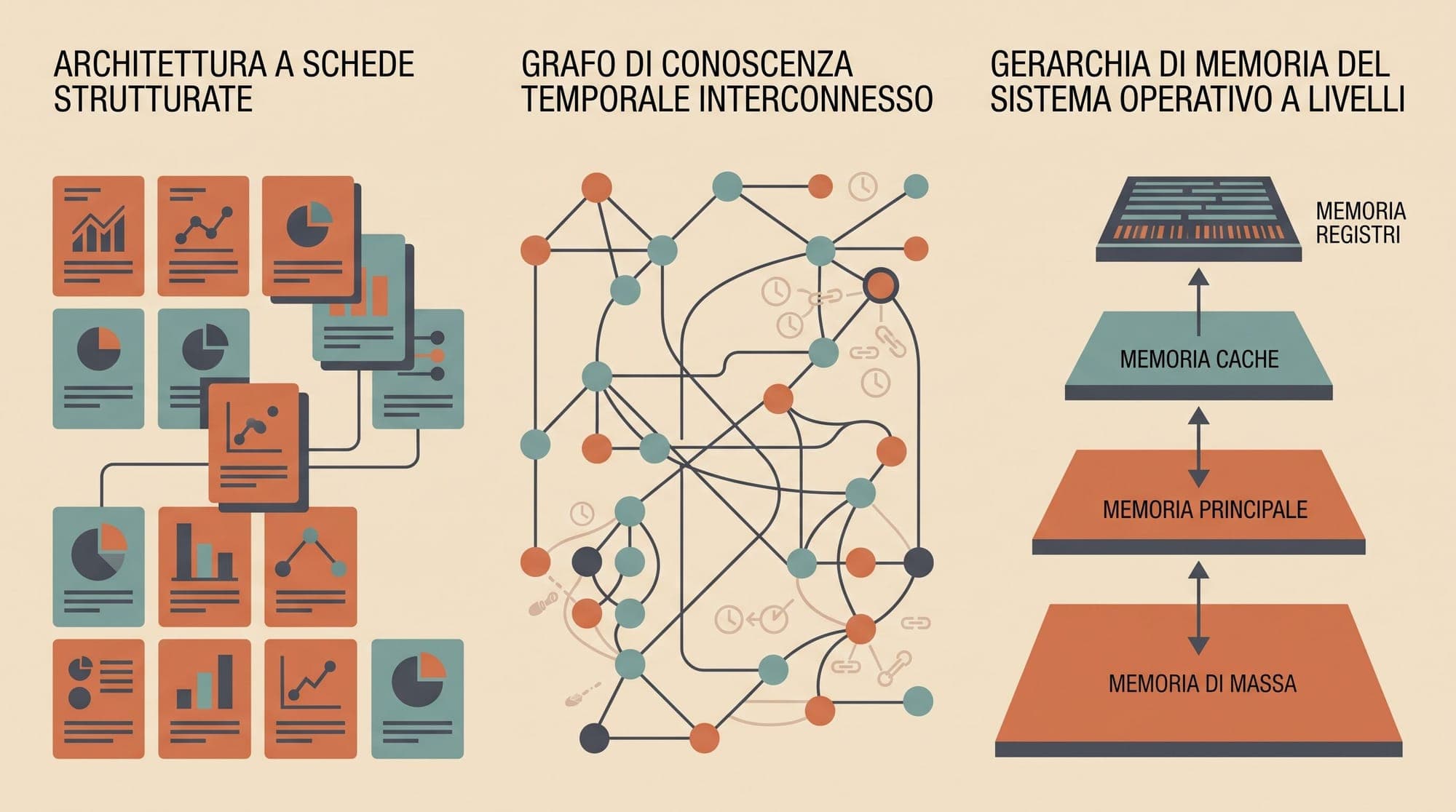
    Large language models are inherently stateless functions. Every invocation begins with an empty memory register, relying entirely on the tokens packed into its context window. In production multi-turn applications, naive context management strategies quickly collapse: appending raw conversational logs inflates inference costs and eventually hits hard context limits, while standard semantic vector search (retrieval-augmented generation) lacks temporal awareness, treats contradictions blindly, and

    AI
    7 min read
  4. Cross-Entropy Loss: The Training Objective Behind Every LLM

    Cross-Entropy Loss: The Training Objective Behind Every LLM Cross-entropy loss is the objective function that guides every large language model during training. Despite its ubiquity, the concept is often treated as a black box. This post explains why cross-entropy loss is the natural choice for training probabilistic models of language, and how it connects to fundamental concepts in information theory and statistics. The Gradient of Prediction Error A language model outputs a probability dis

    4 min read
  5. NVIDIA Researchers Map Cross-Model KV Caches via Linear Ridge Regression to Accelerate Model Cascading Up to 25x

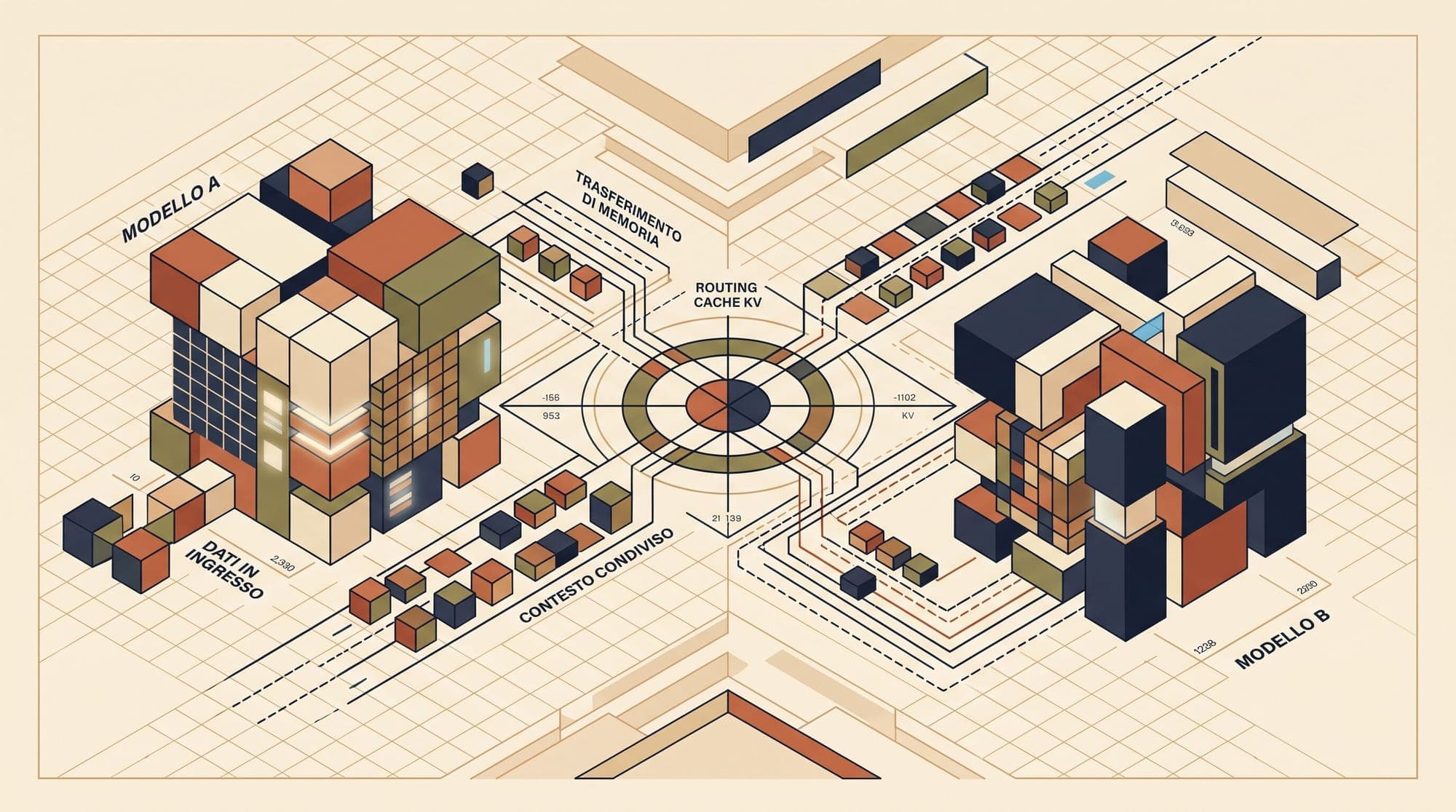
    In multi-agent systems and tiered model cascades, routing requests across different model sizes is a standard architecture for balancing inference cost and generation quality. However, switching models mid-session has historically imposed a severe compute tax: because each neural architecture maintains its own distinct internal representations, the receiving model cannot read the key-value (KV) states generated by the previous model. The target model must recompute the entire conversation histor

    AI
    4 min read
  6. Post-Training RL Frameworks in Production: Comparing verl, OpenRLHF, TRL, and DeepSpeed-Chat Architecture, Distributed Scheduling, and Serving Trade-Offs

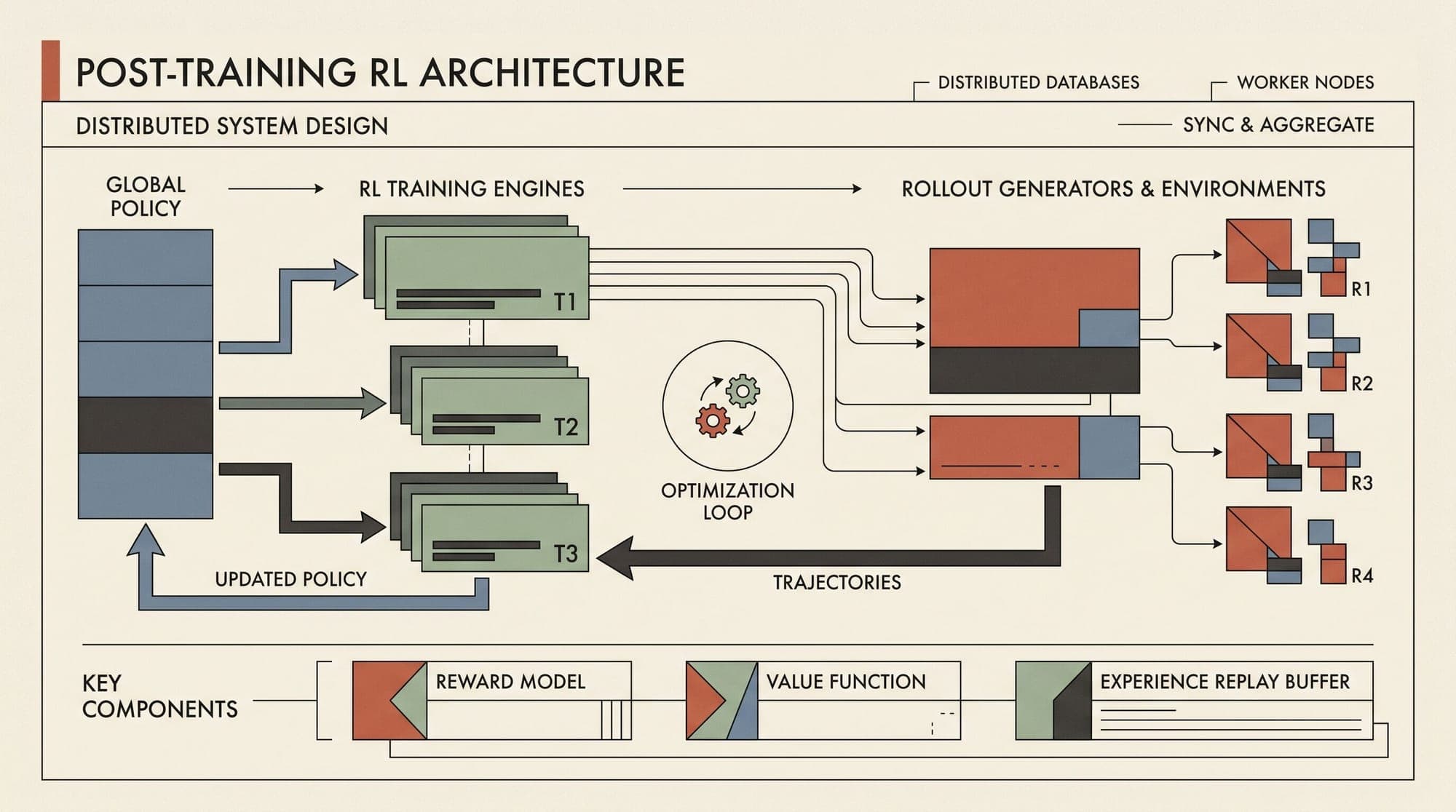
    Post-training reinforcement learning (RL) has replaced standard supervised fine-tuning (SFT) as the primary mechanism for frontier model alignment and reasoning expansion. Whether running classic Proximal Policy Optimization (PPO), Direct Preference Optimization (DPO), Group Relative Policy Optimization (GRPO), or Reinforcement Learning with Verifiable Rewards (RLVR), modern post-training pipelines introduce an execution pattern distinct from standard pre-training: they alternate between high-th

    AI
    8 min read
  7. Chunked and Fused Cross-Entropy: How Online Logit Tiling Slashes Large-Vocabulary VRAM Bottlenecks in LLM Training

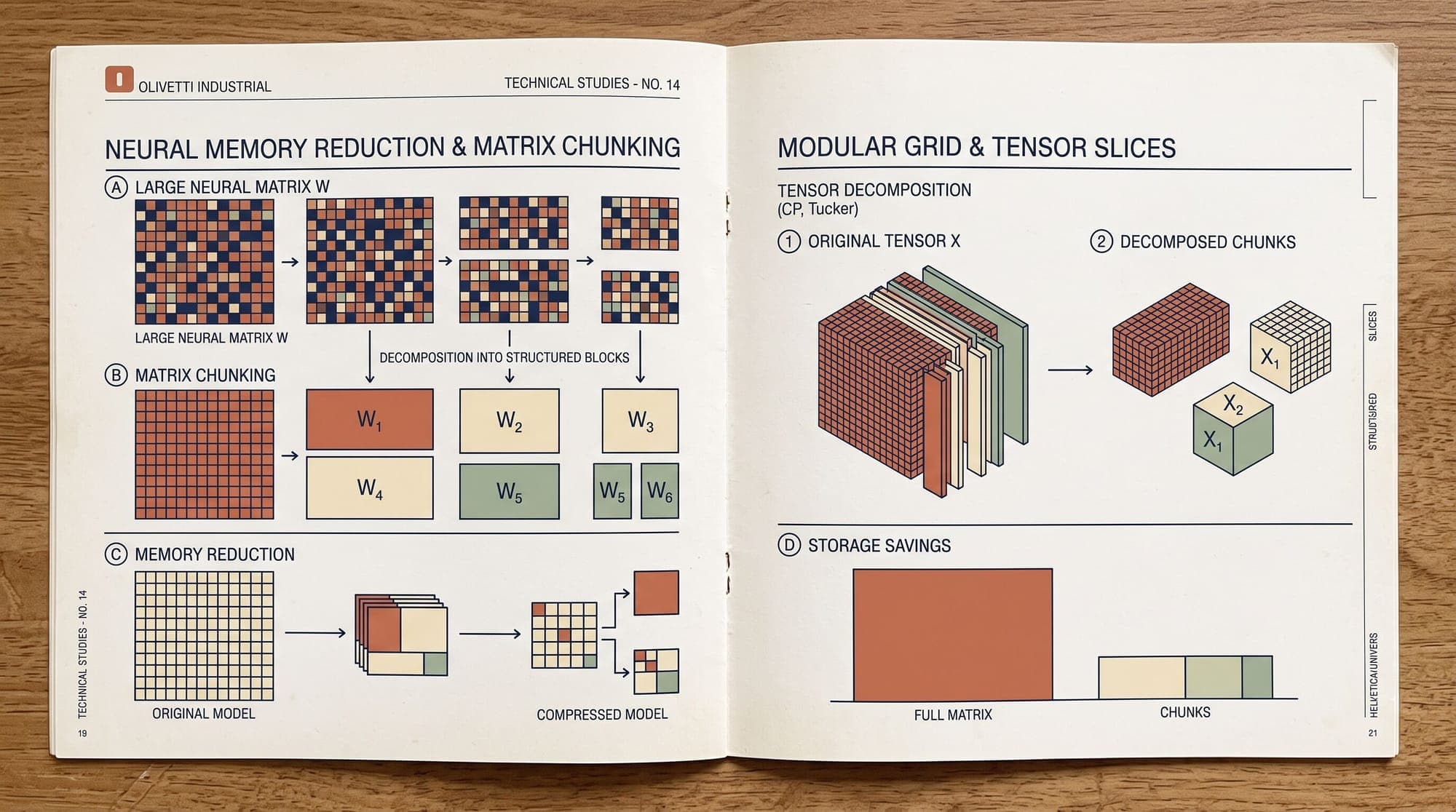
    Chunked and Fused Cross-Entropy: How Online Logit Tiling Slashes Large-Vocabulary VRAM Bottlenecks in LLM Training As frontier large language models have scaled, tokenizer vocabularies have expanded substantially. Where early architectures such as LLaMA and Mistral relied on 32,000 subword tokens, contemporary models routinely employ vocabularies of 128,256 tokens (Llama 3), 152,064 tokens (Qwen 2.5), and 256,000 tokens (Gemma 2). Larger vocabularies compress text more densely, improve multilin

    AI
    7 min read
  8. Kakao Splits Into KakaoAI and KakaoX to Accelerate AI and Messenger Integration

    South Korean platform giant Kakao Corp. announced a corporate split that will separate its core operations into two independent publicly traded entities: KakaoAI and KakaoX. The restructuring, approved by Kakao's board of directors, aims to isolate and accelerate the company's artificial intelligence engineering and messaging ecosystem from its broader investment portfolio. Under the spin-off terms, existing shareholders will receive shares based on a net asset book value split ratio of 36% for

    AI
    1 min read
  9. US Warns 35 Partner Countries to Choose Between Pax Silica and China's WAICO AI Coalition

    The U.S. Department of State is preparing formal diplomatic notices instructing 35 partner nations to select between Washington's AI alliance and Beijing's competing framework. According to a draft cable reviewed by Reuters and reported by The Decoder and CNBC, the U.S. warns that countries joining China's newly established AI initiative will be excluded from the U.S.-led Pax Silica coalition. The diplomatic draft states: "To be part of everything is to be part of nothing. Signature of the Pax

    AI
    2 min read
  10. Asynchronous Batch Inference in Production: Architecture, Queue Scheduling, and Cost Arbitrage

    Asynchronous Batch Inference in Production: Architecture, Queue Scheduling, and Cost Arbitrage Interactive AI applications require low Time-to-First-Token (TTFT) and high inter-token generation speed to maintain responsive user experiences. Achieving sub-second latency targets forces infrastructure teams to overprovision GPU capacity to absorb peak demand spikes. However, non-interactive production workloads (such as historical document processing, embedding generation, nightly model evaluation

    LLM
    7 min read