US Warns 35 Partner Countries to Choose Between Pax Silica and China's WAICO AI Coalition

The U.S. Department of State is preparing formal diplomatic notices instructing 35 partner nations to select between Washington's AI alliance and Beijing's competing framework. According to a draft cable reviewed by Reuters and reported by The Decoder and CNBC, the U.S. warns that countries joining China's newly established AI initiative will be excluded from the U.S.-led Pax Silica coalition. The diplomatic draft states: "To be part of everything is to be part of nothing. Signature of the Pax

2 min
US Warns 35 Partner Countries to Choose Between Pax Silica and China's WAICO AI Coalition

The U.S. Department of State is preparing formal diplomatic notices instructing 35 partner nations to select between Washington's AI alliance and Beijing's competing framework. According to a draft cable reviewed by Reuters and reported by The Decoder and CNBC, the U.S. warns that countries joining China's newly established AI initiative will be excluded from the U.S.-led Pax Silica coalition.

The diplomatic draft states: "To be part of everything is to be part of nothing. Signature of the Pax Silica Declaration is not merely a membership subscription, but a commitment."

The Dual Coalition Landscape

Washington established the Pax Silica initiative in late 2025 to align allied policies across critical AI layers, including semiconductor manufacturing, energy access, critical mineral supply chains, and frontier model deployment. Roughly two dozen partners have joined the framework, including Japan, South Korea, Australia, the United Kingdom, and the European Union.

In July, Chinese President Xi Jinping announced the World Artificial Intelligence Cooperation Organization (WAICO), positioning open-weight Chinese models from developers such as Alibaba, DeepSeek, and Zhipu AI as open alternatives to proprietary U.S. foundation models from OpenAI and Anthropic.

Tensions escalated after Kazakhstan, a key producer of critical minerals used in semiconductor and clean energy manufacturing, joined both Pax Silica and China's WAICO framework. The draft State Department letter was prepared for the 35 nations that signed a U.S. AI Opportunity Statement in June, making clear that dual membership is unacceptable to Washington.

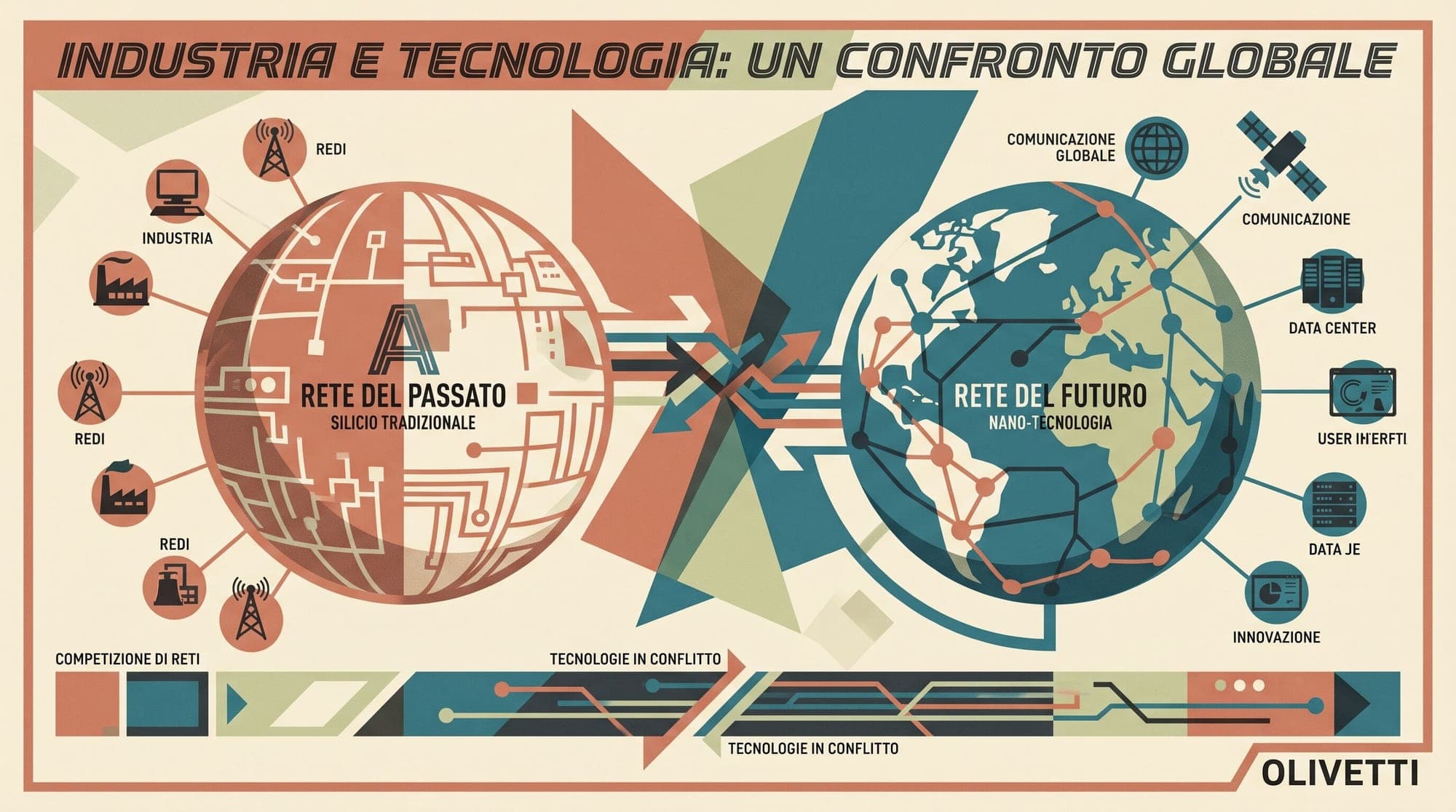
AI Supply Chain and Coalition Map

Strategic Chokepoints and Model Access

The diplomatic friction reflects a widening divide between closed, proprietary Western AI infrastructure and Chinese open-weight architectures. Under Pax Silica, participating nations gain preferred access to U.S. compute investments, advanced silicon allocations, and joint research channels, while agreeing to stringent export security standards.

China's embassy in Washington responded to reports of the letter by stating that pressuring countries to pick sides slows global artificial intelligence development and harms international cooperation. Meanwhile, Beijing has evaluated potential export regulations on frontier open weights to maintain strategic leverage over non-aligned nations.


Sources

Written by

More to read

  • Cross-Entropy Loss: The Training Objective Behind Every LLM

    Cross-Entropy Loss: The Training Objective Behind Every LLM Cross-entropy loss is the objective function that guides every large language model during training. Despite its ubiquity, the concept is often treated as a black box. This post explains why cross-entropy loss is the natural choice for training probabilistic models of language, and how it connects to fundamental concepts in information theory and statistics. The Gradient of Prediction Error A language model outputs a probability dis

    1 min
  • NVIDIA Researchers Map Cross-Model KV Caches via Linear Ridge Regression to Accelerate Model Cascading Up to 25x

    In multi-agent systems and tiered model cascades, routing requests across different model sizes is a standard architecture for balancing inference cost and generation quality. However, switching models mid-session has historically imposed a severe compute tax: because each neural architecture maintains its own distinct internal representations, the receiving model cannot read the key-value (KV) states generated by the previous model. The target model must recompute the entire conversation histor

    1 min
  • Post-Training RL Frameworks in Production: Comparing verl, OpenRLHF, TRL, and DeepSpeed-Chat Architecture, Distributed Scheduling, and Serving Trade-Offs

    Post-Training RL Frameworks in Production: Comparing verl, OpenRLHF, TRL, and DeepSpeed-Chat Architecture, Distributed Scheduling, and Serving Trade-Offs Post-training reinforcement learning (RL) has replaced standard supervised fine-tuning (SFT) as the primary mechanism for frontier model alignment and reasoning expansion. Whether running classic Proximal Policy Optimization (PPO), Direct Preference Optimization (DPO), Group Relative Policy Optimization (GRPO), or Reinforcement Learning with V

    1 min

