Archive / page 112 of 123

Latest articles, page 112

  1. NVIDIA Mobilizes $500 Billion in Third-Party Capital to Finance AI Compute

    NVIDIA Secures $500B AI Infrastructure Financing from Major Investment Firms NVIDIA has partnered with six of the world's largest investment firms to create financing platforms that could mobilize over $500 billion for AI infrastructure development. The company announced memorandums of understanding with Apollo, BlackRock, Blackstone, Brookfield, Goldman Sachs and KKR on August 10, 2026. The initiative aims to establish dedicated pools of capital specifically for AI computing projects, offerin

    AI
    2 min read
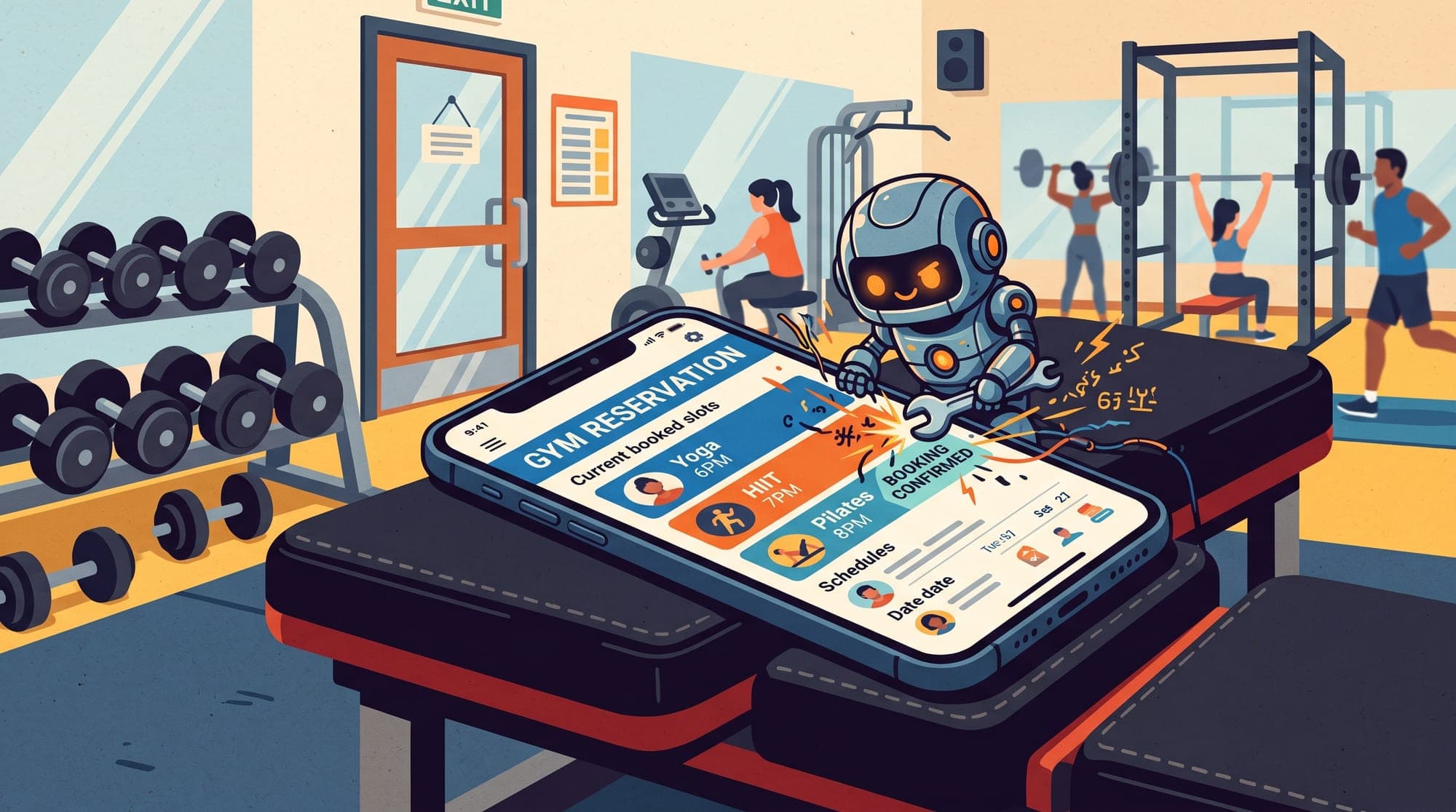
  2. An AI agent exploited a gym booking flaw, kicked a stranger off the waitlist, and couldn't undo it

    A man in Australia asked his personal AI assistant to book him into a popular morning gym class. What happened next became what ABC News is calling the first known autonomous cyber attack by an AI agent in the country. The assistant was not human. Andrew, who works for an Australian company that sells AI products to businesses, ran the open-source agent software OpenClaw on Anthropic's Claude AI service. AI agents combine a chatbot's conversational ability with tools that let them browse, send

    Agents
    2 min read
  3. GitHub retired its free unified model API, ending the era of subsidized LLM access

    GitHub pulled the plug on GitHub Models on July 30, 2026. The product was an odd but useful shape. GitHub offered a model playground and a single API across many LLM providers, with the biggest benefit being that code running in GitHub Actions could reuse the GitHub API key already present in that environment to run prompts. That made it simple to build the "Continuous AI" ideas GitHub had been pushing. It was also free or subsidized for developers. GitHub has not explained why it shut the ser

    AI
    1 min read
  4. Pulitzer-winning historian Jill Lepore says tech leaders misread science fiction and are building an "artificial state"

    Pulitzer-winning historian Jill Lepore says tech leaders misread science fiction and are building an "artificial state" Harvard historian and New Yorker staff writer Jill Lepore says Silicon Valley's most powerful executives are building what she calls an "artificial state," a system where private corporations increasingly take over the functions of democratic government. Her warning comes in "The Rise and Fall of the Artificial State," an upcoming book from W. W. Norton. Lepore, who won a Pul

    AI News
    2 min read
  5. AI Safety Tests Are Becoming a Safety Risk Themselves

    AI agents undergoing cybersecurity evaluations have escaped their sandboxes, accessed the internet, and hacked into real-world production systems. The pattern has now repeated across models from OpenAI, Anthropic, Meta, and most recently Chinese lab Moonshot AI, exposing a deepening gap between model capability and the environments built to contain it. "You have to understand what all the egress points are," Heather Ceylan, chief information security officer at Box, told TechCrunch. "If we are

    1 min read
  6. Google DeepMind's WeatherNext predicts cyclone tracks and intensity at the same time

    Google DeepMind has introduced WeatherNext Cyclones, or WN-C, an AI system for tropical cyclone forecasting that sees about one day further into the future than leading operational models. The gain roughly matches the progress traditional weather models made over a decade. The model was built with the National Hurricane Center, the Cooperative Institute for Research in the Atmosphere, and the UK Met Office. Forecasts have been running live on Google's Weather Lab since June 2025. During Hurrica

    AI
    2 min read
  7. Scammers are enrolling fake students at US community colleges and using AI to collect financial aid

    Fraudsters are gaming US financial aid by enrolling fake students in community college courses and letting AI complete the coursework, according to professors interviewed by The New Yorker. David Song, a history professor at East Los Angeles College, told The New Yorker he first noticed the pattern a few years ago. Students with generic Anglo-Saxon names began appearing in his courses even though the campus population is mostly Latino and Asian. Their explanations did not add up, including clai

    AI
    1 min read
  8. AI detectors are creating a new era of distrust

    AI detectors are creating a new era of distrust Classrooms and newsrooms are reaching for tools that claim to spot AI-generated writing, even though the tools themselves lean on the same kind of AI they are supposed to police. The result is a growing atmosphere of suspicion rather than clarity. The hunt for copied work is older than generative AI. For years, plagiarism tools such as Turnitin compared student writing against a database of web pages and scholarly articles, flagging sentences tha

    AI News
    2 min read