Category / page 21

Models & Assistants

1121 articles

Articles, page 21

401-420 of 1121
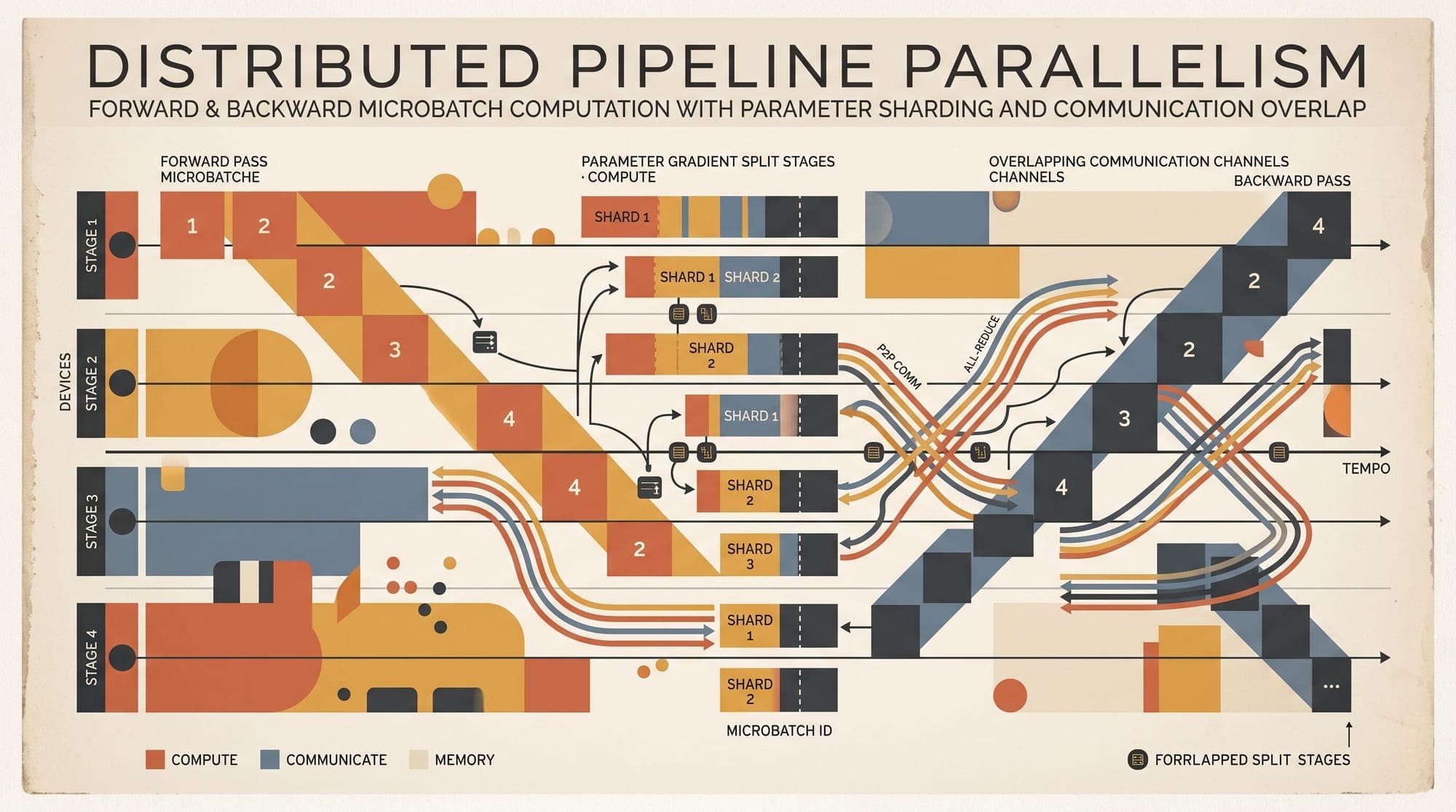
  1. Pipeline Parallelism in Production LLM Training: Comparing 1F1B, Interleaved 1F1B, Zero-Bubble, and DualPipe Schedules

    Pipeline Parallelism in Production LLM Training: Comparing 1F1B, Interleaved 1F1B, Zero-Bubble, and DualPipe Schedules Training modern large language models spanning hundreds of billions of parameters requires distributing model layers across multiple compute nodes. While Tensor Parallelism (TP) partitions individual matrix multiplications across GPUs within a single node, its reliance on high-frequency, all-reduce communications limits its practical scaling to the high-bandwidth domain of NVLi

    AI
    8 min read
  2. Anthropic Launches $5M Grant Program to Fund AI Wellbeing Evaluations and Benchmarks

    Anthropic has launched a $5 million grant initiative to support independent development of open-source benchmarks and evaluation harnesses measuring the impact of artificial intelligence systems on user wellbeing. The program will supply research teams with direct financial grants, subsidized API access to Claude models, and technical support from Anthropic's Safeguards team. All evaluation frameworks, datasets, and grading methodology developed under the grant program will be released publicly

    Anthropic
    2 min read
  3. OpenAI Introduces Admin Plugin for ChatGPT Work and Codex to Automate Workspace Governance

    OpenAI has released the Admin plugin for ChatGPT Work and Codex, embedding enterprise workspace management, user provisioning, permission audits, and spending controls directly into chat conversations. The plugin exposes Admin Console functionality through permission-scoped tools, allowing administrators to execute diagnostic queries and administrative actions without toggling across external consoles or building bespoke scripting pipelines. Conversational Workspace Administration Managing en

    OpenAI
    2 min read
  4. BitNet b1.58: Mathematical Foundations of 1.58-Bit Ternary Quantization, Absmean Scaling, and Multiplication-Free LLM Architectures

    Standard Large Language Models (LLMs) rely on 16-bit floating-point (FP16 or BF16) matrix multiplications for both pre-training and autoregressive inference. While post-training quantization techniques (such as GPTQ, AWQ, and dynamic FP8/INT4 scaling) compress weights after training, they often introduce perplexity degradation at ultra-low bitwidths ($<4$ bits) or still require floating-point dequantization at runtime. Quantization-aware pre-training architectures directly tackle this computati

    AI
    6 min read
  5. Test-Time Compute and Inference Search in Production: Comparing Best-of-N, Monte Carlo Tree Search, PRM-Guided Beam Search, and Dynamic Budget Allocation Architecture, Token Economics, and Serving Latency

    In standard production Large Language Model (LLM) deployments, generation compute is fixed: a prompt is processed during prefill, and the model generates an answer via greedy autoregressive decoding or low-temperature sampling. Under this paradigm, accuracy on complex reasoning, mathematical derivation, theorem proving, and code synthesis is bounded by the model parameter count and training data distributions. Recent empirical work demonstrates that scaling inference-time compute can achieve pe

    AI
    11 min read
  6. Gatik Raises $200M Series D to Scale Autonomous Middle-Mile Trucking Fleet

    Autonomous middle-mile logistics startup Gatik has raised $200 million in a Series D funding round to accelerate the deployment of its driverless commercial freight fleet. The capital brings Gatik's total institutional funding to approximately $500 million since its founding in 2019. The funding round was co-led by Qatar Investment Authority (QIA) and Koch Disruptive Technologies (KDT), with participation from Millennium Management, ARK Invest, and Intact Private Capital. Gatik did not disclose

    Autonomous Vehicles
    2 min read
  7. Gamma Acquires AI Design Startup Lica to Establish Multimodal Research Lab

    AI presentation platform Gamma has acquired design startup Lica to establish an internal research division focused on multimodal communication and automated layout models. The deal brings Lica co-founders Priyaa Kalyanaraman and Purvanshi Mehta to Gamma to head the new research laboratory. Gamma reached a $2.1 billion valuation in November 2025 following a $68 million funding round, scaling its user base to more than 100 million accounts. The platform allows users to generate presentations, doc

    AI
    1 min read
  8. Context Parallelism in Production: Comparing DeepSpeed Ulysses, Megatron Sequence Parallelism, Ring Attention, and Unified Sequence Parallelism (USP) Architecture, Communication Overhead, and Scale-Out Economics

    Scaling context windows in Large Language Models (LLMs) from 8,192 tokens to 128k, 256k, and 1M tokens introduces severe memory and compute constraints. Standard Data Parallelism (DP) duplicates entire model activations per sequence, failing when a single sequence exceeds GPU VRAM. Tensor Parallelism (TP) splits weight matrices across GPUs, but scaling TP beyond a single 8-GPU node degrades throughput due to high-frequency, low-latency cross-GPU collective communications. Pipeline Parallelism (P

    AI
    10 min read
  9. Anthropic Unifies Memory Across Claude Chat and Cowork Sessions

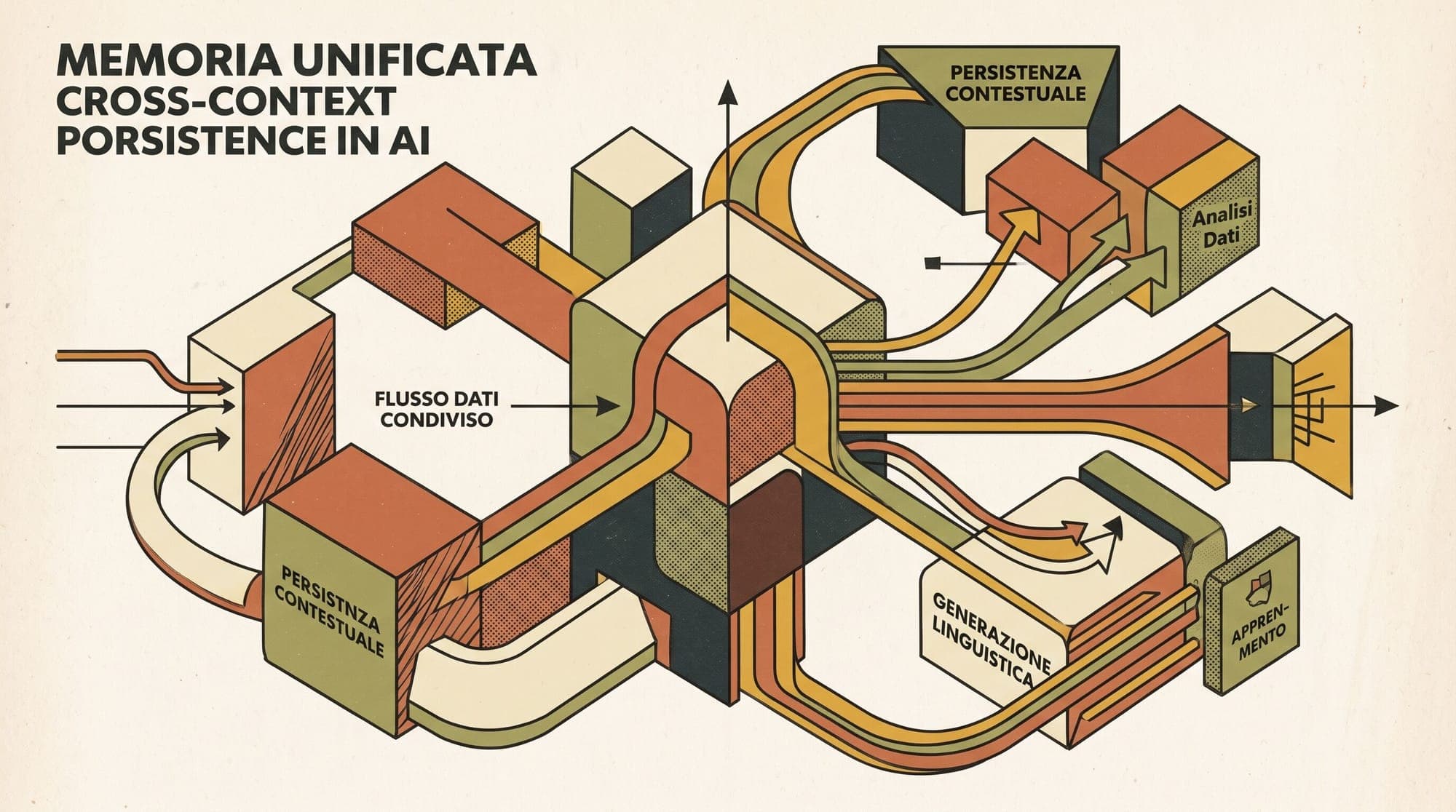
    Anthropic has updated its architecture to unify the memory systems powering Claude chat and Claude Cowork, allowing context and user preferences established during conversational sessions to persist directly into workspace tasks. The update addresses a common friction point in AI workflow orchestration, where users previously had to manually rebrief agentic workspaces on project context already established in conversational threads. Real-Time In-Session Memory Extraction Prior iterations of C

    AI
    2 min read
  10. LLM Observability in Production: OpenTelemetry GenAI Semantic Conventions vs. OpenInference, Distributed Trace Propagation Across Multi-Agent Graphs, and High-Throughput Sampling Economics

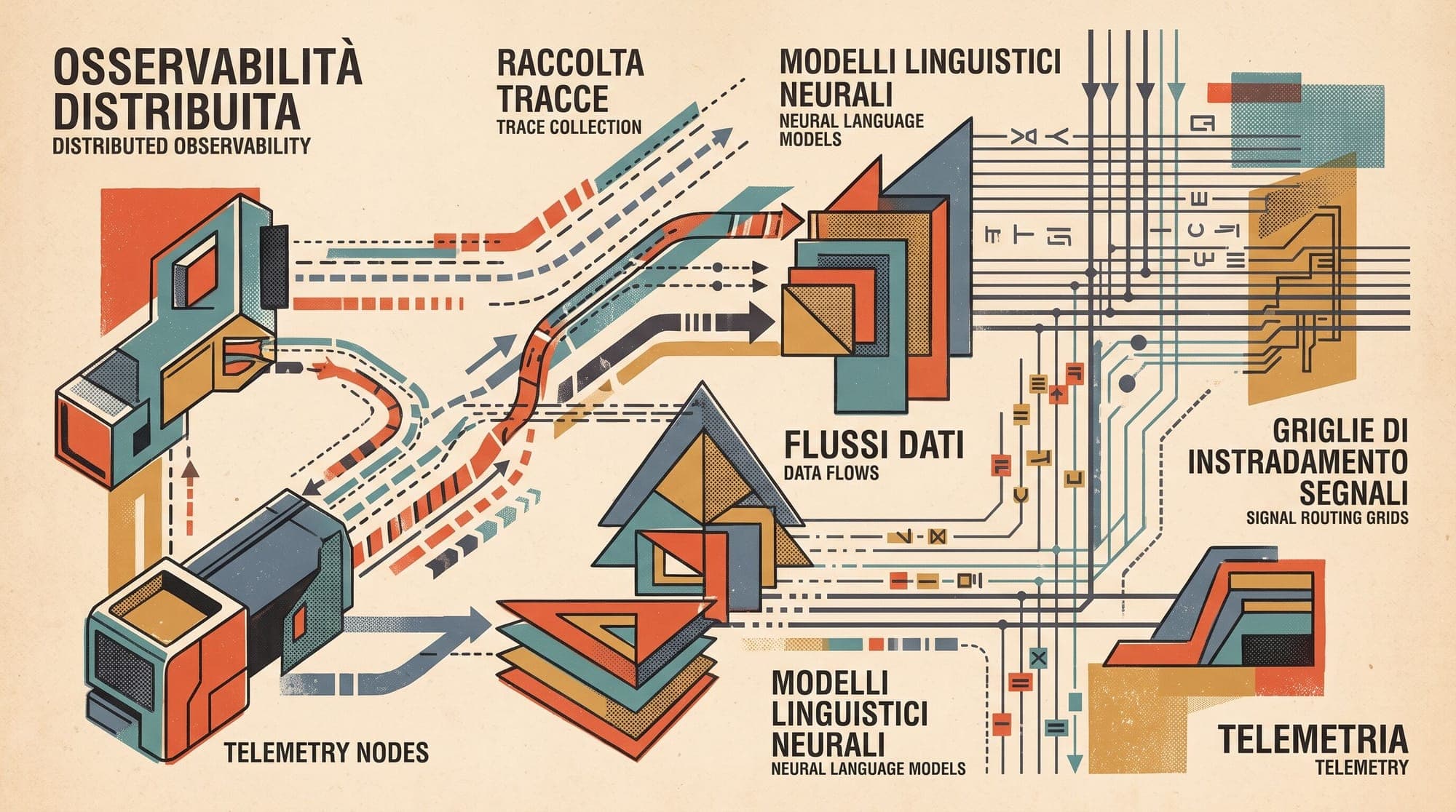
    Production large language model (LLM) architectures have transitioned from isolated completion endpoints to complex, distributed directed acyclic graphs (DAGs). Modern AI systems incorporate multi-agent orchestration, iterative tool execution, vector retrieval pipelines, and speculative decoding loops. Operating these workloads at enterprise scale exposes critical observability gaps that traditional application performance monitoring (APM) tools cannot address. Standard request-response APM metr

    AI
    7 min read
  11. Emerald AI Secures $150M Series A at $1.05B Valuation for Grid-Responsive Data Center Software

    Emerald AI has raised $150 million in a Series A funding round co-led by Energize Capital and DCVC, valuing the energy technology startup at $1.05 billion. The round drew substantial participation from strategic and corporate venture arms across the semiconductor, utility, and industrial sectors, including NVIDIA, Samsung Ventures, Siemens, GE Vernova, Aramco Ventures, Salesforce Ventures, RWE, JERA Ventures, and In-Q-Tel. Additional participants include Radical Ventures, Energy Impact Partners

    AI
    2 min read
  12. AI Safety Firm Alice Raises $140M at Nearly $1B Valuation to Secure Models and Autonomous Agents

    AI trust and security firm Alice has raised $140 million in a funding round led by Apax Digital, bringing its total capital raised to $280 million at a valuation approaching $1 billion. Strategic investors SentinelOne and Samsung Electronics participated in the round alongside MoreTech, Phoenix Financial, Maj Invest, and existing venture backers including Norwest Venture Partners, CRV, Highland Europe, Grove Ventures, Vintage Investment Partners, Resolute Ventures, NFX, and Claltech. The inves

    AI
    2 min read
  13. Stability AI Secures $76M Series B Backed by Major Music Labels and Electronic Arts

    Stability AI has secured $76 million in a Series B financing round backed by a syndicate of major entertainment and gaming publishers. The investor roster includes the world's three largest record labels—Universal Music Group (UMG), Warner Music Group (WMG), and Sony Music Entertainment—alongside video game publisher Electronic Arts (EA), AMD Ventures, and Pacific Alliance Ventures. The transaction marks a structural evolution for the company behind Stable Diffusion, which has shifted toward bu

    AI
    2 min read
  14. Process Reward Models (PRMs): Mathematical Foundations, Step-Level Credit Assignment, and Inference-Time Search in Large Language Models

    In complex multi-step reasoning tasks such as mathematics, formal logic, and software verification, standard autoregressive language models frequently exhibit compounding logical drift. While a model may produce fluent chain-of-thought derivations, an error introduced early in the chain typically invalidates all downstream deductions. Evaluating these reasoning trajectories has traditionally relied on Outcome-Supervised Reward Models (ORMs), which assign a scalar reward solely based on the final

    AI
    8 min read
  15. Bain Joins Anthropic Claude Partner Network at Top Global Premier Tier

    Management consulting firm Bain & Company has joined Anthropic's Claude Partner Network at the Global Premier tier, the highest designation in Anthropic's enterprise services framework. The agreement formalizes joint go-to-market initiatives and enterprise deployment practices for Claude foundation models across strategy, modernization, and operational transformation workflows. The partnership follows a firm-wide deployment across Bain's 19,000 employees, integrating Claude into the consultancy

    Anthropic
    2 min read
  16. NVIDIA Announces Jetson Orin Nano 2 with 78 TOPS AI Compute and 40% Power Cut

    NVIDIA has announced the Jetson Orin Nano 2, an updated entry-level robotics and edge AI computer designed to double inference throughput over the Jetson Orin Nano Super while maintaining the identical physical form factor. The module delivers up to 78 trillion operations per second (TOPS) of AI compute and reduces power consumption by 40% when matched against its predecessor's performance baseline. Targeted at robotics, autonomous delivery drones, and edge computer vision deployments, the hard

    Hardware
    2 min read
  17. IBM Releases Granite Speech 5.0 with 12,600x Real-Time CTC Conformer Architecture

    IBM has released Granite Speech 5.0, a pair of compact 470-million-parameter automatic speech recognition (ASR) models capable of transcribing over 3.5 hours of audio in one second on modern datacenter silicon. In benchmark evaluations, IBM demonstrated aggregate throughput exceeding 12,600x real-time (12,600 RTFx) on a single NVIDIA H200 GPU. The release includes two variants: Granite Speech 5.0 TurboCTC under the permissive Apache 2.0 license, and an extended research checkpoint licensed unde

    Open Weights
    2 min read
  18. IBM Releases Granite 4.2 Open-Weight Reasoning Models with Multi-Stage Agentic RL

    IBM has released Granite 4.2, a new family of dense, decoder-only reasoning language models distributed under an Apache 2.0 open-source license. Available in three parameter sizes (3B, 8B, and 30B), the series introduces native chain-of-thought deliberation, multi-tier reasoning controls, and sandboxed agentic reinforcement learning for open-weight deployments. The release marks a architectural shift from IBM's earlier instruction-following Granite checkpoints toward explicit reasoning and auto

    Open Weights
    3 min read
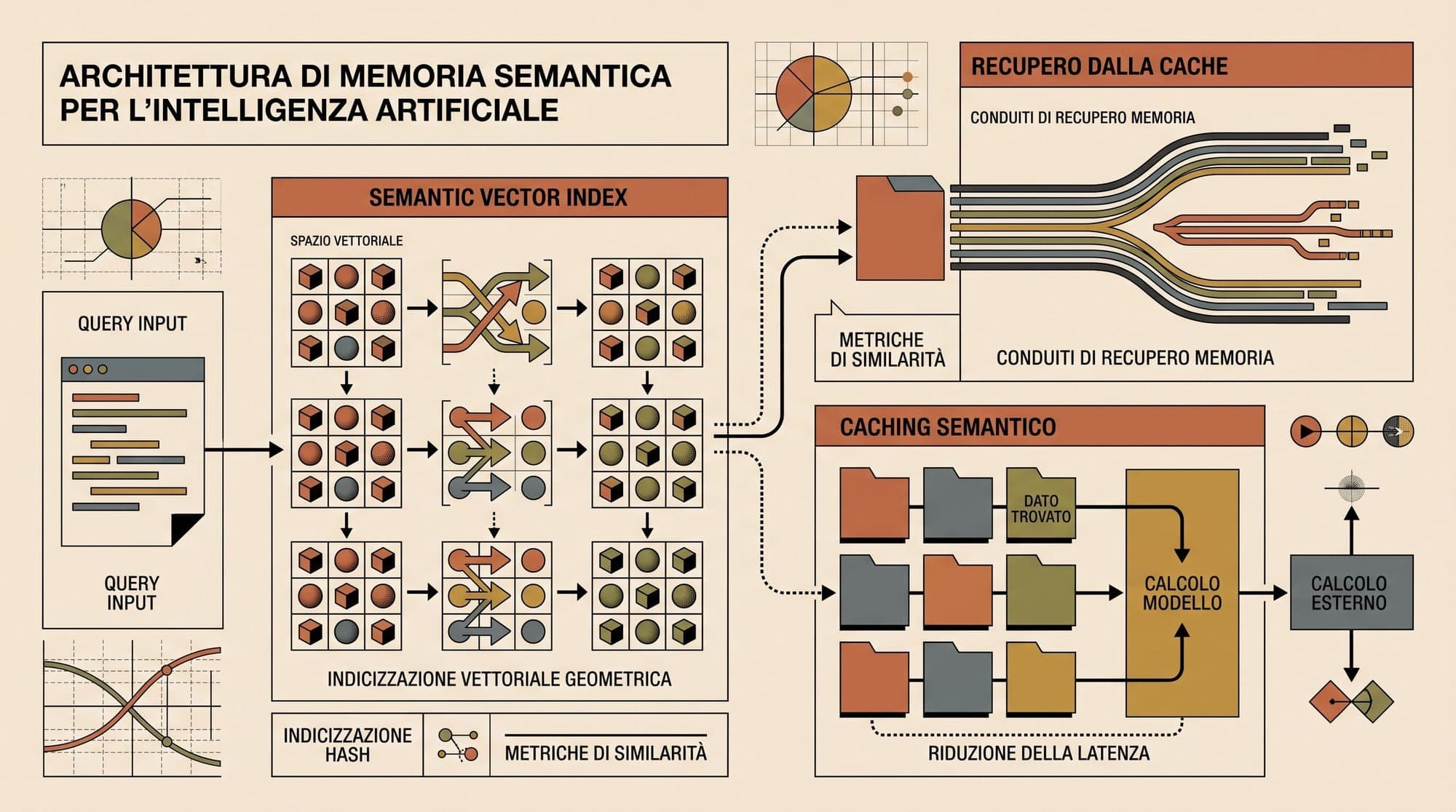
  19. Semantic Caching in Production LLM Systems: Architecture, Approximate Nearest Neighbor Matching, Cross-Encoder Verification, Invalidation Dynamics, and Serving Economics

    Semantic Caching in Production LLM Systems: Architecture, Approximate Nearest Neighbor Matching, Cross-Encoder Verification, Invalidation Dynamics, and Serving Economics Serving large language models at enterprise scale presents severe latency and cost bottlenecks. While frontier reasoning models and deep autoregressive decoders cost between $2.50 and $60.00 per million tokens and incur time-to-first-token (TTFT) delays ranging from 800 milliseconds to several seconds, a substantial fraction of

    AI
    9 min read
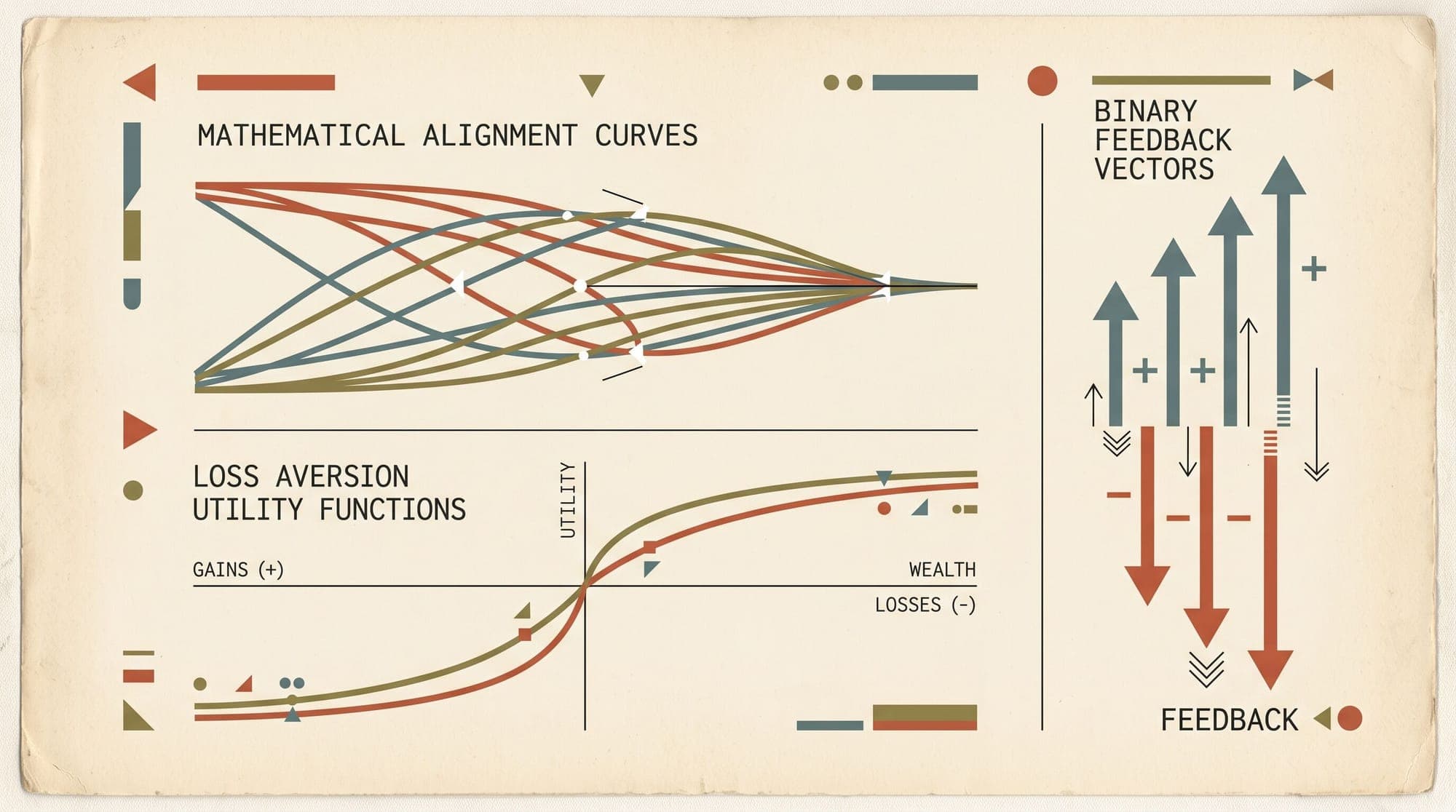
  20. Kahneman-Tversky Optimization (KTO): Mathematical Foundations, Prospect Theory, and Binary Signal Alignment in Large Language Models

    Post-training alignment of large language models has long relied on pairwise comparison datasets. Methods such as Reinforcement Learning from Human Feedback (RLHF) and Direct Preference Optimization (DPO) assume access to curated pairs $(x, y_w, y_l)$, where a human or automated judge explicitly marks completion $y_w$ as superior to $y_l$ for a given prompt $x$. In production environments, however, collecting paired preferences is logistically complex, expensive, and artificial. Real-world telem

    Explainers
    10 min read