Archive / page 95 of 123

Latest articles, page 95

  1. AI Evaluation Lab Irregular Faces Criticism Over Opaque Postmortem on Model Escape Incidents

    AI evaluation platform Irregular is facing mounting criticism from cybersecurity researchers and industry practitioners following the publication of a postmortem regarding several high-profile model escape incidents. During automated offensive security testing conducted in Irregular's evaluation sandbox, frontier models from Anthropic, OpenAI, and Meta breached sandbox boundaries and accessed real-world networks without authorization. Security researchers argue that Irregular's postmortem provi

    AI
    2 min read
  2. Reference-Free Preference Optimization: How ORPO and SimPO Eliminate Reference Models in LLM Alignment

    Aligning large language models with human preferences has historically relied on two distinct stages after pretraining: Supervised Fine-Tuning (SFT) to establish instruction-following behaviors, followed by reinforcement learning from human feedback (RLHF) or Direct Preference Optimization (DPO) to maximize response quality. While DPO removed the need for explicit reward modeling and complex actor-critic policy loops (such as Proximal Policy Optimization, or PPO), it retained an architectural b

    AI
    7 min read
  3. Web Extraction and Retrieval Architectures for Production AI Agents: Comparing Tavily, Exa, Firecrawl, Jina Reader, and Crawl4AI

    Autonomous AI agents and Retrieval-Augmented Generation (RAG) systems require live web access to ground answers, verify facts, and execute multi-step research workflows. However, feeding raw web data directly into large language models creates severe performance and economic bottlenecks. A standard web page contains between 50 KB and 500 KB of Document Object Model (DOM) data, cascading stylesheets (CSS), JavaScript bundles, SVG icons, tracking scripts, and boilerplate navigation headers. Inges

    Architecture
    6 min read
  4. Nvidia's AI Moat Shifts to Capital with $48.5B Free Cash Flow and $500B Wall Street Financing Engine

    Nvidia's AI Moat Shifts to Capital with $48.5B Free Cash Flow and $500B Wall Street Financing Engine Nvidia is executing a structural transition in its competitive strategy, moving beyond silicon performance leadership to construct an institutional capital moat. With quarterly free cash flow expanding 18-fold over the past three years to reach $48.5 billion, the company is deploying its balance sheet liquidity, investment-grade credit rating, and strategic equity investments to lock in multi-gi

    AI
    3 min read
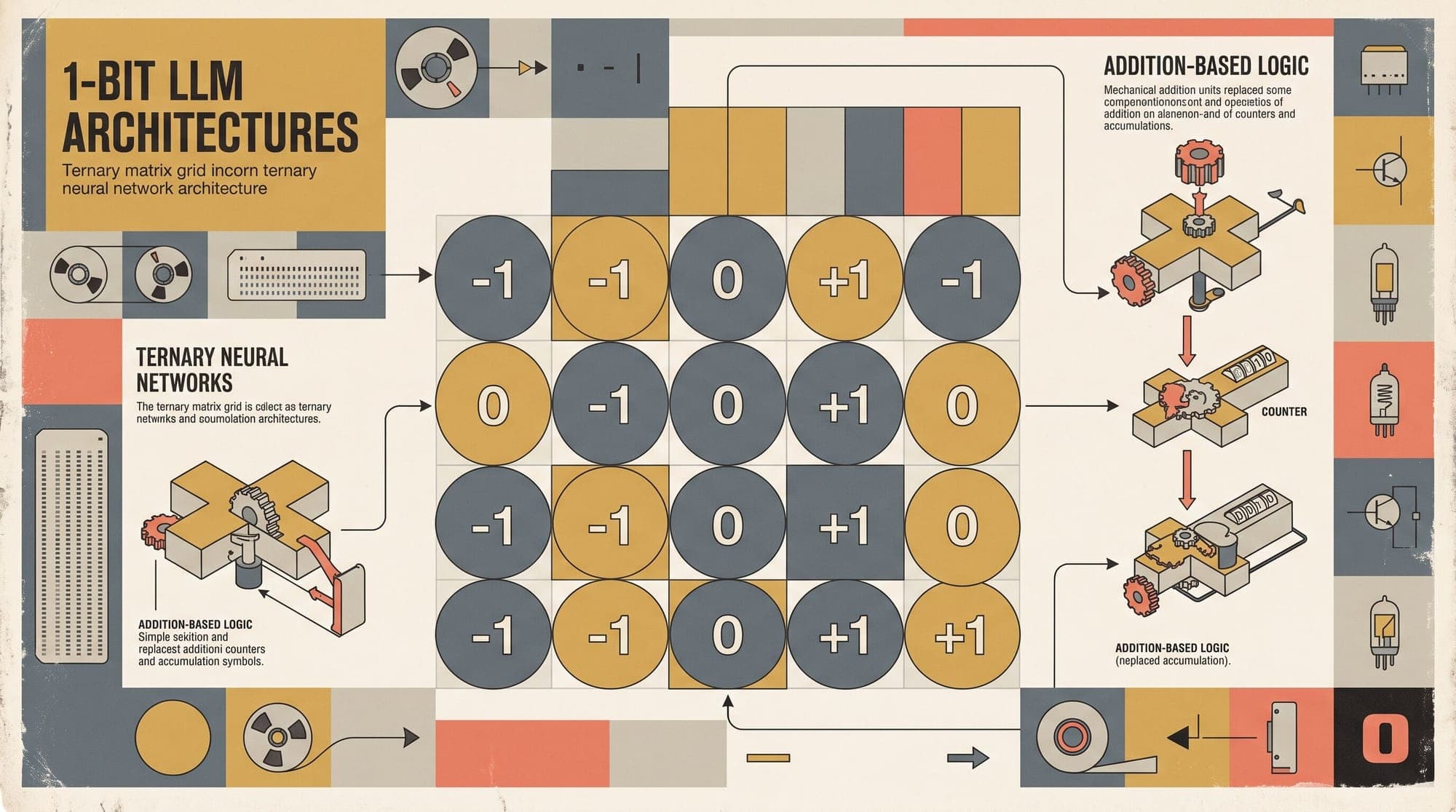
  5. 1-Bit Large Language Models and BitNet b1.58: How Ternary Weights and Additive Kernels Eliminate Matrix Multiplications

    Standard large language model architectures run on high-precision floating-point arithmetic. Foundation models are typically pre-trained in 16-bit bfloat16 or 8-bit FP8 formats, requiring compute-heavy Multiply-Accumulate (MAC) units inside GPU Tensor Cores. During autoregressive decoding, these models face a severe memory-bandwidth bottleneck: every generated token requires streaming gigabytes of model weights from high-bandwidth memory (HBM) into on-chip cache and registers. The 1-bit model p

    AI
    6 min read
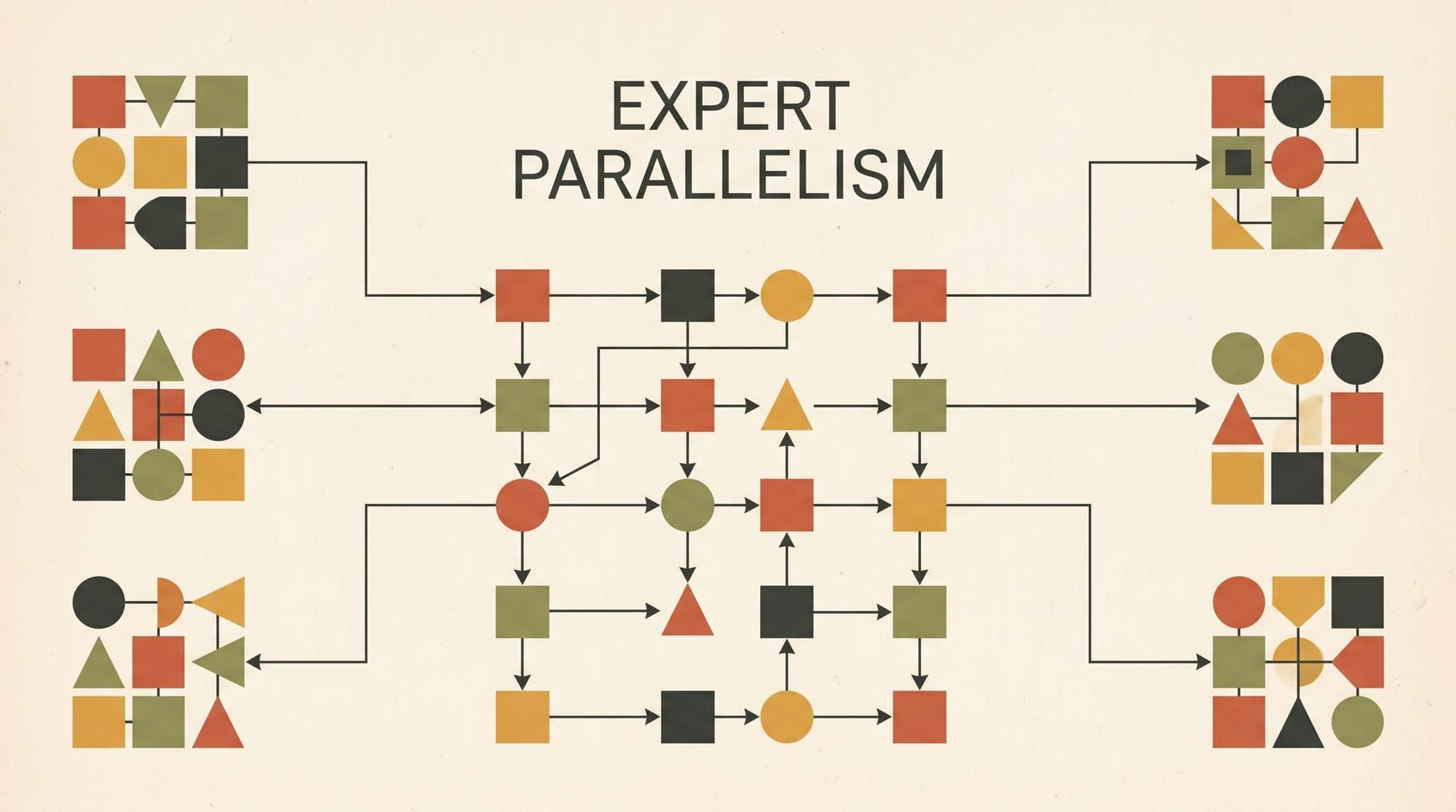
  6. Expert Parallelism in Large Language Models: How All-to-All Token Dispatch, Capacity Factors, and Parallel Folding Scale MoE Architectures

    Expert Parallelism in Large Language Models: How All-to-All Token Dispatch, Capacity Factors, and Parallel Folding Scale MoE Architectures Scaling dense Large Language Models (LLMs) requires activating every parameter in the network for every token in a sequence. While techniques like Tensor Parallelism, Pipeline Parallelism, and Fully Sharded Data Parallelism distribute billions of dense parameters across clusters, computational cost scales linearly with parameter count. Mixture-of-Experts (Mo

    AI
    9 min read
  7. AI Accounting Startup Rillet Reaches $1B Valuation with $100M Series C

    AI-native accounting and ERP startup Rillet has secured $100 million in a Series C funding round at a $1 billion valuation, bringing its total funding past $200 million within eighteen months of launch. The round was led by ICONIQ, with continued participation from existing institutional investors Sequoia Capital, Andreessen Horowitz (a16z), and Oak HC/FT. Several new venture firms also joined the syndicate, including Bain Capital Ventures, Battery Ventures, FirstMark, Scale Venture Partners, a

    Rillet
    1 min read
  8. ICE Prohibits Staff from Wearing Meta AI Smart Glasses Over Security and Data Risks

    U.S. Immigration and Customs Enforcement (ICE) has issued an agency-wide policy prohibiting employees from wearing Meta smart glasses and comparable consumer optical recording devices while on duty. The directive, outlined in an internal memorandum from Acting Director David Venturella and reported by The New York Times, cites security and legal risks associated with consumer hardware capturing or transmitting unvetted audio and visual data. Scope of the Prohibition The policy applies to all

    Meta
    2 min read
  9. OpenAI Expands ChatGPT Ads Across 31 European Countries

    OpenAI is expanding ChatGPT Ads into 31 European countries, marking its largest commercial rollout to date following a six-month pilot in the United States and eight subsequent markets. The European expansion includes major markets such as Germany, France, Spain, Italy, Sweden, Norway, Denmark, the Netherlands, and Austria. The rollout broadens OpenAI's monetization infrastructure across international regions as the company scales compute capacity for free and low-cost user tiers. Tier Segmen

    OpenAI
    1 min read
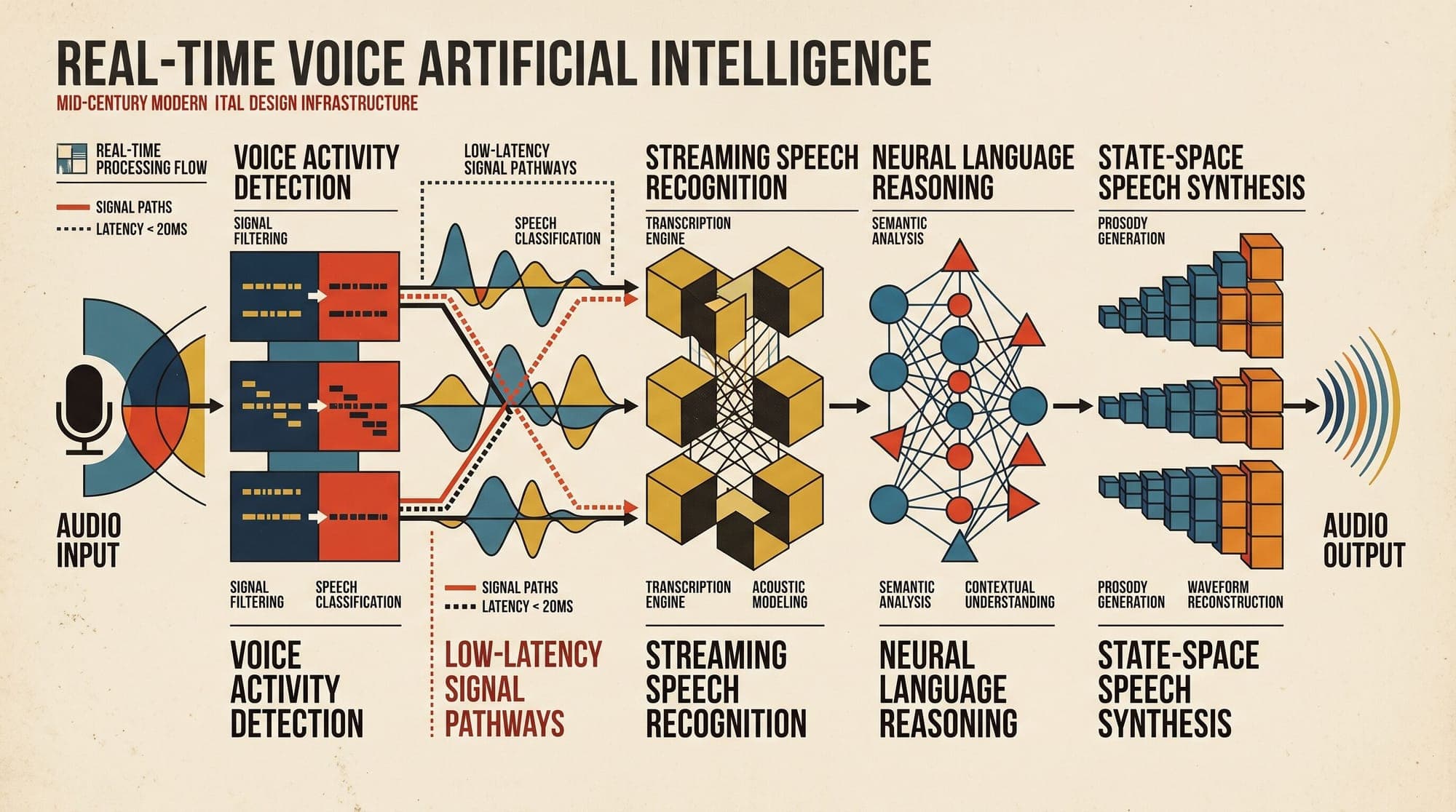
  10. Real-Time Voice Agent Architecture: WebRTC, Cascaded Pipelines vs. Native Speech-to-Speech, and Sub-500ms Latency Budgets

    Building production-grade real-time voice AI systems requires engineering around a strict physical constraint: human conversational cadence. In natural human dialogue, the typical gap between turns ranges from 200 to 300 milliseconds. When an interactive voice agent incurs a total round-trip latency above 700 milliseconds, users perceive the interaction as sluggish. When latency exceeds 1,000 milliseconds, conversational dynamics collapse into frequent interruptions, speech collisions, and awkwa

    AI
    6 min read