Archive / page 93 of 123

Latest articles, page 93

  1. Layer Normalization and RMSNorm in Large Language Models: How Pre-LN, Scaling Invariance, and QK-Norm Stabilize Deep Transformers

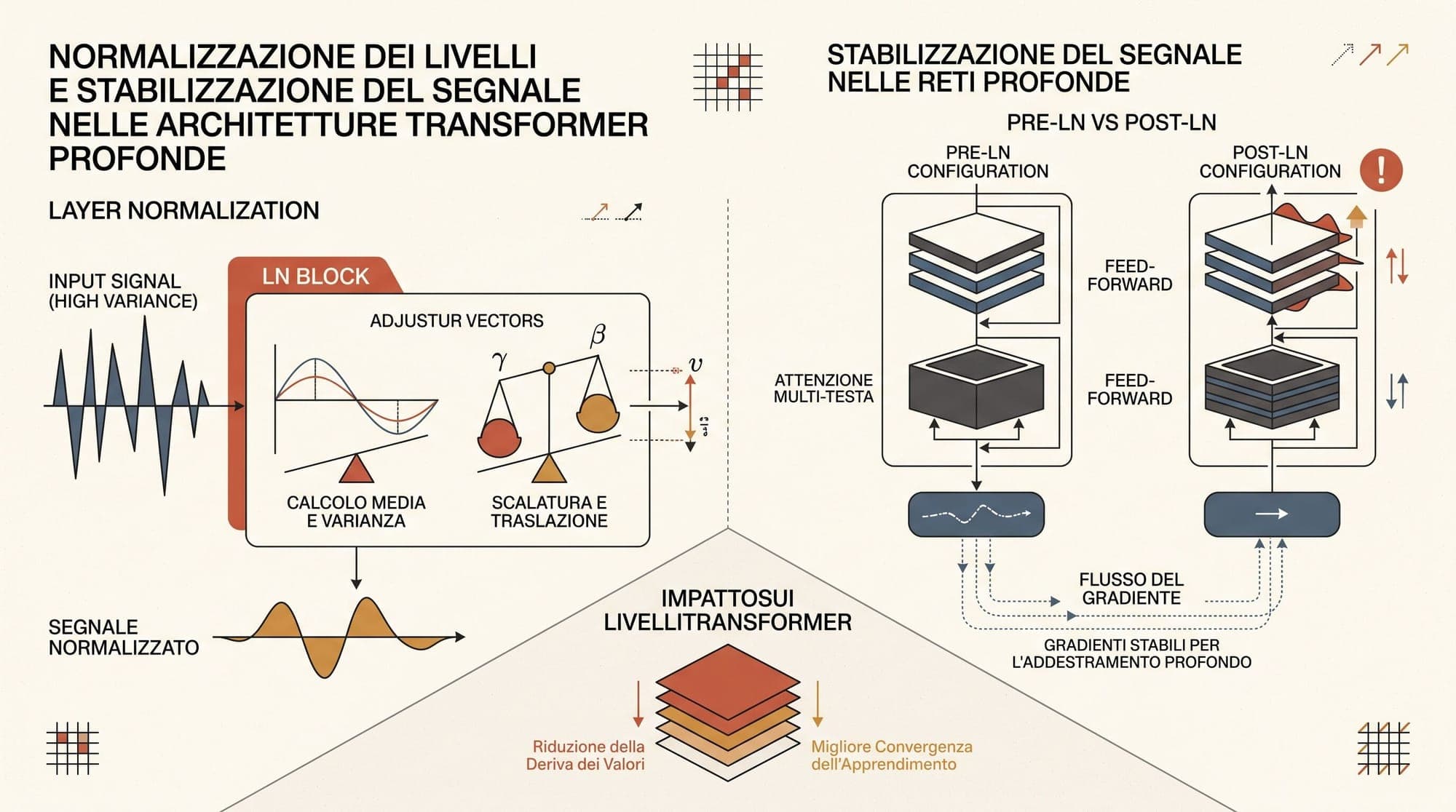
    Training deep autoregressive Transformers requires maintaining numerical stability across dozens or hundreds of stacked attention and feed-forward blocks. As models scale from 7 billion to hundreds of billions of parameters, uncontrolled variance growth along the residual stream or unbounded attention logits can trigger catastrophic loss spikes, gradient underflow, or numerical divergence. Normalization layers act as the primary stabilizing mechanism in modern Large Language Models (LLMs). Whil
    AI
    8 min read
  2. Liquid AI Releases Quantization-Aware Distilled Q4_0 Checkpoints for LFM2.5 Models

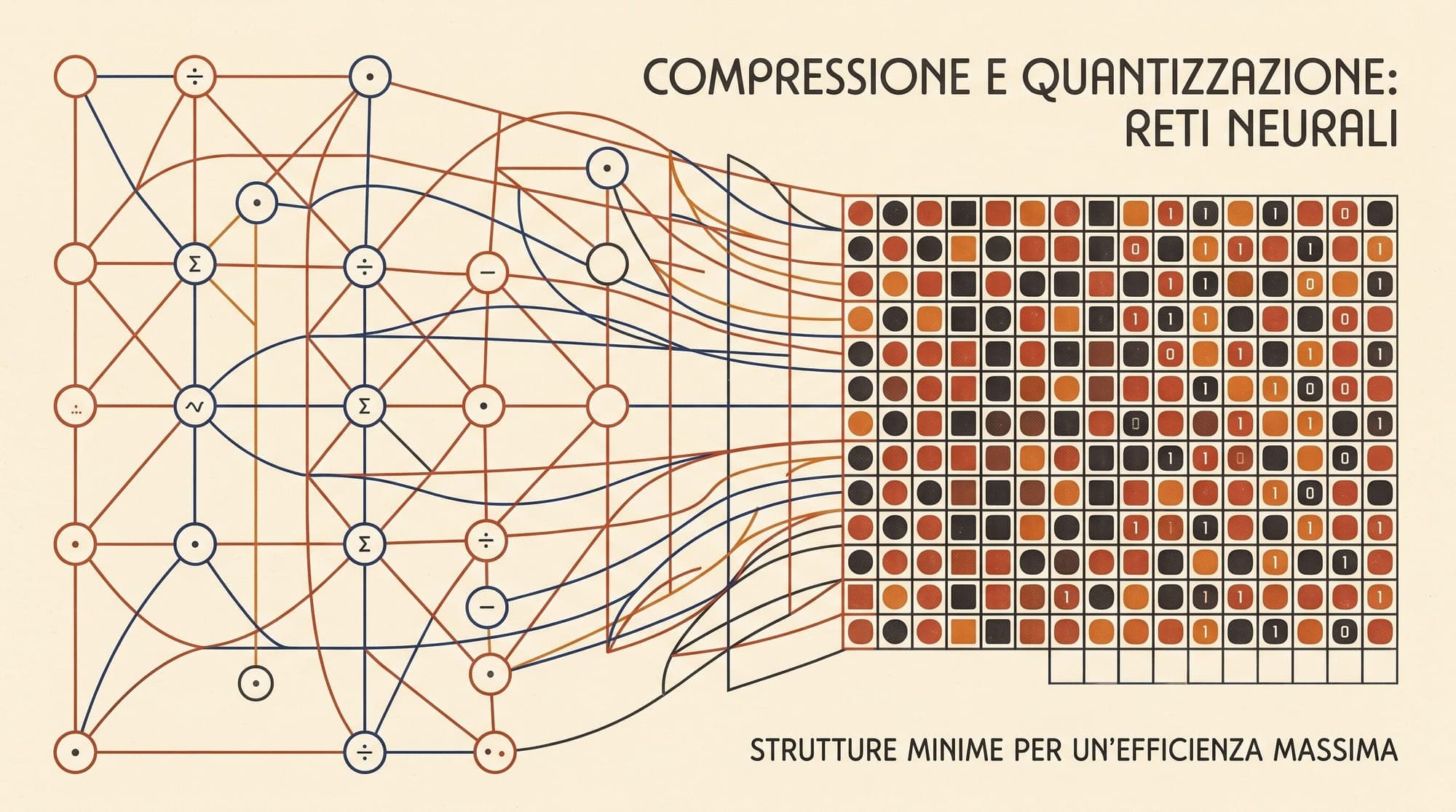
    Liquid AI has released Quantization-Aware Distillation (QAD) Q4_0 GGUF checkpoints for its LFM2.5 model series, allowing edge runtimes to execute 4-bit quantized non-transformer architectures without the accuracy degradation typically associated with standard post-training quantization (PTQ). The release covers four models in the LFM2.5 family: LFM2.5-230M, LFM2.5-350M, LFM2.5-1.2B-Instruct, and LFM2.5-2.6B. The checkpoints are packaged in the standard GGUF format and run across llama.cpp and c

    AI
    2 min read
  3. Palo Alto Networks Enlists Anthropic, OpenAI, and OT Vendors for Critical Infrastructure Defense

    Palo Alto Networks has introduced the Frontier AI Critical Defense Program, a coordinated security initiative uniting frontier AI research labs, enterprise software vendors, and industrial control systems providers to protect critical infrastructure from automated vulnerability exploitation. The program includes participation from Anthropic, OpenAI, industrial automation and operational technology (OT) manufacturers Mitsubishi Electric and Axis Communications, healthcare and finance risk-sharin

    AI
    2 min read
  4. Long-Context LLMs vs. RAG in Production: Break-Even Economics, Attention Degradation, and Hybrid Architectures

    The emergence of production models supporting context windows of 1 million tokens or more, including Google Gemini 1.5 Pro, Anthropic Claude 3.5 Sonnet, and OpenAI GPT-4o, has disrupted conventional enterprise retrieval architectures. For several years, Retrieval-Augmented Generation (RAG) served as the mandatory workaround for strict context limits, forcing engineering teams to build chunking pipelines, embedding indices, and vector database infrastructures. With massive context windows and th

    AI
    6 min read
  5. Chinchilla Scaling Laws: How Compute-Optimal Pre-Training and Inference Economics Reshaped LLM Architecture

    Before 2022, frontier artificial intelligence labs scaled large language models primarily by increasing parameter counts while keeping training dataset sizes relatively static. OpenAI's 2020 GPT-3 model trained 175 billion parameters on 300 billion tokens. DeepMind's 2021 Gopher trained 280 billion parameters on 300 billion tokens, and Megatron-Turing NLG scaled to 530 billion parameters on 270 billion tokens. These allocation decisions followed early empirical scaling laws that suggested parame

    Education
    6 min read
  6. Oracle Health Adds Automated Coding, Dictation, and Chart Review to Clinical AI Agent

    Oracle Health has expanded the capabilities of its Clinical AI Agent in the United States, introducing automated professional fee coding, real-time clinician-controlled dictation, and AI-assisted chart review. The release marks a deliberate expansion beyond ambient clinical documentation into revenue cycle workflows and structured electronic health record retrieval. The update builds on Oracle's ambient listening platform, which transcribes patient encounters and synthesizes clinical notes. By

    AI
    2 min read
  7. On-Device LLM Inference in Production: Architecture, Runtimes, and Hardware Constraints

    Deploying generative language models directly onto edge devices such as smartphones, laptops, embedded systems, and browser sandboxes marks a fundamental shift in AI systems engineering. Moving inference from centralized GPU clusters to client silicon eliminates cloud API costs, cuts network latency to zero, guarantees data privacy by keeping user inputs local, and enables offline functionality. However, executing modern autoregressive models on resource-constrained client hardware presents str

    AI
    7 min read
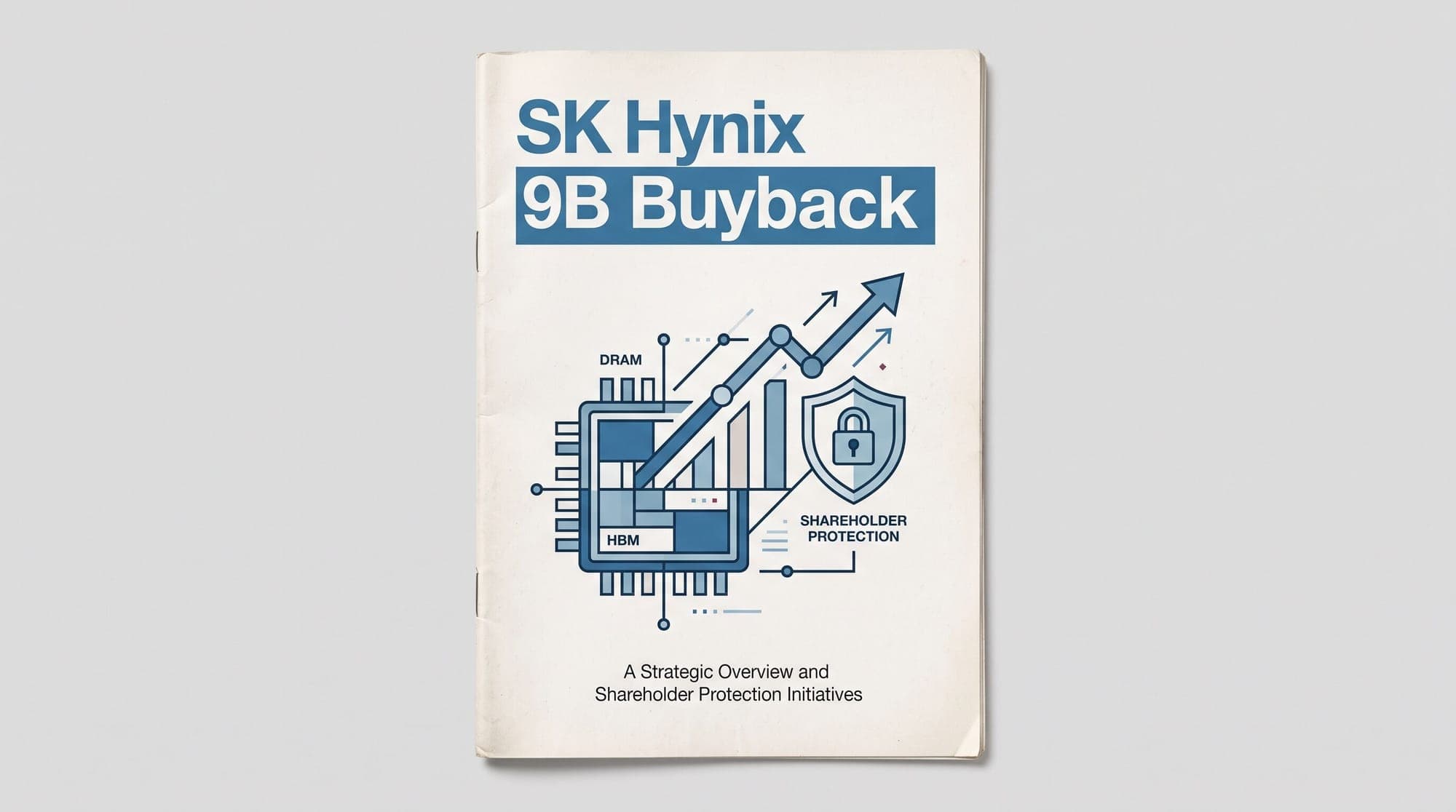
  8. SK Hynix Announces $29 Billion Share Buyback to Calm AI Spending Worries

    SK Hynix announced Wednesday it will buy back and cancel 40 trillion won ($28.61 billion) worth of treasury shares, allocating more than 50 percent of free cash flow generated between 2025 and 2027 to shareholder returns. The buyback, to be executed between August 20 and November 19, represents roughly 24 million shares. The company also said it would pursue an expansion of its total shareholder return target from the previous "within 50 percent of cumulative FCF" to "over 50 percent of cumulat

    AI
    1 min read
  9. Samsung Raises 4nm and 5nm Foundry Prices up to 15% on AI Chip Demand

    Samsung Electronics has raised prices for its most advanced contract chipmaking services by up to 15 percent for new orders, according to two sources familiar with the matter, as demand for AI chips tightens capacity at the South Korean foundry. The increases apply to Samsung's 4-nanometer SF4 and 5-nanometer SF5 process nodes. Prices for SF4 wafers rose 10 to 15 percent for customers in China and the United States from the previous month, while customers in Taiwan saw increases of 5 to 10 perc

    AI
    1 min read
  10. RAG Evaluation Frameworks in Production: Architecture, Metrics, and CI/CD Trade-Offs for Ragas, DeepEval, TruLens, and ARES

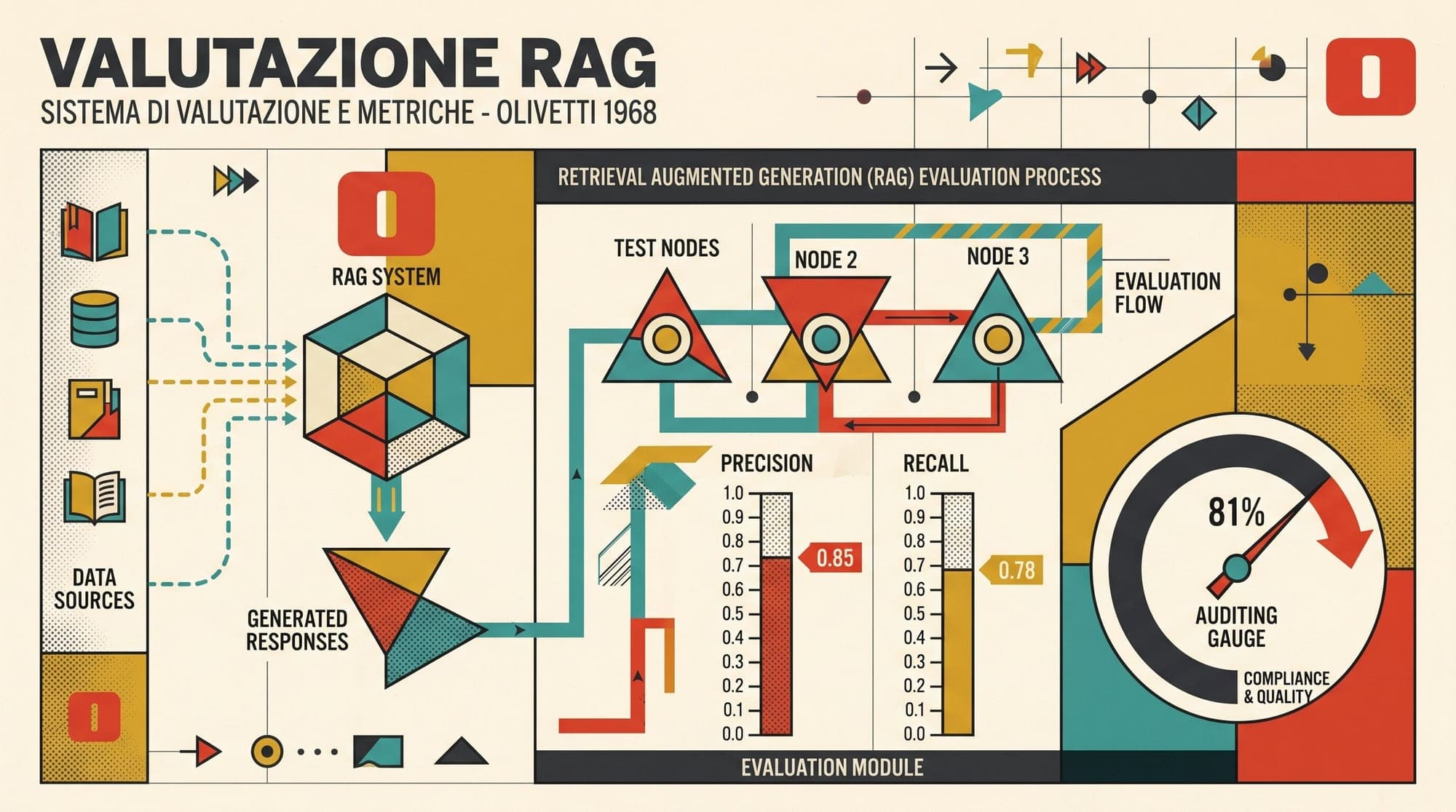
    Production Retrieval-Augmented Generation (RAG) systems fail silently. Unlike traditional software pipelines that throw explicit exceptions on invalid states, a broken RAG pipeline produces syntactically fluent, confident prose that conceals severe underlying defects. When a user receives an incorrect response, the failure can stem from multiple distinct failure points across the stack: the query embedding failed to retrieve relevant chunks, the reranker discarded the critical passage, the chunk

    LLM
    7 min read