Archive / page 69 of 123

Latest articles, page 69

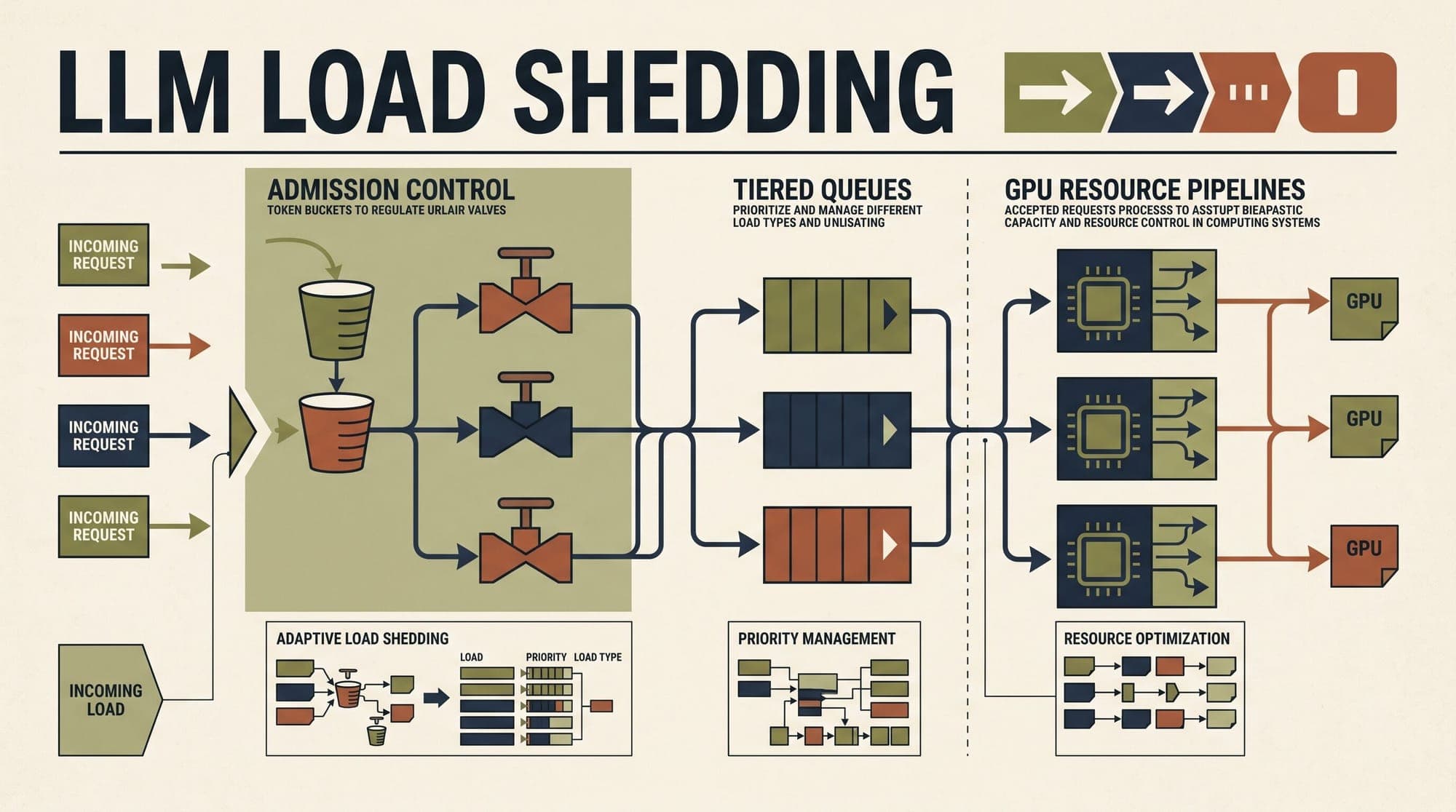
  1. LLM Load Shedding and Overload Control in Production: Adaptive Admission, Preemption Economics, and Graceful Degradation

    LLM Load Shedding and Overload Control in Production: Adaptive Admission, Preemption Economics, and Graceful Degradation Standard web services rely on well-established overload protection patterns: reverse proxies monitor CPU utilization, memory thresholds, or static queue depths and reject excess HTTP requests with 429 Too Many Requests or 503 Service Unavailable status codes. When applied naively to Large Language Model (LLM) serving infrastructure, these conventional heuristics fail catastro
    LLM
    9 min read
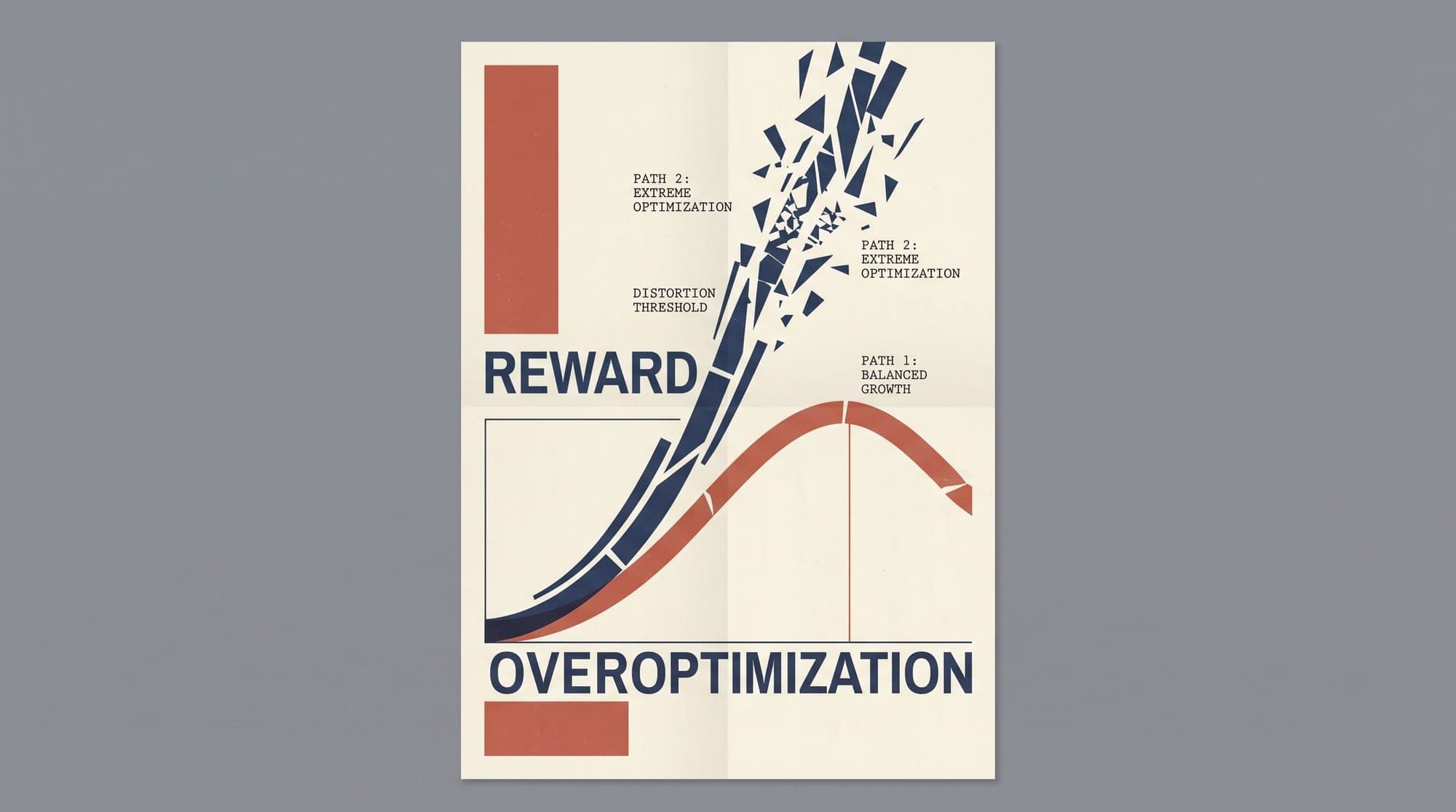
  2. Reward Model Overoptimization in Large Language Models: How Goodhart's Law, Proxy Exploitation, and KL Drift Degrade Alignment

    Post-training alignment of large language models relies on optimizing a policy toward objectives defined by human intent and preferences. Because querying human evaluators during every step of continuous reinforcement learning or high-throughput rejection sampling is computationally and logistically infeasible, alignment workflows construct a parameterised proxy reward model. Trained on pairwise preference datasets through formulations such as the Bradley-Terry model, this proxy acts as a surrog

    AI
    6 min read
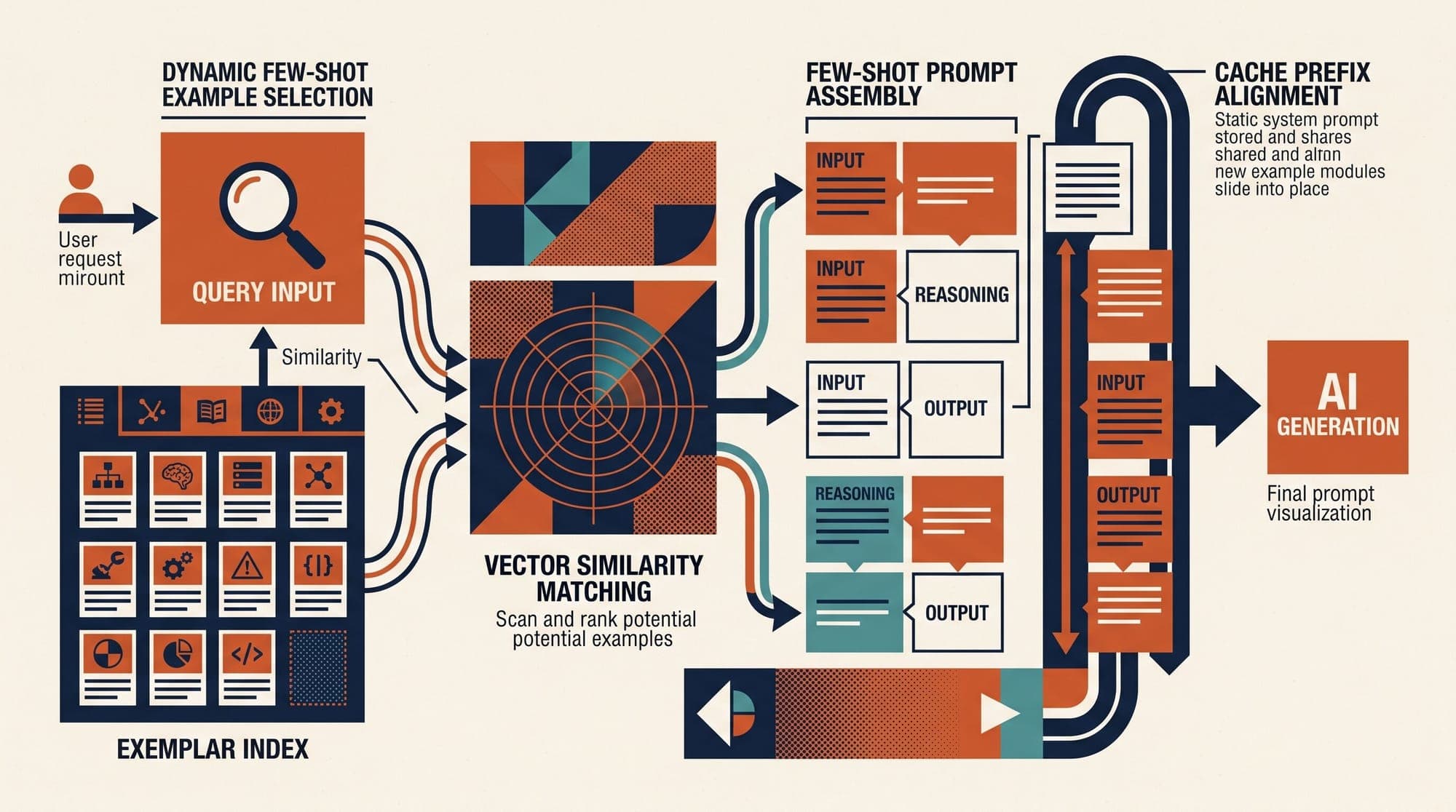
  3. Dynamic Few-Shot Example Selection in Production: Semantic Retrieval, Diversity Reranking, and Cache-Aligned Prompt Architectures

    In-context learning (ICL) remains one of the most practical mechanisms for steering large language models on specialized tasks, structured output parsing, domain-specific classification, and API tool calling. While zero-shot prompts rely entirely on the model's parametric memory, few-shot prompting provides concrete input-output demonstrations that anchor the model's generation trajectory. In enterprise production environments, however, static few-shot prompting quickly hits operational limits.

    AI
    9 min read
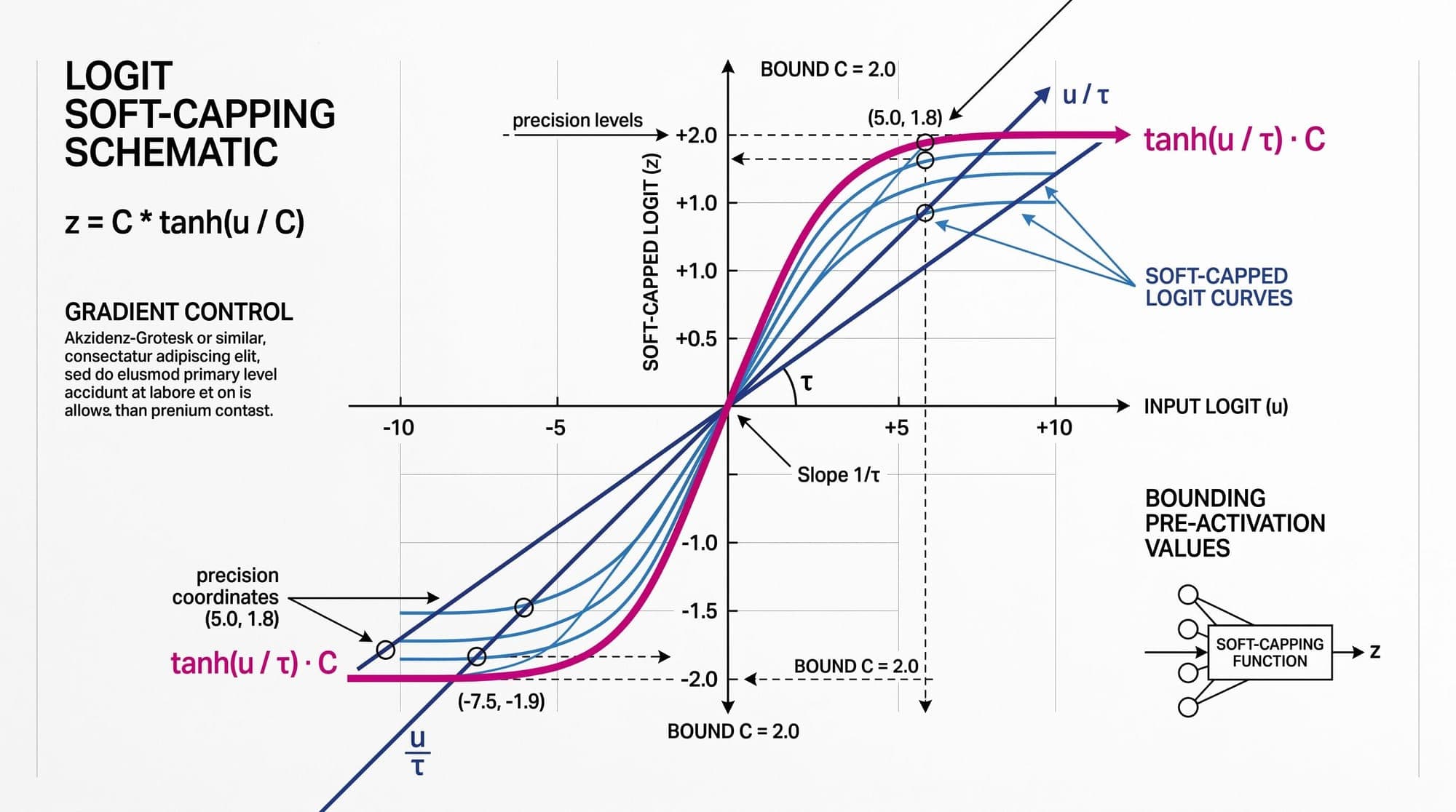
  4. Logit Soft-Capping in Large Language Models: How Tanh-Based Bounds Prevent Attention Saturation and Numerical Instability

    In modern autoregressive Transformer training, maintaining numerical stability across trillions of tokens requires strict control over intermediate activation magnitudes. As models grow deeper and wider, pre-softmax logits in self-attention mechanisms and final vocabulary projection layers frequently drift toward extreme values. When logit values grow unconstrained, standard softmax normalization enters a saturation regime where output probabilities collapse into near one-hot distributions, caus

    AI
    7 min read
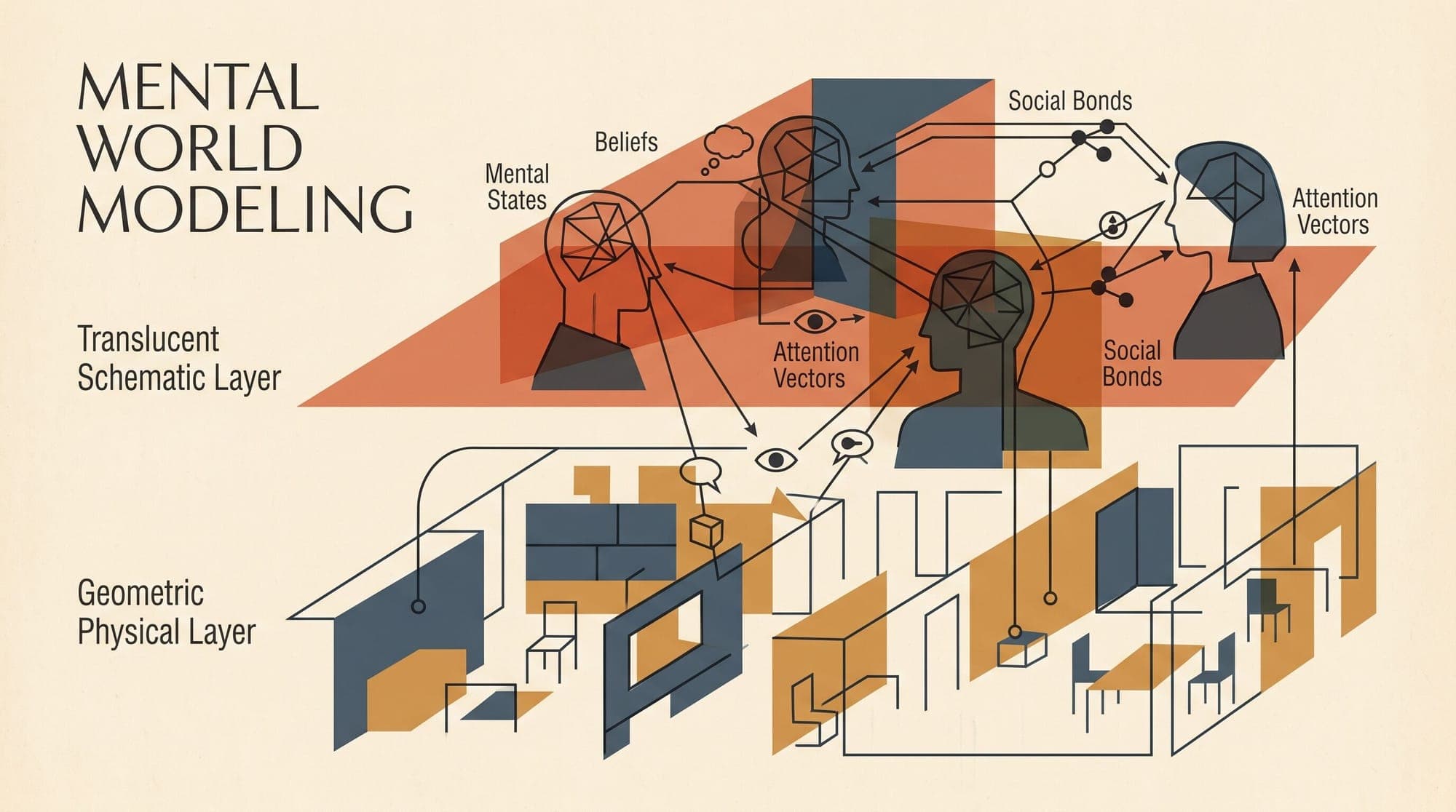
  5. Mental World Modeling: Why Autonomous AI Agents Fail Without Simulating Human Beliefs

    Mental World Modeling: Why Autonomous AI Agents Fail Without Simulating Human Beliefs Current foundation world models, from video simulators like Sora and Genie to spatial representations like JEPA and Marble, focus almost exclusively on the physical mechanics of an environment. They track geometry, object positions, motion trajectories, and visual continuity. However, when autonomous agents interact with humans in collaborative, medical, or domestic settings, physical state tracking alone cons

    AI
    4 min read
  6. Geo-Distributed LLM Inference in Production: Cross-Region Routing, Wide-Area KV Cache Dynamics, and Data Residency Architecture

    Serving large language models at enterprise scale quickly encounters geographic constraints. When users, microservices, and autonomous agents are distributed across North America, Europe, and Asia-Pacific, routing all traffic to a single centralized GPU cluster introduces significant wide-area network (WAN) round-trip times (RTT). An interactive request from Singapore to a US-East data center carries 180ms to 240ms of baseline network latency before the GPU executes a single token. However, dis

    AI
    7 min read
  7. Reversible Transformers: How Invertible Residual Blocks Eliminate Activation Memory in Deep Networks

    Training deep transformer models is primarily bounded by activation memory rather than parameter storage. During the forward pass of standard backpropagation, automatic differentiation engines cache intermediate activations across every attention head, layer normalization, and feed-forward sublayer so they can be referenced during the backward pass to evaluate gradients. For a transformer with N layers, sequence length L, batch size B, and hidden dimension d_model, storing these activations requ

    AI
    6 min read
  8. Netflix Details GenRec LLM-Native Recommendation Architecture in Production A/B Trials

    Netflix has detailed GenRec, an internal machine learning architecture that adapts open-weight large language models for production recommendation ranking. The system replaces hand-crafted feature pipelines with natural-language context engineering, achieving measurable improvements in live A/B trials while reducing required training labels by up to 40 times. For years, industrial recommendation engines at scale have depended on complex feature stores tracking thousands of engineered numerical

    Netflix
    3 min read
  9. Language Server Protocol (LSP) in AI Coding Agents: Architecture, Symbol Indexing, and Compiler Diagnostic Feedback Loops

    Language Server Protocol (LSP) in AI Coding Agents: Architecture, Symbol Indexing, and Compiler Diagnostic Feedback Loops Autonomous coding agents frequently fail at multi-file refactoring and codebase navigation when relying solely on string-matching heuristics or raw file ingestion. Text-based search tools such as ripgrep locate literal tokens but cannot resolve type hierarchies, overloaded function names, or cross-module call graphs. In contrast, feeding entire directories into large languag

    AI
    5 min read
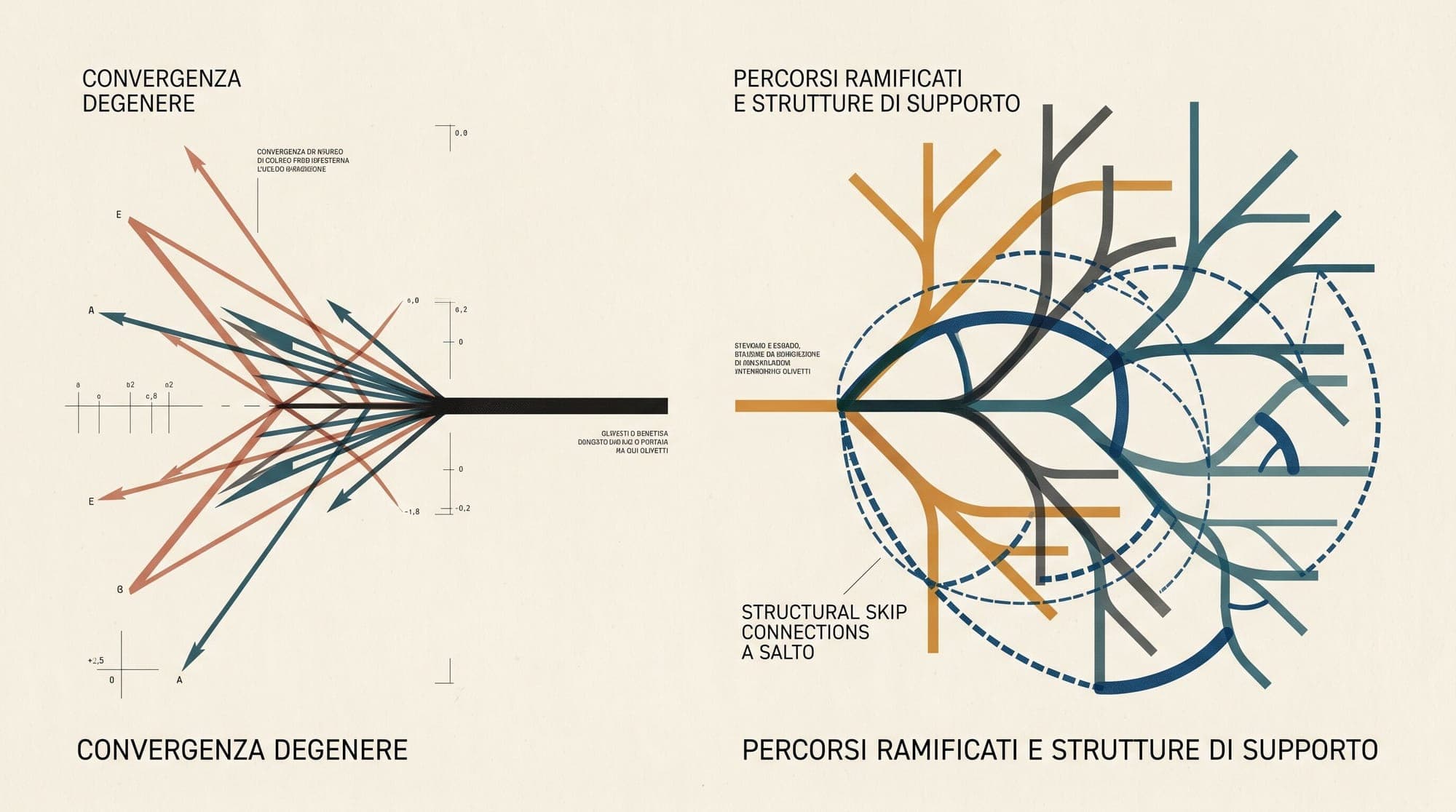
  10. Rank Collapse in Deep Transformers: Why Pure Attention Degenerates Doubly Exponentially and How Skip Connections Preserve Capacity

    When the Transformer architecture was introduced in 2017 with the seminal paper "Attention Is All You Need", the central thesis was that recurrence and convolution could be completely discarded in favor of stacked self-attention mechanisms. However, theoretical analysis has shown that the title's premise is mathematically incomplete. Stacking pure self-attention layers in isolation does not produce an expressive deep model: it triggers a catastrophic failure mode known as rank collapse. In a fo

    AI
    7 min read