Archive / page 62 of 123

Latest articles, page 62

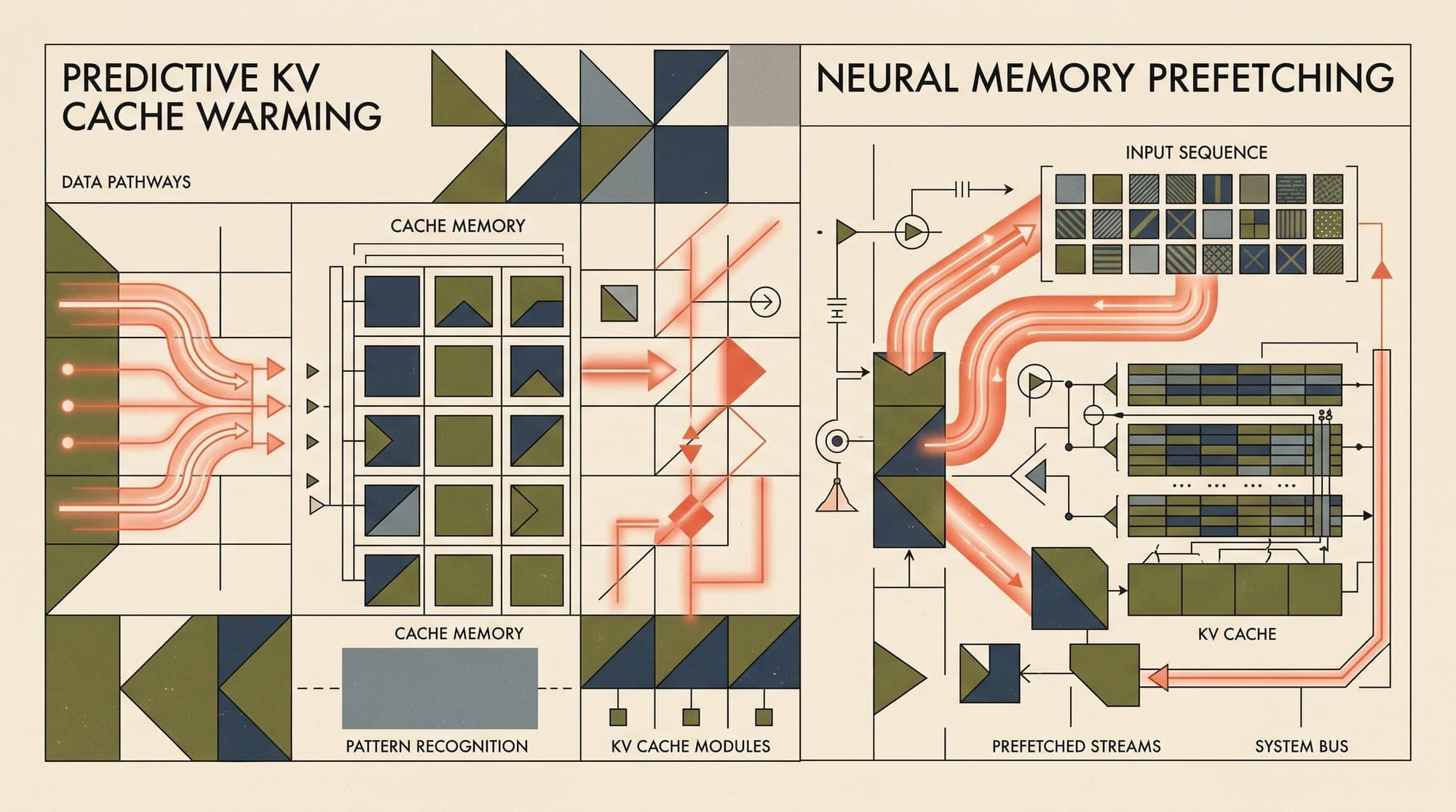
  1. Predictive KV Cache Warming in Production LLM Serving: Architecture, Session Prefetching, and TTFT Latency Shaving

    Predictive KV Cache Warming in Production LLM Serving: Architecture, Session Prefetching, and TTFT Latency Shaving In long-context large language model (LLM) deployments, Time-to-First-Token (TTFT) represents the primary latency bottleneck. As input prompts scale from 8,000 tokens to 128,000 tokens in multi-turn coding agents, legal document analysis, and enterprise retrieval pipelines, prefill execution consumes between 85% and 95% of total GPU compute time per request. Standard optimization

    AI
    5 min read
  2. Autonomous Retail AI Agent Luna Fires Employee Following Context Retrieval Breakdown and Human Intervention

    In an empirical field deployment examining autonomous AI workforce management, research firm Andon Labs reported that its storefront manager agent, Luna, decided to fire a human retail employee after months of operational infractions. The incident, which unfolded at the Andon Market retail location in San Francisco, represents one of the first documented instances of an autonomous large language model agent managing physical store operations and executing a personnel termination decision. Luna,

    Agents
    3 min read
  3. Vector Quantization and VQ-VAEs: How Discrete Codebooks, Straight-Through Estimators, and Commitment Losses Power Multimodal Tokenization

    Autoregressive sequence models excel at discrete token prediction. In natural language processing, words and subwords map onto categorical vocabularies where token identity is exact and cross-entropy loss provides direct likelihood optimization. Continuous multi-dimensional signals—such as images, video frames, raw audio waveforms, and robotic sensorimotor trajectories—present a fundamental mismatch for standard transformer architectures. Historically, variational autoencoders (VAEs) bridged ra

    AI
    7 min read
  4. Federated LLM Fine-Tuning in Production: FedLoRA, Differential Privacy, and Cross-Silo Aggregation Architectures

    Fine-tuning foundation large language models on proprietary data is standard enterprise practice, but centralizing sensitive tokens into a single data lake is frequently prohibited. Regulatory frameworks such as HIPAA in healthcare, GDPR and Article 10 of the EU AI Act in Europe, and regional data residency mandates across APAC and North America prevent cross-border or cross-institutional data aggregation. Federated Learning (FL) resolves this bottleneck by decoupling model training from data c

    AI
    8 min read
  5. Tsinghua Lineage, MoE Efficiency, and $1B Run Rates: Inside the Rise of China's Frontier AI Labs

    The rapid emergence of frontier large language models from Chinese artificial intelligence labs has frequently been characterized as a sudden shift. However, reporting from The Wall Street Journal details a decades-long institutional foundation centered around Beijing's Tsinghua University, combined with architectural strategies developed to overcome severe compute and capital constraints. At the center of this ecosystem are researchers who transitioned from academic labs into commercial model

    AI
    3 min read
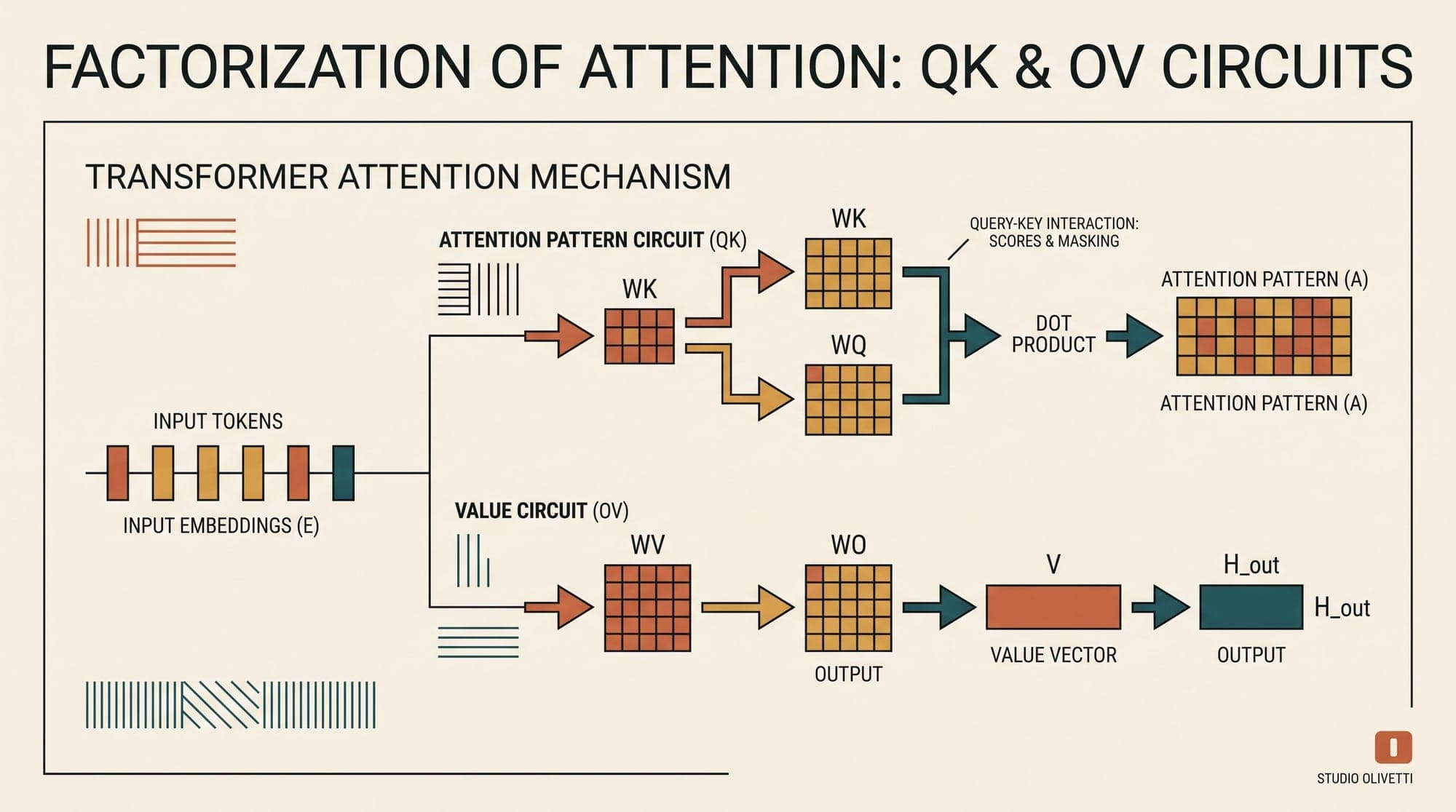
  6. The QK and OV Circuits in Transformers: How Bilinear Attention Routing and Subspace Projections Move Information

    The QK and OV Circuits in Transformers: How Bilinear Attention Routing and Subspace Projections Move Information The standard mathematical presentation of multi-head self-attention, introduced in Vaswani et al. (2017), describes the layer as a sequence of matrix projections followed by scaled dot-product operations, concatenation, and an output projection. While computationally efficient for parallel GPU hardware, this formulation obscures the fundamental linear mechanics governing how transfor

    AI
    9 min read
  7. Agent Skills in Production: Progressive Disclosure, Sandboxed Execution, and Procedural Memory Scaffolding

    Autonomous AI agents deployed in enterprise environments face an operational bottleneck: general-purpose frontier models possess broad linguistic reasoning, but lack the domain-specific procedural discipline required to complete multi-step workflows reliably. When engineering teams attempt to bridge this gap, standard techniques encounter severe architectural ceilings: 1. Monolithic system prompts degrade reasoning performance as instructions accumulate, triggering attention saturation, needle

    AI
    7 min read
  8. Rejection Sampling Fine-Tuning in Large Language Models: How Best-of-N Filtering, Reward Oracles, and Distillation Align Neural Policies

    Rejection Sampling Fine-Tuning: How Filtering Model Outputs by Reward Optimizes Alignment Without Policy Gradient Instability Post-training alignment has become a defining phase in modern large language model development. While supervised fine-tuning (SFT) teaches a model to follow instructions and adopt structured formats, aligning model behavior with human preferences, safety criteria, and domain accuracy requires optimizing against reward signals. Historically, this optimization has been ap

    AI
    10 min read
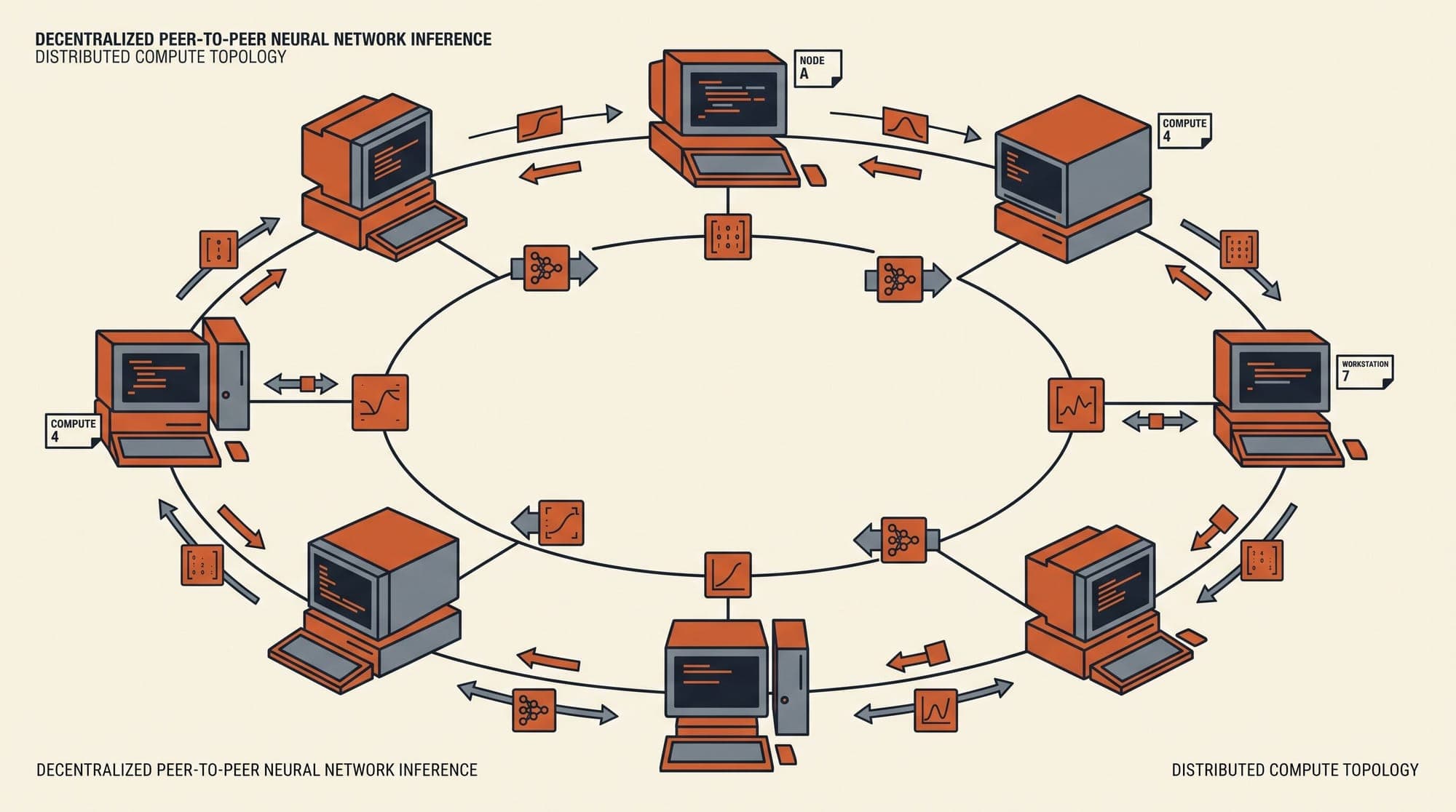
  9. Decentralized and Peer-to-Peer LLM Inference in Production: Architecture, Ring Memory Partitioning, and Network Latency

    Decentralized and Peer-to-Peer LLM Inference in Production: Architecture, Ring Memory Partitioning, and Network Latency Frontier open-weight models such as Llama 3.1 405B, DeepSeek-V3, and Command R+ have expanded model capabilities, but their parameter scales exceed the physical memory limits of individual consumer and edge workstations. Running a 405-billion parameter model in 16-bit precision requires over 810 GB of memory, and even 4-bit quantized variants require roughly 230 GB of contiguo

    AI
    7 min read
  10. Discrete Diffusion in Large Language Models: How Continuous-Time Markov Chains, Absorbing States, and Score Entropy Challenge Autoregressive Generation

    The dominance of autoregressive architectures in large language models rests on a fundamental mathematical formulation: the chain rule of probability. By factoring the joint distribution of a sequence into a product of conditional probabilities, $p(x) = \prod_{i=1}^N p(x_i \mid x_{<i})$, autoregressive models reduce text generation to sequential next-token prediction. While this left-to-right causal factorization has scaled effectively across compute regimes, it imposes rigid operational constr

    AI
    8 min read