Archive / page 63 of 123

Latest articles, page 63

  1. AI Agents Surpass Humans on OpenRouter as Agentic Token Usage Jumps 14x

    Autonomous AI agents have overtaken human users as the primary consumers of language model compute on OpenRouter, with agentic token volume surging fourteenfold over the past six months. Data published by OpenRouter analyst Peter Walker indicates that February 6 marked the permanent inflection point where token consumption by automated agents exceeded direct human API traffic. Since that threshold, agentic token volume on the multi-model gateway has climbed from 0.51 trillion to 7.3 trillion to

    AI
    2 min read
  2. Continuous Pre-Training in Production: Domain Adaptation, Replay Buffers, Learning Rate Restarts, and Catastrophic Forgetting Mitigation

    Continuous Pre-Training in Production: Domain Adaptation, Replay Buffers, Learning Rate Restarts, and Catastrophic Forgetting Mitigation Adapting general-purpose foundation models to specialized enterprise domains (such as clinical medicine, corporate law, quantitative finance, and proprietary software codebases) presents a fundamental architectural challenge. While Retrieval-Augmented Generation (RAG) and Supervised Fine-Tuning (SFT) remain standard first-line approaches, both exhibit severe s

    LLM
    7 min read
  3. Hybrid SSM-Transformer Architectures: How Interleaving Attention and Recurrence Solves the State-Retrieval Trade-Off

    Hybrid SSM-Transformer Architectures: How Interleaving Attention and Recurrence Solves the State-Retrieval Trade-Off Autoregressive language models face a fundamental tension between inference efficiency and long-context retrieval capacity. Pure Transformer architectures scale quadratic computational complexity during sequence prefill and linear key-value (KV) cache memory consumption during autoregressive token generation. Conversely, pure State Space Models (SSMs) and linear recurrent neural

    AI
    8 min read
  4. Study: Why Labor-Saving LLMs Incline Scientists to Do More Work Less Well

    A theoretical study published by researchers from Princeton University, the University of Washington, and collaborating institutions models how large language models alter researchers' time allocation across projects. The authors find that by reducing time friction across different stages of the research lifecycle, AI assistants increase the opportunity cost of researcher time, creating economic incentives to publish a higher volume of less thoroughly refined papers. The paper, titled The unint

    AI
    2 min read
  5. Memory Shortage Drives Nvidia AI Server Prices Up Over 15%

    Nvidia has notified major customers that prices for server systems containing its artificial intelligence accelerators are increasing by more than 15% in many configurations, according to reports from Bloomberg and Fortune. The price adjustments stem from severe supply constraints and rising costs across dynamic random-access memory (DRAM) and high-bandwidth memory (HBM) modules. The price increases will apply to server systems scheduled for delivery starting in early 2027, covering platforms p

    AI
    2 min read
  6. Hallucination Detection and Faithfulness Verification in Production RAG: Architecture, NLI Claim Decomposition, and Runtime Guardrail Economics

    Retrieval-Augmented Generation (RAG) is commonly deployed under the assumption that grounding generation in retrieved passages eliminates factual inaccuracies. In practice, grounding provides an evidence boundary but does not guarantee factual fidelity. For why models hallucinate in the first place, see our AI hallucinations explainer. Production language models regularly synthesize claims absent from the retrieved context (extrinsic hallucinations) or directly assert statements conflicting with

    AI
    6 min read
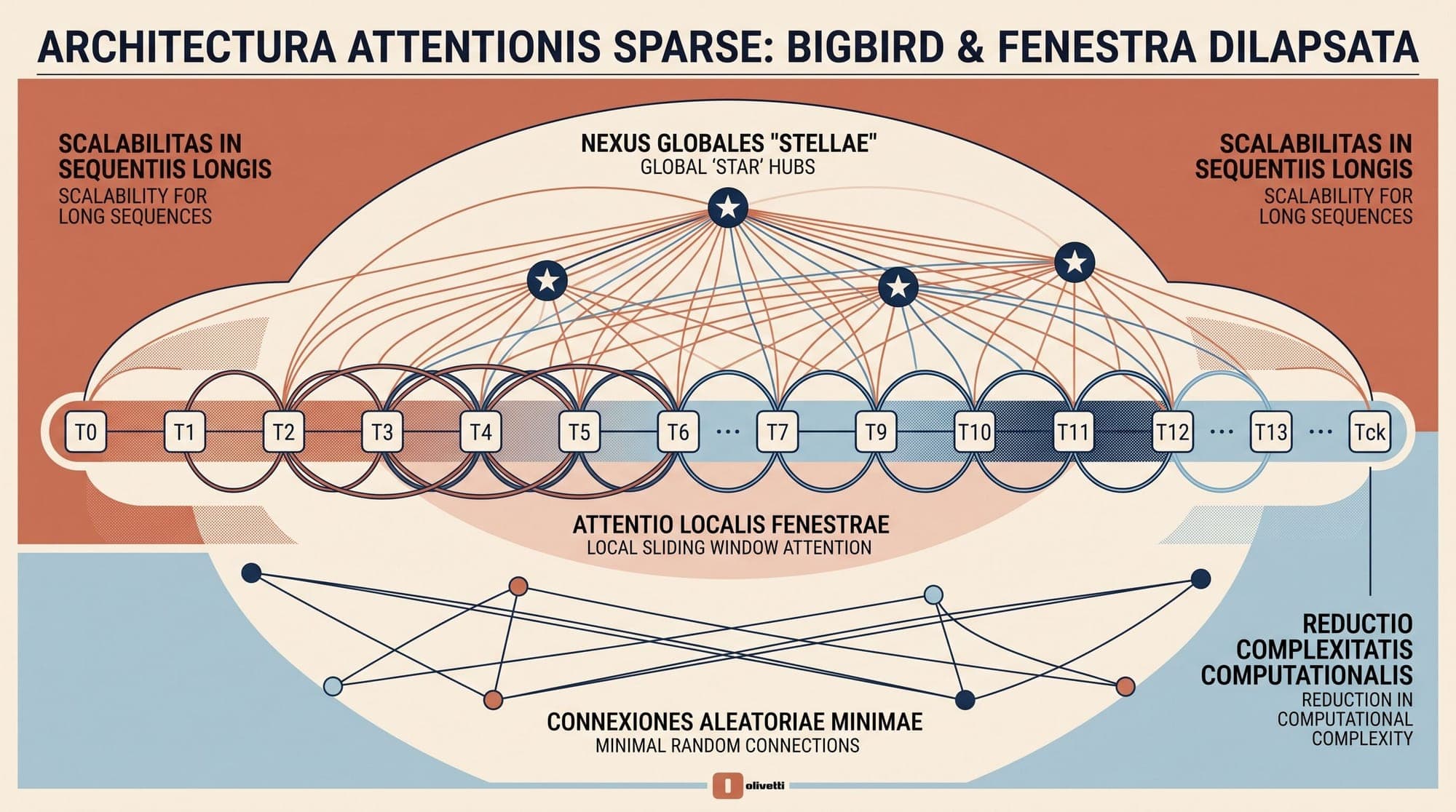
  7. Sparse Attention and BigBird: How Window, Global, and Random Graphs Preserve Turing Completeness in Linear Time

    Standard self-attention in transformer architectures scales quadratically with sequence length. Computing full pairwise interactions between n tokens requires evaluating an n x n attention matrix, yielding O(n^2) computational complexity and memory consumption. While hardware accelerators and IO-aware tiling algorithms like FlashAttention optimize memory traffic, the quadratic compute and KV footprint remains a barrier for processing long contexts, document-level summarization, and genomic seque

    AI
    7 min read
  8. Oxford Study Details Chinese Gray-Market Proxies Reselling Claude Tokens at 90% Discounts

    An investigation by the Oxford China Policy Lab reveals that Chinese developers routinely access Anthropic's frontier Claude models at discounts between 70% and 90% below list price, bypassing geographical blocks, payment filters, and biometric identity verification through a decentralized network of API proxies known locally as "transfer stations" (中转站). The analysis, authored by Oxford researcher Zilan Qian and published via ChinaTalk, outlines the modular supply chain and economic mechanics

    AI
    3 min read
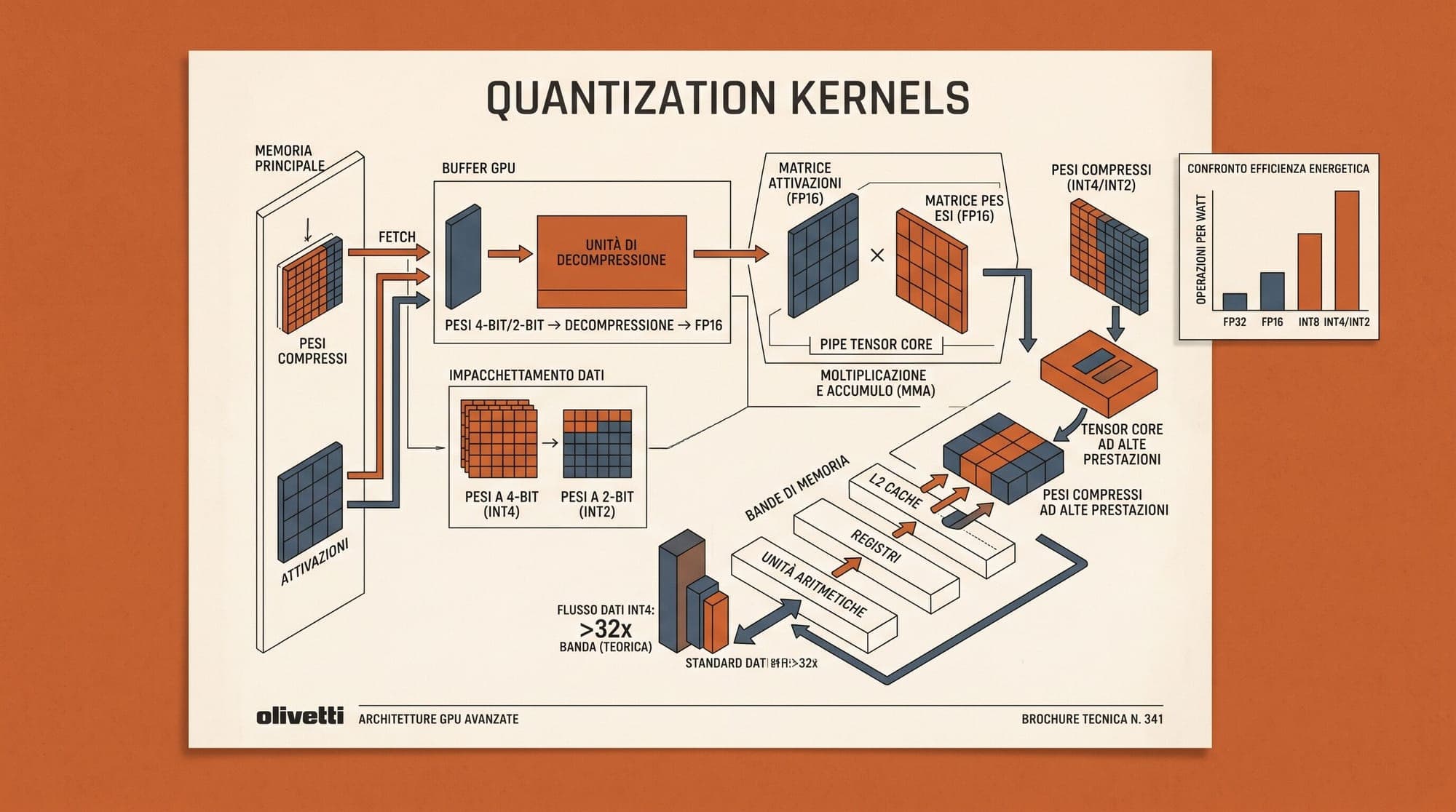
  9. Low-Precision Quantization Kernels in Production: Comparing Marlin, ExLlamaV2, FlashInfer, and BitBLAS

    Low-Precision Quantization Kernels in Production: Comparing Marlin, ExLlamaV2, FlashInfer, and BitBLAS Architecture, Memory Bandwidth, and Decoding Throughput Autoregressive large language model (LLM) serving operates under two distinct compute regimes: a compute-bound prefill phase and a memory-bandwidth-bound decode phase. While processing the initial prompt involves matrix-matrix multiplications (GEMM) with high arithmetic intensity, generating tokens one by one requires matrix-vector multip

    AI
    9 min read
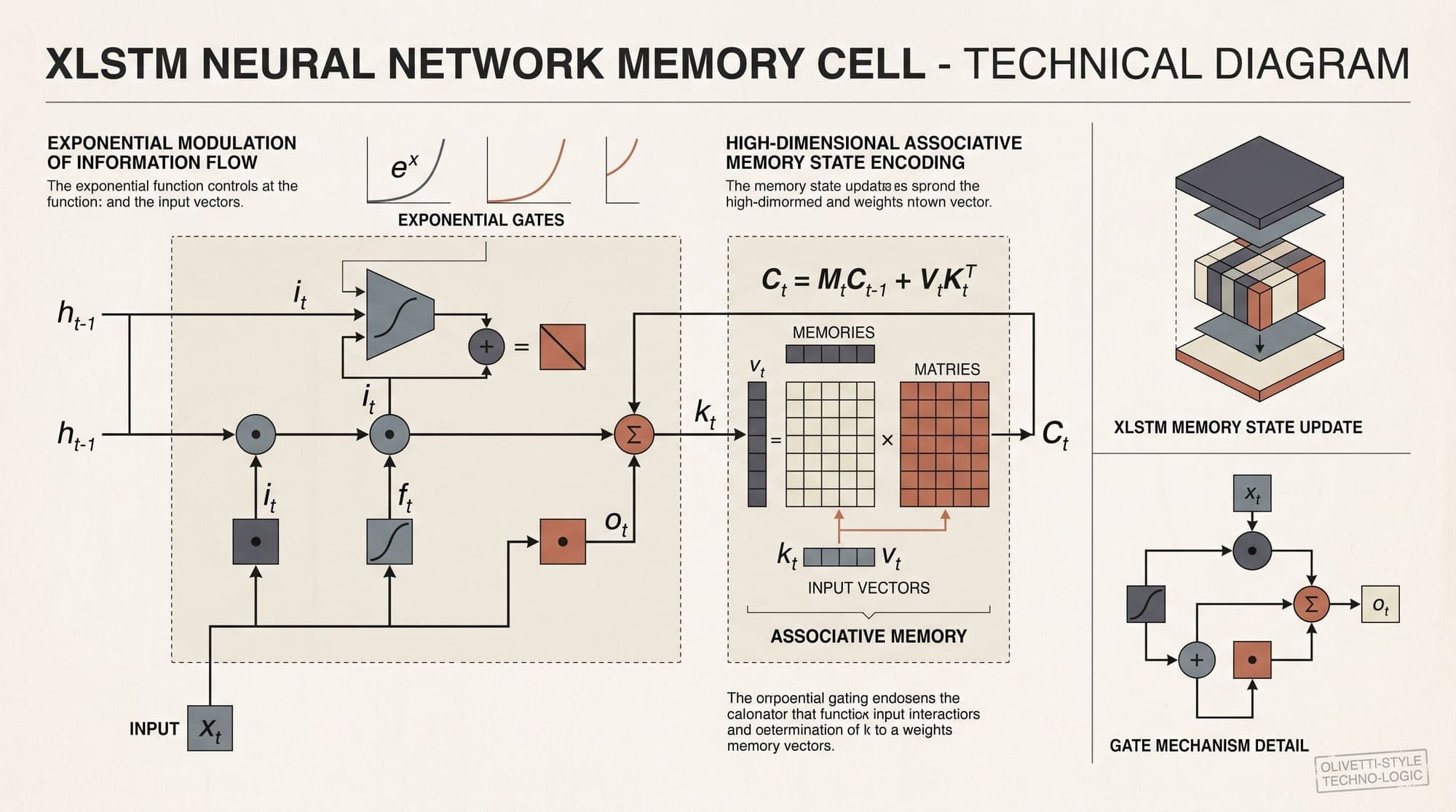
  10. xLSTM: How Exponential Gating and Matrix Memory Scale Recurrent Neural Networks

    xLSTM: How Exponential Gating and Matrix Memory Scale Recurrent Neural Networks For over two decades following its introduction by Hochreiter and Schmidhuber (1997), the Long Short-Term Memory (LSTM) network served as the dominant architecture for sequence modeling. By introducing the constant error carousel and multiplicative gating, LSTMs mitigated the vanishing gradient problem that plagued vanilla recurrent neural networks. However, the emergence of the Transformer architecture (Vaswani et

    AI
    10 min read