Archive / page 47 of 123

Latest articles, page 47

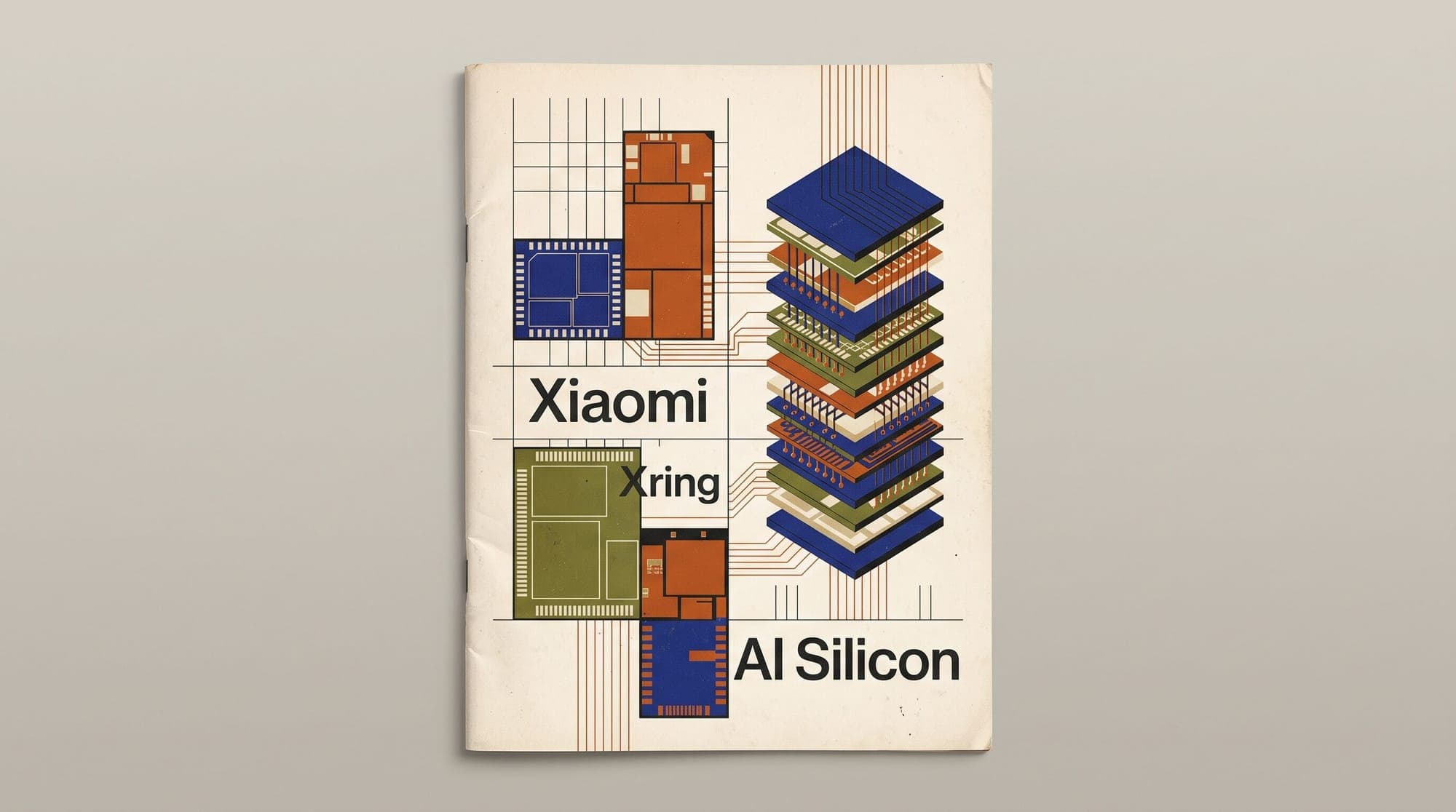
  1. Xiaomi Unveils Custom Silicon Roadmap with 6nm Xring O100 AI Accelerator and 3nm D100 Smart-Driving Processor

    Xiaomi has unveiled details of its custom semiconductor roadmap, introducing two specialized AI processors alongside its next-generation mobile system-on-chip: the 6-nanometer Xring O100 near-memory AI accelerator and the 3-nanometer Xring D100 autonomous driving chip. Both processors are manufactured by TSMC and have completed hardware validation ahead of planned commercial rollouts. The announcements follow a reported investment of more than 21 billion yuan ($3.1 billion) by Xiaomi into in-ho

    AI
    2 min read
  2. Multiverse Computing Releases Quantization-Aware Healing to Boost 4-Bit Model Accuracy Above Full-Precision Baselines

    AI infrastructure firm Multiverse Computing has introduced Quantization-Aware Healing (QAH), a post-compression optimization technique designed to restore model accuracy after structural pruning and extreme quantization. Detailed in research paper 2608.20953, the method allows 4-bit compressed large language models to exceed the benchmark performance of their intermediate 16-bit unquantized counterparts. In standard model optimization workflows, teams apply structural pruning (removing layers,

    AI
    3 min read
  3. Agent Sandbox Architecture in Production: Comparing Firecracker MicroVMs, gVisor, WebAssembly, and Docker Isolation for Untrusted AI Code Execution

    Deploying autonomous AI agents that generate and execute code introduces a critical infrastructure challenge: executing untrusted, model-generated shell commands, Python scripts, and system binaries without compromising the host infrastructure or leaking multi-tenant data. As agentic systems move from single-turn code generation to multi-turn iterative problem solving (such as SWE-bench workflows, automated debugging, and repository refactoring), sandbox requirements have evolved. Sandboxes mus

    AI
    8 min read
  4. KV Cache Compression and Dynamic Pruning in Production Serving: Comparing StreamingLLM, H2O, SnapKV, PyramidKV, and DuoAttention Architecture, Memory Bandwidth Reduction, and Needle Retrieval Retention

    As context windows in production large language models expand from 8K tokens to 128K tokens and beyond, the Key-Value (KV) cache replaces model weights as the primary consumer of GPU High Bandwidth Memory (HBM). In high-throughput serving systems, the KV cache grows linearly with sequence length and batch size, creating a dual bottleneck: capacity exhaustion that caps concurrent batch size, and memory bandwidth saturation during autoregressive decoding. While quantization techniques (such as FP

    AI
    11 min read
  5. Ramp Launches Router.com to Integrate Model Routing and Enterprise AI Spend Controls

    Corporate expense management provider Ramp has released Router.com, a multi-model routing service and API gateway designed to dynamically direct enterprise inference requests across commercial and open-weight large language models. The launch introduces a unified endpoint connecting developer workflows to models from OpenAI, Anthropic, and SpaceXAI (Grok), with scheduled integrations for Google Gemini as well as open-weight families including DeepSeek, Kimi, Minimax, and Nvidia served through i

    AI
    2 min read
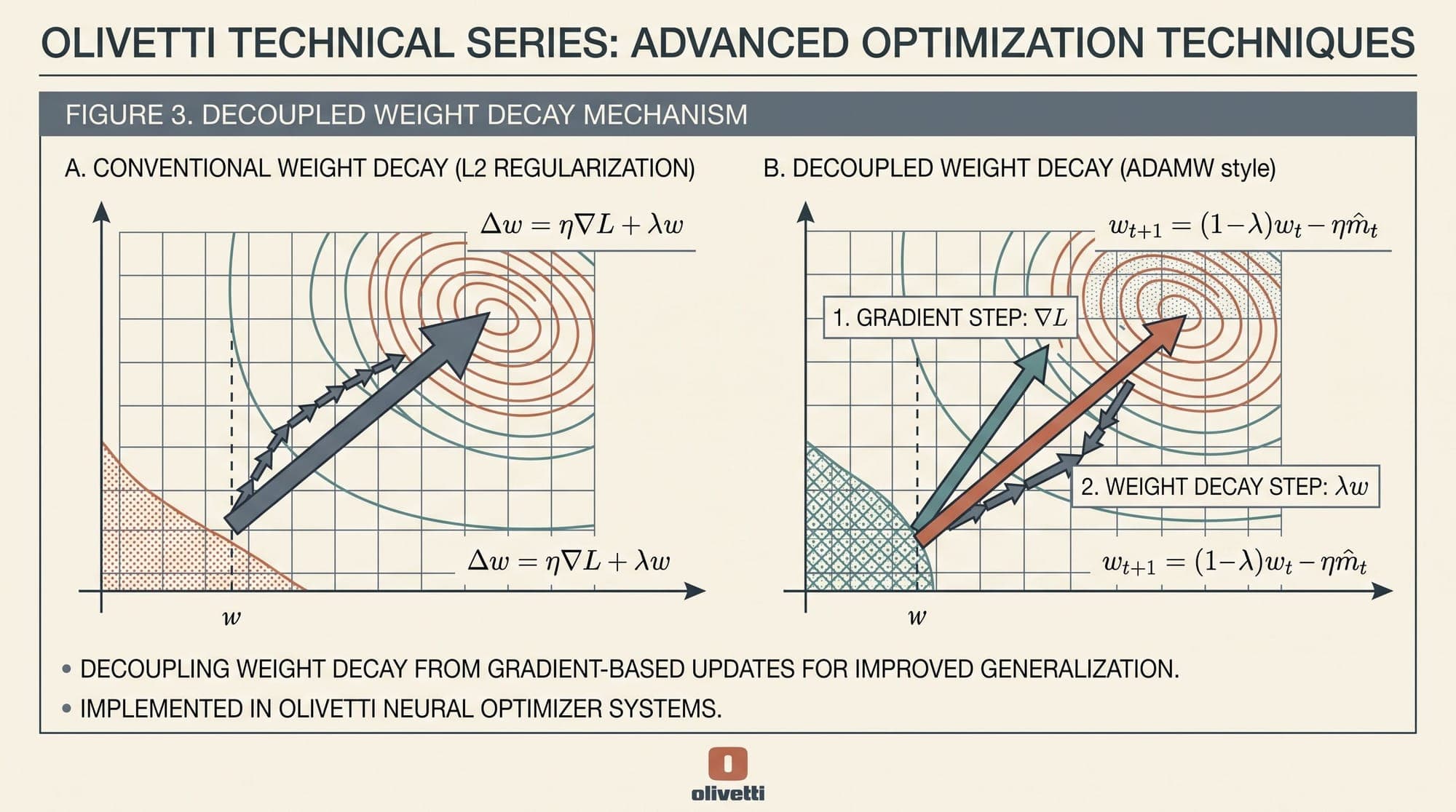
  6. Decoupled Weight Decay Regularization (AdamW): Mathematical Foundations, L2 Regularization Failure in Adaptive Gradient Methods, and Hyperparameter Dynamics

    Decoupled weight decay regularization, formalized by Ilya Loshchilov and Frank Hutter in 2017 and published at ICLR 2019, resolved a fundamental flaw in how adaptive gradient algorithms like Adam implemented weight regularization. Prior to AdamW, deep learning frameworks implemented weight decay as L2 regularization by adding the gradient of the squared L2 norm directly to the loss gradient. While mathematically identical for standard stochastic gradient descent (SGD), this formulation breaks do

    AI
    5 min read
  7. Model Context Protocol (MCP) in Production AI Agents: Architecture, Transport Layers, Security Sandboxing, and Tool Federation

    Model Context Protocol (MCP) in Production AI Agents: Architecture, Transport Layers, Security Sandboxing, and Tool Federation The transition from standalone large language models to autonomous agentic systems has introduced an integration scaling problem. Early agent implementations relied on proprietary, ad hoc function-calling wrappers written specifically for each model provider or orchestration framework. Connecting $M$ distinct agent runtimes to $N$ enterprise data stores and developer to

    AI
    9 min read
  8. Graph RAG in Production: Comparing Microsoft GraphRAG, LightRAG, Fast GraphRAG, and HippoRAG Architecture, Indexing Overhead, and Multi-Hop Retrieval Economics

    Standard vector retrieval-augmented generation (RAG) relies on dense semantic embeddings to map text chunks into a shared vector space. While effective for localized semantic lookups, dense retrieval degrades on two distinct query classes: corpus-wide global summarization (such as identifying overarching themes across an entire document store) and complex multi-hop associative queries (connecting entity A to entity D through multiple intermediary relationships across disparate documents). Graph

    AI
    10 min read
  9. OpenAI Disrupts Russia-Linked Influence Network Using ChatGPT

    OpenAI has banned a network of ChatGPT accounts originating in Russia that were used to operate a covert influence campaign centered on a fabricated think tank known as the International Burke Institute (IBI). According to a threat intelligence report published by OpenAI on August 25, 2026, the operation used ChatGPT to generate English-language social media content across platforms including X, LinkedIn, Facebook, Substack, and Telegram. The operators prompted the models in Russian while expli

    AI
    2 min read
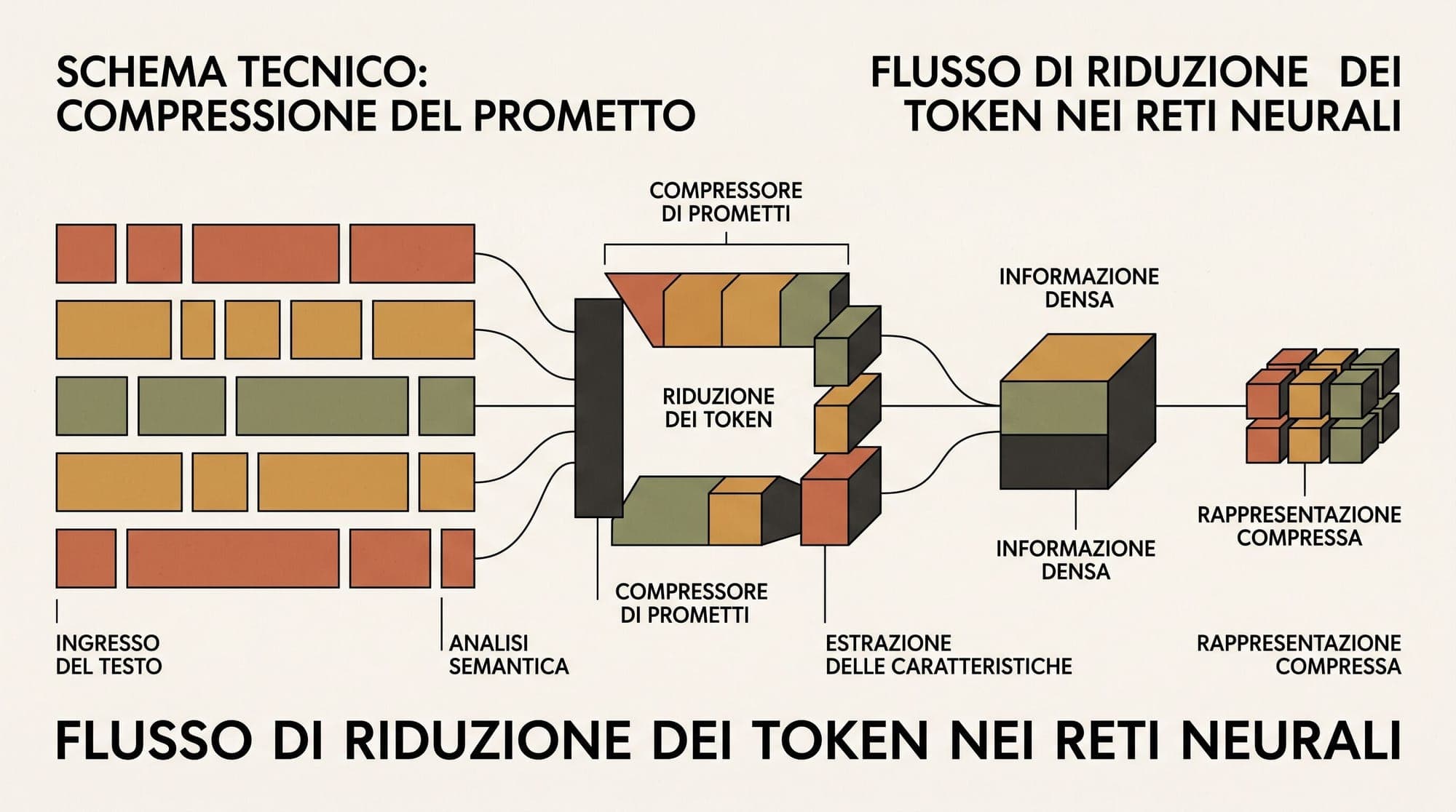
  10. Prompt Compression in Production: Comparing Selective Context, LLMLingua, LongLLMLingua, and LLMLingua-2 Architecture, Token-Level Information Density, and Serving Economics

    In high-throughput production LLM deployments, prompt length dominates both serving latency and inference costs. For multi-turn conversational agents, long-document retrieval-augmented generation (RAG), and multi-step agentic workflows, input contexts routinely scale from 8,000 to over 64,000 tokens. Because the prefill phase scales quadratically in raw attention FLOPs and linearly in key-value (KV) cache allocation, long prompts drive up Time To First Token (TTFT) and consume disproportionate G

    AI
    9 min read