Archive / page 43 of 123

Latest articles, page 43

  1. South Korea's Wrtn Raises $72.2M Series C at $722M Valuation

    South Korean AI platform operator Wrtn Technologies has secured approximately 100 billion won ($72.2 million) in a Series C funding round, pushing the startup's valuation above 1 trillion won ($722 million). The new capital brings Wrtn's cumulative funding to roughly 230 billion won ($166 million) as the company expands its consumer and enterprise generative AI offerings across Asian markets. Expanding Beyond Domestic Aggregation Founded in Seoul in 2021, Wrtn built its initial user base as


    AI
    1 min read
  2. Activation Addition and Representation Engineering: Mathematical Foundations, Linear Subspace Projections, and Inference-Time Steering in Large Language Models

    Large language models encode vast linguistic, factual, and behavioral properties within their internal hidden representations. While traditional alignment and behavioral modification rely on Supervised Fine-Tuning (SFT) or Reinforcement Learning from Human Feedback (RLHF), these gradient-based techniques modify billions of parameter weights, require substantial compute, and frequently suffer from catastrophic forgetting or alignment tax. An alternative paradigm grounded in mechanistic interpret

    AI
    6 min read
  3. Synthetic Data Pipelines in Production LLM Post-Training: Architecture, Prompt Evolution, Quality Filtering, and Contamination Control

    Scaling supervised fine-tuning (SFT) and preference alignment (DPO, PPO, GRPO) through human annotation faces severe economic and operational constraints. Human annotation costs between $5.00 and $50.00 per complex instruction-response trajectory, exhibits significant variance across labeler cohorts, and scales linearly with dataset volume. The LIMA study by Zhou et al. (2023) showed that post-training requires strict data quality rather than raw volume, yet modern frontier models demand million

    AI
    6 min read
  4. Anthropic Outlines $30 Trillion Total Addressable Market in Pre-IPO Pitch

    Anthropic is preparing to pitch prospective initial public offering investors on a total addressable market exceeding $30 trillion, according to a report from The Wall Street Journal. The projection relies on estimating the total monetary value of human labor and enterprise workflows that advanced AI models and autonomous agents could potentially automate or augment across the global economy. If presented in formal registration filings, the $30 trillion figure would surpass the previous record

    Anthropic
    2 min read
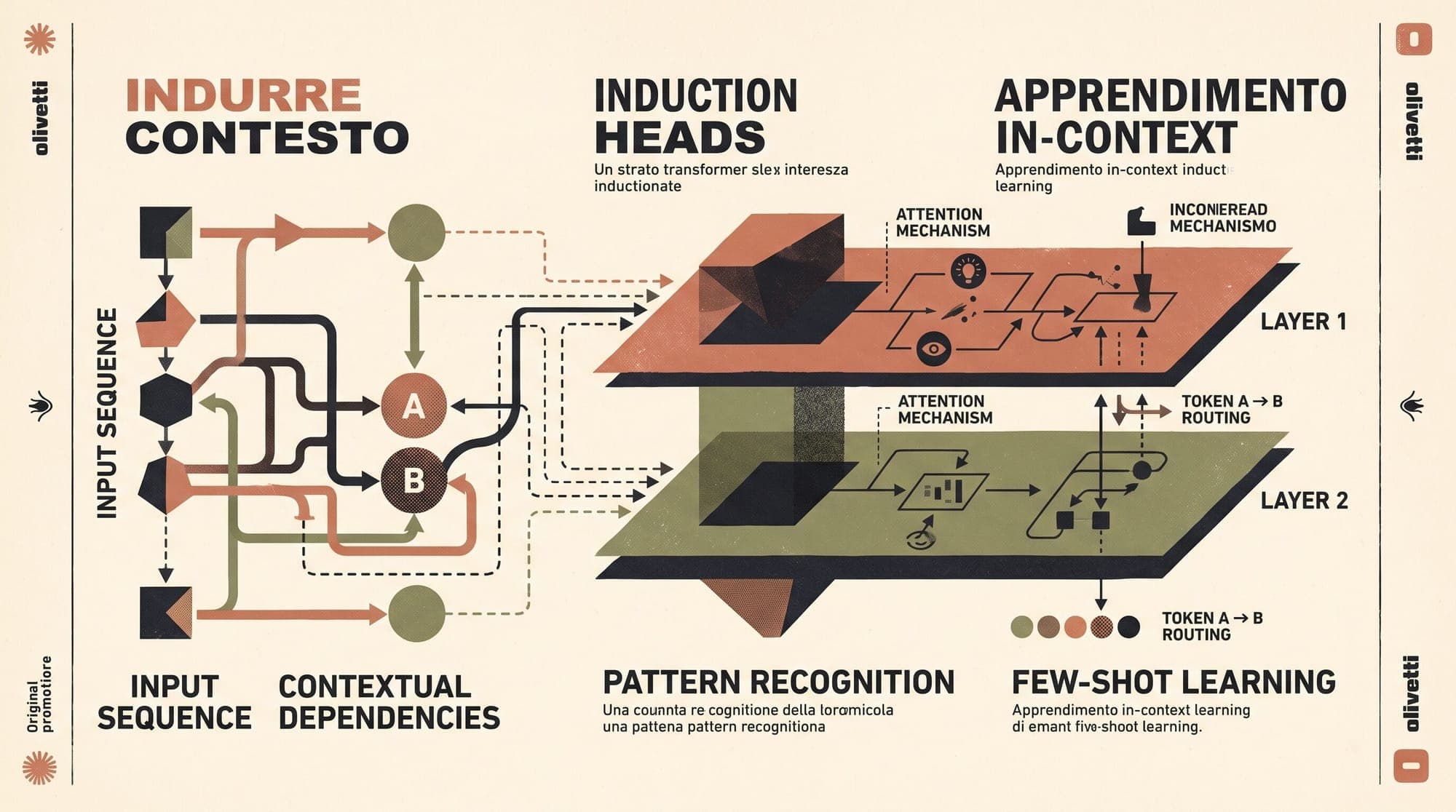
  5. Induction Heads: Mathematical Foundations, Two-Layer Circuit Composition, and the Emergence of In-Context Learning in Transformers

    Induction Heads: Mathematical Foundations, Two-Layer Circuit Composition, and the Emergence of In-Context Learning in Transformers One of the defining capabilities of modern autoregressive large language models is in-context learning: the ability to infer rules, adapt to task formats, and execute complex few-shot instructions purely from prompt context without updating neural network weights. For years, in-context learning was treated as an enigmatic, emergent property of large-scale autoregres

    AI
    13 min read
  6. Continuous Batching and Request Scheduling in Production LLM Serving: Comparing Orca, FastServe, Sarathi-Serve, and vLLM Architecture, Preemption Policies, Chunked Prefill Interleaving, and TTFT-TBT Trade-Offs

    Autoregressive large language model serving exhibits a fundamental architectural tension between compute utilization and latency guarantees. Standard deep learning inference pipelines rely on static request-level batching, where incoming queries are grouped into a fixed tensor, executed across forward passes until all sequences finish, and evicted simultaneously. In transformer-based text generation, static batching collapses serving efficiency. Because sequence lengths vary widely and token gen

    AI
    7 min read
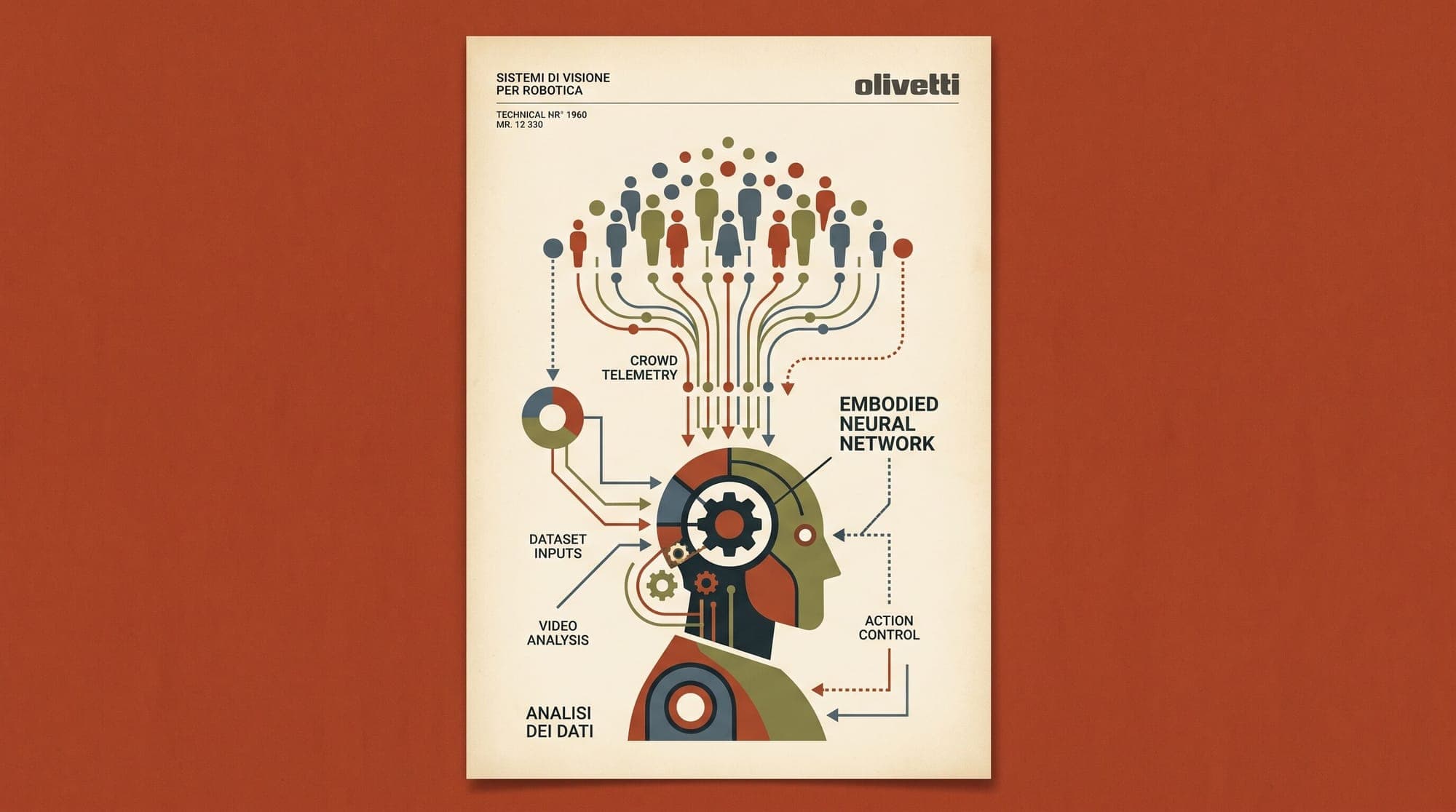
  7. Figure AI Unveils Index Platform with 16 Million Crowdsourced Videos for Robot Foundation Models

    Humanoid robotics startup Figure AI has launched Index, a global crowdsourced data collection platform engineered to capture real-world human task demonstrations at scale. Operating in stealth for four months prior to its public unveiling, the platform has compiled 16 million video demonstrations from contributors across 108 countries, generating embodied training data for Figure's physical AI foundation models. The initiative directly targets the primary bottleneck in scaling embodied AI: the

    AI
    2 min read
  8. Anthropic Claude Autonomously Designs Validated Protein Binders Across 14 Targets

    Anthropic has released results from an autonomous de novo protein binder design campaign run by its Claude models, with wet-lab validation from two outside evaluators. Claude designed binders against 15 targets and succeeded against 14 of them, according to Anthropic. Across all campaigns, 27% of designs bound, and 49% of the designs Claude ranked first for each target bound, according to Anthropic's technical report. The campaign used Claude Opus 4.8 and Claude Mythos Preview inside Claude Sci

    AI
    3 min read
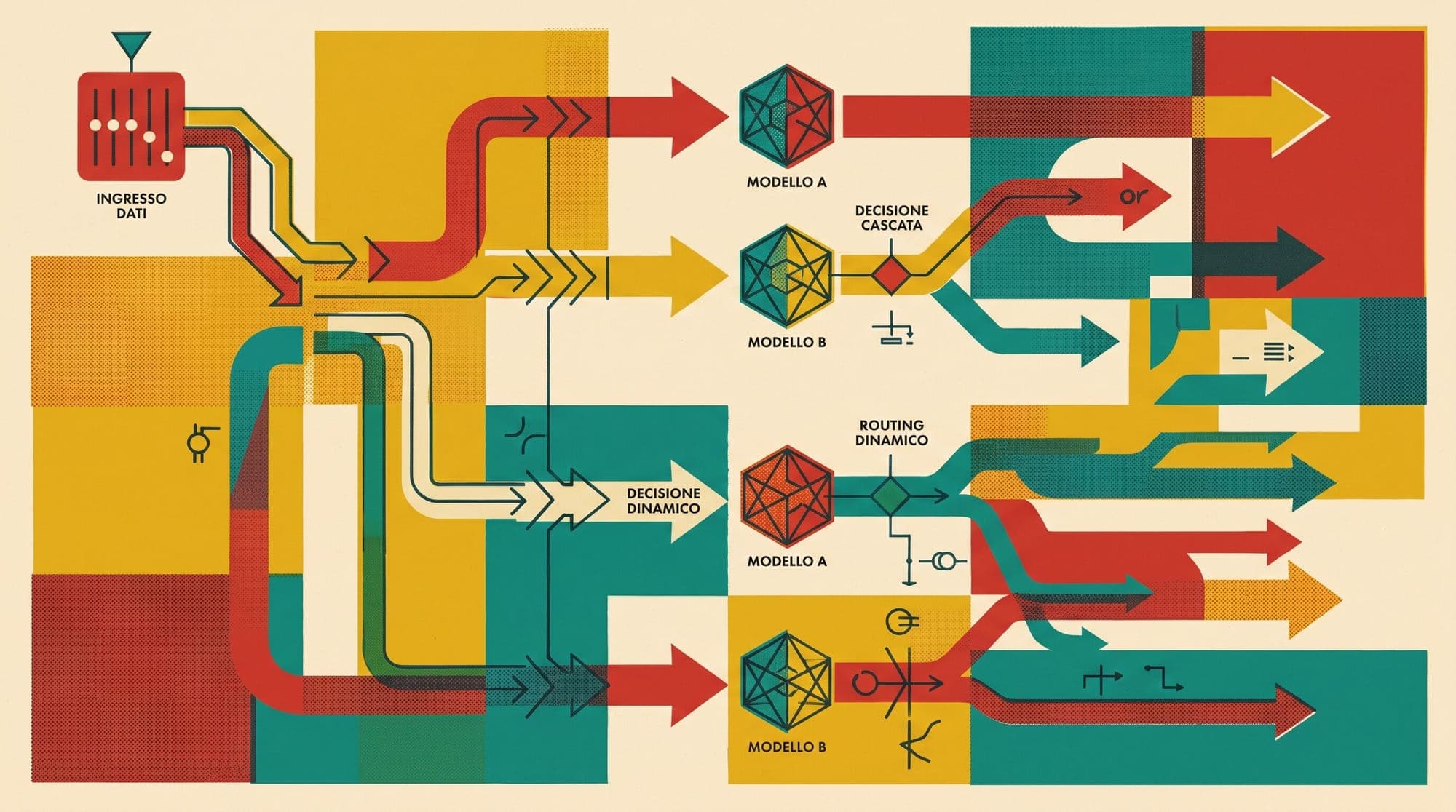
  9. Model Routing and Cascades in Production: Comparing RouteLLM, FrugalGPT, Embedding Classifiers, and Verifier Cascades

    Model Routing and Cascades in Production: Comparing RouteLLM, FrugalGPT, Embedding Classifiers, and Verifier Cascades Enterprise LLM deployments face a persistent structural inefficiency: the uniform routing of all incoming queries to flagship frontier models. Commercial API pricing and self-hosted GPU infrastructure costs span two orders of magnitude between lightweight models (such as Llama 3.1 8B, GPT-4o-mini, and Claude 3.5 Haiku at $0.15 to $0.30 per million tokens) and frontier reasoning

    Inference
    9 min read
  10. Skild AI Introduces S1 Robotics Foundation Model with In-Context Video Prompting

    Robotics foundation model startup Skild AI has unveiled S1, a foundation model capable of learning physical manipulation tasks unseen during pretraining directly from a single video demonstration prompt without fine-tuning. Traditional robotic adaptation typically requires extensive task-specific teleoperation data, domain randomization, and model fine-tuning before a system can reliably execute novel actions. S1 employs in-context prompting to translate visual demonstrations directly into real

    Robotics
    1 min read