South Korea's Wrtn Raises 2.2M Series C at 22M Valuation

South Korean AI platform operator Wrtn Technologies has secured approximately 100 billion won ($72.2 million) in a Series C funding round, pushing the startup's valuation above 1 trillion won ($722 million). The new capital brings Wrtn's cumulative funding to roughly 230 billion won ($166 million) as the company expands its consumer and enterprise generative AI offerings across Asian markets. Expanding Beyond Domestic Aggregation Founded in Seoul in 2021, Wrtn built its initial user base as

1 min
South Korea's Wrtn Raises 2.2M Series C at 22M Valuation

South Korean AI platform operator Wrtn Technologies has secured approximately 100 billion won ($72.2 million) in a Series C funding round, pushing the startup's valuation above 1 trillion won ($722 million).

The new capital brings Wrtn's cumulative funding to roughly 230 billion won ($166 million) as the company expands its consumer and enterprise generative AI offerings across Asian markets.

Expanding Beyond Domestic Aggregation

Founded in Seoul in 2021, Wrtn built its initial user base as an AI portal that aggregated various large language models, including models from OpenAI and local Korean providers, into a unified interface for writing, search, and workflow automation. The platform has since scaled to more than 5 million monthly active users across South Korea and Japan.

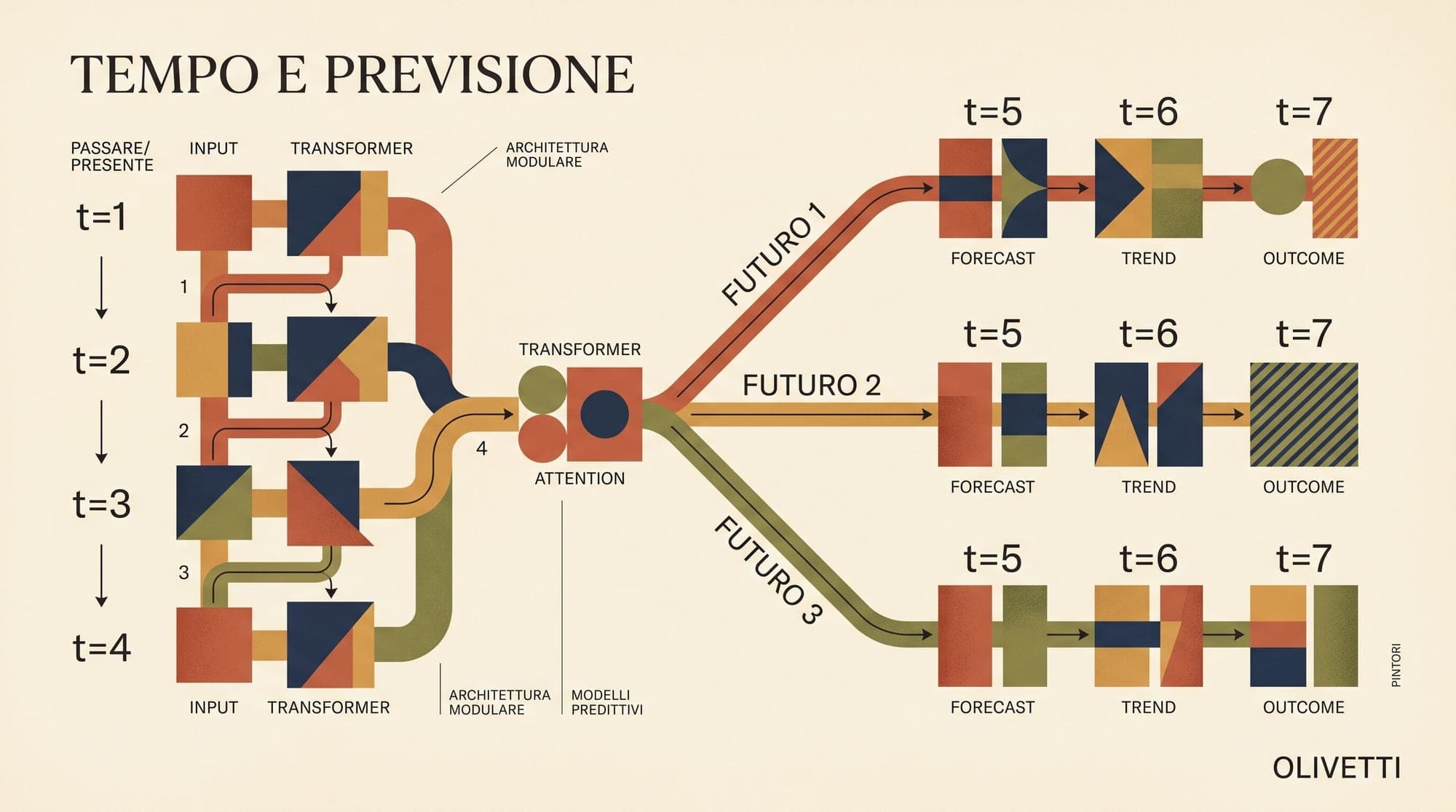
Wrtn AI Service Architecture

According to company projections reported by Reuters, Wrtn expects full-year revenue to surpass 200 billion won in 2026, compared to 47.1 billion won recorded in 2025. The company attributed recent top-line growth to increased adoption of its paid tiers, enterprise workflow tools, and interactive generative entertainment services.

Product Roadmap and Governance Controls

Wrtn stated that proceeds from the Series C round will support international market expansion and core infrastructure engineering. The startup launched operations in Japan during mid-2025 and is evaluating entry into additional regional markets.

In parallel with scaling its footprint, Wrtn is implementing tighter safeguards on its interactive AI entertainment platform, Crack. The updates introduce usage time caps for teenage accounts, stricter parental consent verification protocols, and lower transaction limits on digital goods within interactive character environments.


Sources

Written by

More to read

  • Amazon to Shut Down Mechanical Turk on September 30 After 21 Years

    Amazon Web Services has announced that it will permanently shut down Amazon Mechanical Turk on September 30, 2026. The retirement brings an end to a 21-year-old crowdsourcing platform that served as an early foundation for modern machine learning dataset annotation and human-in-the-loop computing. In a formal notice posted to the Mechanical Turk portal, AWS stated that the decision followed an internal assessment of its service portfolio. The platform had previously halted new customer registra

    1 min
  • Hierarchical KV Cache Offloading in Production LLM Serving: Host RAM, Local NVMe, Remote Storage, and LMCache Architecture

    Hierarchical KV Cache Offloading in Production LLM Serving: Host RAM, Local NVMe, Remote Storage, and LMCache Architecture High-concurrency large language model (LLM) serving faces an acute memory capacity bottleneck. While modern GPUs deliver high floating-point compute throughput, High-Bandwidth Memory (HBM) capacity remains severely constrained. In workloads involving multi-turn conversations, agentic coding loops, and long-document retrieval-augmented generation (RAG), Key-Value (KV) cache

    1 min
  • Mixture-of-Depths: Mathematical Foundations, Dynamic Compute Routing, Capacity-Constrained Tensors, and IsoFLOP Scaling

    Mixture-of-Depths (MoD): Mathematical Foundations, Dynamic Compute Routing, Capacity-Constrained Tensors, and IsoFLOP Scaling In standard autoregressive Transformer architectures, computational effort is distributed uniformly across all tokens in a sequence. Every token position $i \in \{1, \dots, S\}$ passes through every layer $l \in \{1, \dots, L\}$, executing identical matrix multiplications across multi-head self-attention and feed-forward networks (FFN). This architectural constraint igno

    1 min