
Google Cloud has launched Gemini Enterprise for Legal, a specialized vertical edition of its enterprise AI platform configured specifically for corporate legal departments and law firms.
The product debuted in preview on August 25, 2026, alongside a parallel financial services edition, marking Google's initial push into industry-tailored enterprise AI packages. Launch law firms participating in early access include Cleary Gottlieb, Freshfields, Weil, and Williams & Connolly.
Architectural Architecture: Skills, Connectors, and Governance
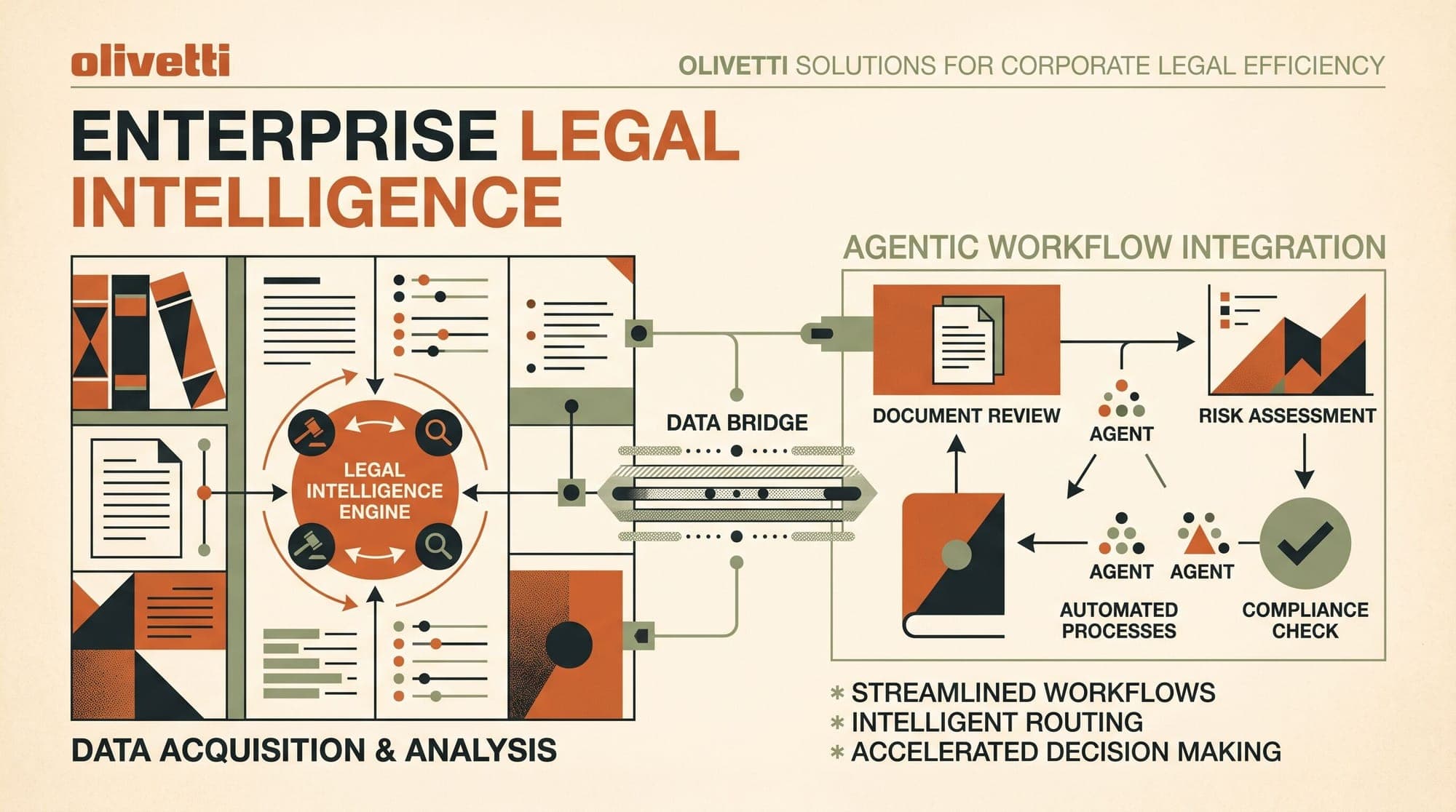
Rather than offering generic foundation models that require custom integration by enterprise IT teams, Gemini Enterprise for Legal bundles four structured architectural layers:
- Domain Skills: Pre-configured instruction sets designed by legal specialists to enforce firm-specific playbooks, citation standards, and house styles across contract review, redlining, regulatory scanning, legal research, and Data Subject Access Request (DSAR) fulfillment.
- Model Context Protocol Connectors: Secure links connecting agents to document management and e-discovery systems. Connectors include iManage, NetDocuments, Docusign, Everlaw, RelativityOne, Thomson Reuters HighQ, and Free Law Project's CourtListener for PACER and court opinions, as well as patent search tool Solve Intelligence and legal AI platform Harvey.
- Specialized Agent Harnesses: Workflow agents that execute multi-step research, regulatory screening, and document drafting tasks autonomously rather than acting as conversational chatbots.
- Governance Control Plane: A centralized administration dashboard that enforces organizational risk policies, verifiable source grounding with strict legal citations, and privacy isolation.

Permissions and Ethical Wall Compliance
In legal environments, matter-level confidentiality and regulatory ethical walls represent rigid compliance requirements. Google stated that client data, playbooks, custom agent configurations, and model generations remain isolated within the customer tenant and are not used to train or fine-tune underlying foundation models.
The platform's connectors are architected to inherit user-level permissions directly from underlying document management and litigation systems, ensuring that access boundaries established in software like RelativityOne or iManage cannot be bypassed during agent retrieval.
Systems Integrators and Ecosystem Rollout
To support enterprise deployment, Google announced implementation partnerships with systems integrators and consultancies including Accenture, Deloitte, Devoteam, Factor Law, KPMG, Tribe.ai, Valtech, Zazmic, Zencore, and 66degrees. Deloitte has contributed initial pre-built agents for contract summarization and clause redlining, while legal tech firm Eudia supplied knowledge agents for compliance screening.
Google confirmed that industry-specific editions targeting healthcare and life sciences will follow as part of the broader verticalization strategy for Gemini Enterprise.



