Archive / page 57 of 123

Latest articles, page 57

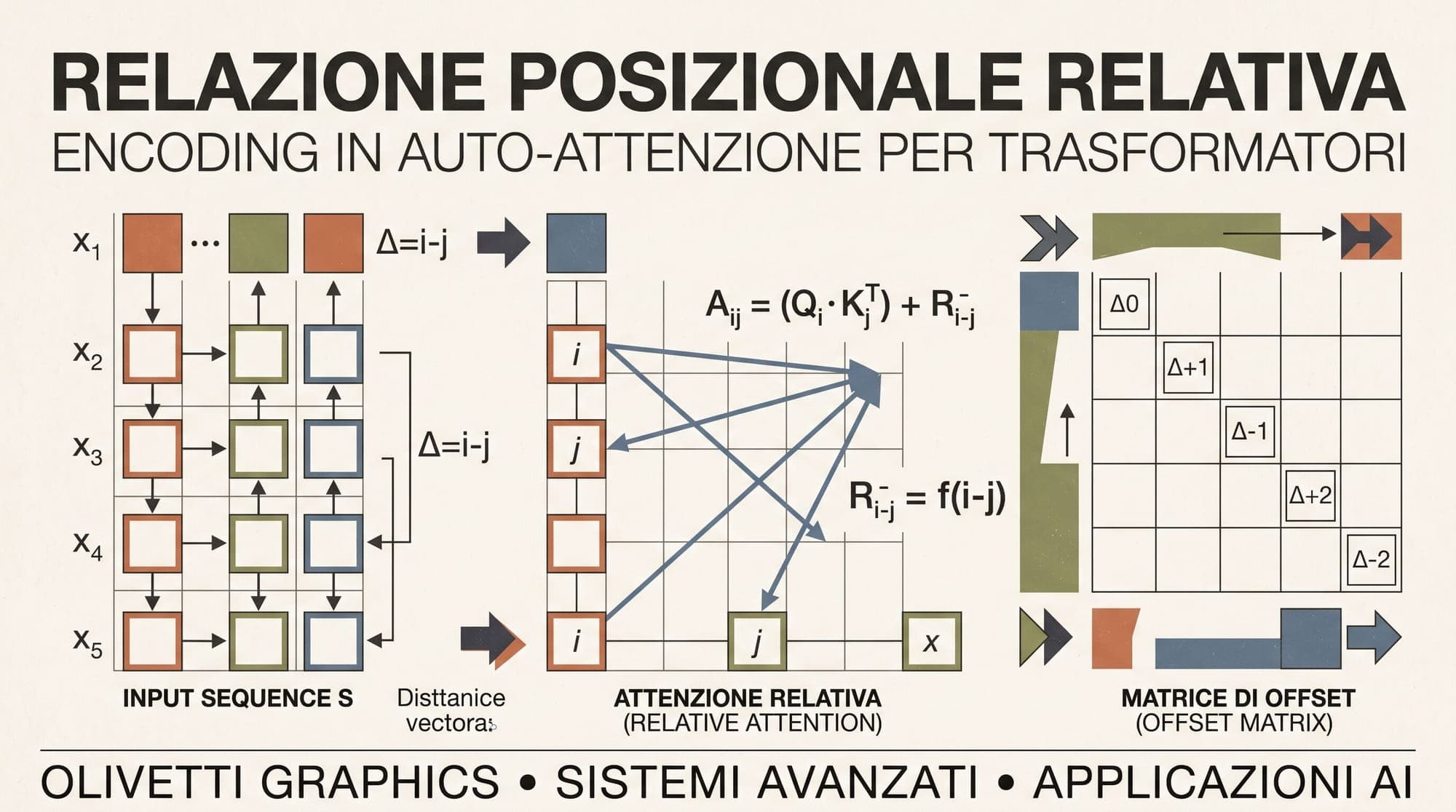
  1. Relative Positional Encodings in Transformers: How Shaw's Attention, Transformer-XL, and T5 Relative Biases Preserve Translation Invariance

    Relative Positional Encodings in Transformers: How Shaw's Attention, Transformer-XL, and T5 Relative Biases Preserve Translation Invariance Standard self-attention operations in transformer architectures possess no inherent awareness of sequence order. Because scaled dot-product attention computes interactions across sets of tokens without regard to index ordering, early models relied on absolute positional encodings to inject sequential structure. While absolute encodings assign rigid coordina
    AI
    9 min read
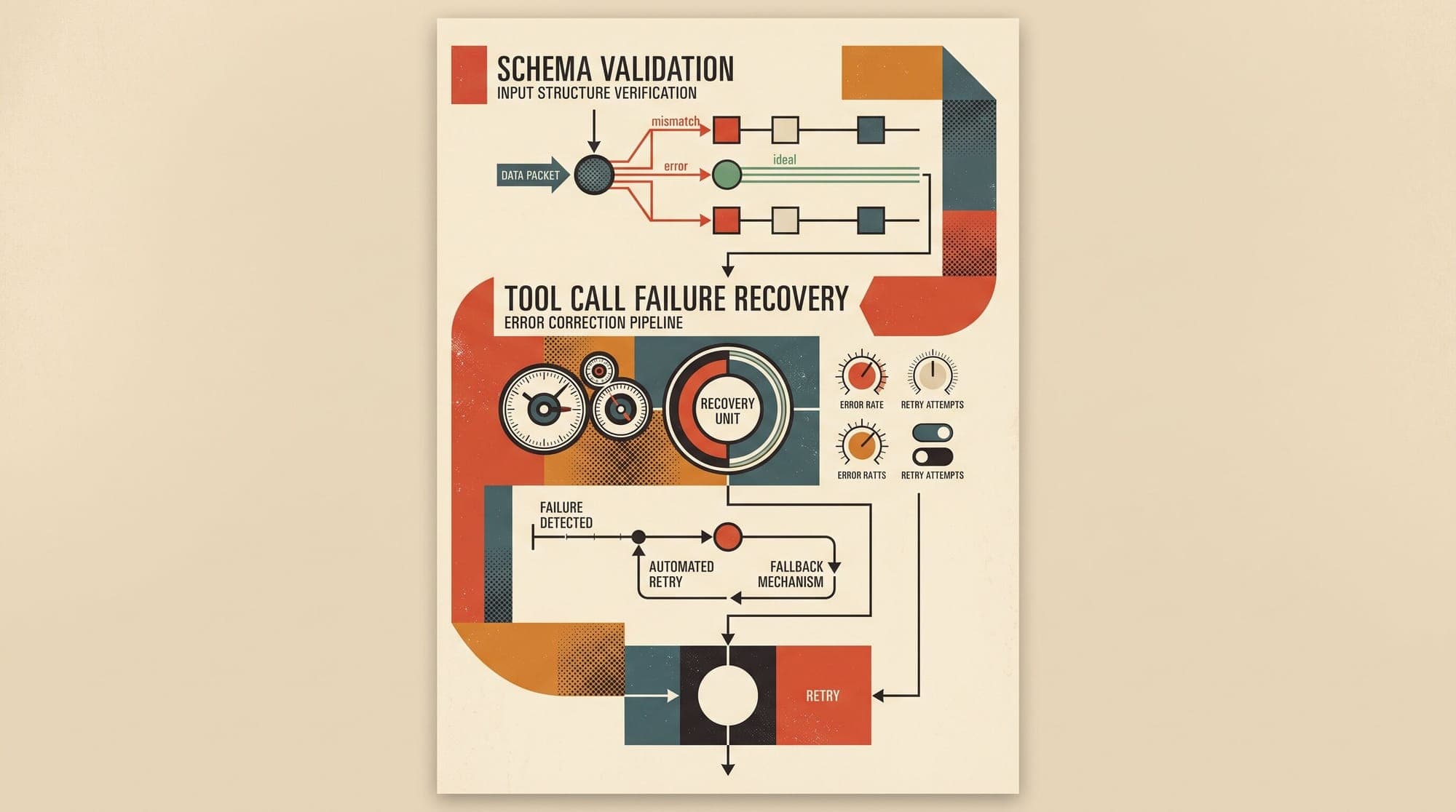
  2. Tool-Call Failure Recovery in Production AI Agents: Syntactic Repair, Schema Coercion, Parameter Inoculation, and Dynamic Fallback Architectures

    Tool-Call Failure Recovery in Production AI Agents: Syntactic Repair, Schema Coercion, Parameter Inoculation, and Dynamic Fallback Architectures Autonomous language model agents operate by interleaving natural language reasoning traces with structured tool invocations. However, when deployed in multi-turn production environments, raw tool calling exhibits significant fragility. Empirical studies from benchmark suites such as $\tau$-bench (arXiv:2406.12045) and the Berkeley Function Calling Lead

    Agents
    8 min read
  3. OpenAI Veteran Luke Metz Joins Meta Superintelligence Labs Under Alexandr Wang

    AI researcher Luke Metz has left OpenAI to join Meta's Superintelligence Labs, according to reporting by Axios. Metz begins at Meta this week and will report directly to Chief AI Officer Alexandr Wang. Metz has been a prominent figure in frontier LLM post-training and alignment research. During his initial tenure at OpenAI, his experimental research preview project served as the core prototype that led to the launch of ChatGPT. In late 2024, Metz departed OpenAI to become a founding team member

    AI
    1 min read
  4. Nvidia in Talks to Invest in Perplexity at Over $30B Valuation as ARR Tops $750M

    Nvidia is in discussions to invest in AI search startup Perplexity in an equity funding round that would value the company at more than $30 billion, according to reporting by The Information. The proposed valuation represents an increase of more than 50% from the $20 billion valuation Perplexity finalized in late 2025. The investment discussions coincide with rapid revenue acceleration. Perplexity's annualized recurring revenue (ARR) has expanded to over $750 million, up from less than $250 mil

    AI
    1 min read
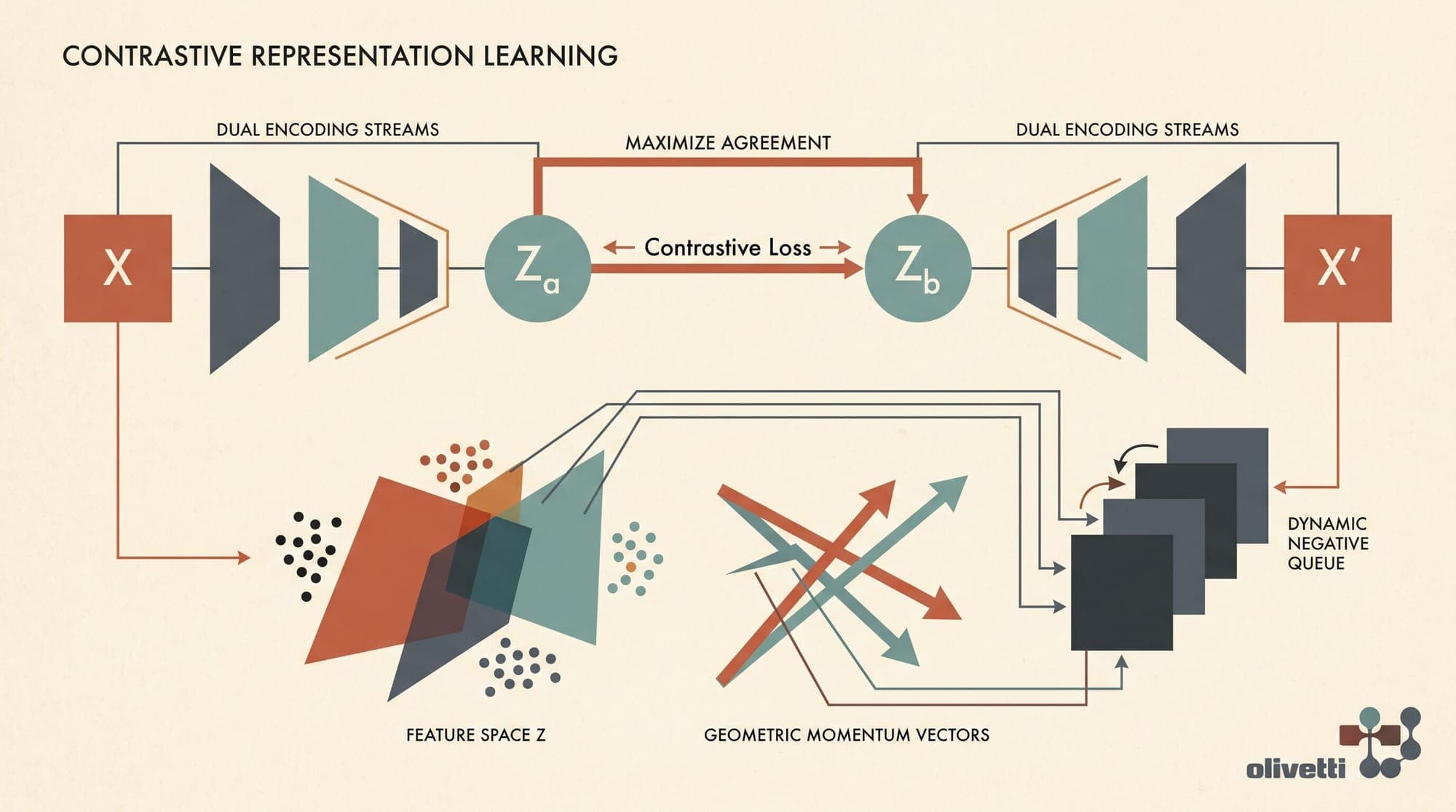
  5. SimCLR and MoCo: How Momentum Encoders, Dynamic Queues, and InfoNCE Scaled Self-Supervised Representation Learning

    Self-supervised visual representation learning underwent a foundational transformation in 2020 with the introduction of contrastive learning frameworks. Prior to this period, pre-training computer vision models without human annotations relied on heuristic pretext tasks such as jigsaw puzzle solving, rotation prediction, or autoencoding color channels. These methods forced networks to learn low-level geometric or statistical artifacts rather than generalizable semantic abstractions. Contrastive

    AI
    8 min read
  6. LLM Evaluation Arenas in Production: Bradley-Terry Modeling, Active Matchmaking, Style Bias Control, and Bootstrapped Elo Calibration

    LLM Evaluation Arenas in Production: Bradley-Terry Modeling, Active Matchmaking, Style Bias Control, and Bootstrapped Elo Calibration Static benchmarks such as MMLU, GSM8K, and HumanEval face severe limitations in production machine learning environments. Modern foundation models rapidly saturate static multiple-choice questions, training datasets frequently suffer from benchmark contamination, and synthetic test suites fail to capture open-ended, multi-turn user intent. Consequently, engineeri

    AI
    9 min read
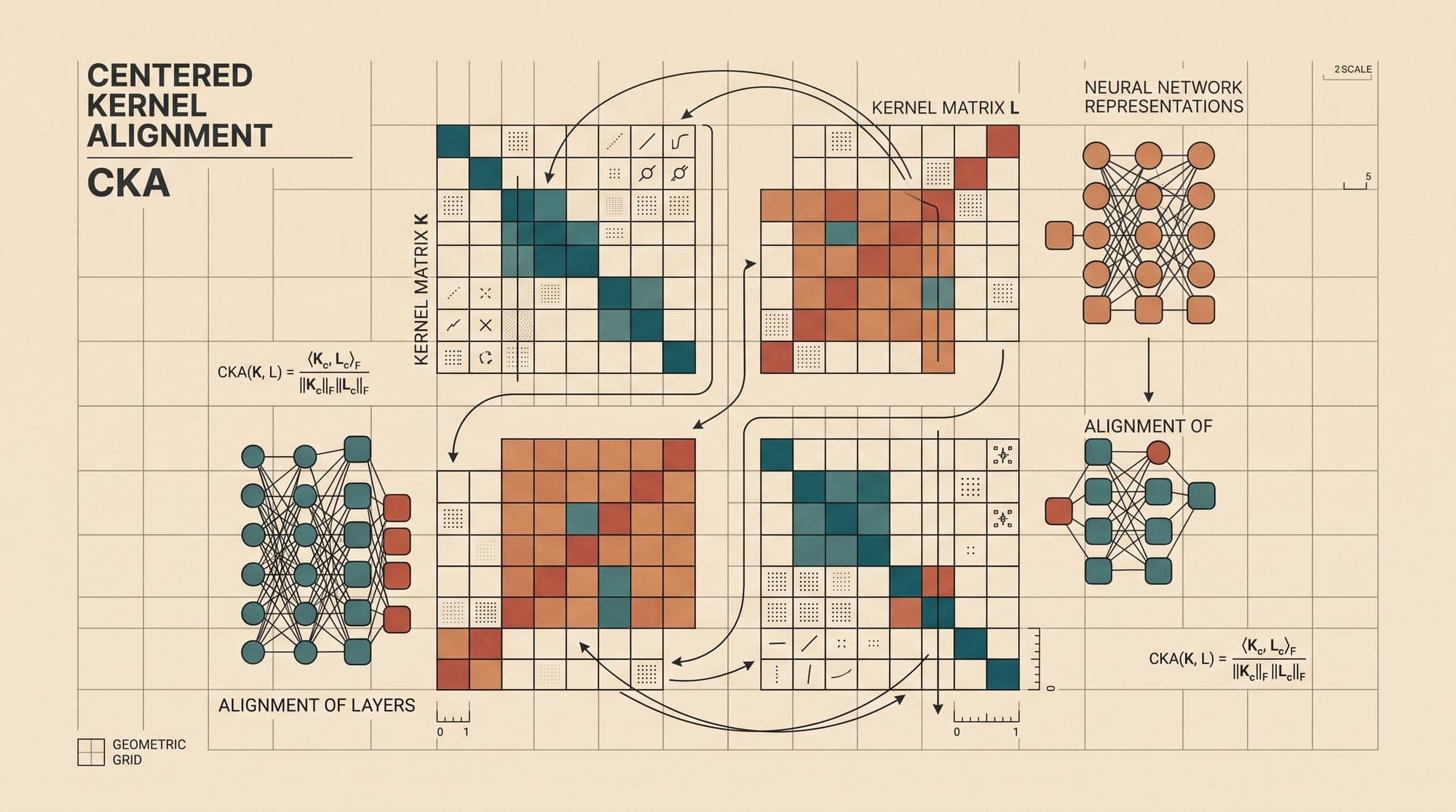
  7. Centered Kernel Alignment: How CKA Measures Representation Similarity Across Layers and Architectures

    Understanding how deep neural networks represent information across layers, training steps, and disparate architectures has long been a central challenge in machine learning interpretability. When two neural networks are trained on the exact same dataset, even from identical model architectures, their learned weight matrices and individual neuron activations differ completely due to random initialization, data shuffling, and non-convex optimization. Because representations are not aligned to a s

    AI
    9 min read
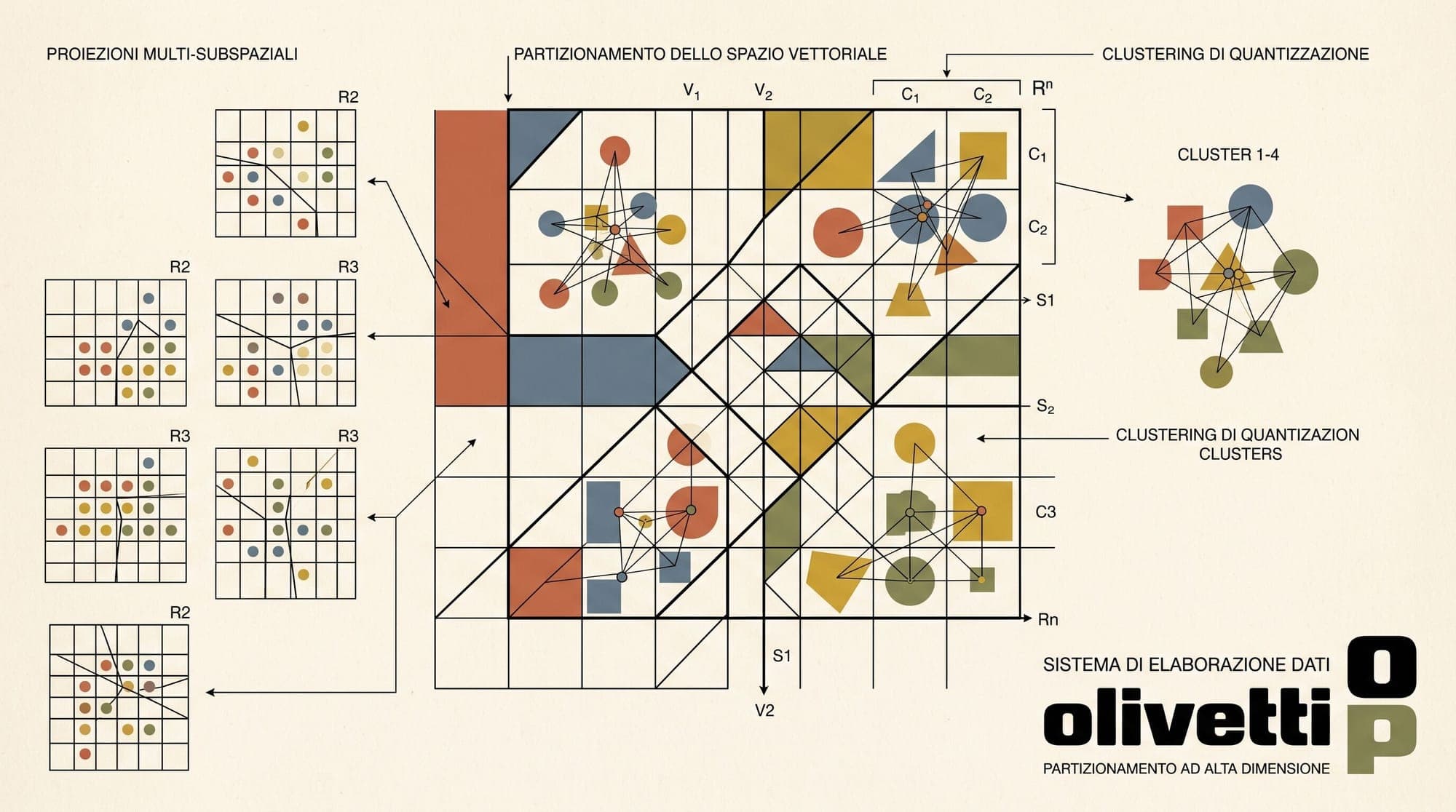
  8. Vector Compression in Production Search: Comparing SQ, PQ, and RaBitQ Architecture, Recall Retention, and Memory Economics

    In production Retrieval-Augmented Generation (RAG) systems and enterprise search platforms, storing raw floating-point embedding vectors in RAM quickly encounters hard hardware limits. A dataset of 100 million 1536-dimensional embeddings stored in FP32 requires over 614 GB of high-speed memory solely for vector coordinates, before accounting for index graph structures like HNSW or DiskANN. To scale similarity search to billions of vectors while keeping indices memory-resident, production vector

    AI
    4 min read
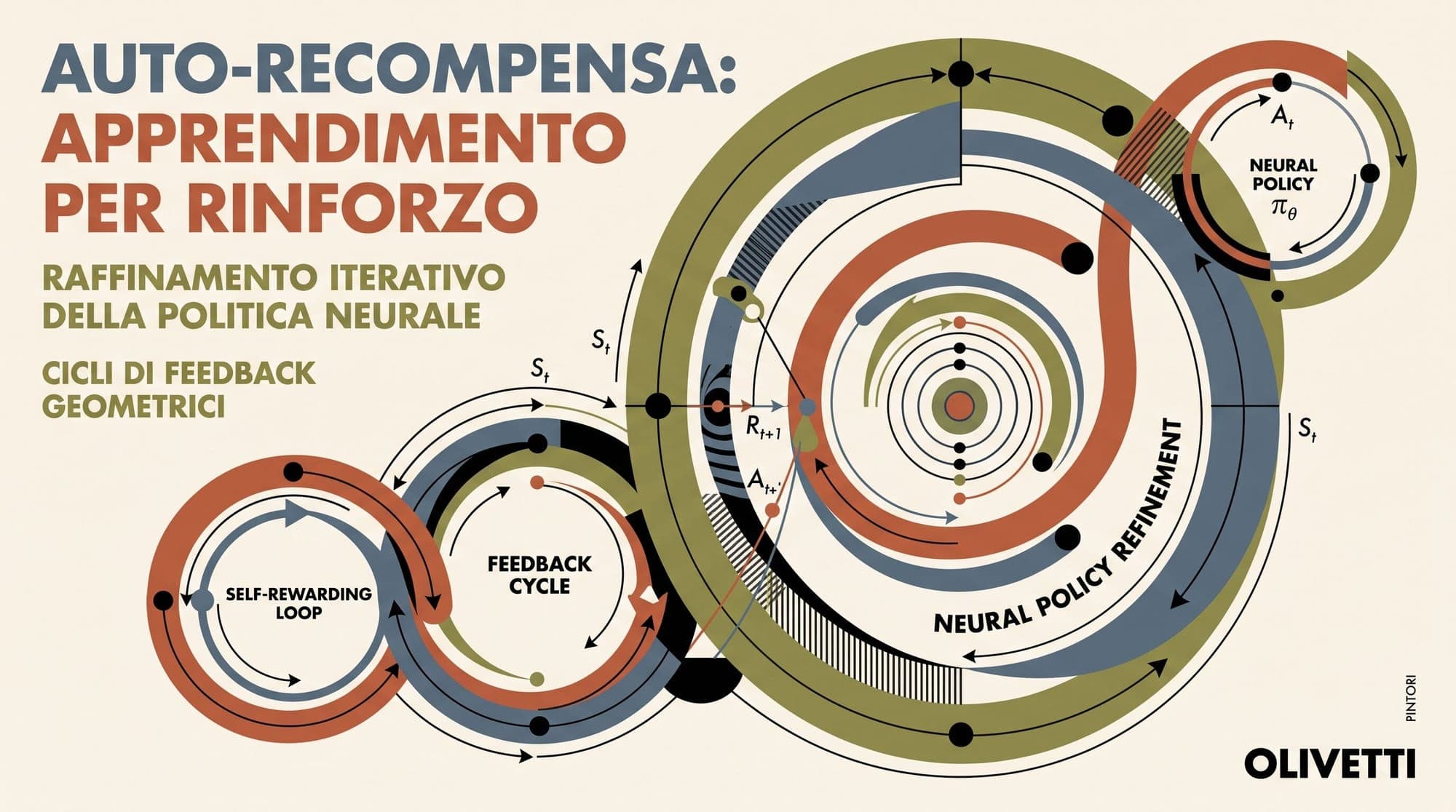
  9. Self-Rewarding Language Models: How Iterative DPO and LLM-as-a-Judge Form Autonomous Self-Alignment Loops

    Standard post-training alignment pipelines rely on frozen reward models trained on static human feedback datasets. While Reinforcement Learning from Human Feedback (RLHF) and Direct Preference Optimization (DPO) effectively steer model outputs toward human preferences, they face a fundamental scalability bottleneck: human annotators cannot evaluate superhuman reasoning or generate labels at the scale required for continuous self-improvement. Self-Rewarding Language Models, introduced by Meta AI

    AI
    3 min read
  10. SoftBank Plans Record $6.3B Retail Bond Sale to Fund OpenAI Commitments

    Japanese conglomerate SoftBank Group Corp. has announced plans for a record 1 trillion yen ($6.3 billion) retail bond sale in Japan. The offering represents the largest domestic retail bond issuance in Japanese history and marks SoftBank's third debt sale targeted at retail investors this year, as the firm mobilizes liquidity to fulfill its capital commitments to OpenAI. According to regulatory filings, the seven-year subordinated bonds carry an indicative coupon range between 4.3% and 4.9%. Th

    AI
    2 min read