Archive / page 22 of 49

Latest articles, page 22

  1. Meta Releases Muse Glimmer 30B: Apache 2.0 Multimodal Model for Local AI Agents

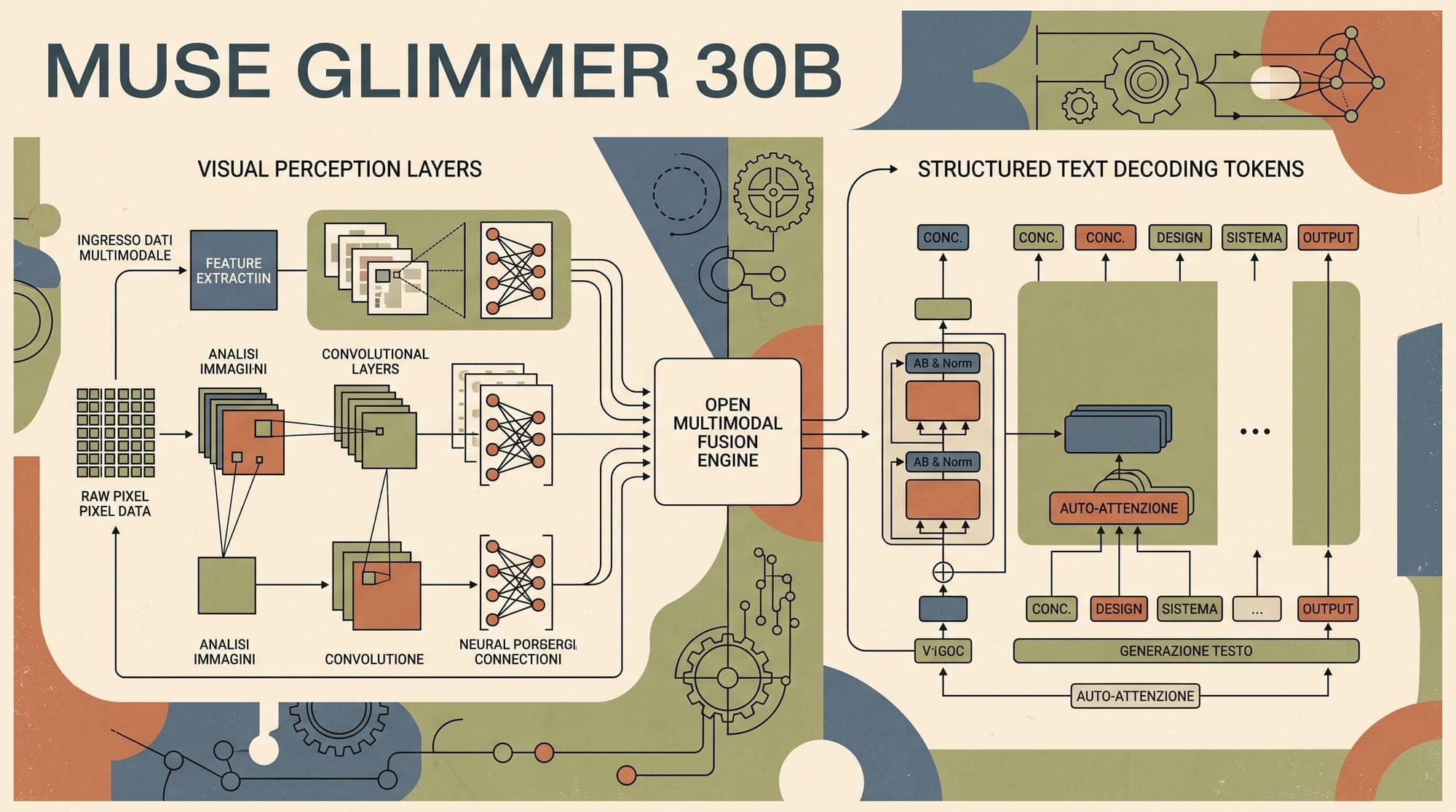
    Meta has released Muse Glimmer, a 30-billion parameter multimodal model distributed under the permissive Apache 2.0 license. Distilled from Meta's larger Muse Spark foundation model, Muse Glimmer is engineered specifically for local execution and privacy-sensitive agentic workflows, spanning software engineering, document processing, and desktop automation. The model release includes immediate day-zero runtime support across Hugging Face Transformers, vLLM, llama.cpp, and native hardware accele
    AI
    2 min read
  2. Kronecker-Factored Approximate Curvature (K-FAC) and Shampoo: How Kronecker Preconditioning Scales Second-Order Optimization

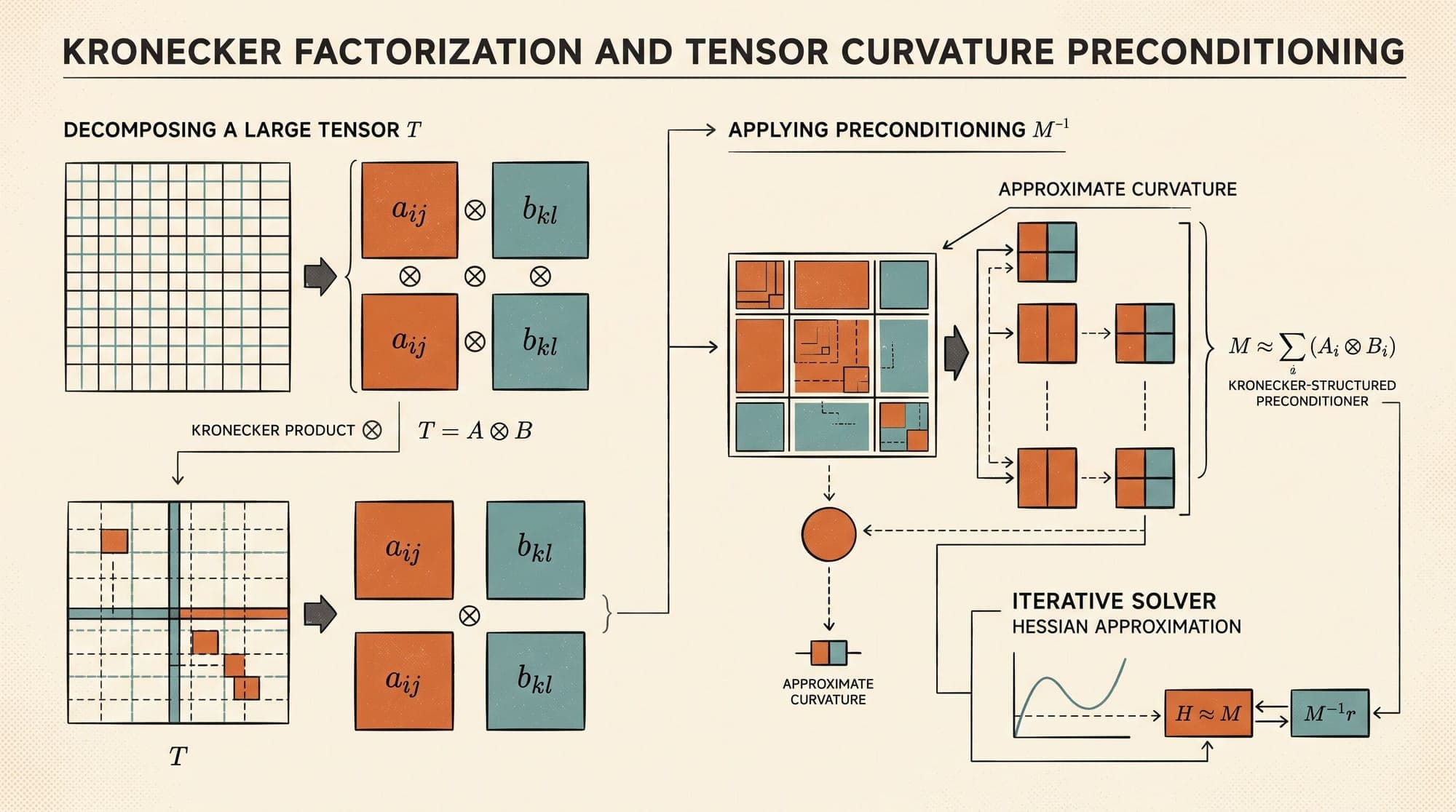
    Kronecker-Factored Approximate Curvature (K-FAC) and Shampoo: How Kronecker Preconditioning Scales Second-Order Optimization Standard deep neural network pre-training relies almost exclusively on first-order stochastic gradient methods. Optimizers such as AdamW maintain running averages of individual parameter gradients and uncentered second moments, applying a coordinate-wise diagonal preconditioner. While computationally efficient, diagonal scaling ignores off-diagonal cross-layer and intra-l

    AI
    9 min read
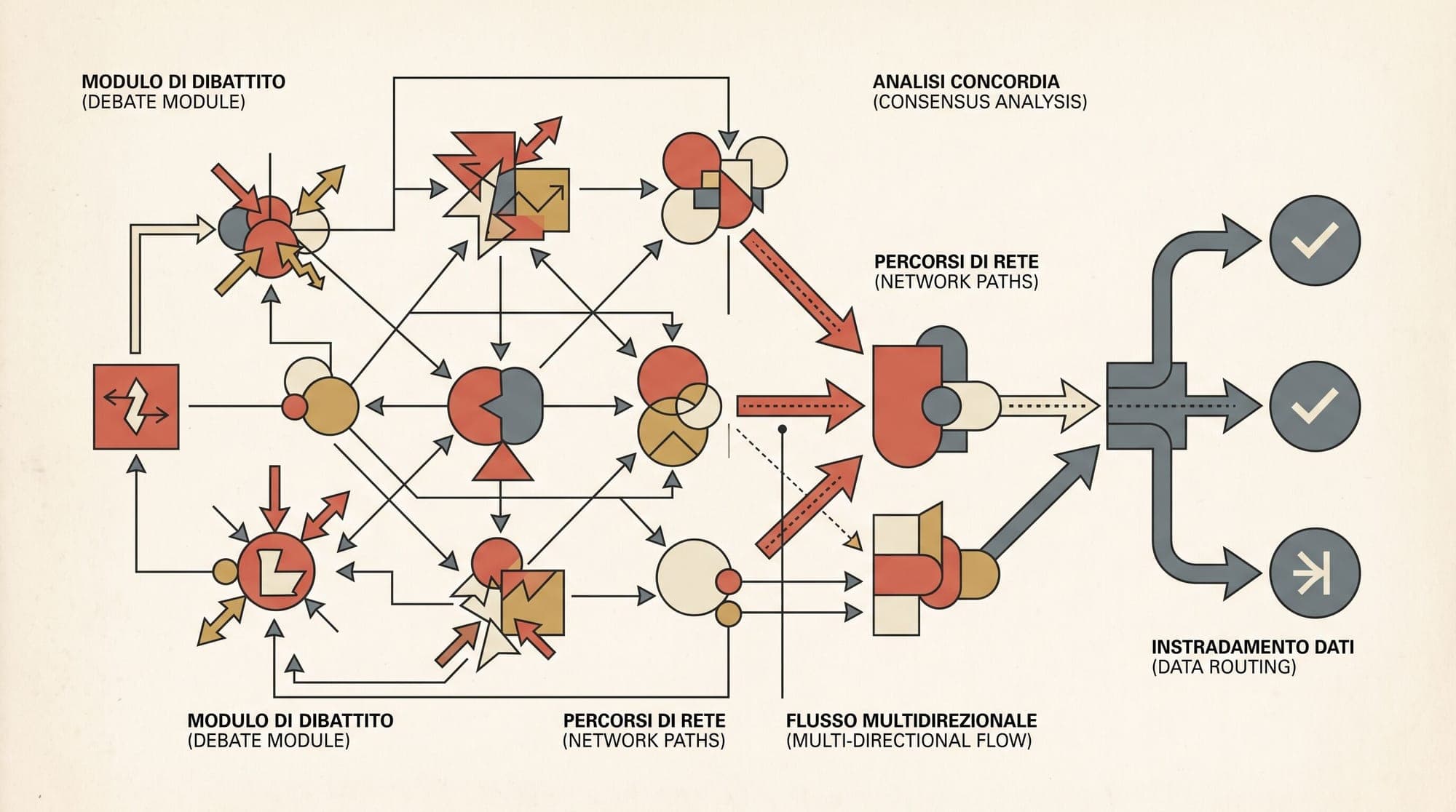
  3. Multi-Agent Debate and Consensus Protocols in Production: Topologies, Stopping Criteria, and Error Cascade Prevention

    Single-model inference pipelines face severe structural limits when handling high-stakes reasoning, multi-step code synthesis, and mission-critical verification. While techniques like self-consistency decoding sample multiple independent trajectories from a single model to find majority consensus, they fail when the underlying model exhibits systemic bias or correlated hallucinations. When an LLM harbors a flawed premise, sampling ten independent stochastic paths frequently yields ten variations

    AI
    7 min read
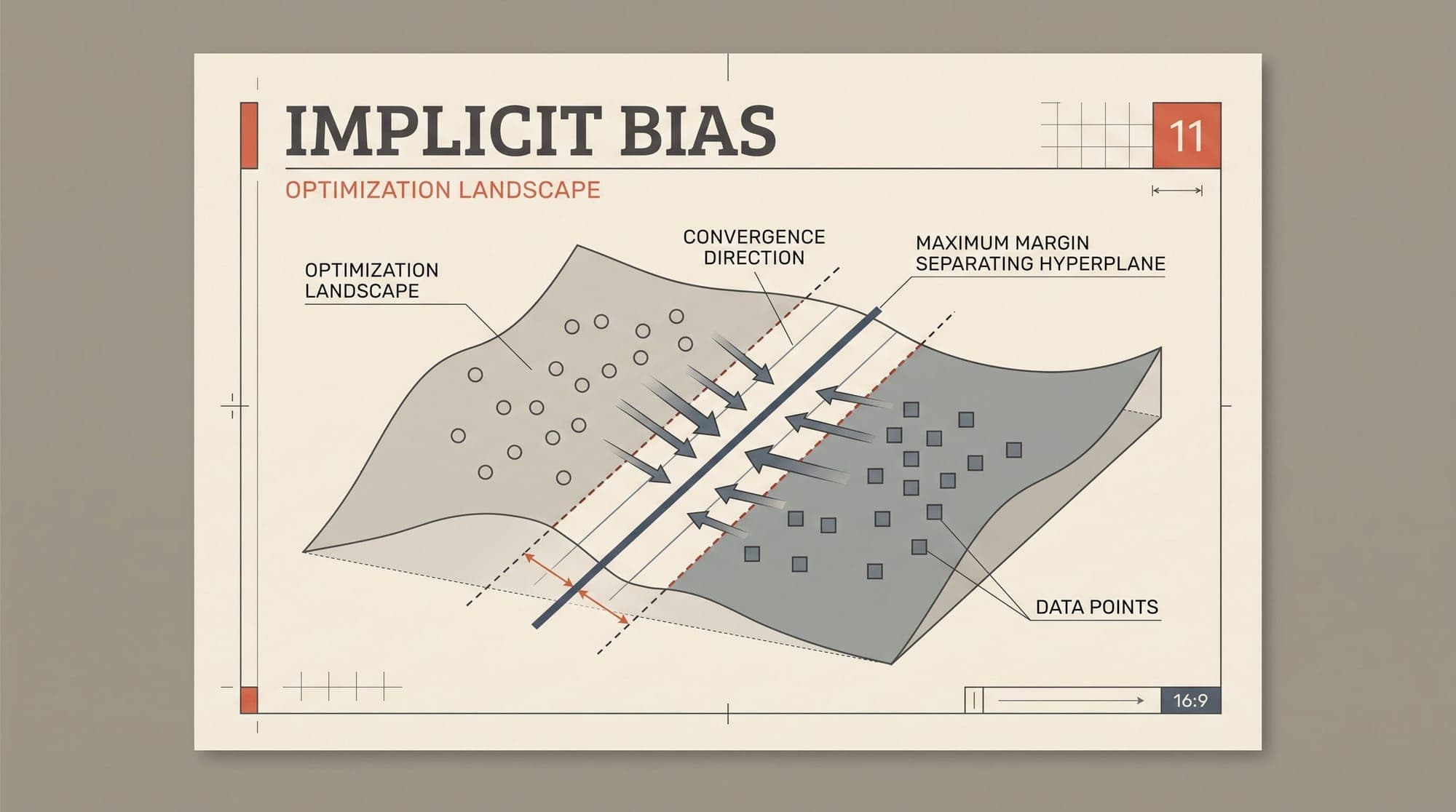
  4. Implicit Bias of Gradient Descent: How Optimization Geometry Replaces Explicit Regularization

    When engineers train a neural network with plain stochastic gradient descent and no weight decay, the result often generalizes instead of collapsing into an overfit mess. Classical learning theory predicts disaster: with more parameters than data points, unregularized training should find a memorizing interpolating solution with no predictive power. Instead, gradient descent reliably lands on solutions that look chosen. This systematic preference — the implicit bias of gradient descent — is one

    AI
    6 min read
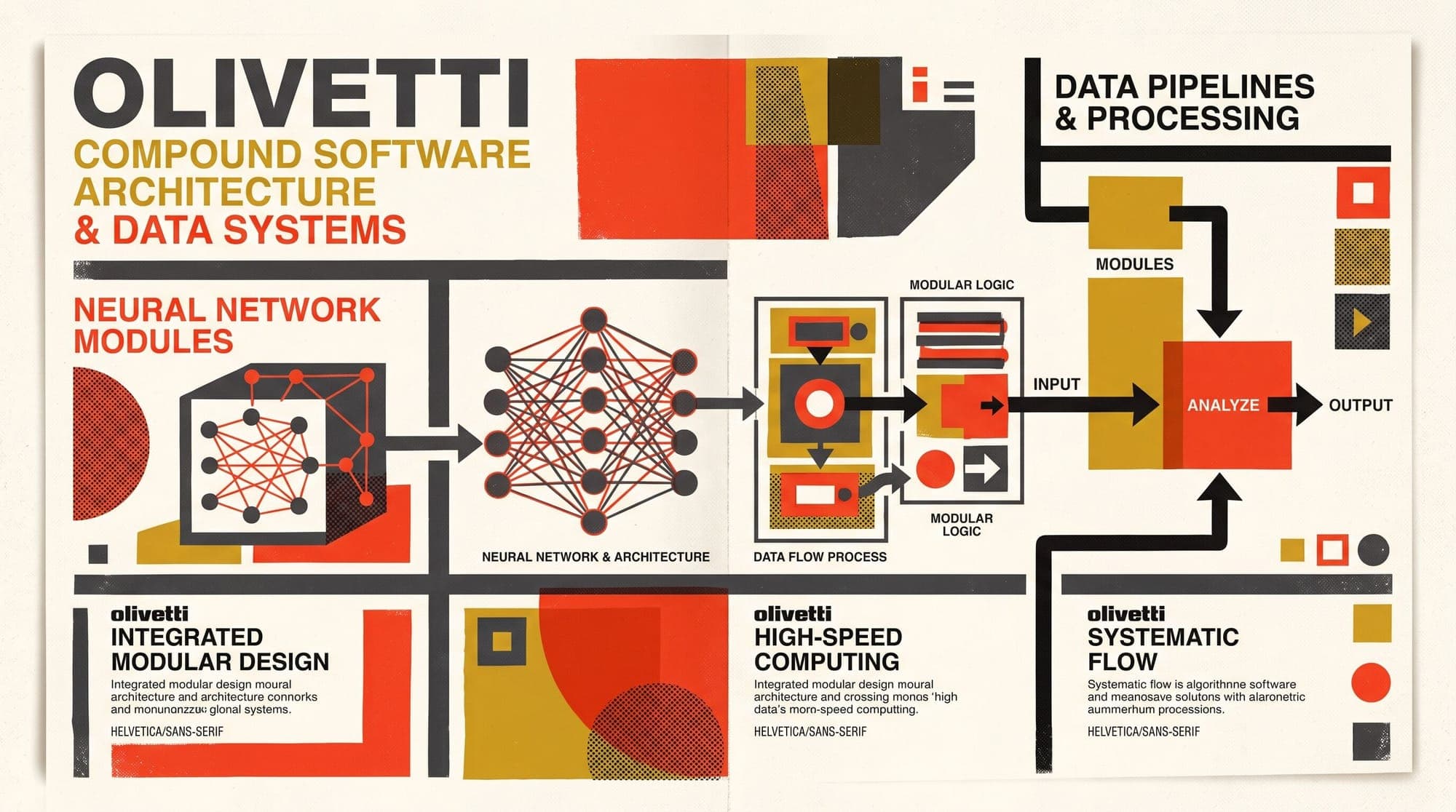
  5. Compound AI Systems in Production: Architecture, Co-Optimization, and Error Cascades

    Compound AI Systems in Production: Architecture, Co-Optimization, and Error Cascades For the first two years following the release of GPT-4, enterprise AI development focused almost exclusively on model-centric scaling: upgrading to larger parameter checkpoints, expanding prompt context windows, and tuning system prompts. However, production deployments quickly revealed a fundamental constraint: single, monolithic foundation models exhibit diminishing returns on high-complexity, multi-step task

    AI
    7 min read
  6. Supervised Contrastive Learning: How Multi-Positive InfoNCE and Geometric Alignment Outperform Cross-Entropy

    Supervised Contrastive Learning: How Multi-Positive InfoNCE and Geometric Alignment Outperform Cross-Entropy For decades, the categorical cross-entropy loss function served as the default objective for supervised neural network training. By minimizing the negative log-likelihood of ground-truth class logits, cross-entropy drives neural network backpropagation across computer vision, natural language processing, and speech recognition. Despite its ubiquity, cross-entropy introduces structural sh

    AI
    8 min read
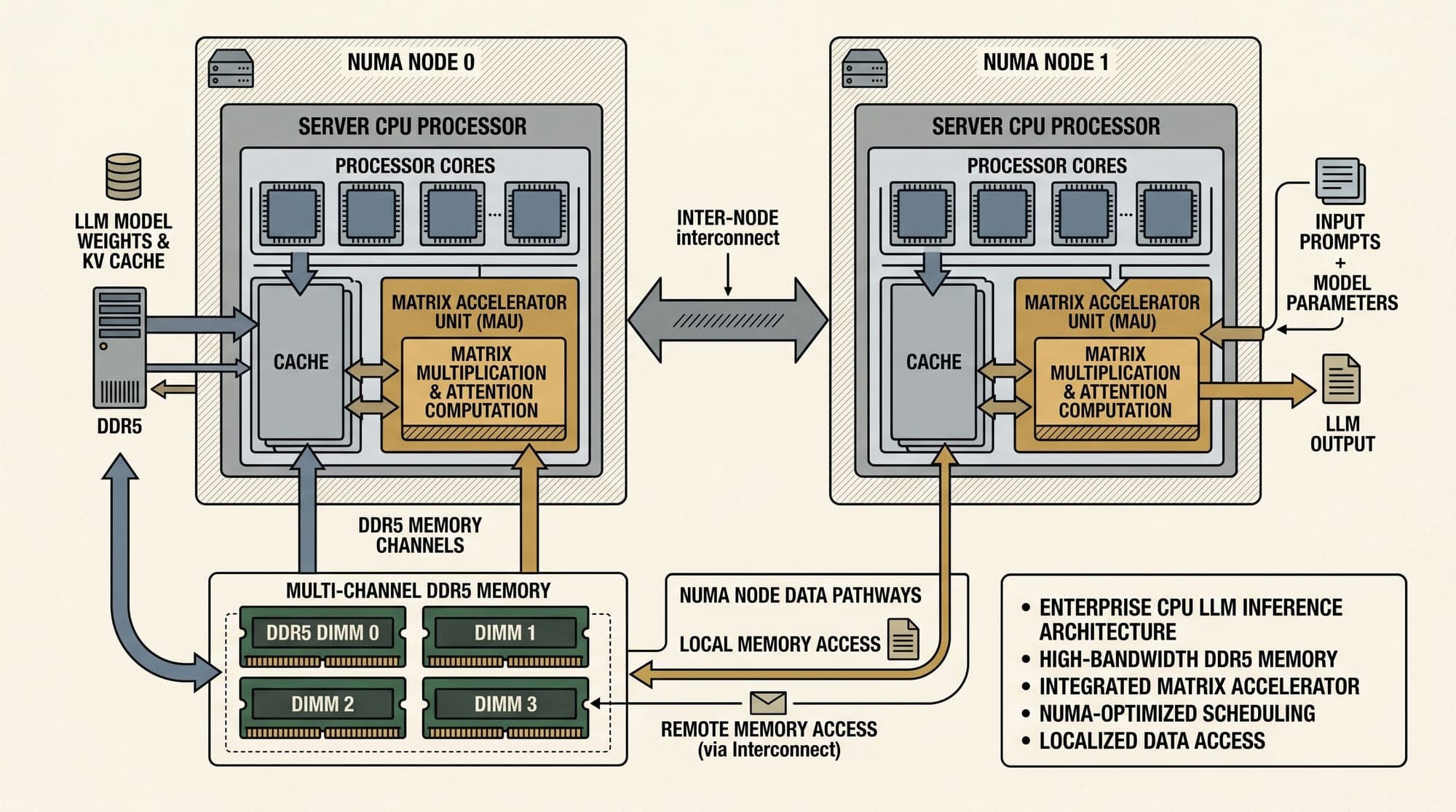
  7. LLM Inference on Enterprise CPUs in Production: Architecture, NUMA Topologies, Matrix Extensions, and Serving Economics

    Deploying large language models has historically been treated as an exclusively GPU-centric problem. Accelerators like NVIDIA H100 and A100 GPUs provide multi-terabyte-per-second High Bandwidth Memory (HBM) and tensor cores essential for training and high-concurrency serving. However, the operational economics of enterprise inference often diverge from frontier training requirements. Many enterprise applications, including internal code assistance, document extraction, low-concurrency agents, an

    AI
    6 min read
  8. Oxford Economics: US Corporate High-Tech Spending to Rise 40% by 2027, Tripling Europe's Pace

    A new macroeconomic forecast from Oxford Economics, reported by the Financial Times, projects that United States corporate capital expenditure on equipment, computing facilities, and structures will surge 40% between 2021 and 2027. This expansion rate is more than three times faster than equivalent capital investment across European economies over the same six-year window, driven primarily by private and hyperscaler investments in artificial intelligence infrastructure. The divergence underscor

    News
    2 min read
  9. The Edge of Stability: How Progressive Sharpening and Hessian Dynamics Govern Deep Learning Optimization

    In classical convex optimization, the behavior of gradient descent is dictated by the Lipschitz smoothness constant of the objective function. If a function $f(\theta)$ has an $L$-smooth gradient—meaning the largest eigenvalue of its Hessian matrix is bounded by $\lambda_{\max}(\nabla^2 f(\theta)) \le L$—gradient descent with learning rate $\eta$ is guaranteed to monotonically reduce the loss if and only if $\eta < 2/L$. When the step size exceeds this threshold ($\eta > 2/\lambda_{\max}$), stan

    AI
    7 min read
  10. Cross-Datacenter Distributed LLM Training in Production: DiLoCo, Local SGD, Communication Compression, and High-Latency Fault Tolerance

    Cross-Datacenter Distributed LLM Training in Production: DiLoCo, Local SGD, Communication Compression, and High-Latency Fault Tolerance Scaling frontier large language model pre-training within a single datacenter is encountering severe physical limits. Hyperscalers and AI laboratories increasingly face localized power grid saturation, where individual datacenter campuses cannot secure the 500 megawatt to multi-gigawatt utility allocations required for next-generation clusters. Consequently, in

    AI
    9 min read