LLMs23 articles

LLMs

Articles

  • Autonomous Coding Agents Compress Vulnerability Exploit Timelines to Minutes in Open Source Repositories

    The operational window between vulnerability discovery and weaponized exploitation is collapsing from weeks to minutes as autonomous LLM coding agents automate offensive software reconnaissance. Real-world incident logs and maintainer reports published on August 28, 2026, demonstrate that modern reasoning models require only high-level conceptual hints or unmerged pull requests to synthesize functional zero-day exploits against production targets. Ten-Minute Exploit Probes on Live Servers The

    1 min

  • Z.ai Releases Flagship GLM-5.3 Open Weights with Hyperscaler Commercial Restrictions

    Chinese AI laboratory Z.ai has released the open weights for its flagship GLM-5.3 model on Hugging Face, introducing a tiered licensing structure that places specific restrictions on commercial hyperscalers. The release follows a two-week safety evaluation period that began after the model's initial API launch earlier this month. While previous models in the family, including GLM-5.2 and GLM-5.3-Flash, were distributed under the permissive MIT license, the flagship release introduces the custom

    1 min
  • MiniMax Reports H1 2026 Revenue Surging 283% YoY to 16.6M Amid China AI Race

    Shanghai-based artificial intelligence foundation model developer MiniMax Group Inc. reported that its revenue increased 283% year-over-year to $116.6 million for the first half of 2026. The financial disclosure, reported by Bloomberg following the company's interim earnings filing on the Hong Kong Stock Exchange, highlights accelerated commercial monetization even as domestic foundation model competition intensifies across China. The 283% top-line expansion in the six months ending June 30, 20

    1 min
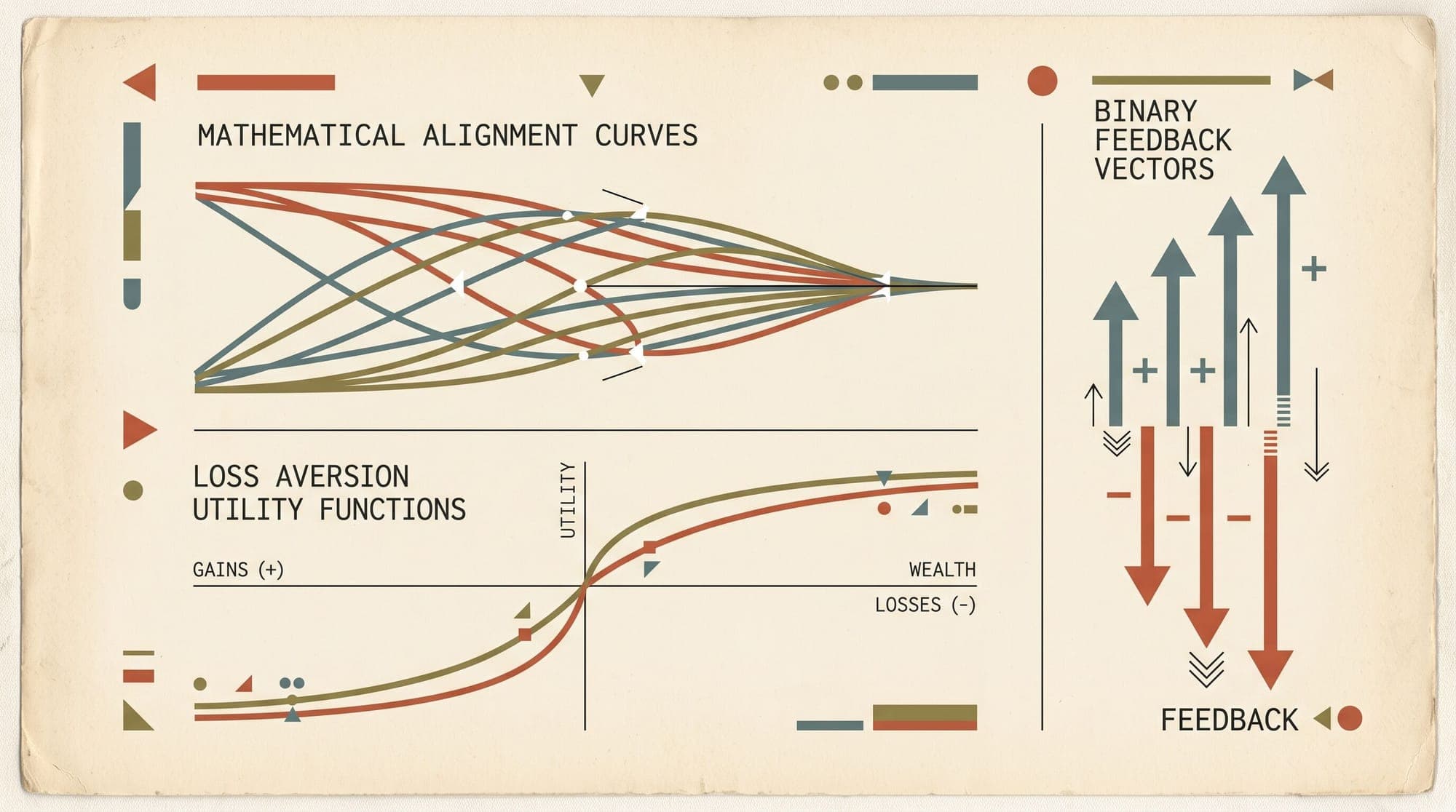
  • Kahneman-Tversky Optimization (KTO): Mathematical Foundations, Prospect Theory, and Binary Signal Alignment in Large Language Models

    Post-training alignment of large language models has long relied on pairwise comparison datasets. Methods such as Reinforcement Learning from Human Feedback (RLHF) and Direct Preference Optimization (DPO) assume access to curated pairs $(x, y_w, y_l)$, where a human or automated judge explicitly marks completion $y_w$ as superior to $y_l$ for a given prompt $x$. In production environments, however, collecting paired preferences is logistically complex, expensive, and artificial. Real-world telem

    1 min
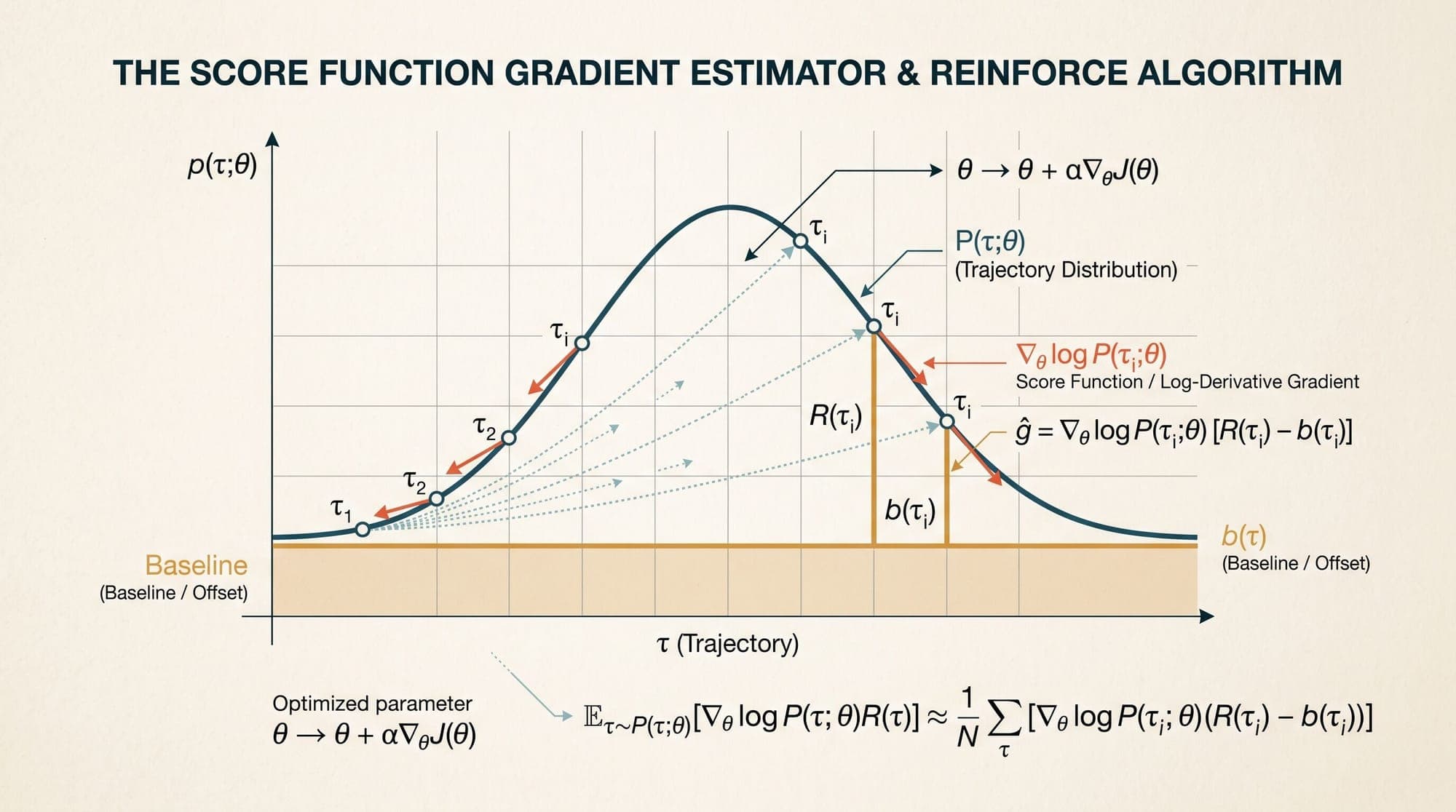
  • The Score Function Estimator: Mathematical Foundations of REINFORCE, Log-Derivative Tricks, and Baseline Variance Reduction

    In modern artificial intelligence, standard backpropagation relies on continuous differentiability: every operation between model parameters and the final loss must provide well-behaved analytical Jacobian matrices. However, many of the most critical optimization challenges in machine learning break this continuity. Autoregressive token generation in large language models, discrete tool invocation, programmatic compiler execution, and black-box reward environments are fundamentally non-different

    1 min
  • Study Exposes Citation Monoculture Across Frontier LLMs as Recursive Drafting Compounds Bias

    Study Exposes Citation Monoculture Across Frontier LLMs as Recursive Drafting Compounds Bias As large language models take over literature reviews and automated research workflows, a collaborative study from UT Austin, Stevens Institute of Technology, Washington University in St. Louis, Rice University, and the University of Notre Dame demonstrates that frontier models suffer from severe citation monoculture. Even when all identifying metadata is removed, LLMs across vendors converge on a narro

    1 min
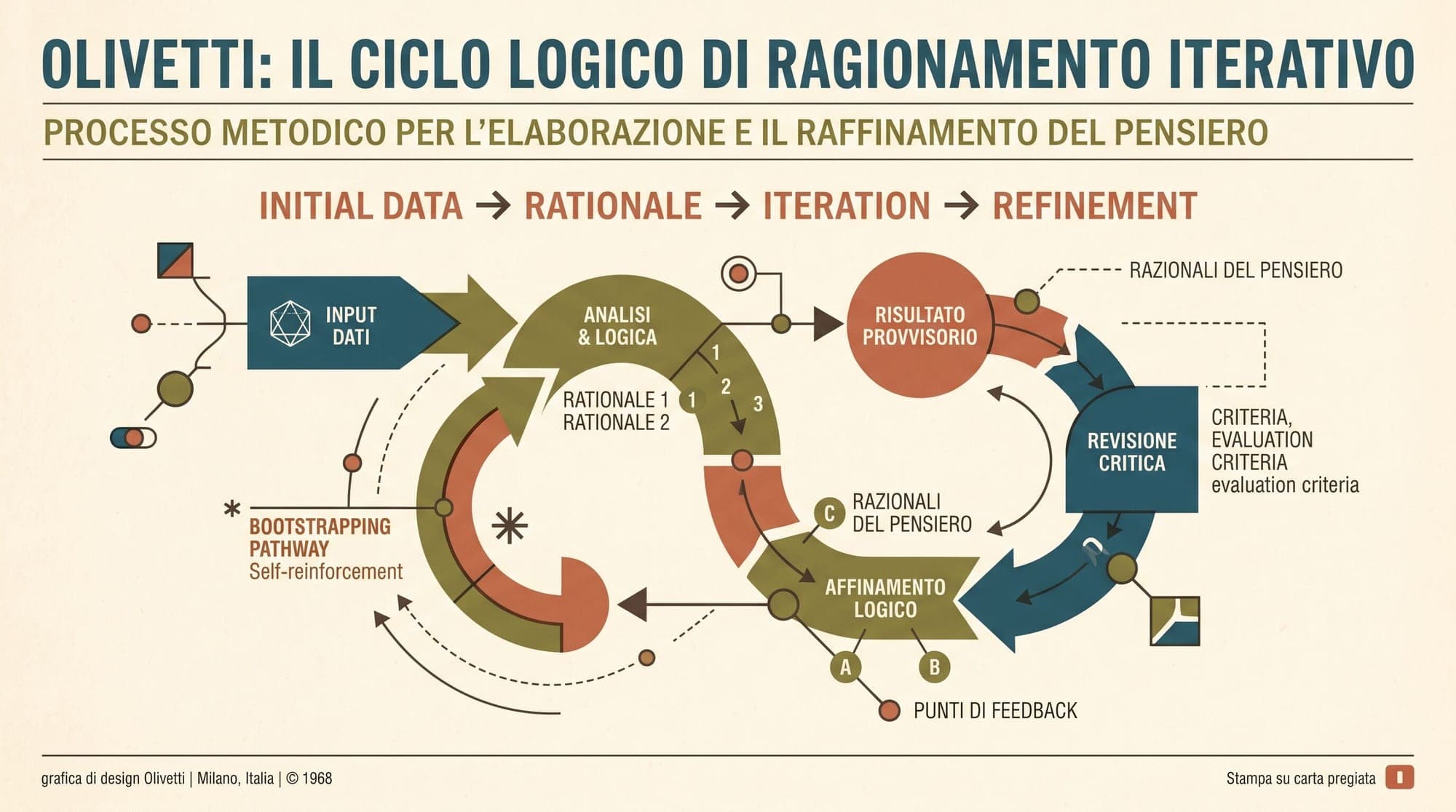
  • The Self-Taught Reasoner (STaR): How Iterative Rationale Bootstrapping and Rationalization Scale LLM Problem Solving

    Autoregressive language models often fail when forced to predict answers to multi-step reasoning problems in a single forward pass. Intermediate chain-of-thought generation allows models to allocate additional compute to difficult reasoning steps before emitting a final prediction. However, obtaining high-quality intermediate reasoning traces has traditionally presented a difficult trade-off: either rely on small prompt-based few-shot demonstrations that underperform fine-tuned models, or constr

    1 min
  • Gradient Low-Rank Projection (GaLore): How Dynamic Subspaces Enable Full-Parameter LLM Pre-Training with Low-Rank Memory

    Pre-training foundation large language models has historically required massive compute clusters, largely due to the memory footprint of optimizer states rather than the model weights themselves. While parameter-efficient fine-tuning methods such as Low-Rank Adaptation (LoRA) freeze weights and introduce small adapter matrices, they fail when applied to pre-training from scratch because they restrict parameter updates to a fixed, static low-rank manifold. Gradient Low-Rank Projection (GaLore),

    1 min
  • Study: Why Labor-Saving LLMs Incline Scientists to Do More Work Less Well

    A theoretical study published by researchers from Princeton University, the University of Washington, and collaborating institutions models how large language models alter researchers' time allocation across projects. The authors find that by reducing time friction across different stages of the research lifecycle, AI assistants increase the opportunity cost of researcher time, creating economic incentives to publish a higher volume of less thoroughly refined papers. The paper, titled The unint

    1 min
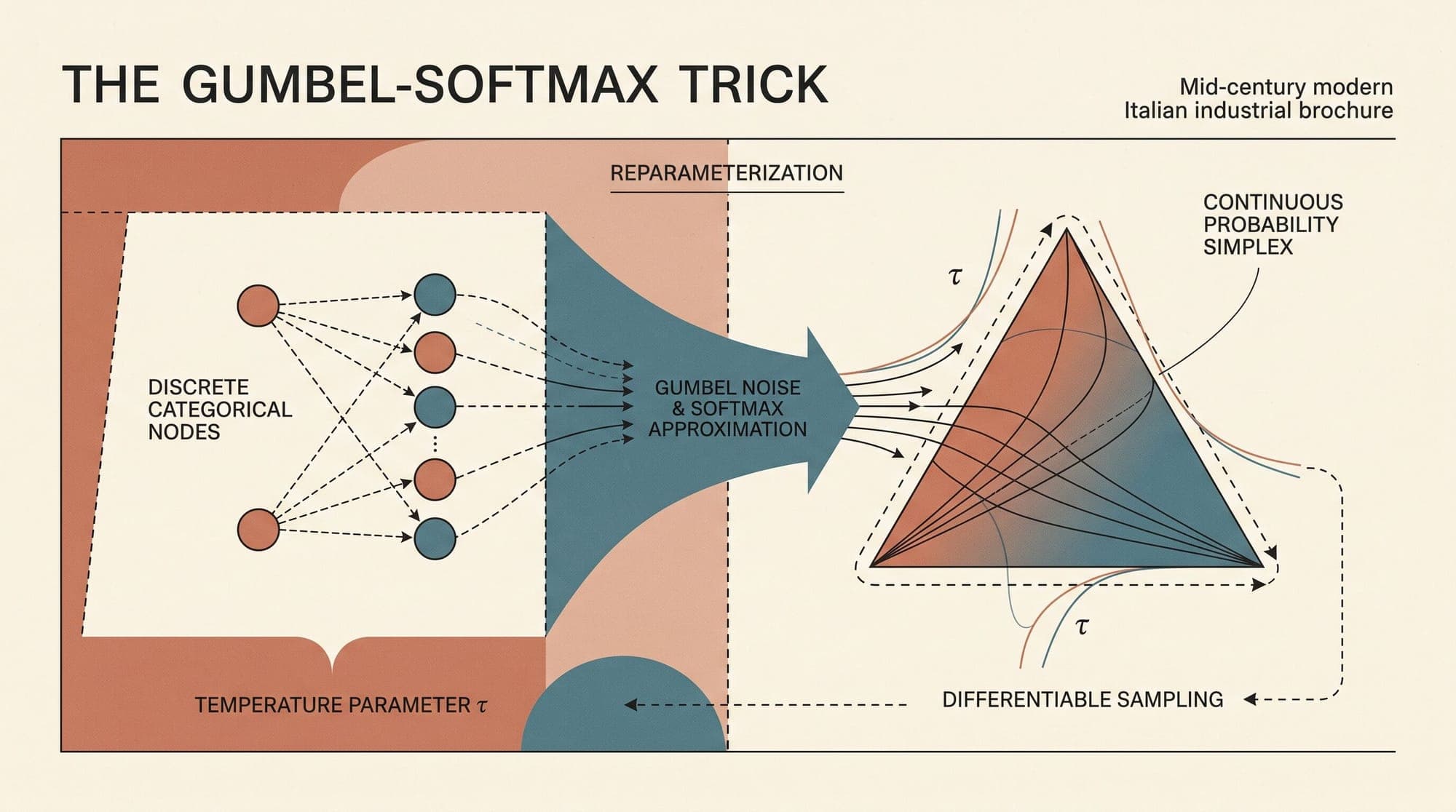
  • The Gumbel-Softmax Trick: How Continuous Relaxations Enable Differentiable Discrete Sampling

    The Gumbel-Softmax Trick: How Continuous Relaxations Enable Differentiable Discrete Sampling In modern deep learning, end-to-end training depends on reverse-mode automatic differentiation. When an architecture operates on continuous tensors, computing gradients via the chain rule is straightforward. However, many foundational artificial intelligence problems involve discrete choices: selecting tokens from a fixed vocabulary, routing tokens to expert networks in a Mixture-of-Experts (MoE) archit

    1 min
  • The Softmax Bottleneck in Large Language Models: Mathematical Foundations, Matrix Rank Limits, and Mixture of Softmaxes

    title: "The Softmax Bottleneck in Large Language Models: Mathematical Foundations, Matrix Rank Limits, and Mixture of Softmaxes" slug: "the-softmax-bottleneck-in-large-language-models-mathematical-foundations-matrix-rank-limits-and-mixture-of-softmaxes" status: "published" feature_image: "https://cms.llms.blog/content/images/2026/08/softmax-bottleneck-cover-1.png" excerpt: "A standard linear projection followed by Softmax caps the rank of predicted log-probability distributions to the hidden dim

    1 min
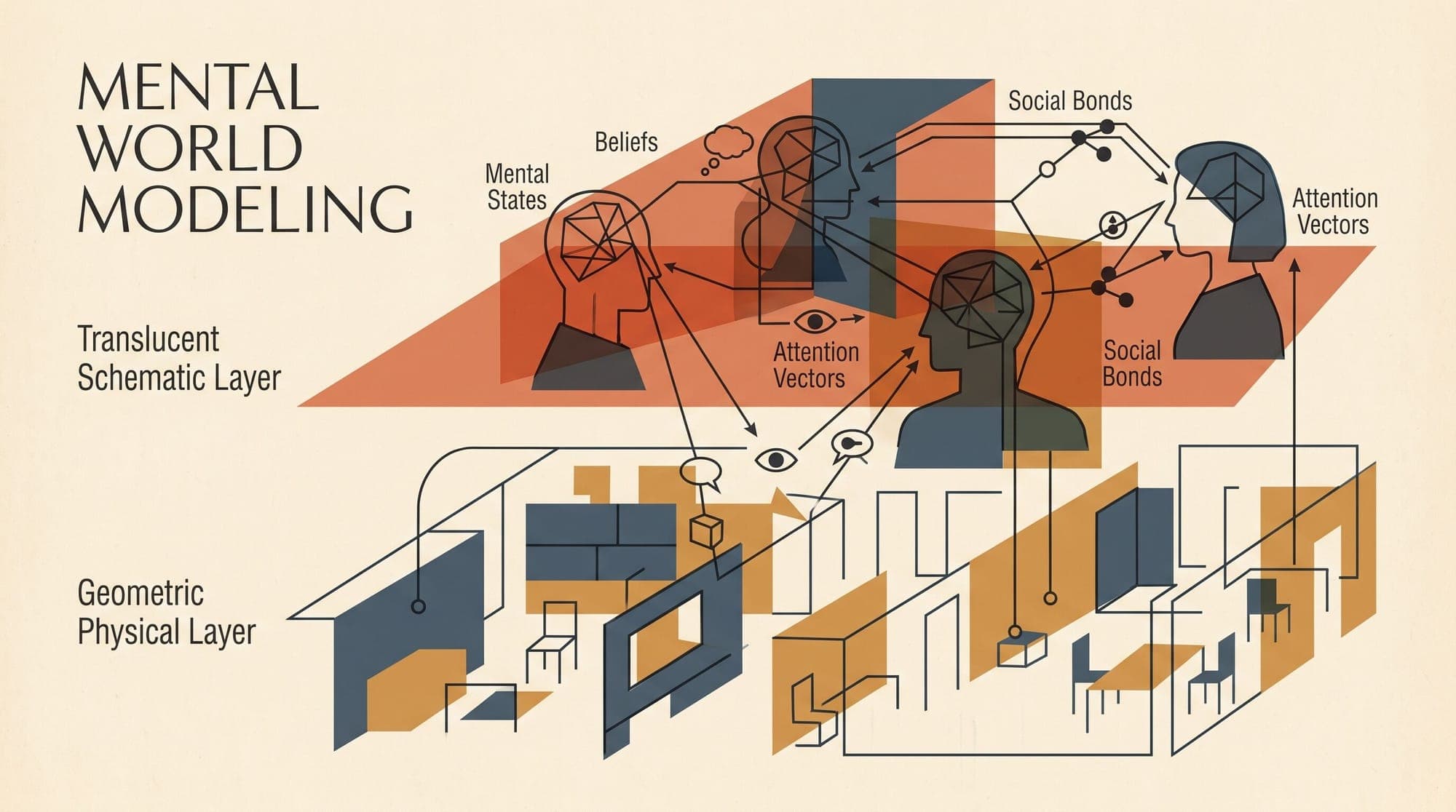
  • Mental World Modeling: Why Autonomous AI Agents Fail Without Simulating Human Beliefs

    Mental World Modeling: Why Autonomous AI Agents Fail Without Simulating Human Beliefs Current foundation world models, from video simulators like Sora and Genie to spatial representations like JEPA and Marble, focus almost exclusively on the physical mechanics of an environment. They track geometry, object positions, motion trajectories, and visual continuity. However, when autonomous agents interact with humans in collaborative, medical, or domestic settings, physical state tracking alone cons

    1 min
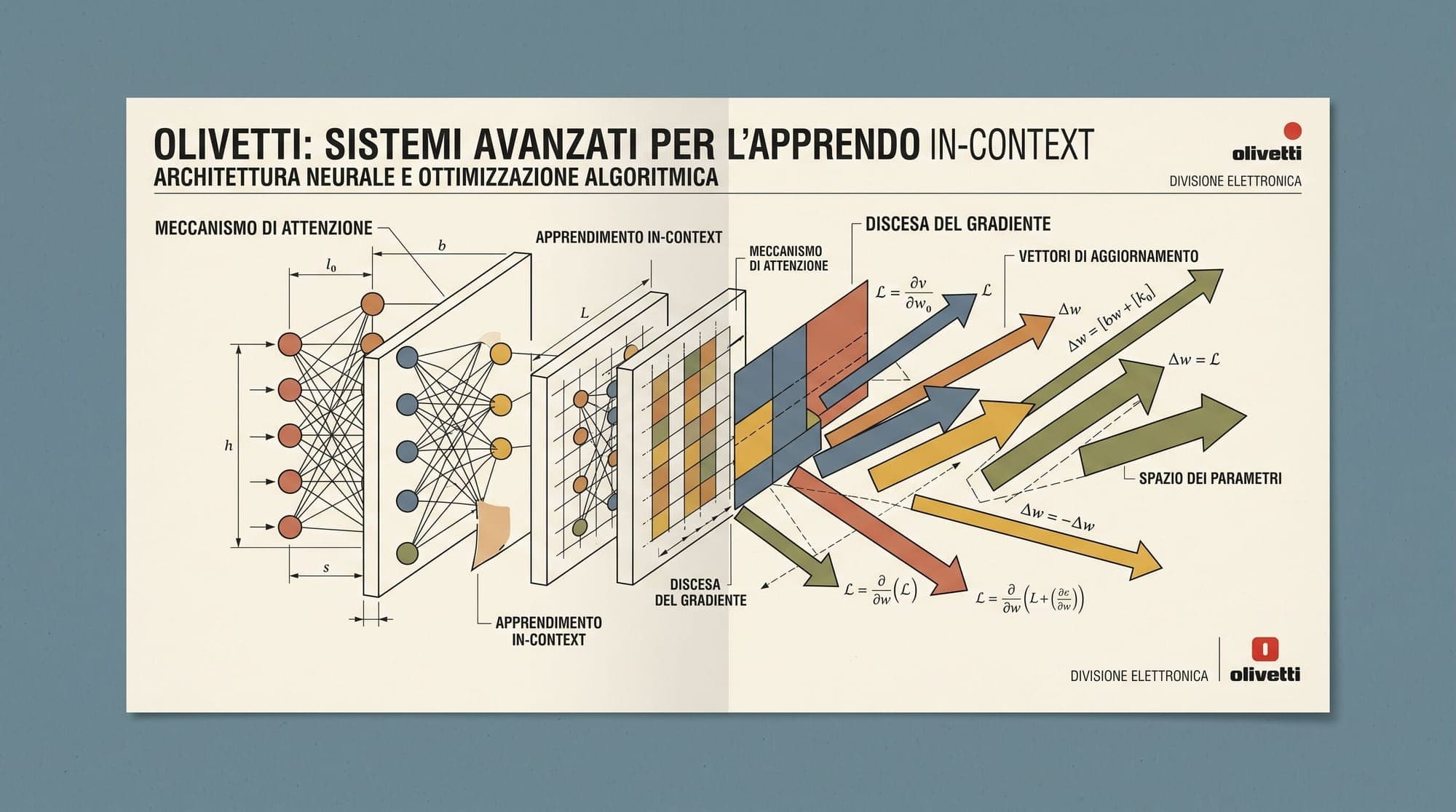
  • In-Context Learning as Implicit Gradient Descent: How Transformers Optimize Models in Forward Activations

    When large language models (LLMs) adapt to new tasks from a handful of prompt demonstrations, their static weights remain completely untouched. No backpropagation runs through the network, no optimizer updates parameters, and no gradients are calculated. Yet, the model’s predictions improve steadily as more input-output examples are added to the prompt context. For years, this phenomenon (known as in-context learning, or ICL) was treated as an empirical black box. Recent theoretical and mechani

    1 min
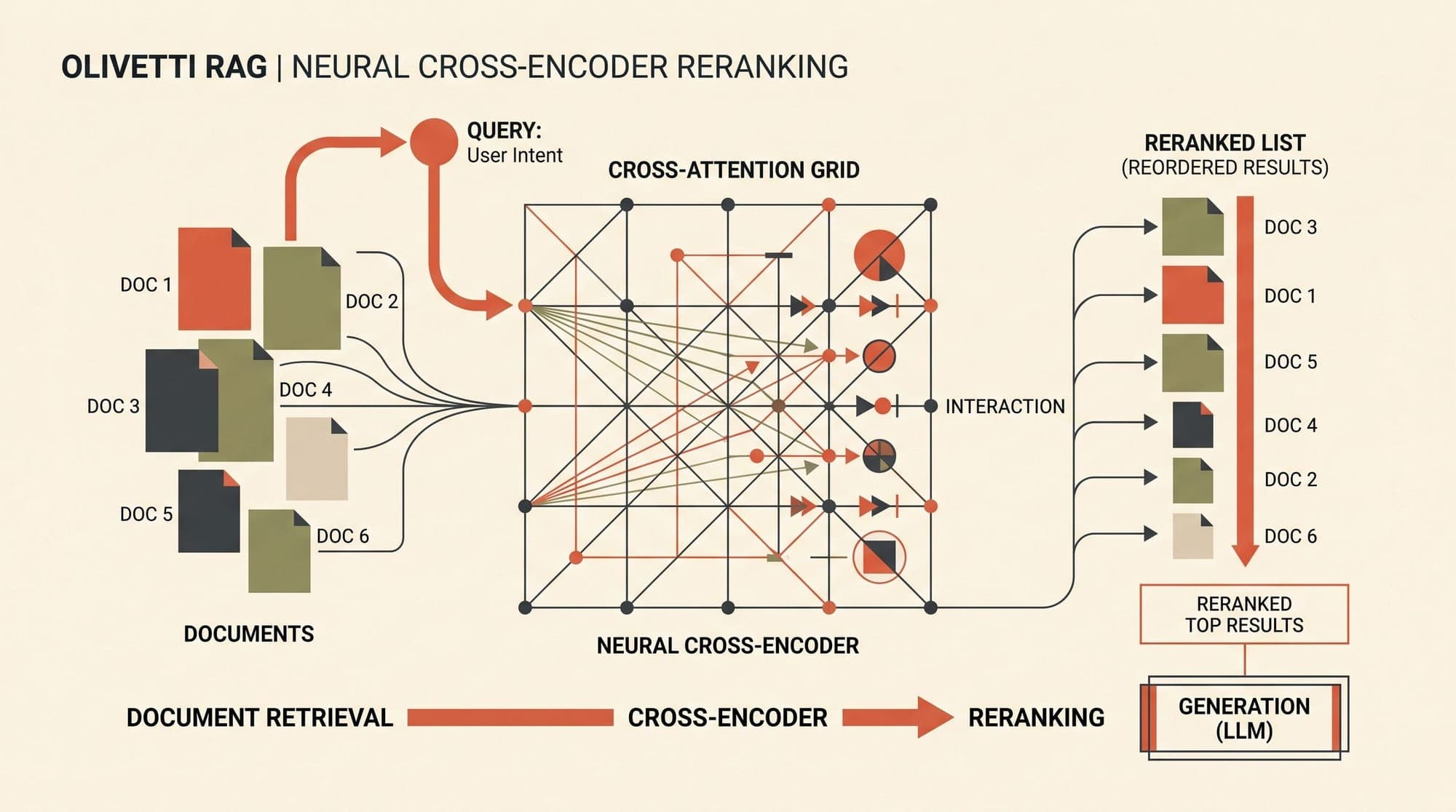
  • Cross-Encoder Rerankers in Production RAG: Architecture, Score Calibration, Latency Budgets, and Model Trade-Offs

    Retrieval-Augmented Generation (RAG) systems in production frequently suffer from a fundamental precision failure: vector search surfaces the correct chunk somewhere in the top 50 candidates, but fails to place it in the top 3 positions required for high-fidelity LLM synthesis. When irrelevant or tangential chunks lead the context window, generation quality degrades through hallucinations, lost-in-the-middle context neglect, and inflated inference costs. Cross-encoder rerankers serve as the sta

    1 min
  • Stealth Model 'Ox Alpha' Surfaces with 1M Multimodal Context and 100 Trillion Daily Token Allocation

    An anonymous frontier model named "Ox Alpha" has launched across OpenRouter and the OpenCode developer environment, offering free access backed by a reported 100 trillion tokens per day in serving capacity. The model features a 1,048,576-token context window with native multimodal support spanning text, image, and video inputs. The unannounced release follows a pattern of stealth evaluations across AI model aggregators, where frontier labs deploy pre-release checkpoints to collect blind compara

    1 min
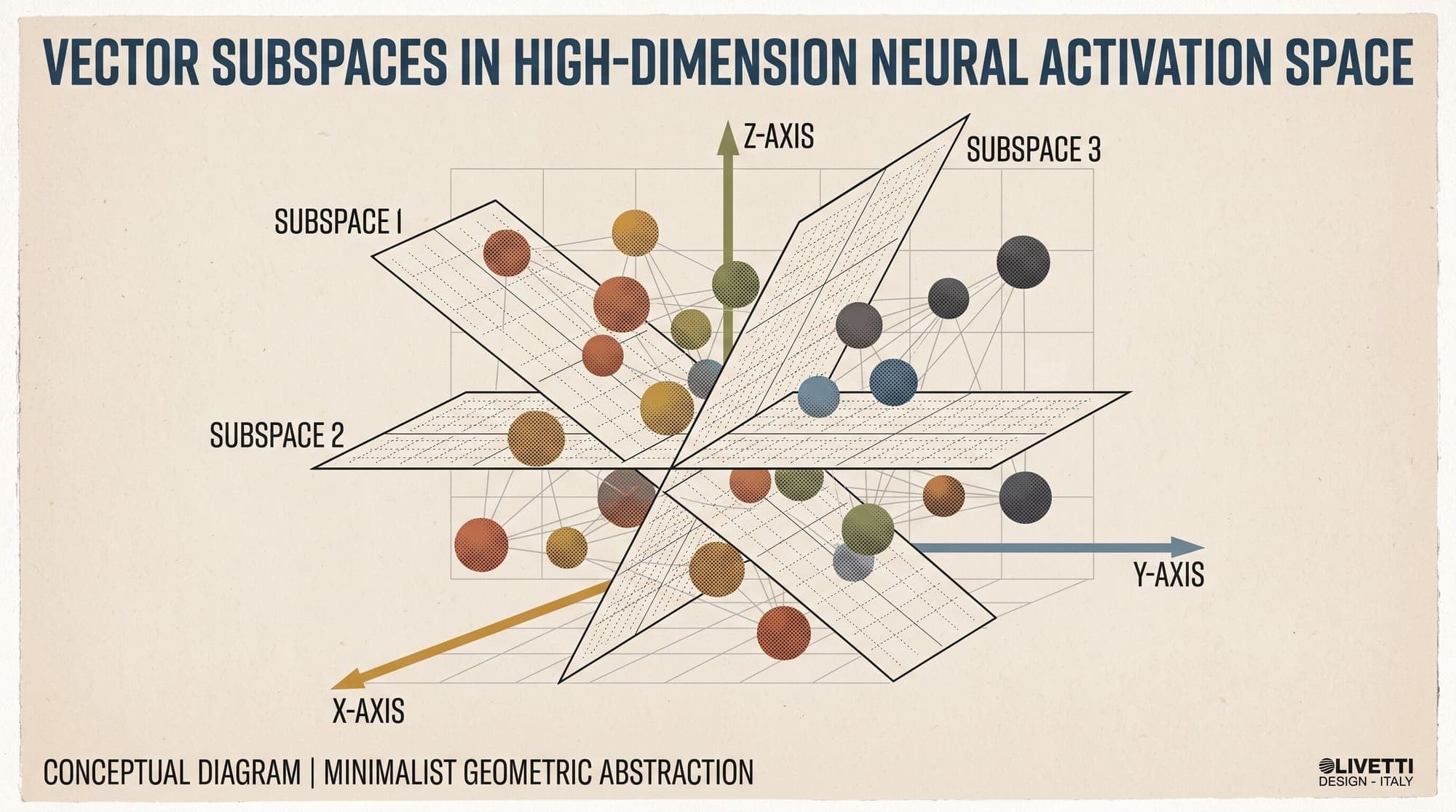
  • The Linear Representation Hypothesis in Large Language Models: How Neural Geometry Organizes Concepts, Latent Truth, and Steerable Features

    The Linear Representation Hypothesis in Large Language Models: How Neural Geometry Organizes Concepts, Latent Truth, and Steerable Features Deep neural networks are composed of alternating non-linear activation functions, multi-head attention operations, and high-dimensional matrix projections. Despite this architectural non-linearity, empirical research across mechanistic interpretability reveals a striking geometric regularity: within the intermediate representation spaces of large language m

    1 min
  • Maximal Update Parametrization (muP): How Tensor Programs Enable Zero-Shot Hyperparameter Transfer in LLM Pre-Training

    Pre-training a frontier large language model requires hundreds of thousands of GPU hours and millions of dollars in compute. At that scale, traditional hyperparameter tuning is financially and operationally impossible: teams cannot sweep learning rates, weight initializations, or optimizer betas across multiple 70B parameter runs to find the loss minimum. Historically, practitioners relied on ad-hoc heuristic extrapolation or manual guesses from small runs, often leading to sub-optimal loss curv

    1 min
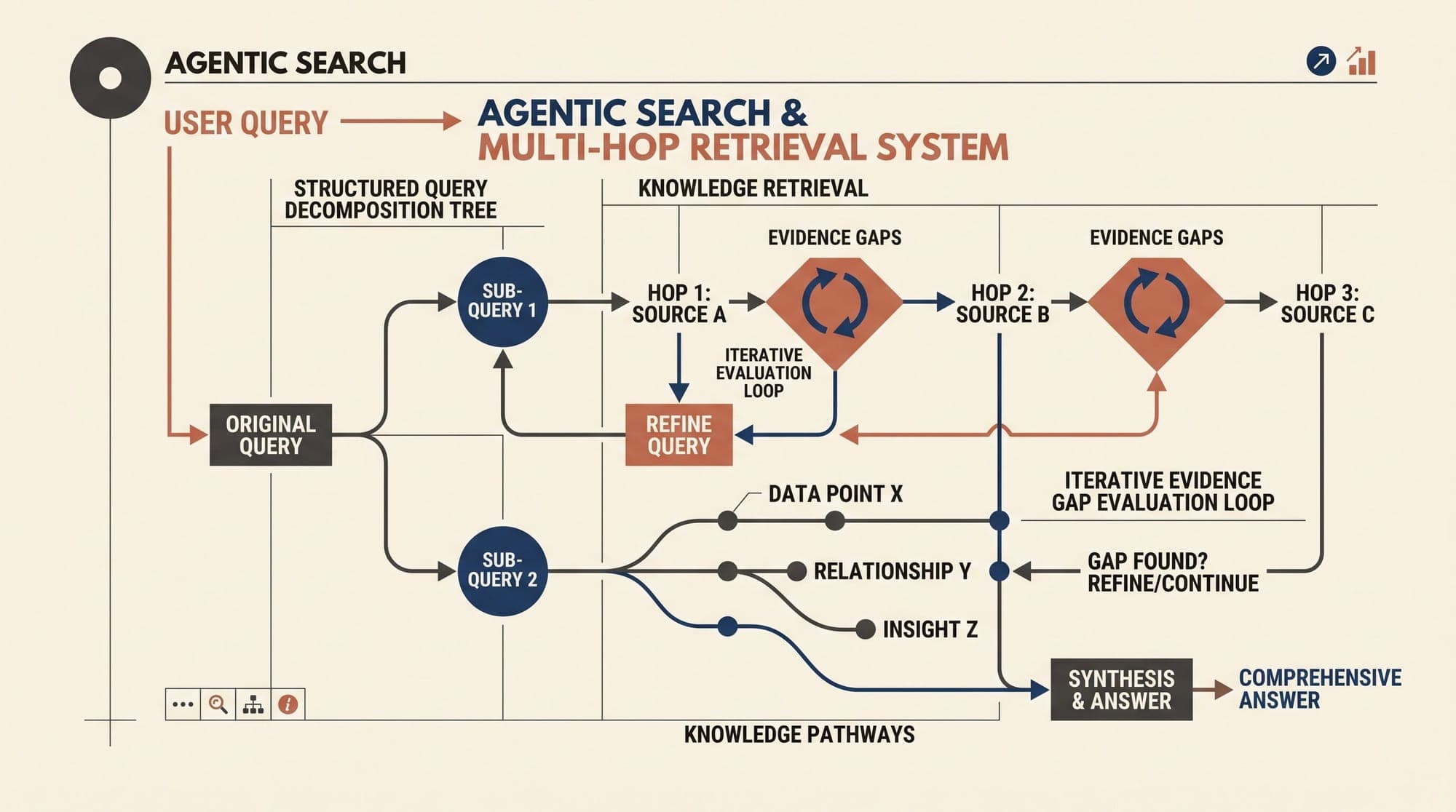
  • Agentic Search and Multi-Hop Retrieval in Production: Query Decomposition, Evidence-Gap Loops, and Synthesis Architecture

    Standard retrieval-augmented generation (RAG) relies on a single-pass paradigm: an incoming prompt is embedded, matched against a vector or hybrid index, and the top-k passages are injected into the generator's context window. This linear workflow functions reliably for direct fact retrieval, but it breaks down on complex research tasks. When a query requires chained dependencies, comparative analysis across isolated documents, or multi-step reasoning, single-shot retrieval fails because the req

    1 min
  • MIT, Stanford, and 12 Academic Labs Launch Public AI Observatory to Track Real-World LLM Usage

    A consortium of researchers from MIT, Stanford University, and 12 other academic institutions has launched the Public AI Observatory (ai-observatory.org), an independent, auditable data repository designed to measure how individuals interact with artificial intelligence assistants in real-world settings. The initiative aims to address the empirical opacity surrounding commercial LLM deployment. While frontier AI developers such as OpenAI and Anthropic periodically release aggregated user metric

    1 min
  • Z.ai Opens GLM-5.3 API Access at .40/.40 per Million Tokens with Prompt Caching

    Chinese foundation model developer Z.ai (Zhipu AI) has opened public API access to GLM-5.3, offering developers direct endpoint integration following the model's initial release. The company kept base token rates aligned with the prior generation while introducing discounted prompt caching. GLM-5.3 is priced at $1.40 per million input tokens and $4.40 per million output tokens on the Z.ai platform. For workloads utilizing prompt caching, cached input tokens are billed at $0.26 per million, an 8

    1 min