Archive / page 30 of 49

Latest articles, page 30

  1. Auxiliary-Loss-Free Load Balancing in Mixture-of-Experts: How Dynamic Bias Adjustments Eliminate Gradient Conflict and Routing Collapse

    Sparse Mixture-of-Experts (MoE) architectures decouple parameter count from per-token compute cost by activating only a small subset of feed-forward network (FFN) parameters for any given token. While dense transformers evaluate every parameter across all sequence positions, MoE models route tokens dynamically to specialized sub-networks, enabling parameter scaling to hundreds of billions or trillions of parameters at the inference and training cost of much smaller dense models. However, condit


    AI
    9 min read
  2. Confidential LLM Inference in Production: Hardware TEEs, GPU Enclaves, Attestation, and Serving Performance Trade-Offs

    Deploying large language models in multi-tenant cloud environments introduces a fundamental security boundary problem. Standard transport encryption (TLS) secures prompts in transit, and encryption-at-rest protects checkpoints on disk, but model weights, prompt tokens, and key-value (KV) caches exist in plaintext within system memory during active inference. For organizations processing protected health information (PHI), proprietary intellectual property, or regulated financial records, host op

    AI
    8 min read
  3. Google DeepMind Outlines 15-Year Game AI Arc and EVE Online Research Sandbox

    Google DeepMind has detailed its 15-year trajectory of game-based artificial intelligence research, outlining how milestones from arcade reinforcement learning to modern multimodal models have culminated in an experimental research program inside the persistent virtual universe of EVE Online. The retrospective connects early breakthroughs in discrete, fully observable games to the frontier challenges currently facing autonomous systems: long-horizon planning, non-stationary multi-agent dynamics

    AI
    3 min read
  4. The Residual Stream in Transformers: How Linear Additive State, Subspace Projections, and Layer Accumulation Power Modern LLMs

    In standard descriptions of transformer architectures, multi-head attention and feedforward networks receive the vast majority of analytical focus. However, the operational backbone coordinating these sublayers is the residual stream. First introduced in convolutional computer vision models by He et al. (2016) to mitigate vanishing gradients in deep networks, residual skip connections operate in large language models as a persistent, high-dimensional linear communication bus. Rather than proces

    AI
    6 min read
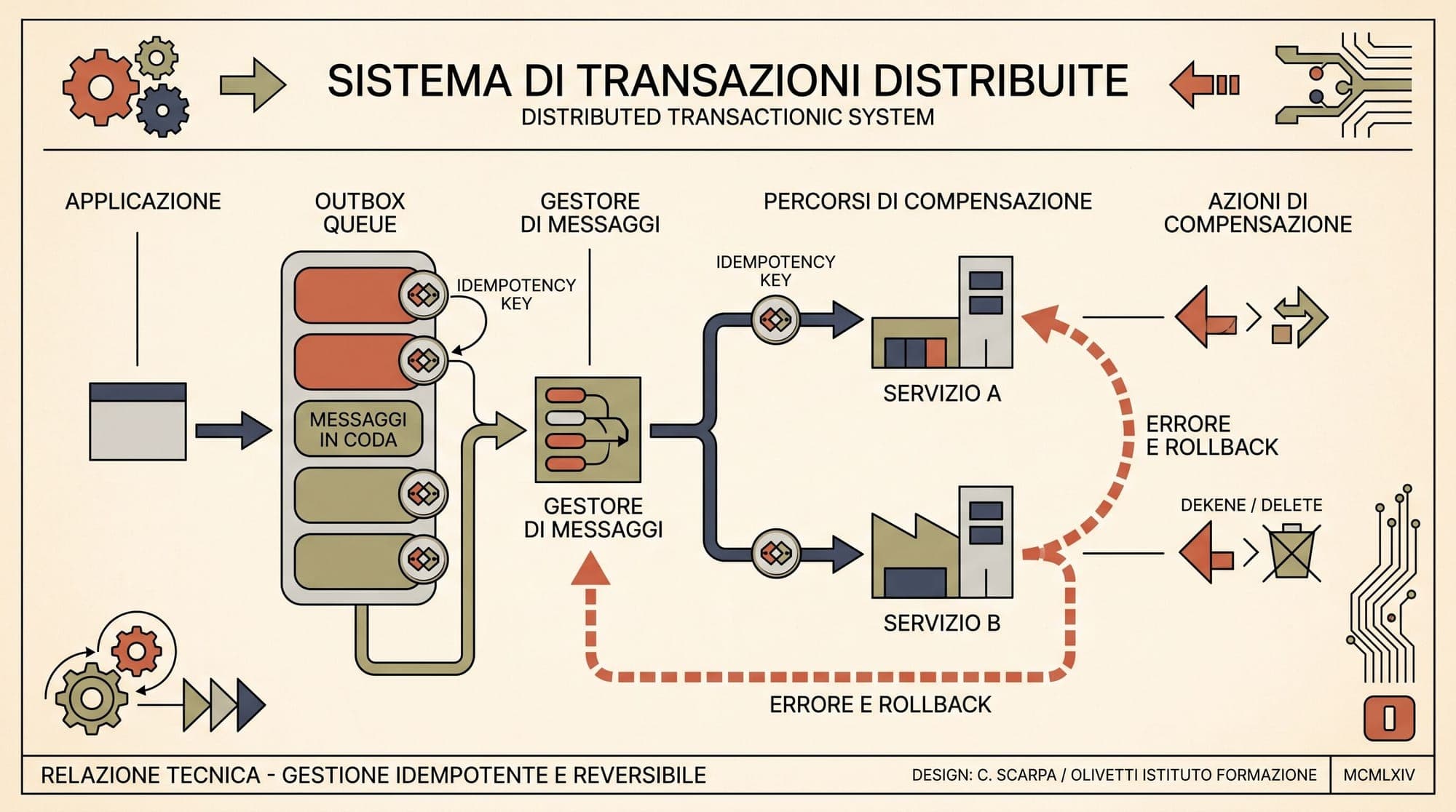
  5. Idempotency and Side-Effect Safety in Production AI Agents: Transactional Outboxes, Distributed Sagas, and Compensating Actions

    Autonomous AI agents interacting with real-world infrastructure frequently execute irreversible side-effects: charging payment methods, provisioning cloud servers, sending external webhooks, and modifying production databases. While traditional microservices rely on deterministic business logic and predictable retry policies, Large Language Model (LLM) agents operate probabilistically. An agent faced with a transient network drop, an HTTP 504 Gateway Timeout, or context window compaction can re-

    AI
    7 min read
  6. US Corporate AI Debt Surge Tests Investor Limits as Hyperscalers Issue $220B in 2026 Bonds

    The unprecedented capital requirements of frontier artificial intelligence infrastructure have triggered a record borrowing spree among US technology hyperscalers, testing the absorptive capacity of institutional credit markets. Total corporate debt issuance tied to AI hyperscalers has surpassed $220 billion in 2026 according to data from BNP Paribas, representing an eighteen-fold increase compared to the $12.5 billion issued during the same period in 2025. As mega-cap technology firms repeated

    AI
    2 min read
  7. Nvidia in Early Talks with South Korean AI Chip Designer Rebellions

    Nvidia is in early-stage discussions with South Korean AI semiconductor designer Rebellions regarding possible strategic tie-ups, including technology licensing partnerships, direct equity investments, or a full acquisition. Nvidia Chief Executive Officer Jensen Huang met with Rebellions co-founder and Chief Executive Officer Sunghyun Park at Nvidia headquarters in Santa Clara, California, according to reporting from Bloomberg citing people familiar with the matter. The discussions remain preli

    AI
    1 min read
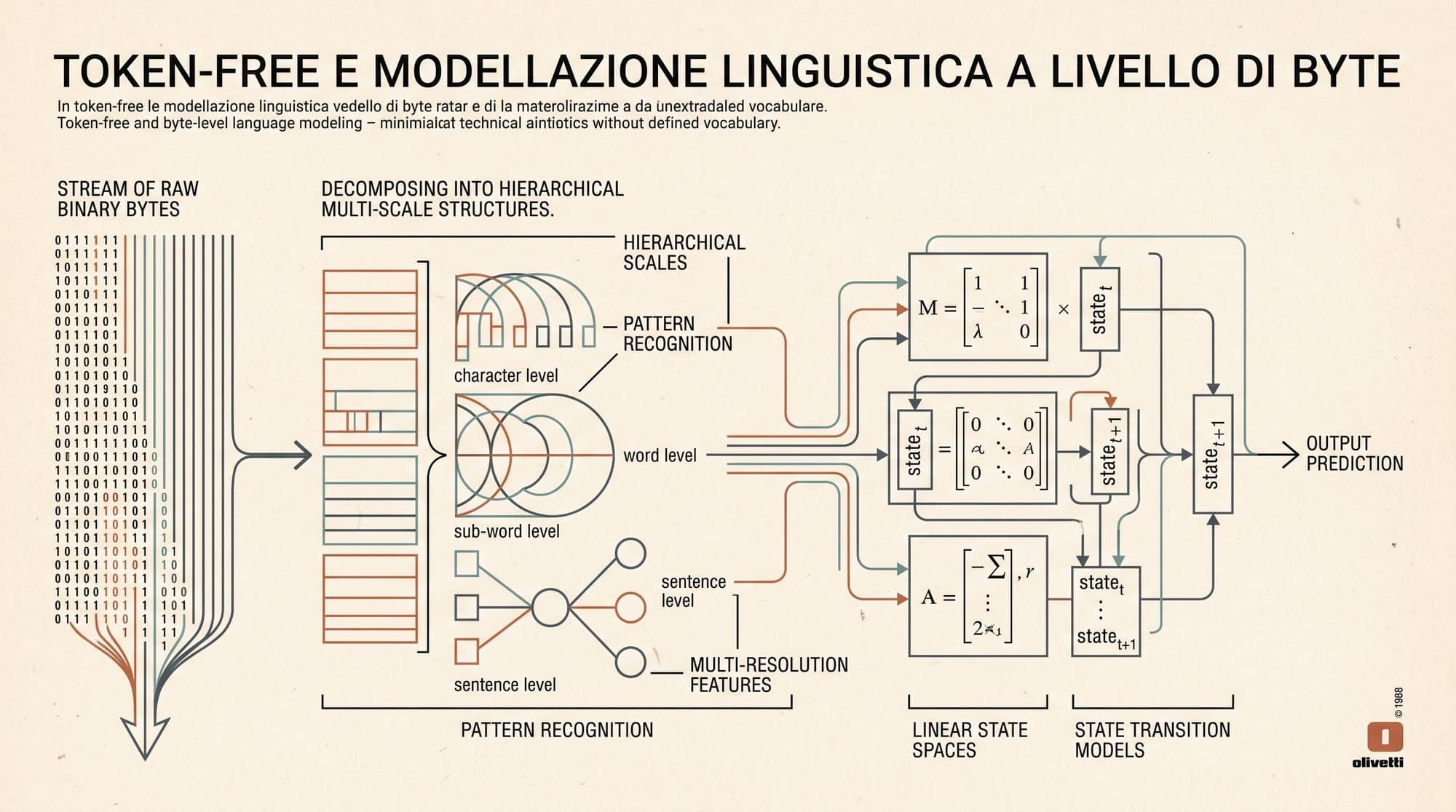
  8. Token-Free and Byte-Level Language Models: How Hierarchical Patching, MegaByte, and MambaByte Eliminate Tokenizer Bottlenecks

    Modern large language models universally rely on subword tokenizers such as Byte-Pair Encoding (BPE), WordPiece, and Unigram algorithms. These tokenizers compress text into discrete integer IDs from a fixed vocabulary, typically spanning 32,000 to 256,000 entries. By collapsing three to five characters into a single token, tokenizers reduce sequence length ($L$), making quadratic $O(L^2)$ self-attention computationally tractable. However, subword tokenization introduces systemic architectural l

    AI
    7 min read
  9. PII Redaction and Reversible Tokenization in Production LLM Systems: Architecture, NER Latency, and Streaming De-Anonymization

    In enterprise production environments, forwarding unsanitized prompt payloads to third-party model providers or logging raw agent execution traces exposes organizations to severe regulatory liability. Under frameworks such as GDPR Article 4(1), the HIPAA Safe Harbor standard, and the California Privacy Rights Act (CPRA), personally identifiable information (PII) including patient health identifiers, Social Security numbers, credit card data, full names, and personal email addresses cannot be tra

    AI
    7 min read
  10. Weight Initialization in Large Language Models: How Variance Scaling, Residual Multipliers, and DeepNorm Stabilize Deep Transformer Pre-Training

    Weight Initialization in Large Language Models: How Variance Scaling, Residual Multipliers, and DeepNorm Stabilize Deep Transformer Pre-Training In deep transformer architectures, weight initialization is the primary determinant of whether a trillion-token pre-training run converges smoothly or diverges during the first thousand steps. When training networks with 80 to 120 layers (such as Llama 3 70B, GPT-4, or deep mixture-of-experts models), naive application of classical Gaussian or uniform

    AI
    10 min read