Archive / page 29 of 49

Latest articles, page 29

  1. US Public Opposition to Local AI Data Centers Surges to 75%, Heatmap Survey Finds

    Public opposition to local data center construction in the United States has accelerated sharply over the past twelve months, according to a survey conducted by Heatmap News and Embold Research. The nationwide survey found that 75 percent of American adults now oppose the development of a data center facility near their community, with 61 percent reporting they are strongly opposed. The shift marks a substantial reversal from August 2025, when public sentiment was evenly divided at 43 percent i


    News
    2 min read
  2. Perplexity and Bits-Per-Byte in Large Language Models: Mathematical Foundations, Tokenizer Dependency, and Compression Benchmarks

    Perplexity and Bits-Per-Byte in Large Language Models: Mathematical Foundations, Tokenizer Dependency, and Compression Benchmarks Evaluating autoregressive large language models requires metrics that quantify predictive confidence across text sequences. The standard objective during pre-training is the minimization of empirical risk under a cross-entropy loss function. Exponentiating this loss yields Perplexity (PPL), a foundational metric dating back to statistical speech recognition and n-gra

    AI
    9 min read
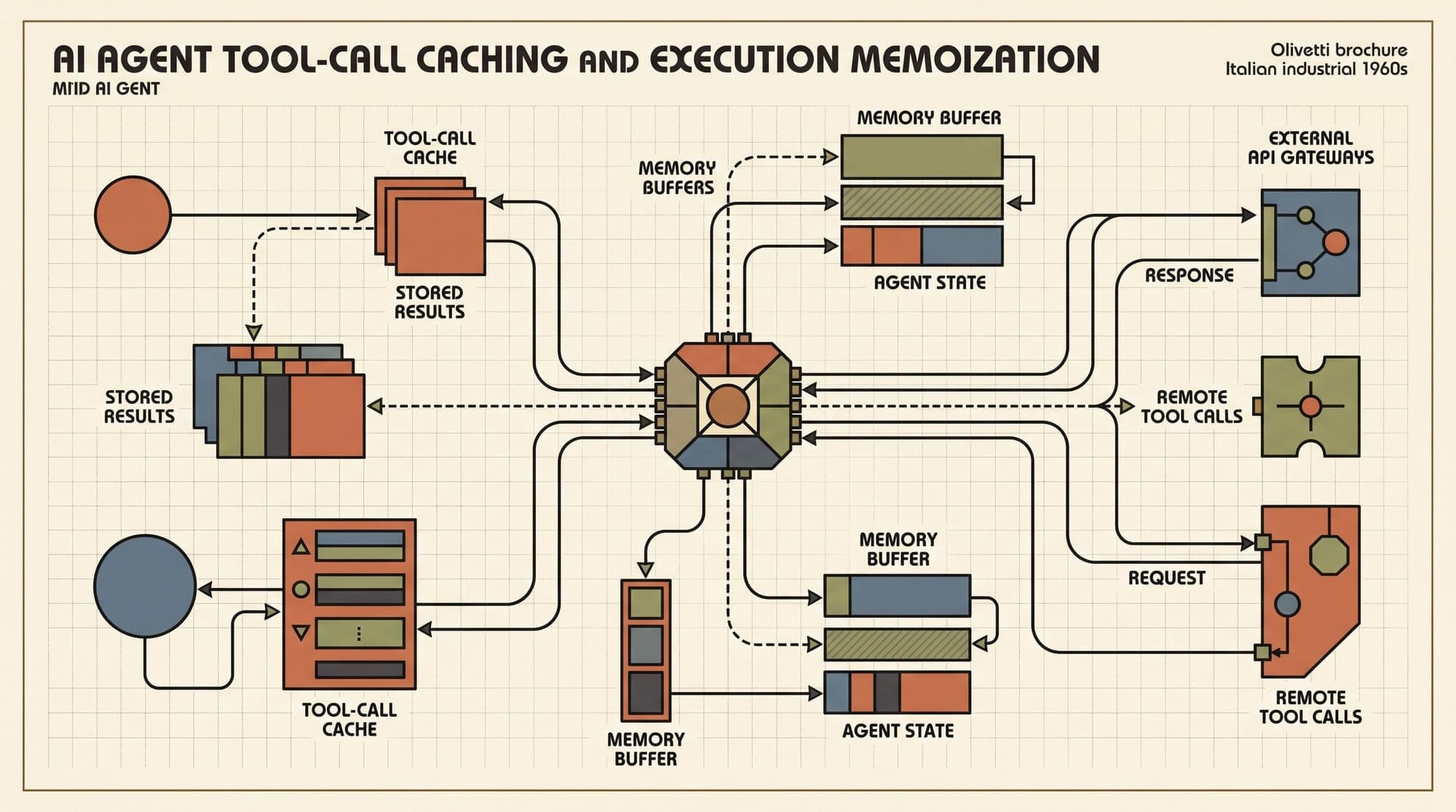
  3. Tool-Call Caching in Production AI Agents: Architecture, State Invalidation, and Latency Economics

    In multi-turn agentic architectures such as ReAct, plan-and-solve swarms, and autonomous coding runtimes, large language models spend significant time waiting on external tool execution. While prompt caching and prefix KV-cache reuse have reduced inference costs for repeated prompt contexts, they do not optimize the downstream execution layer. When an agent queries a database, scrapes a webpage, executes a sandboxed bash command, or retrieves embeddings, external tool latency frequently accounts

    AI
    6 min read
  4. Arithmetic Intensity and the Roofline Model: Why LLM Generation Is Memory-Bound and Prefill Is Compute-Bound

    Arithmetic Intensity and the Roofline Model in Large Language Models: Why Generation Is Memory-Bound and Prefill Is Compute-Bound Every optimization in modern large language model (LLM) serving exists to solve a single hardware reality: running a Transformer model is not one computational problem, but two completely distinct workloads operating on opposite sides of a physical performance barrier. When an LLM processes a prompt during the prefill phase, it saturates modern GPU Tensor Cores, ope

    AI
    9 min read
  5. DeepSeek Unveils Experimental Vision Model Challenging Anthropic's Opus 4.8

    DeepSeek Unveils Experimental Vision Model Challenging Anthropic's Opus 4.8 DeepSeek announced an experimental multimodal version of its V4 Flash model that can analyze visual prompts, claiming near-parity with Anthropic's Opus 4.8 on multimodal agentic benchmarks. The new release, deepseek-v4-flash-vision-exp, extends DeepSeek's flagship text-only V4 Flash model with vision capabilities. The experimental model processes images alongside text, enabling use cases like describing pictures, rea

    AI
    2 min read
  6. Anthropic Deploys Claude Mythos 5 in Security Tools, Commits $35M to Open-Source Defense Fund

    Anthropic Deploys Claude Mythos 5 in Security Tools, Commits $35M to Open-Source Defense Fund Claude Mythos 5 is now running vulnerability scans in Claude Security for Enterprise customers, marking the third stage of Anthropic's deliberate rollout of its cyber-capable model. Anthropic announced on August 21 that Claude Mythos 5, limited to vetted security defenders since April 2026, is now available for Enterprise customers to scan codebases for vulnerabilities. The company is also launching

    AI
    2 min read
  7. Nscale Targets $3 Billion U.S. IPO as Soon as September

    Nscale Targets $3 Billion U.S. IPO as Soon as September Nscale signage during the Nvidia GTC conference in San Jose, California. London-based AI infrastructure startup Nscale is preparing for a U.S. initial public offering that could raise up to $3 billion, according to people familiar with the matter. The offering may launch as early as September, joining a wave of AI data center companies tapping public markets. Goldman Sachs and JPMorgan Chase are leading the IPO process, Bloomberg reporte

    AI
    2 min read
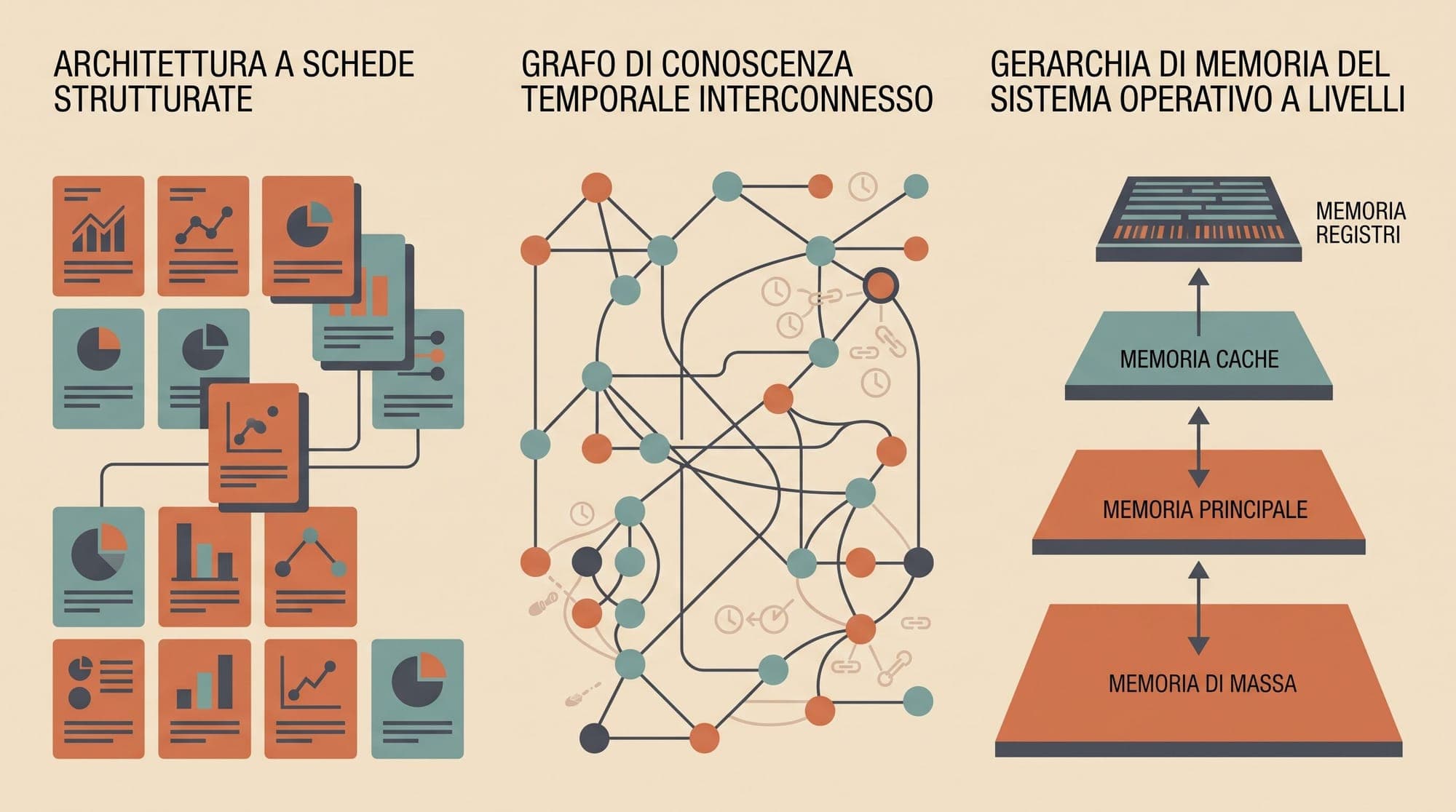
  8. Agent Memory Engines in Production: Comparing Mem0, Zep, and Letta Architecture, Graph Stores, and Retrieval Latency

    Large language models are inherently stateless functions. Every invocation begins with an empty memory register, relying entirely on the tokens packed into its context window. In production multi-turn applications, naive context management strategies quickly collapse: appending raw conversational logs inflates inference costs and eventually hits hard context limits, while standard semantic vector search (retrieval-augmented generation) lacks temporal awareness, treats contradictions blindly, and

    AI
    7 min read
  9. Cross-Entropy Loss: The Training Objective Behind Every LLM

    Cross-Entropy Loss: The Training Objective Behind Every LLM Cross-entropy loss is the objective function that guides every large language model during training. Despite its ubiquity, the concept is often treated as a black box. This post explains why cross-entropy loss is the natural choice for training probabilistic models of language, and how it connects to fundamental concepts in information theory and statistics. The Gradient of Prediction Error A language model outputs a probability dis

    4 min read
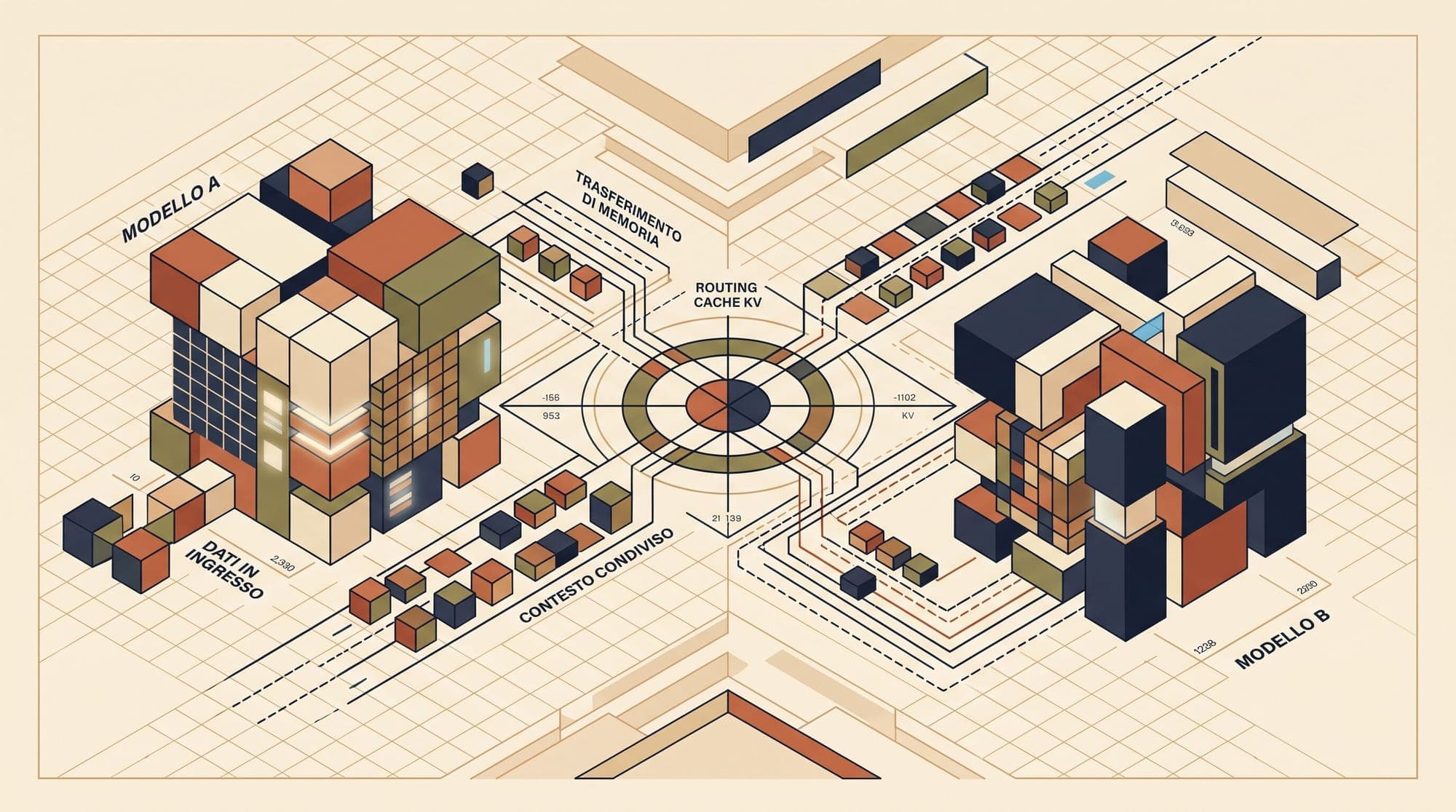
  10. NVIDIA Researchers Map Cross-Model KV Caches via Linear Ridge Regression to Accelerate Model Cascading Up to 25x

    In multi-agent systems and tiered model cascades, routing requests across different model sizes is a standard architecture for balancing inference cost and generation quality. However, switching models mid-session has historically imposed a severe compute tax: because each neural architecture maintains its own distinct internal representations, the receiving model cannot read the key-value (KV) states generated by the previous model. The target model must recompute the entire conversation histor

    AI
    4 min read