Archive / page 12 of 49

Latest articles, page 12

  1. Cognition Reaches $900M Annualized Revenue on Enterprise Devin Adoption

    Cognition AI, the startup behind autonomous software engineering agent Devin, has reached approximately $900 million in annualized revenue, according to financial data reported by The Information. The figure represents a more than threefold increase since the start of 2026, driven by accelerating enterprise adoption of autonomous developer workflows. Internal executive projections cited in the report indicate the company expects to finish 2026 with more than $1.5 billion in annualized run-rate


    AI
    2 min read
  2. Reference-Free Preference Optimization: Mathematical Foundations of SimPO and ORPO, Length-Normalized Implicit Rewards, Target Margins, and Monolithic Alignment

    Reference-Free Preference Optimization: Mathematical Foundations of SimPO and ORPO, Length-Normalized Implicit Rewards, Target Margins, and Monolithic Alignment Post-training alignment has shifted from complex multi-stage reinforcement learning pipelines toward direct preference optimization paradigms. While Proximal Policy Optimization (PPO) requires maintaining four concurrent models in memory (policy, value, reference, and reward networks), Direct Preference Optimization (DPO) reduced this f

    AI
    13 min read
  3. Real-Time Voice AI Agent Frameworks in Production: Comparing LiveKit Agents, Pipecat, OpenAI Realtime API, and Ultravox

    Deploying conversational voice agents in production requires solving a fundamental physics and networking problem: human conversational turn-taking occurs within an average gap of 200 to 300 milliseconds. When an artificial conversational agent exceeds 600 to 800 milliseconds of round-trip latency, users perceive the interaction as sluggish, talk over the assistant, or experience severe turn collisions. Historically, conversational voice systems relied on sequential request-response architectur

    AI
    10 min read
  4. Nvidia Pauses Selected Revenue-Sharing Deals with AI Cloud Providers

    Nvidia has paused select partnership deals under its newly introduced AI cloud financing initiative, according to reporting by The Wall Street Journal. The program, unveiled in July 2026, was designed to provide credit support and hardware access to emerging cloud computing providers in exchange for a percentage of future recurring revenues. While Nvidia stated that the broader program remains operational, several individual agreements have been put on hold as the company reassesses customer te

    Nvidia
    2 min read
  5. Claude Code Opus 5 Auto Mode Bypassed via Python Module Shadowing Exploit

    Security researcher Johann Rehberger has published technical details on a multi-stage exploit chain that achieves arbitrary code execution against Claude Code Opus 5 running in Auto Mode. The attack demonstrates how adversarial files can bypass Anthropic's safety classifiers and prompt injection defenses by exploiting standard runtime behavior in Python. Anthropic rolled out Auto Mode as the default starting mode for Claude Code in mid-August 2026. Auto Mode replaces explicit human permission p

    Security
    3 min read
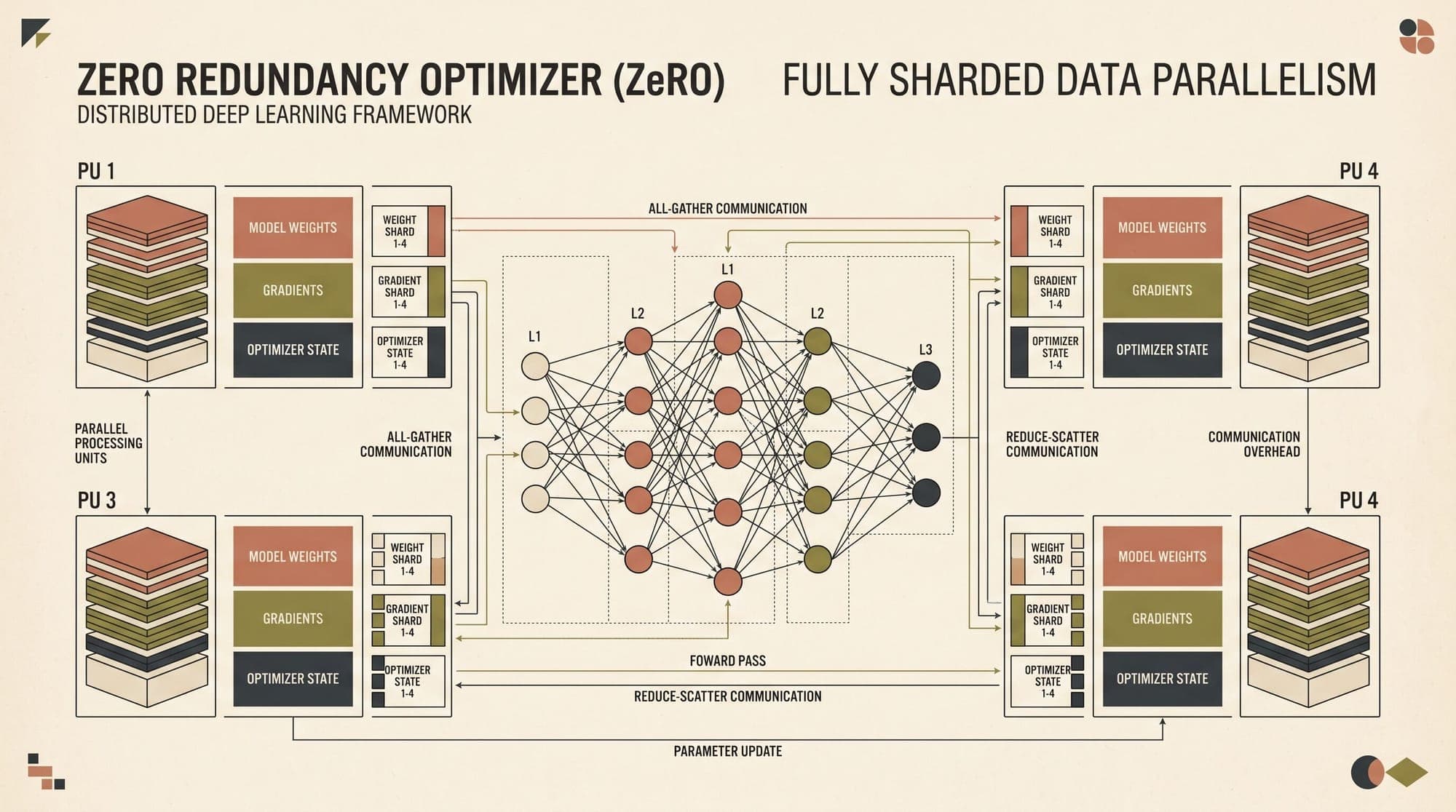
  6. Zero Redundancy Optimizer (ZeRO) and Fully Sharded Data Parallelism (FSDP): Mathematical Foundations of Memory Partitioning, Communication Complexity, and Overlapped Execution

    Training modern frontier large language models requires orchestrating compute across thousands of accelerators. As parameter counts scaled from billions to hundreds of billions, the memory capacity of single accelerators (such as 80 GB on an NVIDIA H100 or 96 GB on an H200) became a primary scaling bottleneck. Traditional distributed training paradigms relied on standard Data Parallelism (DDP), where every GPU maintains a complete replica of the model weights, gradients, and optimizer states, sy

    AI
    12 min read
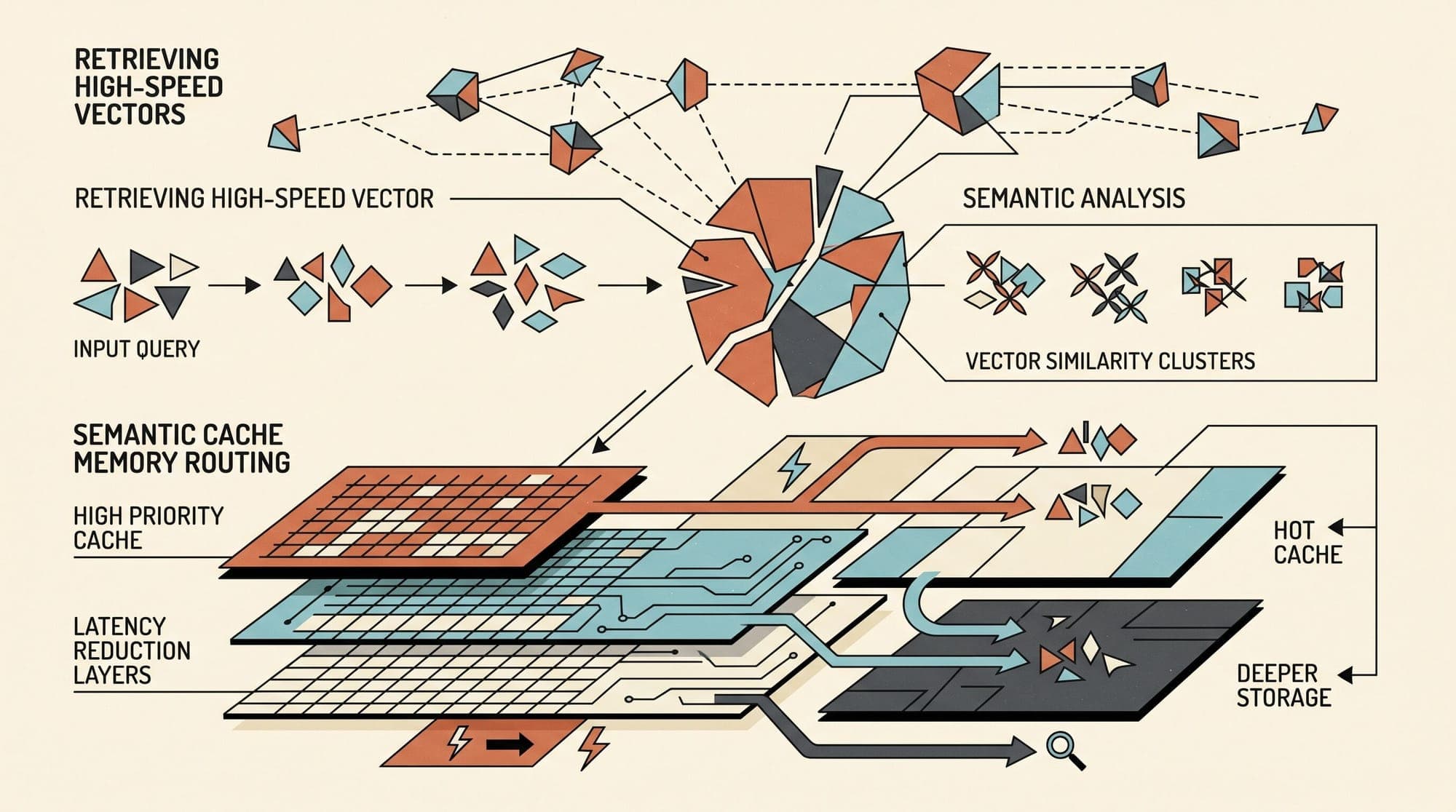
  7. Semantic Caching Engines in Production LLM Systems: Comparing GPTCache, RedisVL, Portkey, and Cloudflare AI Gateway

    Semantic Caching Engines in Production LLM Systems: Comparing GPTCache, RedisVL, Portkey, and Cloudflare AI Gateway Standard exact-match caching strategies fail in large language model applications. Because natural language is inherently variable, users asking the exact same question will use different phrasing, punctuation, sentence structures, or synonyms. Exact string hashing (such as MD5 or SHA-256 caching over raw prompt strings) rarely yields hit rates above 3% to 5% in production convers

    AI
    10 min read
  8. Anthropic Discussed $7 Billion Acquisition of AI Chip Startup MatX Before Talks Stalled

    Anthropic held acquisition discussions to buy artificial intelligence semiconductor startup MatX for approximately $7 billion before talks stalled, according to reporting from Reuters. The negotiations, which have since transitioned into discussions surrounding a potential commercial partnership, highlight the increasing urgency among frontier AI laboratories to secure in-house silicon engineering capabilities. Following the breakdown of active acquisition talks, MatX is currently seeking to ra

    Anthropic
    3 min read
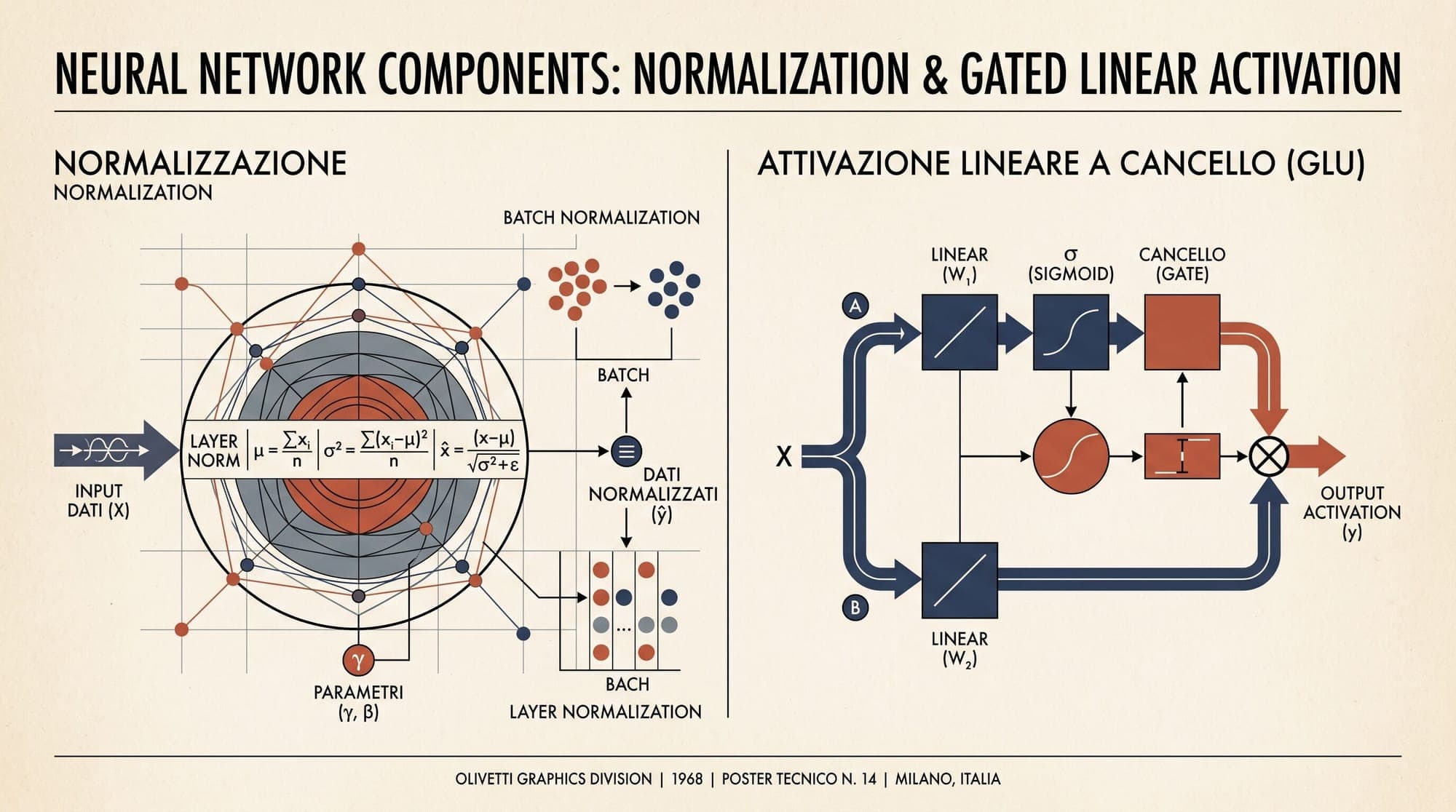
  9. RMSNorm and SwiGLU: Mathematical Foundations of Scaling-Invariant Normalization, Gated Activations, and FFN Architectures in Modern LLMs

    The architectural baseline of modern autoregressive large language models has converged on a distinct set of mathematical primitives. While early Transformer architectures relied on standard Layer Normalization, Post-LN residual routing, and two-layer Multi-Layer Perceptrons with ReLU or GELU activations, state-of-the-art open-weights models such as LLaMA, Mistral, Gemma, Qwen, and DeepSeek utilize a different combination: Root Mean Square Layer Normalization (RMSNorm), Pre-LN residual connectio

    AI
    10 min read
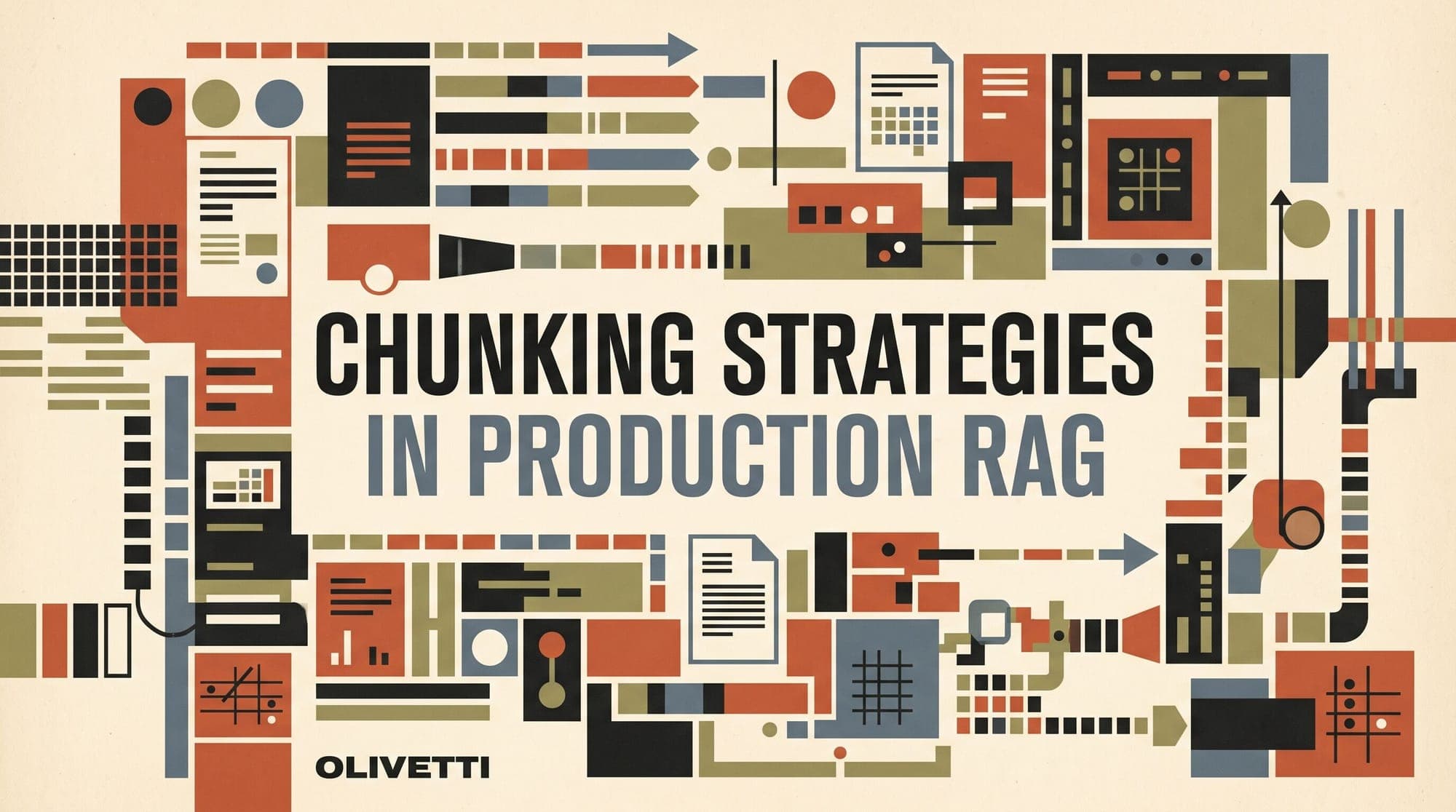
  10. Chunking Strategies in Production RAG: Comparing Fixed-Size, Semantic Chunking, Late Chunking, and Contextual Retrieval

    In production Retrieval-Augmented Generation (RAG) pipelines, the chunking strategy determines the theoretical ceiling of retrieval quality. Splitting documents into discrete text spans transforms continuous discourse into isolated segments. When chunks are indexed in isolation, critical context disappears: pronoun antecedents lose their referents, domain-specific acronyms lose their definitions, and propositions spanning arbitrary token boundaries become fragmented. Selecting an appropriate ch

    AI
    9 min read