Modern post-training pipelines have moved beyond basic training scripts. As model parameter counts, context windows, and alignment techniques expand, the choice of fine-tuning framework directly dictates GPU memory overhead, token throughput, and developer iteration speed.
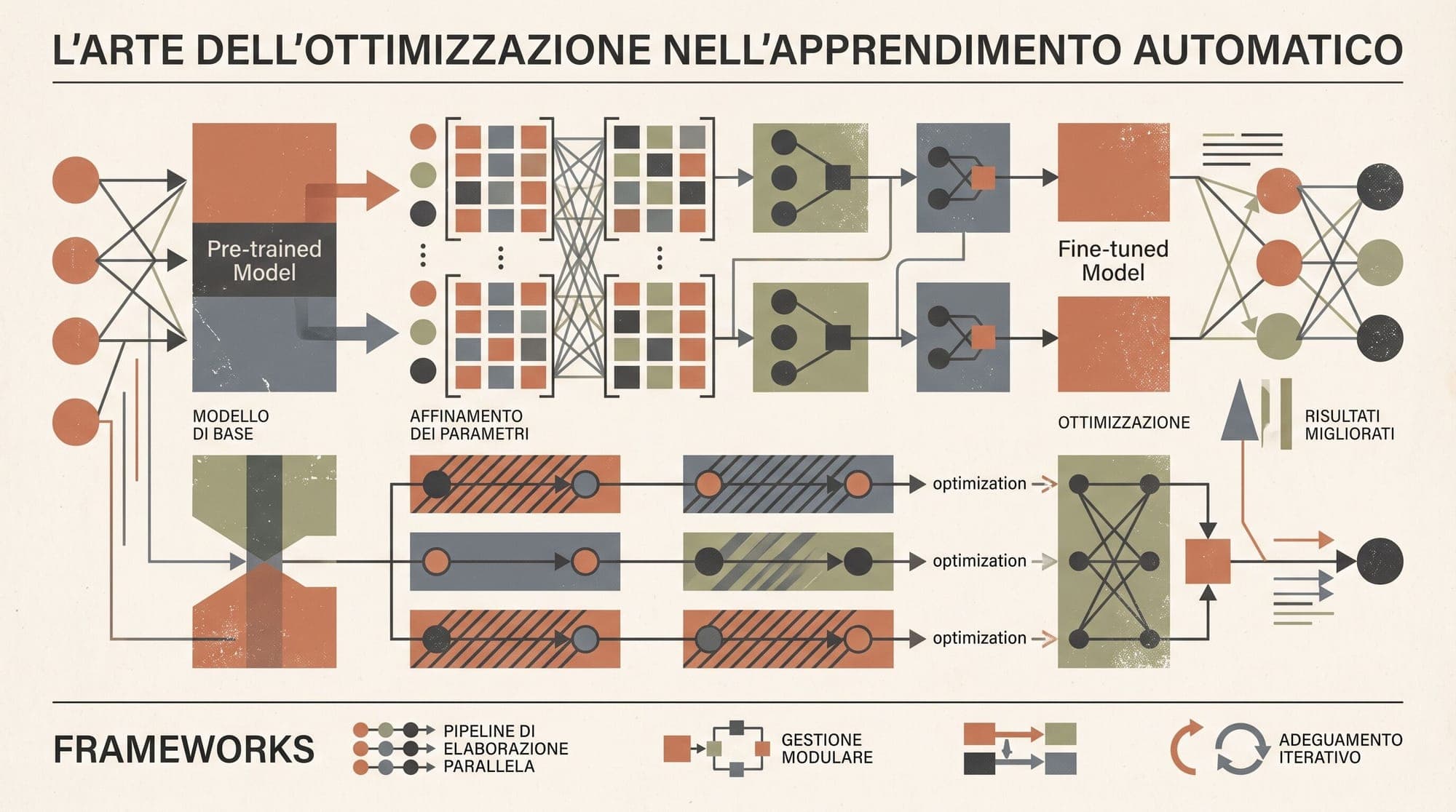
Four open-source frameworks dominate the enterprise fine-tuning landscape: Unsloth, Axolotl, LLaMA-Factory, and Meta's Torchtune. While all four orchestrate parameter-efficient fine-tuning (PEFT) and full parameter adaptation, they diverge fundamentally in architectural philosophy, kernel optimizations, and distributed scaling capabilities.

The Core Architectural Divide
Fine-tuning efficiency is bounded by two primary constraints: compute utilization (FLOPs efficiency) and VRAM consumption (activation memory, optimizer states, and weight storage). The leading frameworks address these constraints through distinct layers of the software stack:
- Kernel-Level Rewriting (Unsloth): Direct mathematical derivation of backpropagation steps in custom Triton kernels, bypassing standard PyTorch Autograd intermediate graph allocations.
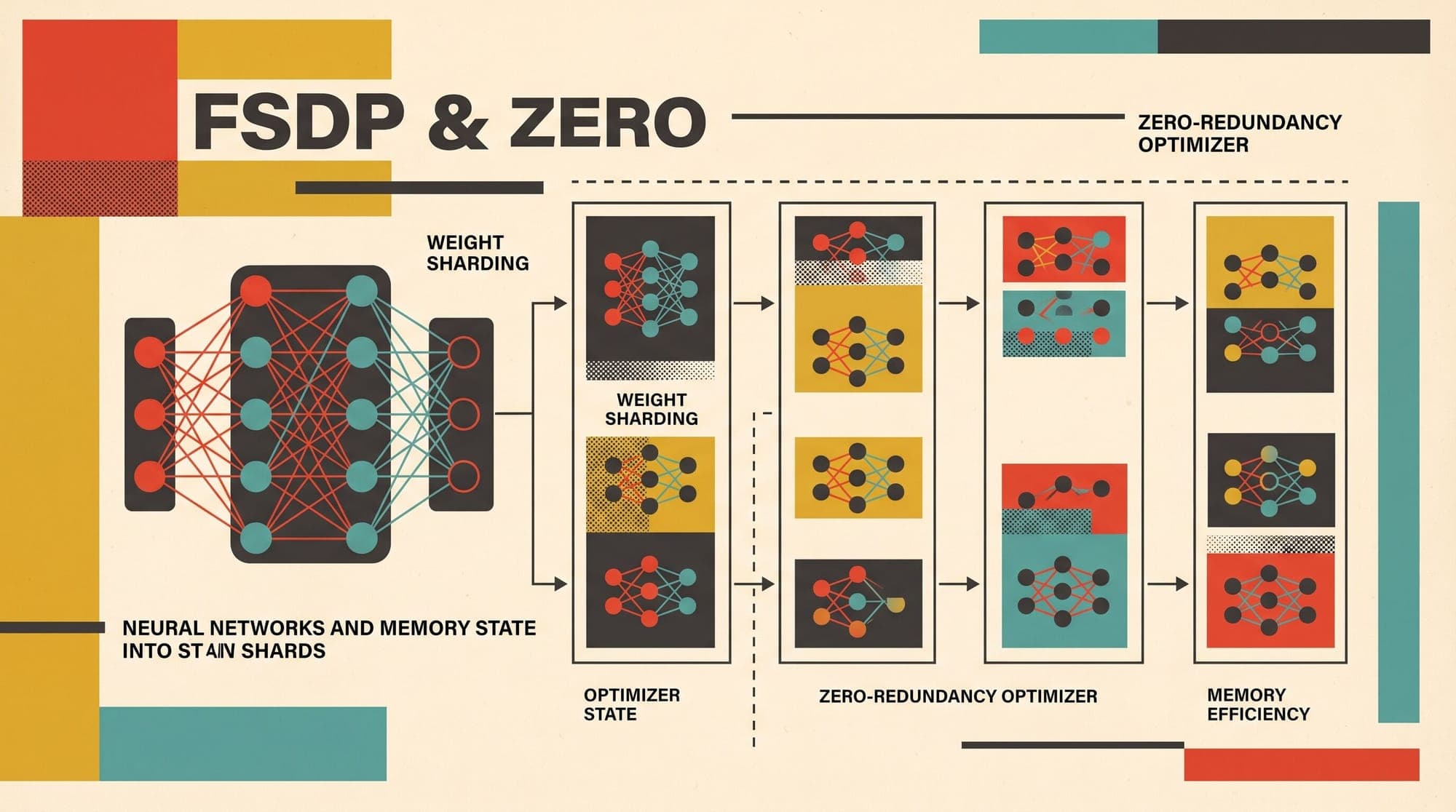
- Distributed Orchestration and Composability (Axolotl): Declarative YAML orchestration bridging Hugging Face Accelerate, PyTorch Fully Sharded Data Parallel (FSDP2), DeepSpeed ZeRO, and Liger Kernel optimizations across multi-GPU and multi-node topologies.
- Multi-Model Breadth and Full-Lifecycle UI (LLaMA-Factory): Modular abstraction layer supporting over 100 model architectures, providing both a zero-code web interface (LLaMA Board) and CLI pipelines spanning Supervised Fine-Tuning (SFT), Direct Preference Optimization (DPO), and Reinforcement Learning from Human Feedback (RLHF).
- PyTorch-Native Modular Recipes (Torchtune): Zero-wrapper PyTorch implementation leveraging
torch.compileand native distributed primitives without third-party framework overhead, prioritizing code transparency and architectural extensibility.
1. Unsloth: Kernel-Level Optimization for Single-GPU Efficiency
Unsloth differentiates itself by manually rewriting the backward pass of foundational transformer operations rather than relying on standard PyTorch automatic differentiation.
Architectural Mechanics
- Custom Triton Kernels: Unsloth implements hand-derived CUDA/Triton kernels for Rotary Position Embedding (RoPE), RMSNorm, SwiGLU activations, and Cross-Entropy loss. By fusing matrix operations and computing gradients analytically, it eliminates redundant memory transfers between GPU High Bandwidth Memory (HBM) and SRAM.
- Autograd Intermediate Reduction: Standard PyTorch autograd saves intermediate activation tensors to calculate gradients during backpropagation. Unsloth recomputes key activations on the fly or derives closed-form gradient solutions, reducing activation memory by up to 70-80%.
- Fast LoRA Weight Dequantization: For 4-bit QLoRA, Unsloth introduces optimized fused kernels that dynamically dequantize NF4/FP4 base weights and perform low-rank matrix multiplications in a single fused GPU operation.
Benchmarks and Performance Profile
In standard single-GPU benchmarks on an Nvidia A100 (80GB) training Llama-3.1 8B (sequence length 2,048, batch size 4, rank 16):
- Throughput: Unsloth achieves ~4,200 tokens/second in 4-bit QLoRA, compared to ~1,500 tokens/second on standard Hugging Face TRL baselines (a ~2.8x speedup). In 16-bit LoRA, throughput reaches ~2,800 tokens/second (~1.9x baseline).
- VRAM Footprint: A 4-bit QLoRA run on Llama-3.1 8B requires approximately 8GB of VRAM in Unsloth, compared to 16GB in standard PEFT setups, enabling fine-tuning of 8B models on consumer GPUs (RTX 3090/4090) and 70B models on single 80GB A100/H100 instances.
Limitations
Unsloth's primary trade-off has historically centered on distributed scaling. While single-GPU and single-node multi-GPU performance is highly optimized, scaling across heterogeneous, multi-node clusters with advanced tensor parallelism requires custom plumbing.
2. Axolotl: Declarative Orchestration and Multi-Node Scaling
Axolotl is designed for production reproducibility and large-scale distributed training. It replaces bespoke Python training scripts with unified, declarative YAML configurations.
Architectural Mechanics
- Advanced Parallelism Matrix: Axolotl integrates directly with PyTorch FSDP2 and Microsoft DeepSpeed (ZeRO-1, ZeRO-2, ZeRO-3 with CPU offloading). It supports Sequence Parallelism (Ring Attention and Ulysses context parallelism), enabling training across context windows exceeding 64,000 to 128,000 tokens across GPU clusters.
- Liger Kernel Integration: Through native support for LinkedIn's Liger Kernel (
use_liger: true), Axolotl incorporates fused Triton operations for RMSNorm, CrossEntropy, and SwiGLU, bridging the single-GPU memory efficiency gap without losing multi-node scaling. - Multi-Dataset Multiplexing and Packing: Axolotl includes robust sequence packing algorithms that concatenate short training sequences into dense context blocks without cross-sample attention contamination, preventing wasted compute on padding tokens.
Production Fit
Axolotl is the industry standard for research labs and engineering teams running multi-GPU (8x A100/H100) or multi-node clusters. Its configuration-driven approach ensures deterministic builds across CI/CD pipelines and infrastructure orchestrators like Kubernetes (Slurm, Ray, or Modal).
3. LLaMA-Factory: Multi-Architecture Breadth and Full-Lifecycle Alignment
LLaMA-Factory focuses on operational velocity and broad model support, providing an end-to-end framework that covers data preparation, training, evaluation, and deployment.
Architectural Mechanics
- Broad Model Support: Out-of-the-box support for over 100 model architectures, including Llama 3, Qwen 2.5, Mistral, Gemma 2, DeepSeek-V2/V3, and multimodal vision-language models (VLMs).
- Full Alignment Suite: Beyond basic Supervised Fine-Tuning (SFT), LLaMA-Factory includes built-in training loops for Direct Preference Optimization (DPO), Kahneman-Tversky Optimization (KTO), Odds Ratio Preference Optimization (ORPO), and PPO-based RLHF.
- Pluggable Backends: Allows users to toggle between standard Hugging Face Accelerate, DeepSpeed, and Unsloth backends directly through configuration flags or the LLaMA Board web interface.
Production Fit
LLaMA-Factory is suited for teams evaluating diverse model families rapidly, product teams needing zero-code web interfaces for non-ML engineers, and pipelines that require iterative transition from SFT to preference alignment within a single framework.
4. Torchtune: Meta's PyTorch-Native Foundation
Torchtune is Meta's official library for fine-tuning LLMs using native PyTorch 2.x primitives.
Architectural Mechanics
- No Third-Party Wrappers: Unlike frameworks layered on top of Hugging Face Transformers and Accelerate, Torchtune models are written purely in standard PyTorch modules. There are no opaque trainer abstractions; training loops are explicit Python files ("recipes").
- PyTorch 2.5
torch.compileOptimization: Leverages native kernel fusion, dynamic shapes, and Inductor compiler optimizations. On Llama-3.1 8B benchmarks,torch.compileintegration yields roughly 20-25% wall-clock speed improvements over standard PyTorch execution without custom C++/CUDA extensions. - Native FSDP2 Integration: Employs PyTorch's next-generation Fully Sharded Data Parallel implementation (FSDP2 /
per_param_sharding), delivering memory-efficient distributed training with minimal communication overhead. - Fine-Grained Customizability: Because recipes are modular Python scripts, developers can easily inject custom loss functions, bespoke learning rate schedulers, or architectural modifications without battling deep inheritance hierarchies.
Comparative Architectural Matrix
Memory and Speed Trade-Offs
- Unsloth: 2x to 5x throughput on single GPUs; lowest VRAM footprint (8GB for 8B QLoRA); custom Triton kernels; best on single GPU and budget hardware.
- Axolotl: High multi-GPU/multi-node throughput; moderate to low VRAM footprint (via Liger Kernel); DeepSpeed ZeRO-3 and FSDP2; best for large-scale cluster training and long sequences.
- LLaMA-Factory: Standard to high throughput (when configured with Unsloth backend); moderate VRAM footprint; supports DeepSpeed and standard Accelerate; best for rapid multi-model experiments and preference alignment.
- Torchtune: High throughput with
torch.compile; moderate VRAM footprint; native PyTorch FSDP2; best for PyTorch-native development and custom architectural modifications.
Alignment and Sequence Capabilities
- Unsloth: Supports SFT, DPO, GRPO, and Reward Modeling; dynamic context extension; notebook-first workflow.
- Axolotl: Supports SFT, DPO, IPO, KTO, and ORPO; sequence packing and Ring Attention for 128k+ contexts; declarative YAML workflow.
- LLaMA-Factory: Supports SFT, Reward Modeling, PPO, DPO, KTO, and ORPO; built-in dataset visualizers; Web UI and CLI workflow.
- Torchtune: Supports SFT, DPO, and QAT (Quantization-Aware Training); native PyTorch dataset loaders; CLI recipe execution.
Selecting the Right Production Framework
Choosing the appropriate fine-tuning stack depends on three operational variables:
- Hardware Constraints: If training is confined to a single GPU (such as a local workstation, RTX 4090, or a single A100 instance), Unsloth provides the highest token throughput and lowest VRAM barrier.
- Cluster Scale and Long Contexts: For production clusters running multi-node jobs with context lengths exceeding 32k tokens, Axolotl provides the most mature distributed orchestration, combining FSDP2, DeepSpeed, and Ring Attention.
- PyTorch Ecosystem Integration: Teams building proprietary training loops, custom loss functions, or integrating deeply with PyTorch infrastructure benefit from Torchtune's explicit, wrapper-free codebase.
- Fast Prototyping and Broad Model Coverage: Teams needing to benchmark dozens of different model architectures across SFT and DPO pipelines without writing custom boilerplate achieve the fastest turnaround with LLaMA-Factory.
Sources
- Unsloth Architecture and Triton Kernels
- Axolotl Distributed Fine-Tuning Documentation
- Meta Torchtune Repository and Recipes
- LLaMA-Factory Multi-Model Framework
- LinkedIn Liger Kernel: Efficient Triton Kernels for LLM Training
- Spheron: Axolotl vs Unsloth vs TorchTune Benchmarks
- The AI Engineer: Fine-Tuning Framework Comparison