
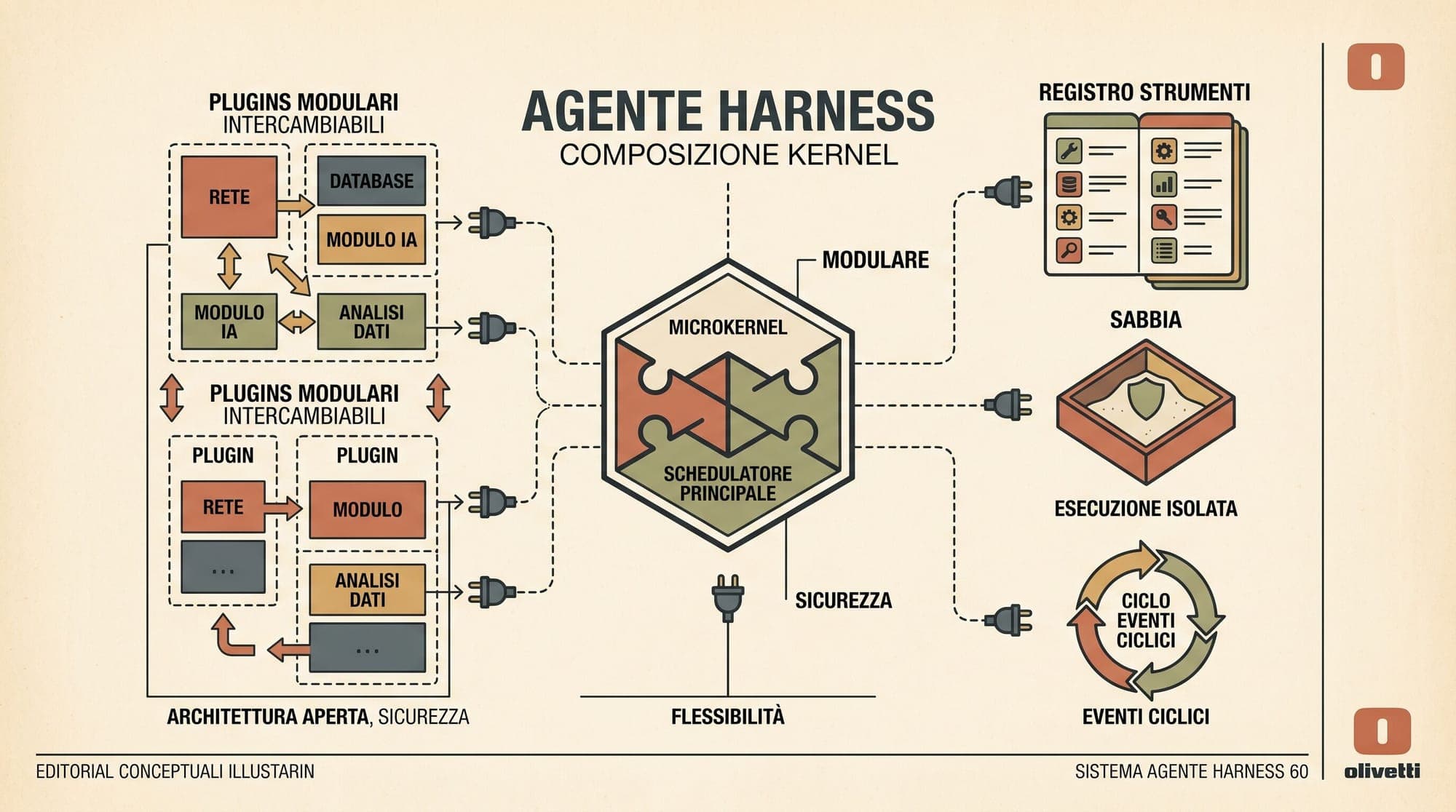
DeepSeek AI has released DeepSeek Harness (dsh), an open-source agent harness built on a modular "everything is a plugin" design. Published under the MIT license on GitHub, the project provides a runtime framework where all core agent functions—including model adapters, session storage, tool registries, sandboxes, and the execution loop itself—are implemented as interchangeable, hot-swappable plugins.
Rather than developing a monolithic agent runner, DeepSeek structured the system around Cordis, an open-source composition meta-framework originally authored by developer shigma and refined over four years within the Koishi chatbot ecosystem.
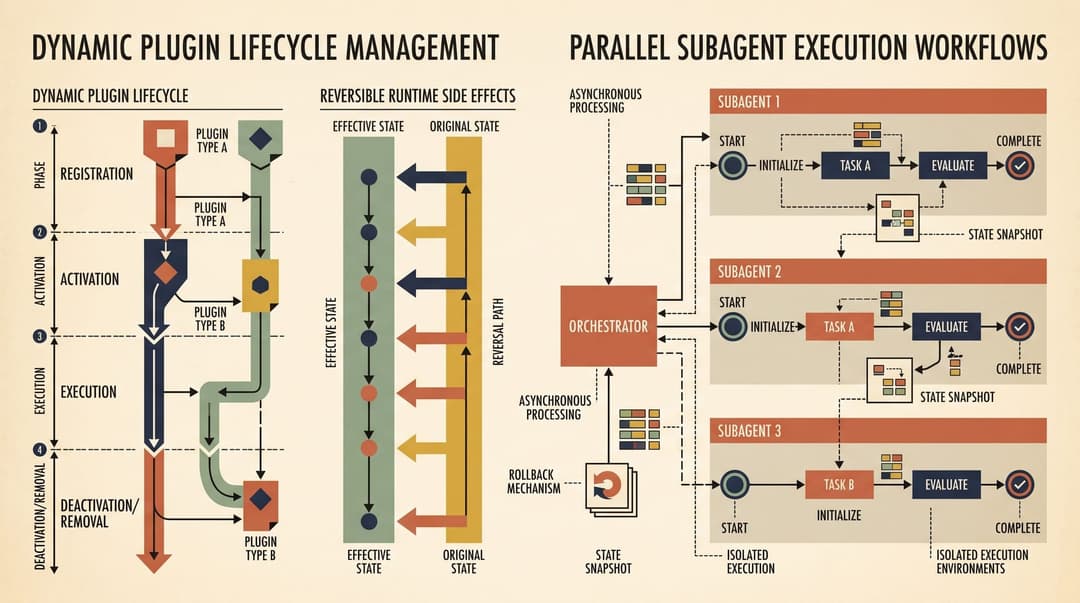
The Cordis Foundation and Reversible Effects
DeepSeek Harness leverages Cordis v4 to solve key lifecycle and state management challenges common in dynamic agent environments:
- Reversible Side Effects (
ctx.effect): Every plugin modification registers an explicit inverse cleanup function. When a plugin or tool is unmounted or reloaded, Cordis automatically executes its teardown in reverse registration order, preventing resource leaks and dangling state. - Spatial and Temporal Composability: The framework formalizes dependency management, ensuring plugins only initialize after prerequisite services are active and unload before upstream dependencies terminate.
- Path Independence: Application state is determined strictly by the set of currently enabled plugins rather than the sequence in which they were attached or modified.
Runtime Modes and Multi-Agent Orchestration
DeepSeek Harness ships with a local Web UI (defaulting to port 3080), headless execution modes, and a Python SDK for programmatic integration. The environment supports four distinct session presets:
- Standard Mode: A full-featured agent environment including file editing, workspace terminal execution, web search, skills, planning tools, and subagent delegation.
- Code Mode: Executes multi-step workflows by allowing the model to author single TypeScript programs against a unified SDK, collapsing multiple sequential tool invocations into a single execution turn.
- Minimal Mode: A stripped-down configuration containing only a persistent bash shell and a file editor, replicating the baseline environment DeepSeek uses for standardized evaluations.
- Creator Mode: An inspection and authoring preset allowing developers to experiment with plugin configurations and author custom session templates.
The harness natively supports parallel subagent orchestration, providing live progress indicators for concurrent workers and a detailed Trajectory timeline that profiles turn latencies, token consumption, and granular tool execution metrics. Provider connectivity is managed via the pi-ai library, supporting official DeepSeek endpoints, OpenCode Go, and generic OpenAI-compatible APIs with credential segregation in local configuration files.
DeepSeek AI currently designates the repository as a developer preview with active community contributions and plugin development underway.
