Archive / page 8 of 49

Latest articles, page 8

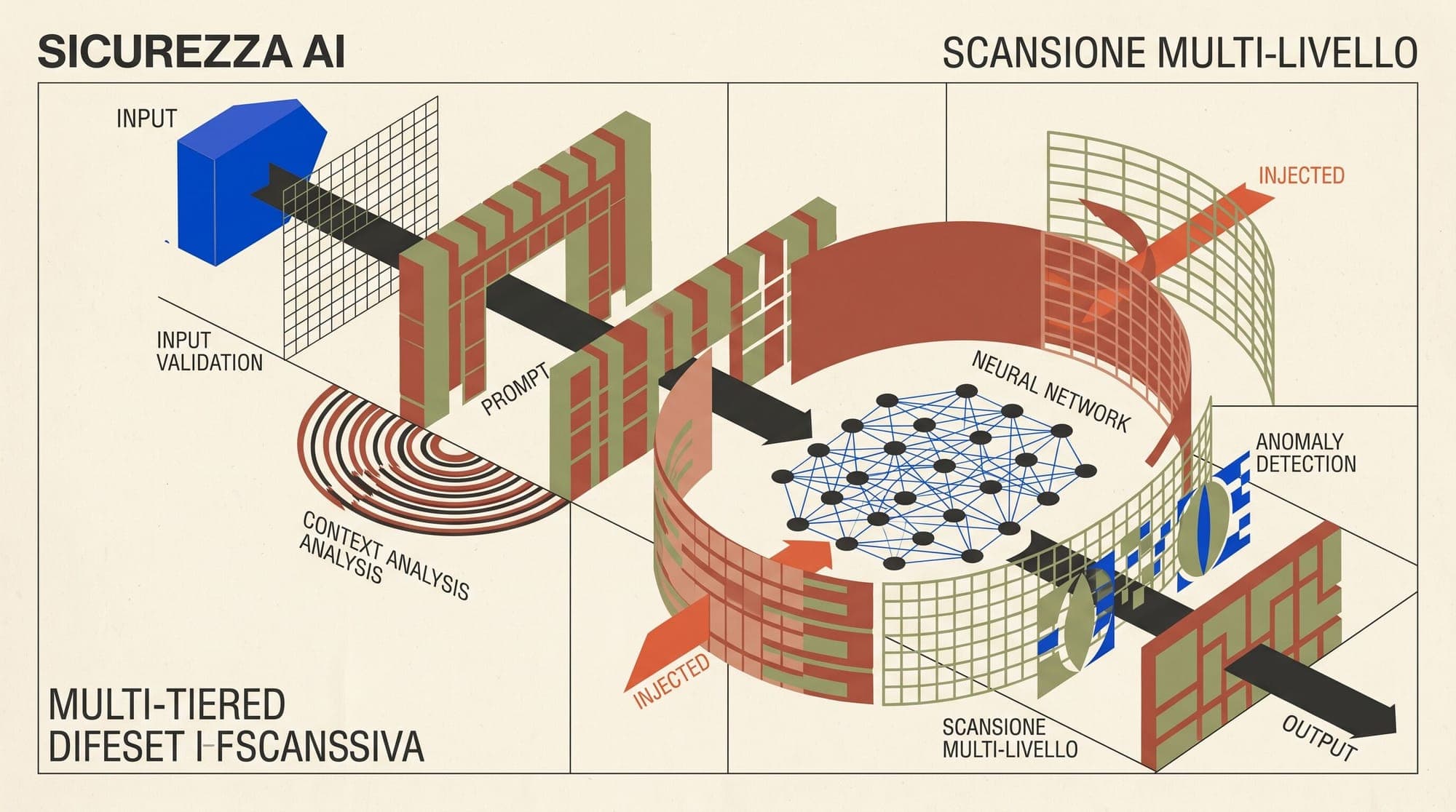
  1. Prompt Injection Detection and Jailbreak Defense Frameworks in Production: Comparing Rebuff, Vigil, LLM Guard, and Meta Prompt Guard

    Prompt injection remains one of the primary operational vulnerabilities facing production Large Language Model (LLM) deployments. As systems expand from isolated chat interfaces into autonomous agents with access to databases, web browsing, APIs, and file systems, the blast radius of an unmitigated injection attack shifts from offensive output generation to unauthorized tool invocation and systemic data exfiltration. Standard input sanitization methods developed for traditional software enginee

    Security
    6 min read
  2. Chinese Mathematicians Prove 3D Ghys Conjecture Using Shanghai AI Lab's Shusheng-S2 and Lean Verification

    A research team led by mathematicians from Great Bay University and the Shanghai Artificial Intelligence Laboratory has published a complete proof of the three-dimensional Ghys conjecture, resolving a 31-year-old open problem in dynamical systems. The proof relied on Shanghai AI Lab's Shusheng-S2 multimodal scientific foundation model to explore deduction pathways, followed by formal computer verification in the Lean proof assistant conducted by researchers at Peking University. The achievement

    AI
    2 min read
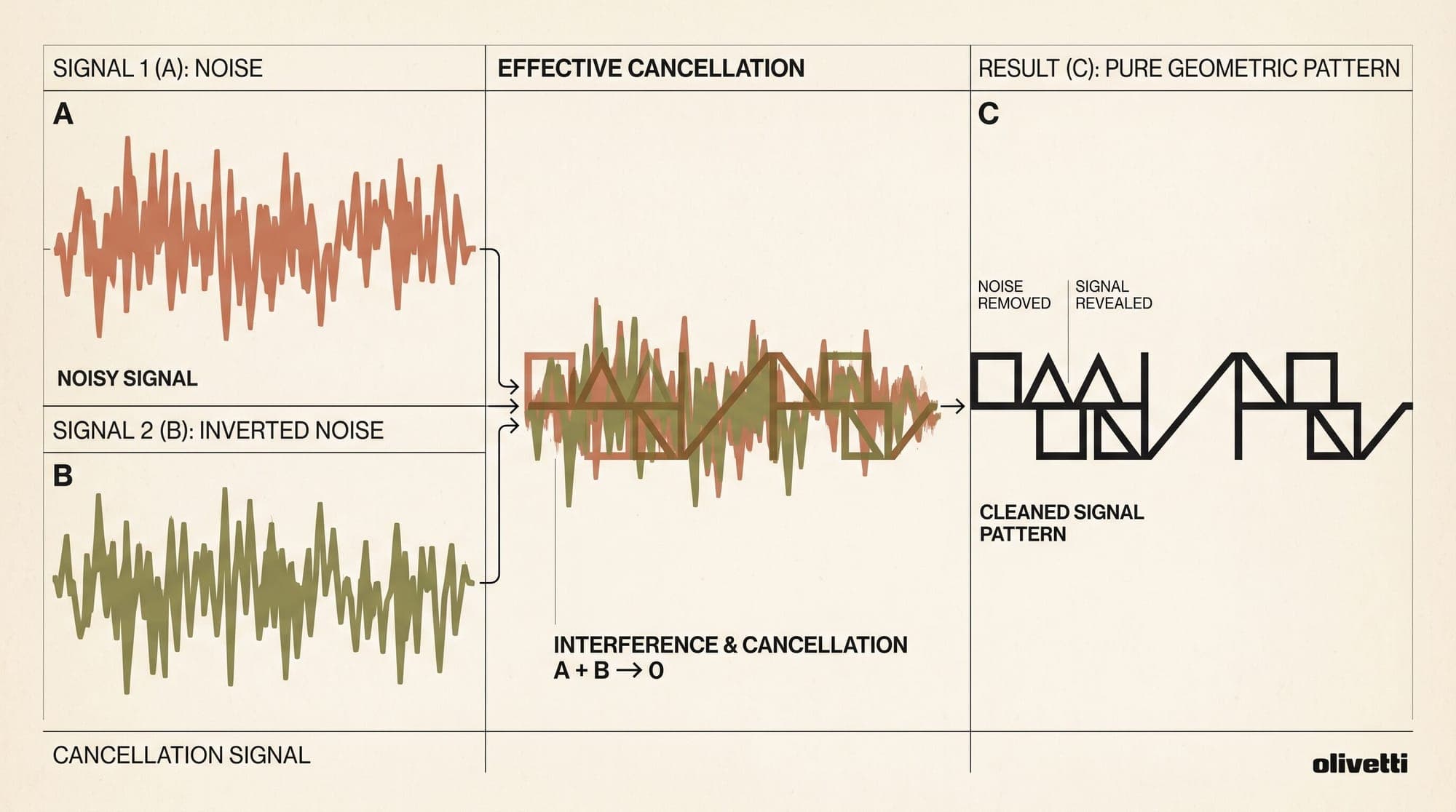
  3. Differential Transformer (Diff Transformer): Mathematical Foundations of Differential Attention, Noise Cancellation, and Hallucination Suppression

    Differential Transformer (Diff Transformer): Mathematical Foundations of Differential Attention, Noise Cancellation, and Hallucination Suppression Standard Transformer architectures rely on softmax attention to route information between tokens in an autoregressive sequence. While effective across scale, softmax attention suffers from a structural tendency to allocate non-trivial probability mass to irrelevant context tokens. In long-context retrieval, multi-hop reasoning, and document summariza

    Education
    6 min read
  4. Open-Source Function-Calling Models in Production: Comparing Gorilla OpenFunctions-v2, Hermes 3, Functionary, and xLAM

    Deploying autonomous AI agents and automated API workflows requires reliable structured output generation and tool invocation. While general-purpose language models can be prompted to output JSON tool invocations, specialized function-calling fine-tunes provide higher schema compliance, lower parameter hallucination rates, and support for parallel tool invocation. Four open-source model families have emerged as prominent architectures for local and private function calling: Gorilla OpenFunction

    AI
    4 min read
  5. Google Releases Harness² for Recursive Agent Harnessing Without Model Retraining

    Google Cloud AI Research has open-sourced Harness², a framework designed to automate the recursive self-improvement of AI agent scaffolding without modifying underlying model weights. Released under the Apache-2.0 license, the repository provides tools to optimize prompts, tools, memory, skills, and orchestration across open-world tasks where no ground-truth answer keys or verifiers exist. Decoupling Agent Scaffolding from Model Weights An autonomous agent's performance depends heavily on its

    AI
    3 min read
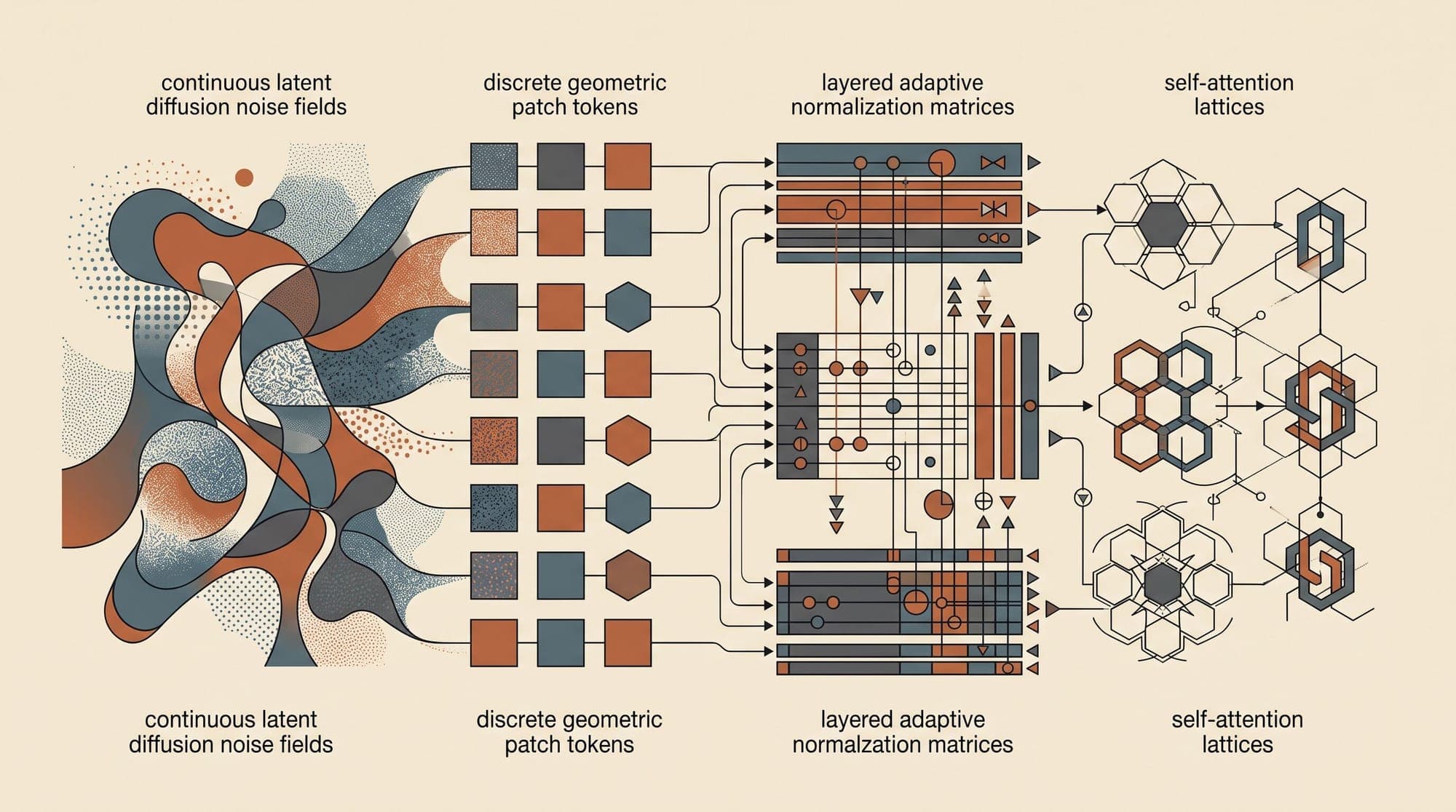
  6. Diffusion Transformers (DiT): Mathematical Foundations, Patchification, Adaptive LayerNorm (adaLN-Zero), and Latent Diffusion Scaling

    Diffusion Transformers (DiT), introduced by William Peebles and Saining Xie in their 2023 paper Scalable Diffusion Models with Transformers, established a structural departure in generative visual modeling. For years, diffusion pipelines relied almost exclusively on convolutional U-Net backbones derived from Denoising Diffusion Probabilistic Models (DDPM) and Latent Diffusion Models (LDM). DiT replaced these multi-scale convolutional networks with standard isotropic Transformer architectures ope

    AI
    5 min read
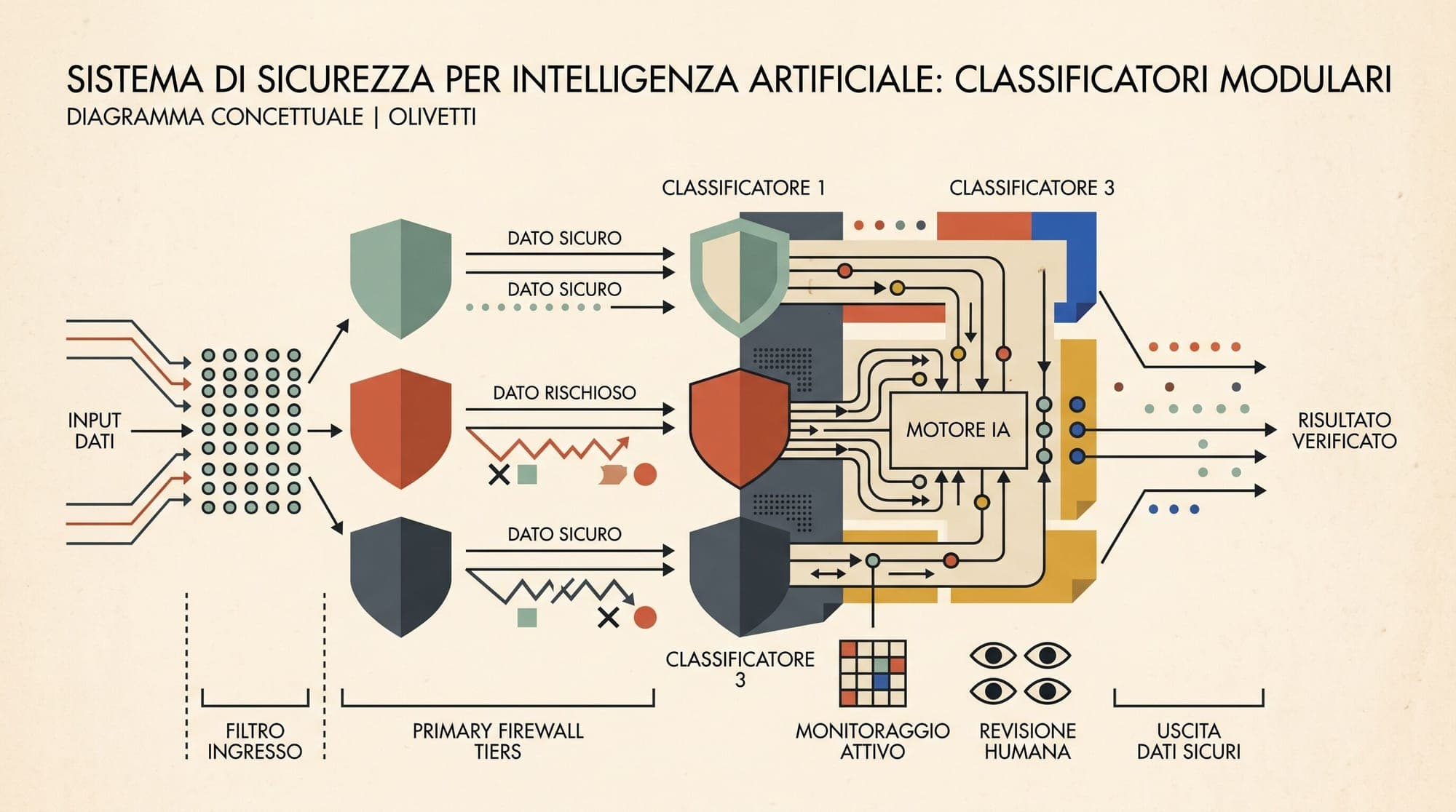
  7. Open-Source Safety and Moderation Classifiers in Production: Comparing Llama Guard 3, ShieldGemma, WildGuard, and Prompt-Guard

    Production large language model (LLM) applications require structured defenses against adversarial jailbreaks, prompt injections, and policy-violating content. While guardrail orchestration frameworks handle workflow logic, the actual enforcement decisions rely on specialized safety classifier models. Open-source safety classifiers have diverged into distinct architectural paradigms, ranging from lightweight bidirectional encoders to full autoregressive decoders and multi-task refusal evaluator

    AI
    5 min read
  8. PostgreSQL 19 GA Delayed to November Following LLM Code Review Findings and Feature Reverts

    The PostgreSQL Global Development Group has moved the targeted general availability date for PostgreSQL 19 from late September to November 19, 2026. The delay follows late-cycle code reviews using large language model tooling that surfaced roughly 40 defect reports, prompting core maintainers to revert between 8 and 10 major features slated for the release. Reverted Features and Architectural Defect Findings According to PostgreSQL committer and EDB vice president Peter Eisentraut, automated

    Databases
    1 min read
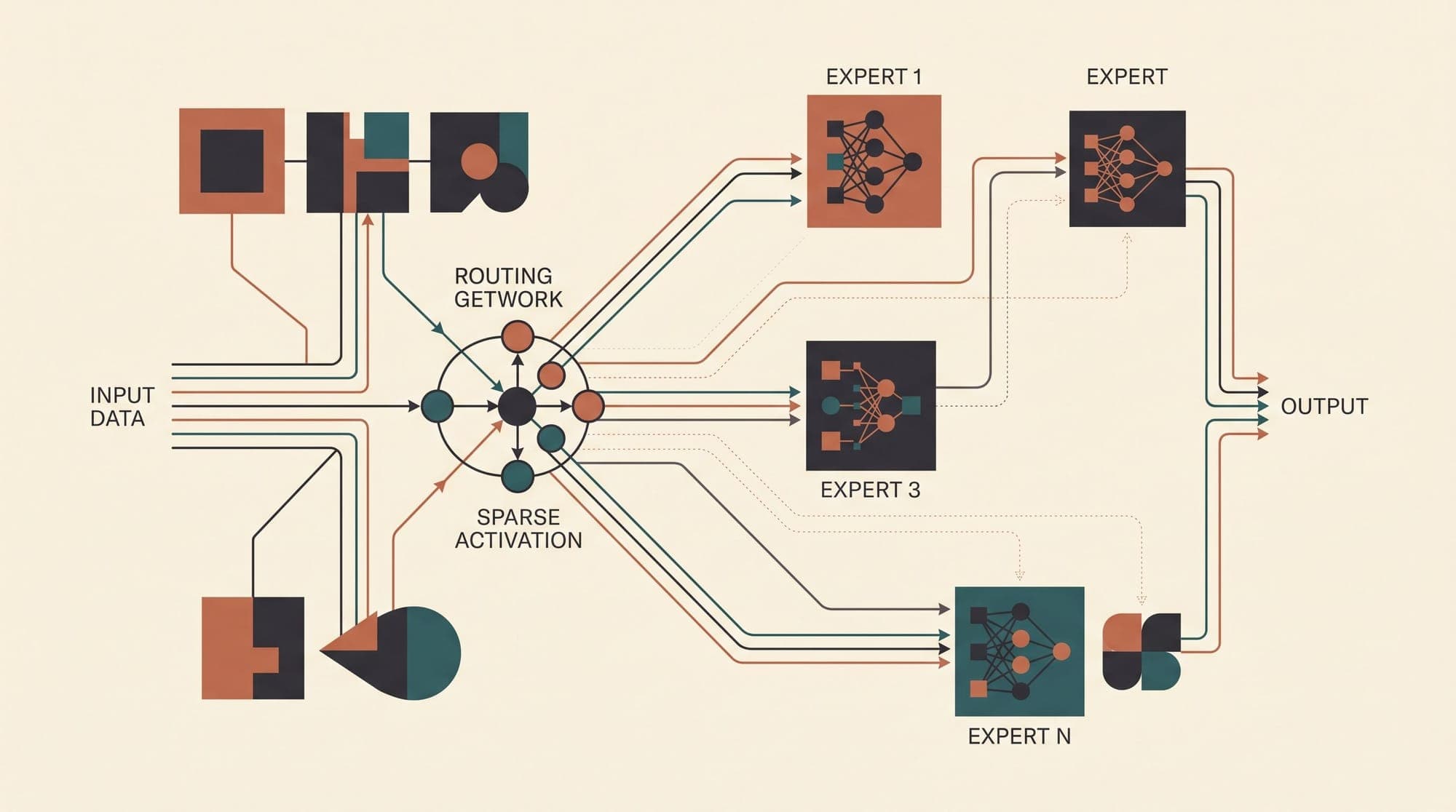
  9. Reflection AI Releases Beam 1.0: 501B Open-Weight MoE Under Apache 2.0

    US AI research lab Reflection AI has released Beam 1.0, a 501-billion-parameter open-weight Mixture-of-Experts (MoE) foundation model licensed under Apache 2.0. The release includes weights in BF16, FP8, and NVFP4 precision formats alongside training harnesses and inference integration for vLLM, SGLang, and Ollama. Architecture and Sparse Compute Profile Beam is built across 52 layers with an interleaved local and global attention structure, maintaining a 3:1 ratio between sliding-window and

    Open Source
    2 min read
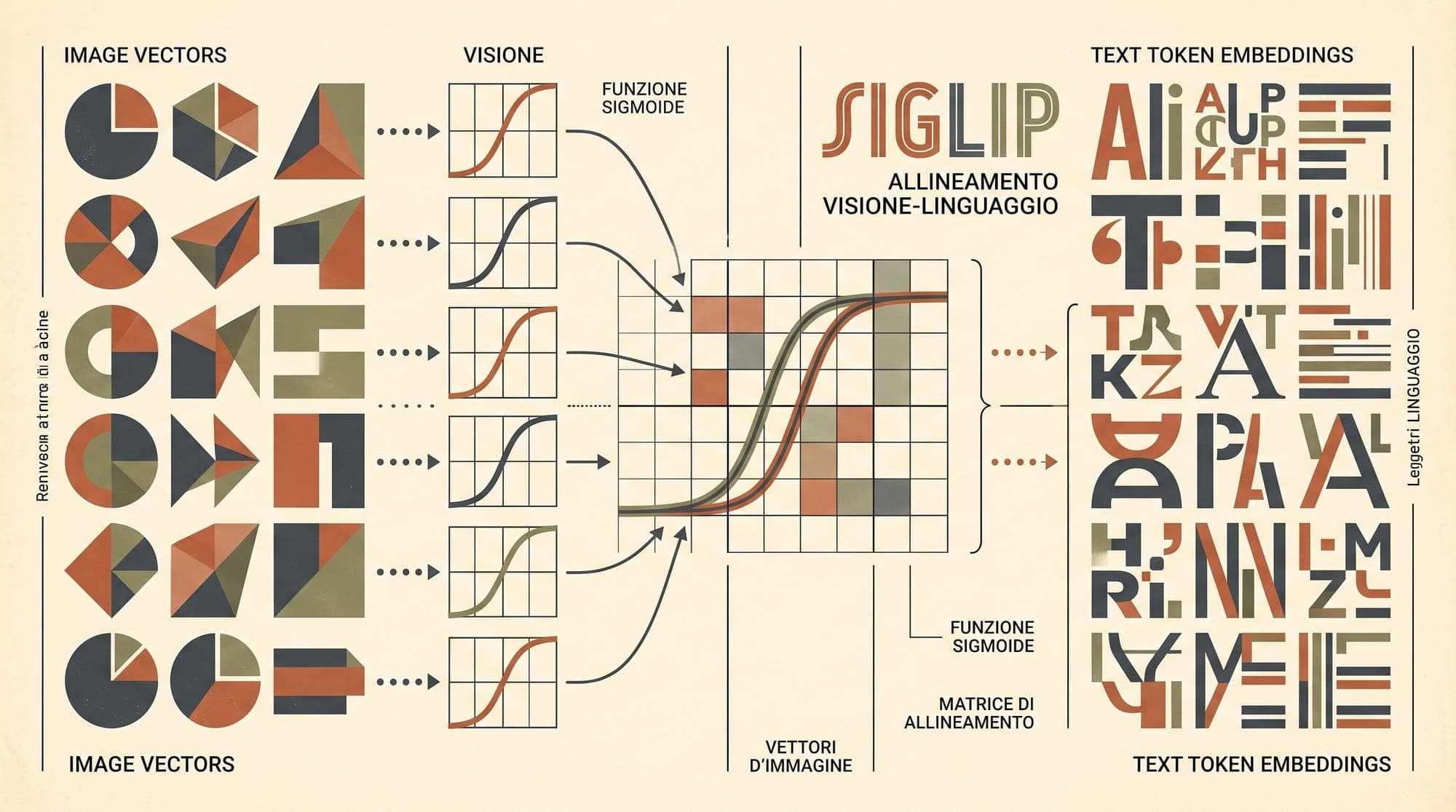
  10. Sigmoid Loss for Language Image Pre-Training (SigLIP): Mathematical Foundations, Pairwise Binary Classification, Softmax Normalization Removal, and Batch Size Scaling in Multimodal Vision-Language Models

    Executive Summary Multimodal foundation models rely heavily on contrastive representation learning to map visual features and natural language tokens into a unified embedding space. For years, the dominant paradigm was the InfoNCE objective popularized by CLIP (Radford et al., 2021) and ALIGN (Jia et al., 2021), which uses categorical cross-entropy with a softmax normalization over all paired elements in a mini-batch. While effective, the softmax normalization imposes a severe distributed syste

    AI
    8 min read