Archive / page 20 of 49

Latest articles, page 20

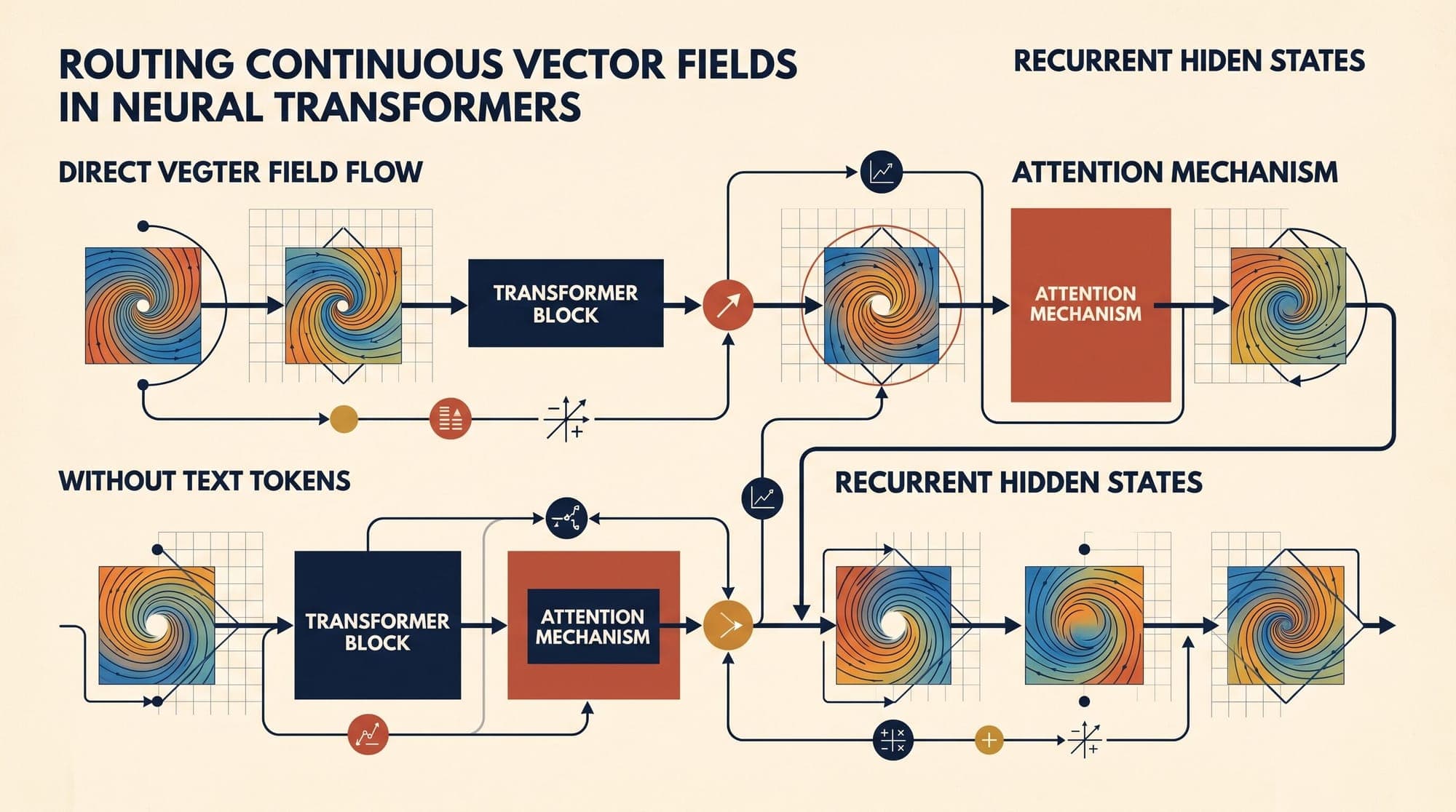
  1. Latent Reasoning in Large Language Models: How Continuous Thoughts and Recurrent Hidden States Bypass Discrete Tokenization

    Standard autoregressive language models solve multi-step reasoning tasks by generating explicit verbal scratchpads. Under the Chain-of-Thought (CoT) paradigm formalized by Wei et al. (2022), a Transformer expands its effective computational depth by emitting intermediate natural language tokens into the prompt context. Each emitted token provides an additional forward pass through the network's layers, transforming reasoning into a sequence of left-to-right text predictions. While language-base

    AI
    8 min read
  2. Speech-to-Text Serving in Production: Comparing Faster-Whisper, Moonshine, SenseVoice, and NeMo Canary Architecture, Streaming Latency, and GPU Economics

    In conversational voice AI and real-time agentic workflows, the speech-to-text (STT) layer sets the hard lower bound on system responsiveness. Human conversational cadence expects turn-taking latencies between 200ms and 500ms. When an AI pipeline must accommodate downstream large language model (LLM) time-to-first-token generation (100ms to 250ms) and text-to-speech (TTS) audio synthesis (100ms to 200ms), the automatic speech recognition (ASR) stage cannot exceed 100ms to 150ms of processing ove

    AI
    8 min read
  3. Writer Releases Palmyra X6 Flagship Agentic Model with Rebuilt Enterprise Agent Harness

    Enterprise generative AI platform Writer has launched Palmyra X6, its new flagship agentic foundation model, alongside a rebuilt runtime harness engineered for multi-step workflow execution and governance. The model release introduces substantial latency and efficiency improvements over previous Palmyra iterations, cutting inference costs by 52% while accelerating output generation by 48%. Writer reported average generation speeds of 82 tokens per second and a mean task completion time of 26 se

    AI
    1 min read
  4. River AI Secures $1.1B Led by General Catalyst to Build Open-Weight Model Infrastructure

    River AI, an artificial intelligence startup founded by former xAI co-founder Igor Babuschkin, has secured $1.1 billion in early-stage funding to build an open-weight model stack and decentralized AI infrastructure platform. The financing round was led jointly by General Catalyst and public benefit corporation AMP PBC, with strategic participation from NVIDIA, AMD Ventures, Y Combinator, and Singapore sovereign fund Temasek. Babuschkin, whose prior engineering background spans OpenAI, Google De

    AI
    2 min read
  5. Unlikelihood Training in Large Language Models: How Negative Candidate Loss and Sequence-Level Penalties Suppress Repetition Loops and Hallucinations

    Unlikelihood Training in Large Language Models: How Negative Candidate Loss and Sequence-Level Penalties Suppress Repetition Loops and Hallucinations Autoregressive language models generate text by iteratively predicting the probability distribution of the next token conditioned on preceding tokens. While standard maximum likelihood estimation (MLE) via cross-entropy loss serves as the universal training objective across modern foundation models, it possesses a fundamental structural asymmetry:

    AI
    13 min read
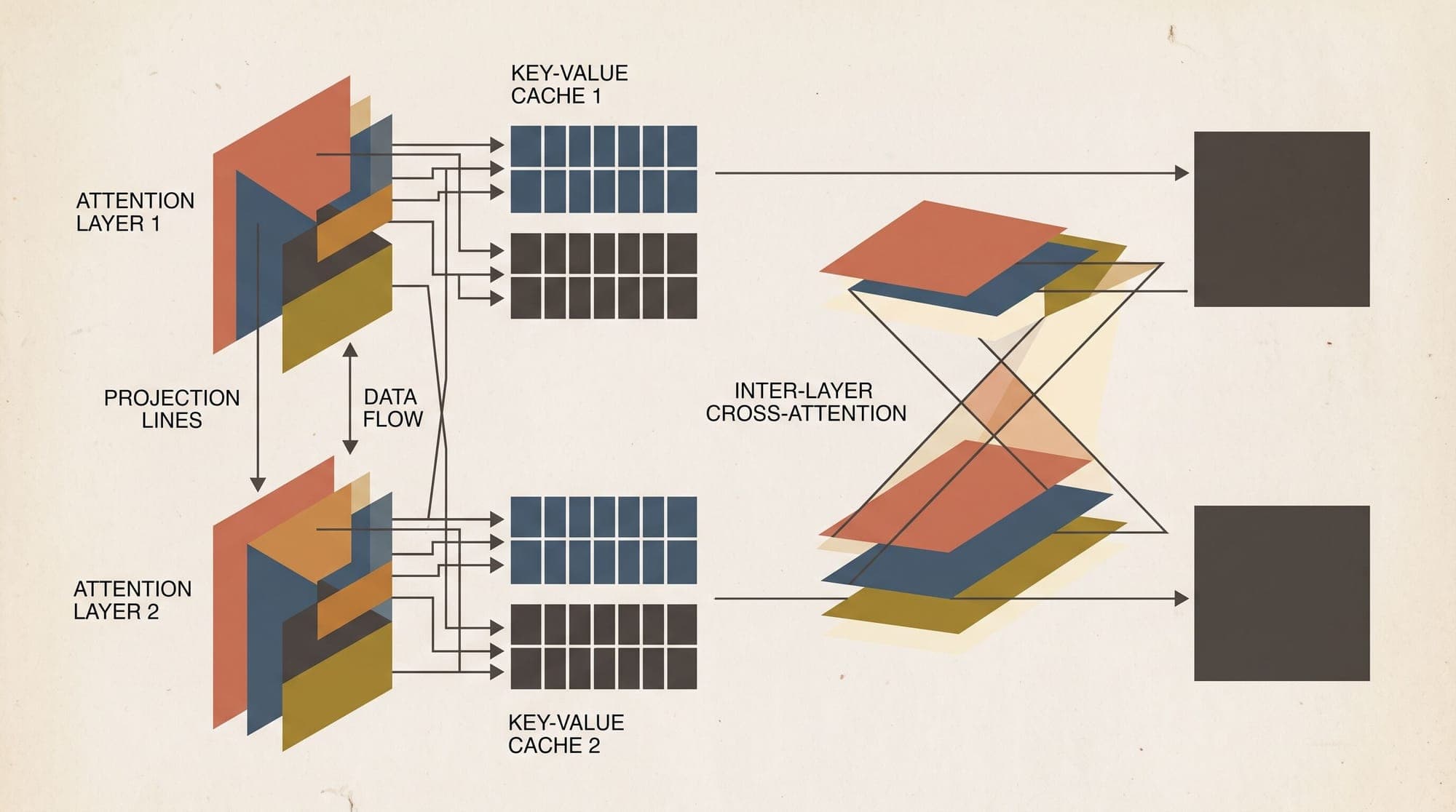
  6. Cross-Model KV Cache Transfer in Production: Architecture, Closed-Form Ridge Projections, and Cascaded Serving Economics

    Modern enterprise LLM serving architectures frequently rely on multi-model pipelines to balance inference cost, generation latency, and output quality. In model routing cascades, lightweight 8B models triage incoming queries and escalate complex reasoning tasks to 70B or MoE models. In speculative decoding pipelines, smaller draft models propose token sequences verified by larger target models. In long-horizon AI agent swarms, sub-agents frequently switch between specialized models across multi-

    LLM
    8 min read
  7. Instinct AI Assistant Faces Scrutiny Over Data Training Terms and Autonomous Transaction Permissions

    Instinct, an autonomous personal AI assistant currently in private beta, has drawn scrutiny across the developer and security community regarding its data collection policies and broad operational permissions. The service is developed by San Francisco-based Spear Street Technology Inc., led by former Sierra research scientist and Reflexion paper co-author Noah Shinn. Operating via SMS and WhatsApp interfaces, Instinct executes multi-step personal workflows by directly interfacing with user devi

    AI
    2 min read
  8. UK and Ukraine Sign AI Defense Pact to Share Battlefield Sensor Data and Target Detection Models

    The United Kingdom and Ukraine have signed a bilateral artificial intelligence defense partnership, granting British researchers and defense contractors access to Ukraine's battlefield data platform, Avengers AI Labs. The agreement was signed in Kyiv by British Prime Minister Andy Burnham and Ukrainian President Volodymyr Zelenskyy during Burnham's first official overseas visit. Under the framework, Britain becomes the first international partner permitted to access Ukraine's operational datase

    AI
    2 min read
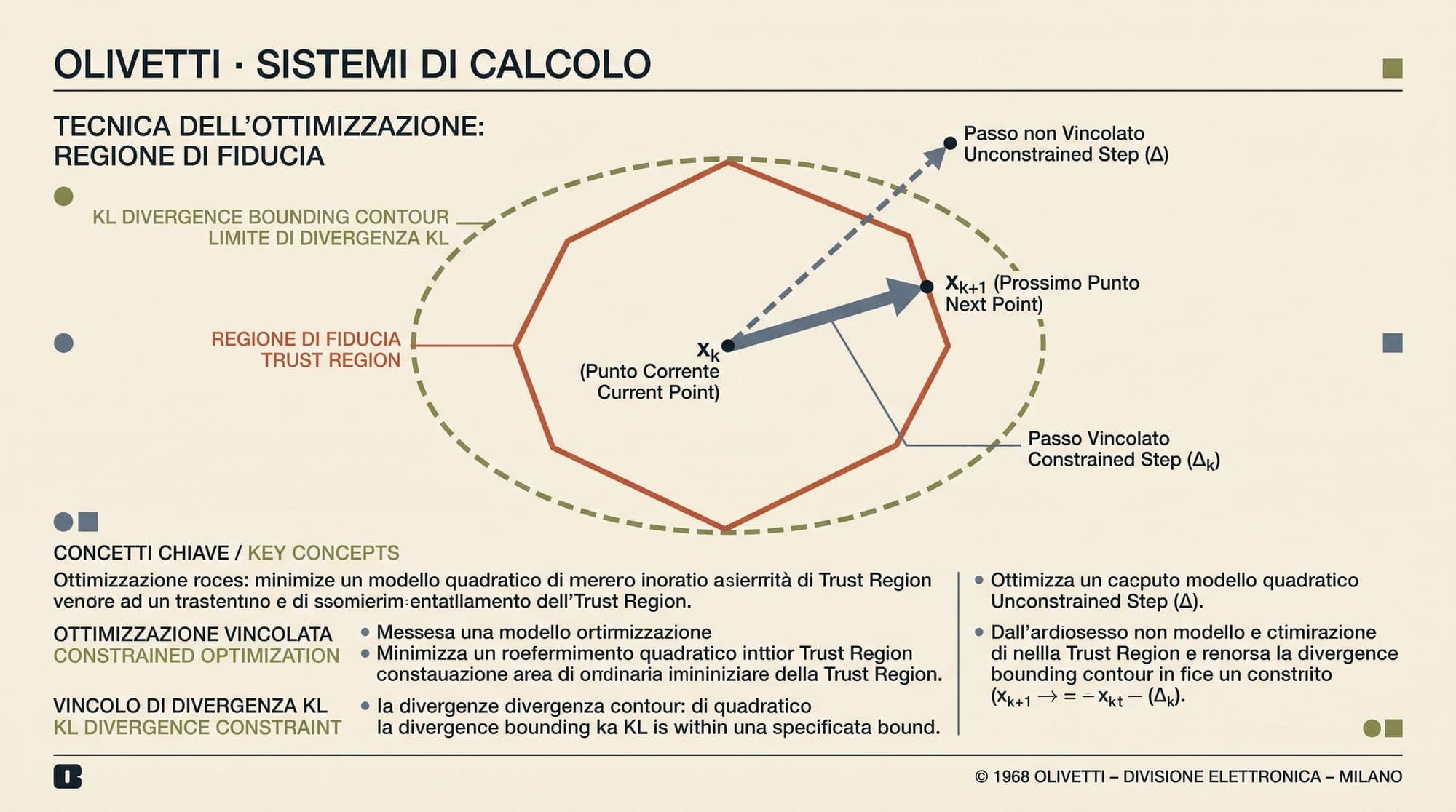
  9. Trust Region Policy Optimization: Mathematical Foundations, Monotonic Improvement Guarantees, and Conjugate Gradient Updates

    Trust Region Policy Optimization: Mathematical Foundations, Monotonic Improvement Guarantees, and Conjugate Gradient Updates In policy gradient reinforcement learning, optimization dynamics differ fundamentally from standard supervised learning. In supervised regression or classification, the underlying data distribution $P(x, y)$ remains stationary throughout training; a sub-optimal parameter update merely yields high loss on the current batch without corrupting future sample collection. In re

    AI
    9 min read
  10. Vector Quantization for LLM Weights in Production: Comparing QuIP#, AQLM, and VPTQ Architecture, Dequantization Kernels, and 2-Bit Serving Economics

    Vector Quantization for LLM Weights in Production: Comparing QuIP#, AQLM, and VPTQ Architecture, Dequantization Kernels, and 2-Bit Serving Economics Scalar post-training quantization methods such as GPTQ and AWQ have become the standard for compressing large language models to 4-bit integer formats (INT4). At 4 bits per parameter, scalar techniques preserve over 98% of baseline 16-bit floating-point (FP16/BF16) model accuracy across common benchmarks. However, pushing scalar quantization below

    AI
    9 min read